
Quick Take
- One whale behavior has no official scientific classification, but whale watchers have given it a name anyway. Discover snarging →
- Whales can't sleep the way you do, and one floating behavior turns out to be their surprising workaround. See how whales rest →
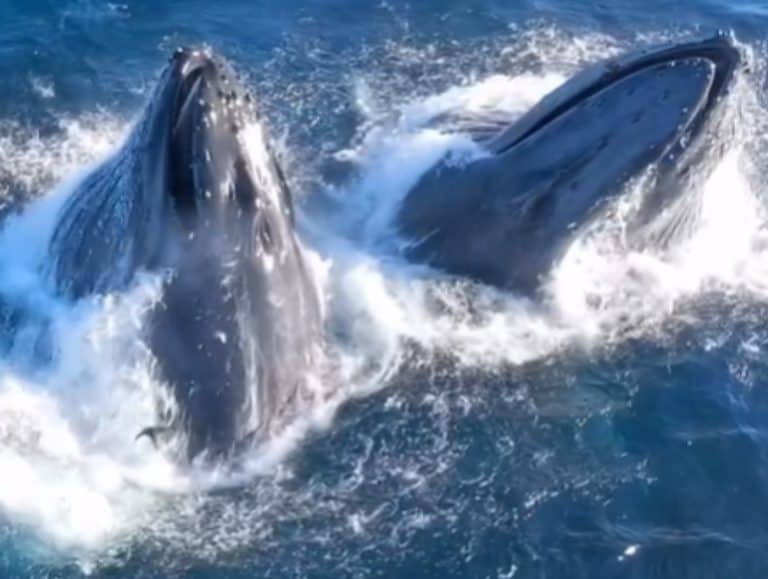
- A group of humpback whales engineered a hunting trap so precise it rivals any predator strategy on land. See the hunting strategy →
Whales are fascinating creatures with admirable traits and quirky tendencies. From breaching to bubble-net feeding, whales display several unique behaviors. But what do they all mean?
Many whale behaviors are actually forms of communication or even playfulness. Others have more to do with the whale’s comfort or health. For example, some movements might help the animal rid its skin of parasites.
Here are seven of the most common whale behaviors, explained by a professional.
1. Fluking
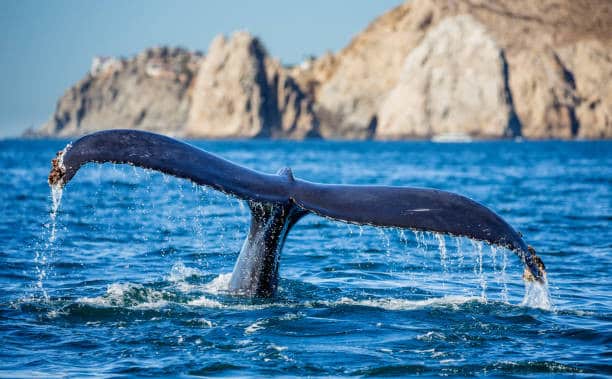
Certainly, one of the most interesting whale behaviors is the act of raising its tail (composed of two “flukes”) when diving. If you’ve ever gone whale watching, you might have witnessed this in action, noticing the underside of the whale’s flukes.
“Fluking is another name for the behavior in which a whale raises its tail prior to making a deep dive,” says Iryna Smyrnova, Zoologist and Veterinarian (DVM) at Meowoff. “Fluking (raising one’s tail) indicates a whale is going down into deeper waters to forage.”
2. Breaching
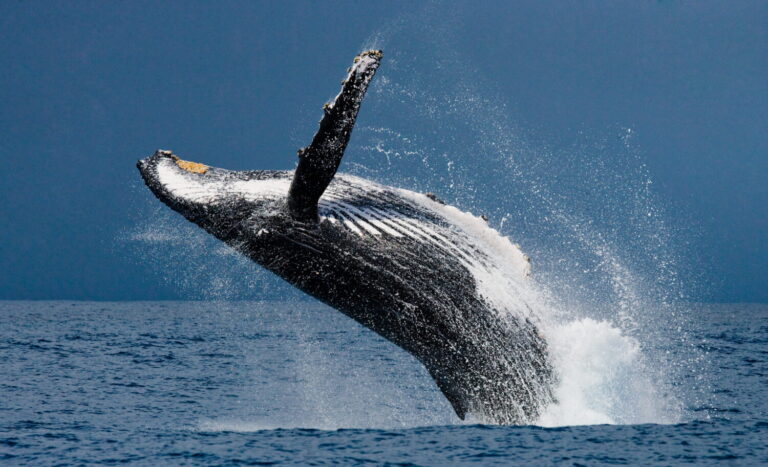
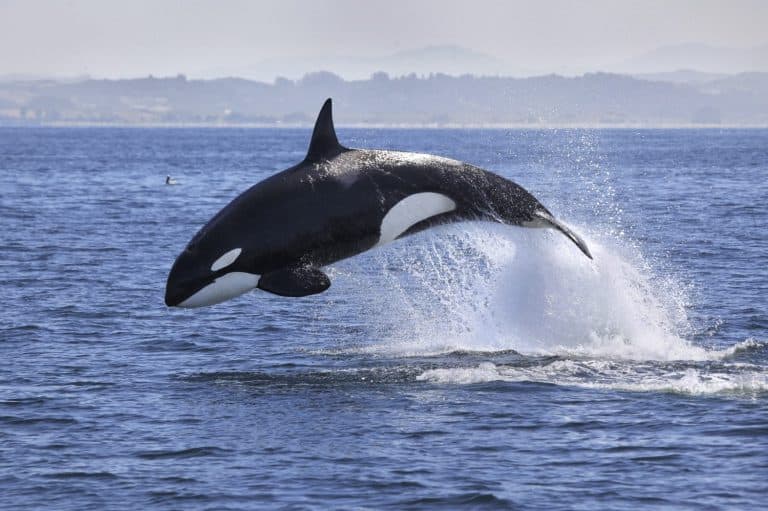
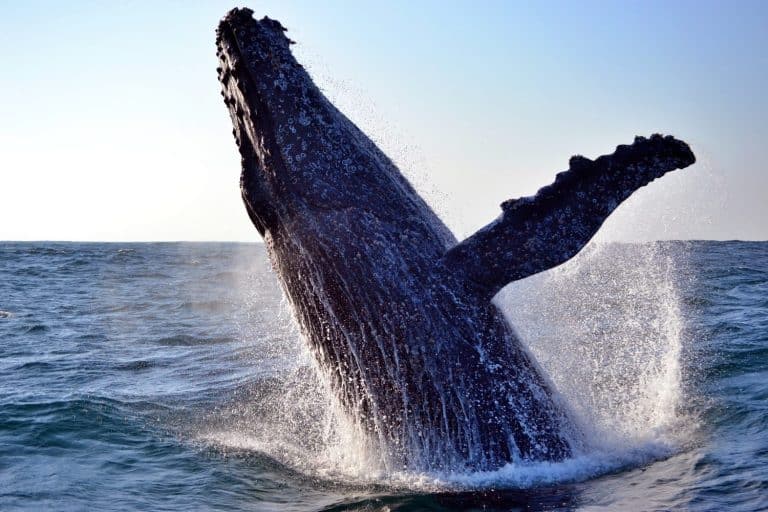
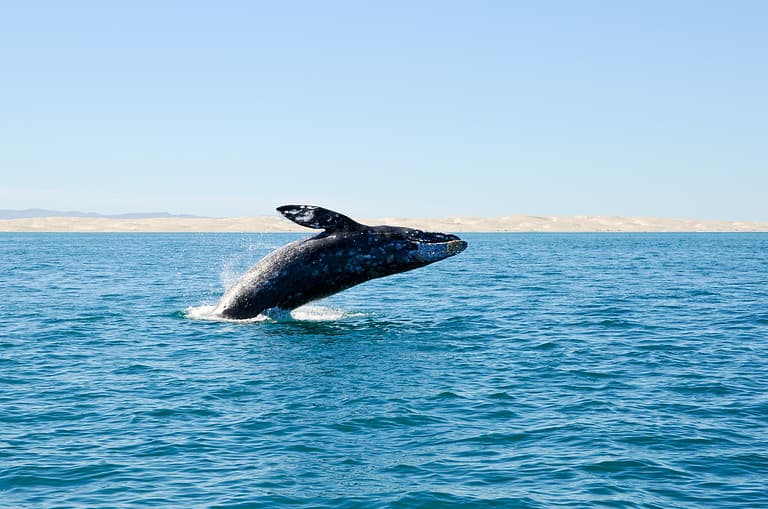
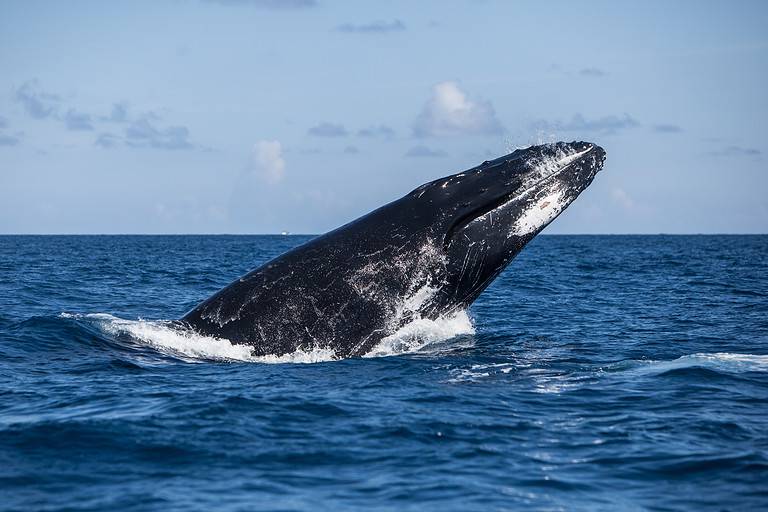
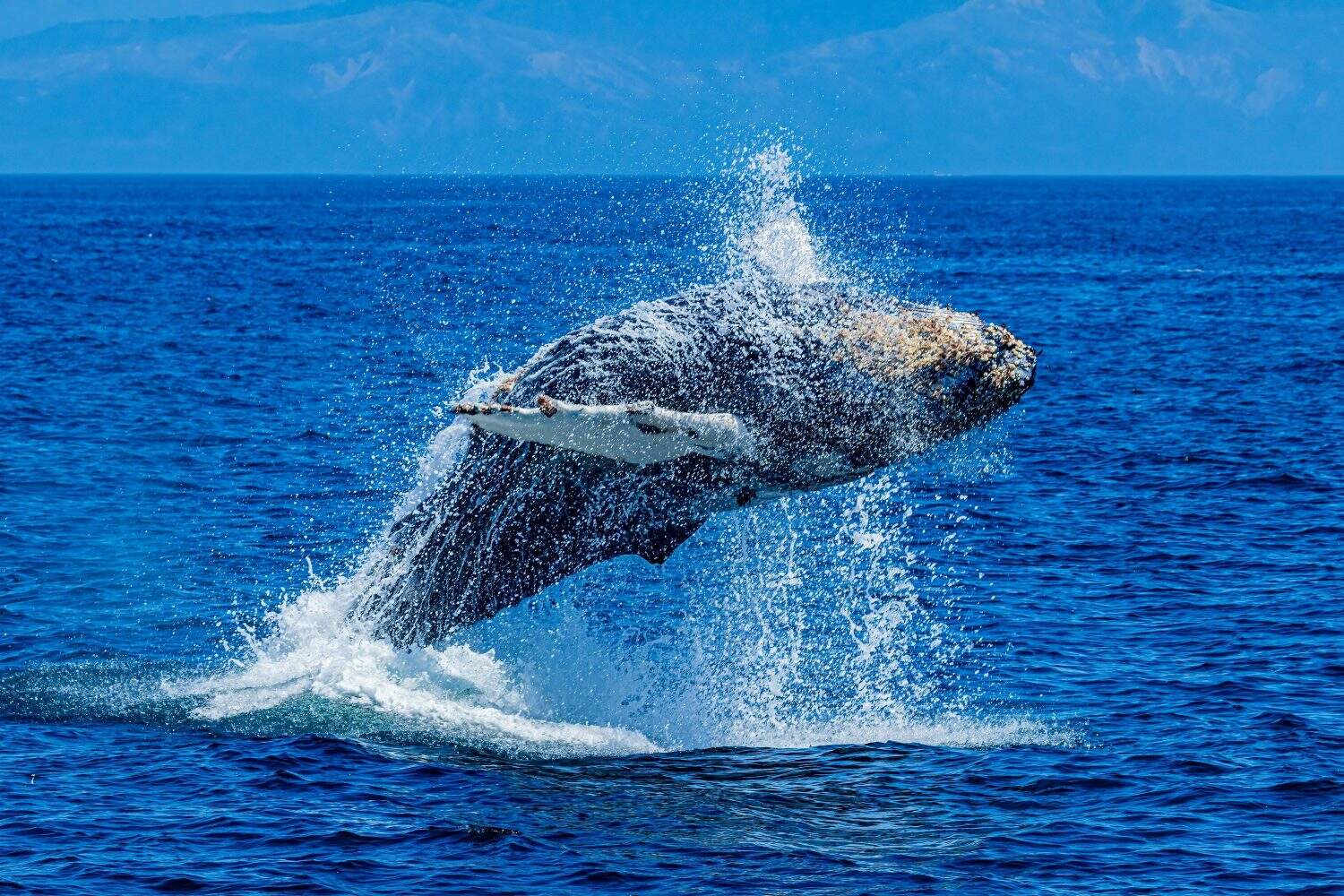
Another common whale behavior is breaching, which is when a whale bursts out of the water. Sometimes, the animal will even twirl its body, giving quite a show.
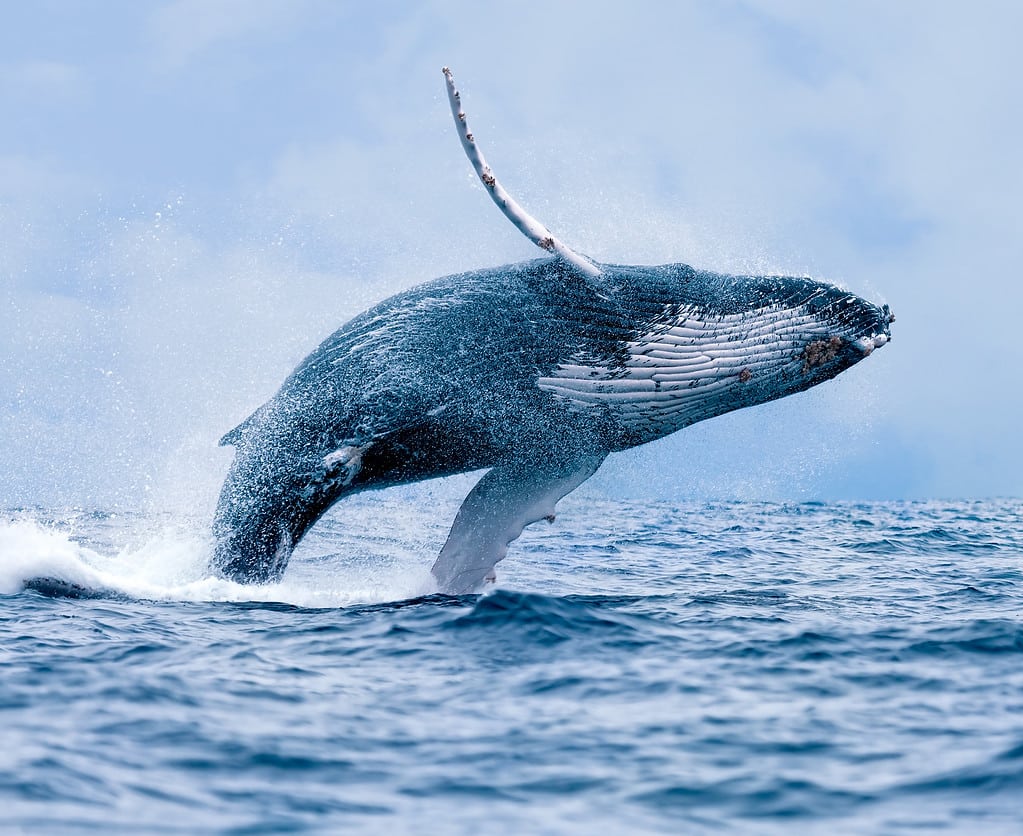
Whale breaching makes for a great whale-watching experience.
©PaulWolf/iStock via Getty Images
“Breaching is an action in which a whale propels itself out of the water,” Smyrnova explains. “It has been speculated that breaching could serve several purposes: to communicate, rid the skin of parasites, or engage in play.”
There are various types of whale breaches, including a full breach (when more than half of the whale’s body emerges from the water) and a partial breach (when less than half of its body emerges). Additionally, whales may perform tail breaches (displaying the lower portion of their bodies), chin-slap breaches (landing on their throat or belly), and other variations, depending on the angle of their dive or fall.
Fluking is another name for the behavior in which a whale raises its tail prior to making a deep dive.
Iryna Smyrnova, Zoologist and Veterinarian (DVM) at Meowoff
3. Spouting
Perhaps one of the most well-known and widely appreciated whale behaviors is blowhole blowing, also known as spouting. This impressive act is incredible to witness firsthand.
“This is really just an extremely forceful expulsion of warm air, which becomes visualized as a cloud of mist,” says Smyrnova. “Even the form of a whale’s blow can indicate the type of whale that is being observed.”
For example, some whales have two blowholes while others have just one. Additionally, certain species (like blue whales) can shoot their blows as high as 50 feet at high speeds.
4. Logging
Sometimes, whales will float motionlessly at the surface of the water, resembling a log. Because whales are voluntary breathers, they rest by shutting down half of their brain while the other half remains active. Since they cannot sleep in the same way humans do, logging serves as a form of rest for them.
According to Smyrnova, logging, among other whale behaviors, “can provide us with some understanding of how whales are able to survey their environment and save energy.”
5. Bubble-Net Feeding
One of the most fascinating whale behaviors is their coordinated hunting technique called bubble-net feeding. Essentially, a group of whales will dive beneath schools of fish, releasing air from their blowholes and creating bubbles that “trap” their prey. This behavior is primarily associated with humpback whales.
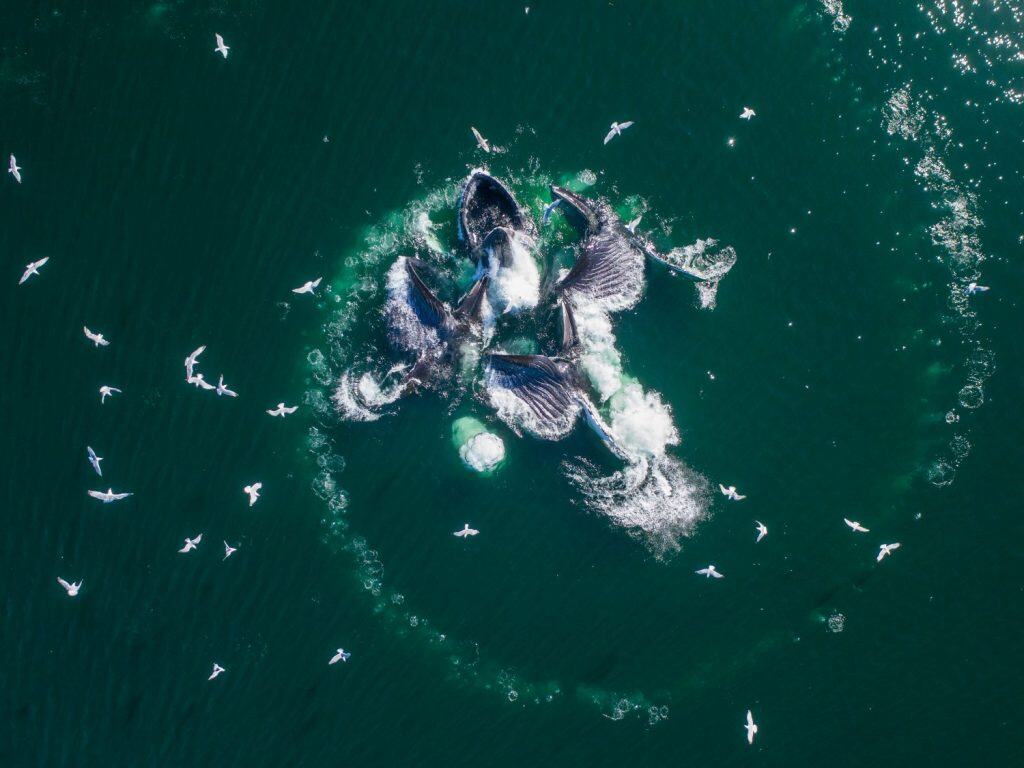
Bubble-net feeding is a coordinated feeding tactic, commonly exhibited by humpback whales.
©Danita Delimont/Shutterstock.com
“Bubble-net feeding is probably one of my favorite behaviors. Humpback whales have developed this cooperative method of catching schooling fish,” says Smyrnova. “They create ‘bubble nets’ around groups of schooling fish using large amounts of bubbles, which concentrate the fish, allowing them to swim up through them with their mouths wide open to catch the fish.”
6. Slapping/Flippering
Did you know that whales can actually slap the water with their fins? This common behavior is often called flippering. The whale typically rolls onto its side or back and strikes the water with its fins, and sometimes its tail.
“Two types of slapping include slapping their tails (lob-tailing) and slapping their pectoral fins,” Smyrnova explains. “These slaps are believed to be methods of communication among whales. However, based upon circumstances, these slaps could represent additional ways whales interact socially, feed, or both.“
7. Snarging
Personally, snarging is my least favorite whale behavior, but it’s interesting nonetheless. In addition to expelling air and water from their blowholes, whales sometimes release a substance called snarge. Simply put, snarge is essentially whale snot, which can mix with the expelled mist.
However, “Snarging is somewhat informal terminology some whale watchers use to describe a very forceful and/or loud exhalation on the surface by a whale,” says Smyrnova. “There is no official scientific classification for snarging.”