
Quick Take
- Plastic doesn't kill a whale the way most people assume. The actual mechanism is far slower and more disturbing. Understand the slow mechanism →
- The specific junk found inside this whale accidentally mapped exactly where our ocean trash problem originates and revealed how far it travels. Trace the debris origins →
- The stranded whales we find on beaches may represent as little as a sliver of actual deaths, meaning the true scale of the plastic crisis is hiding somewhere we can't see it. See the hidden death toll →
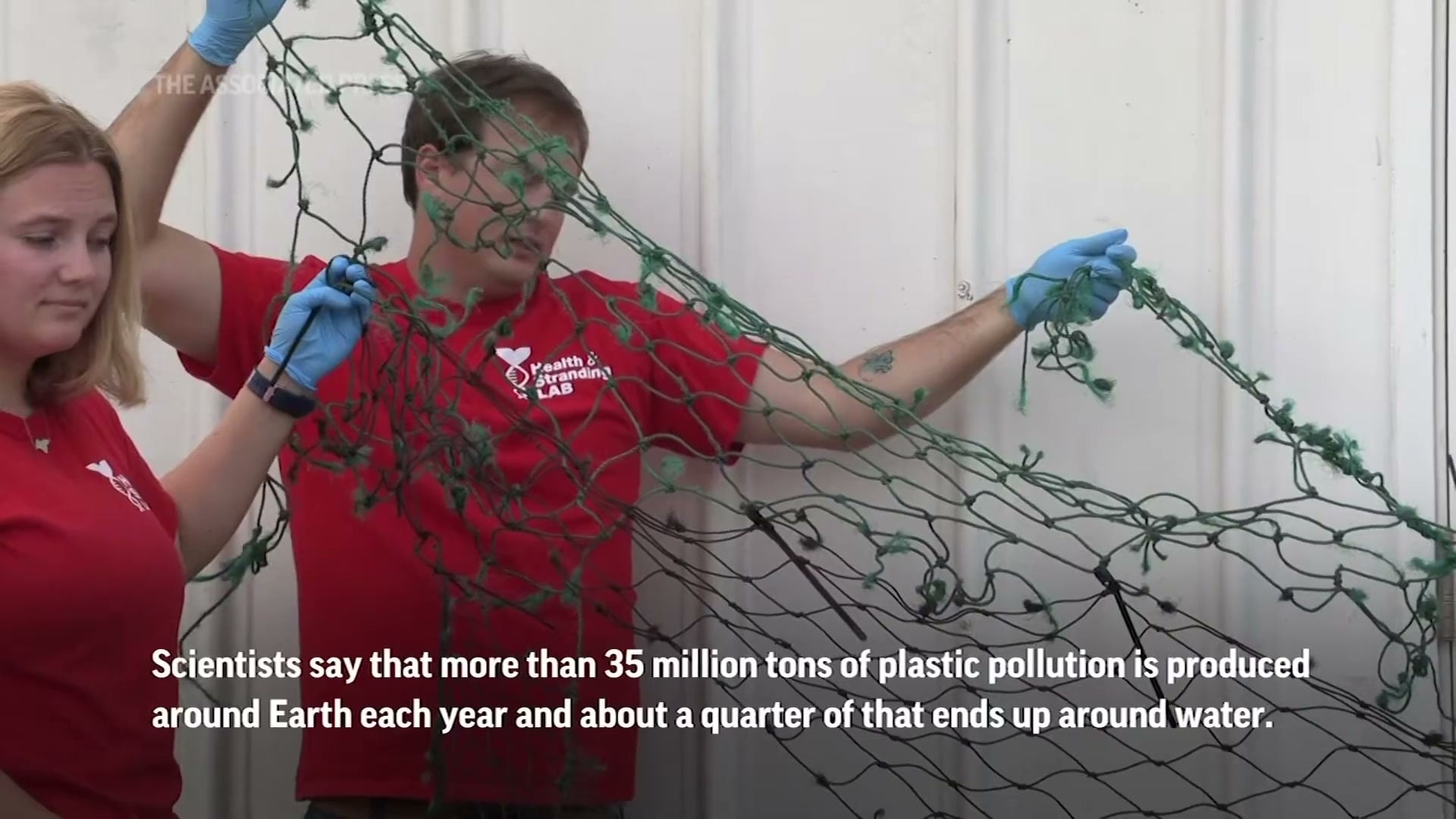
When a sperm whale washed ashore on Kauai, researchers from the Hawaii Pacific University Marine Mammal Stranding Response Program performed a necropsy that quickly turned into a tragic inventory of human trash. Inside the whale’s stomach, they cataloged at least six different types of fishing net, two kinds of plastic bag, six hagfish traps, a light fixture protector, and a floating buoy.
While scientists can’t confirm whether the whale swallowed this massive pile of garbage gradually or all at once during a single, disastrous feeding trip, they are certain it played a major role in the animal’s death.
Blind Hunting in the Deep Ocean
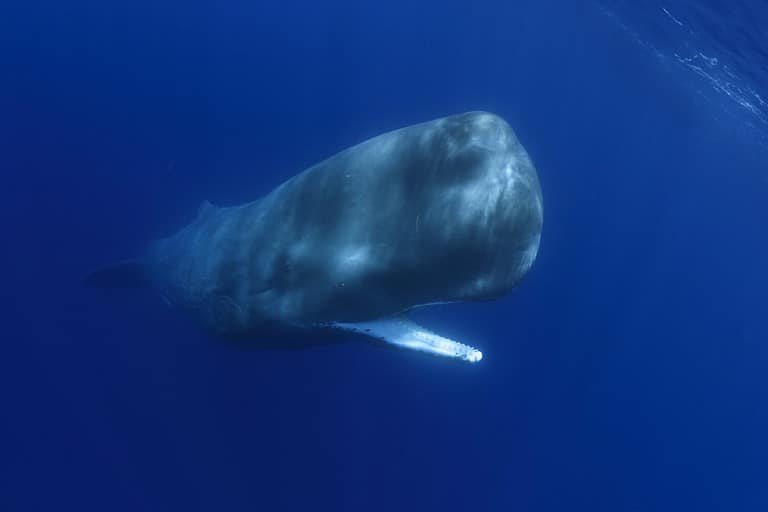
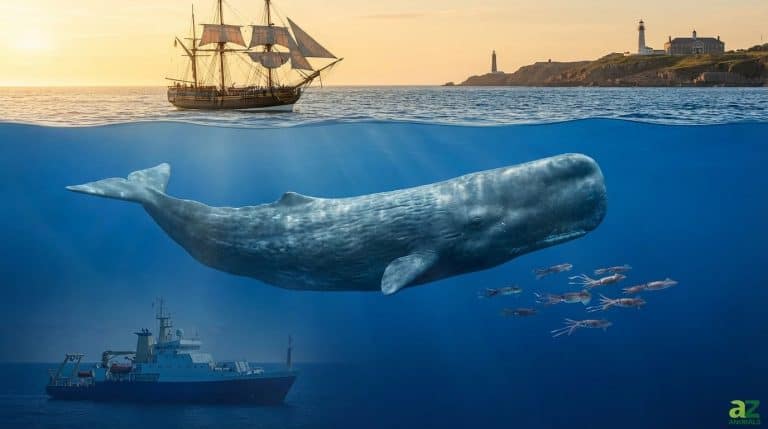
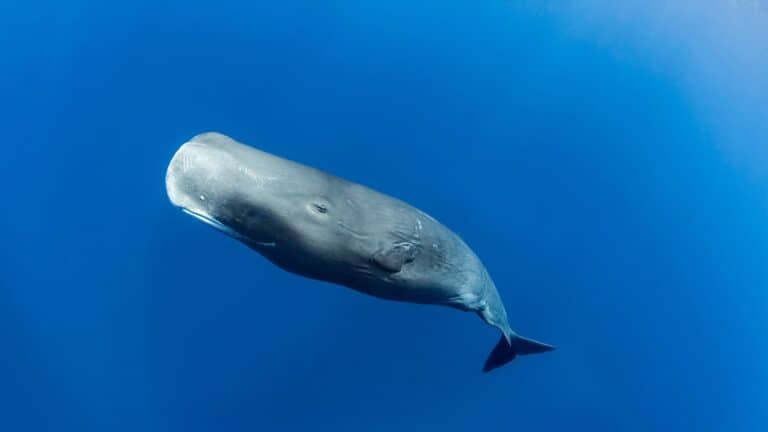
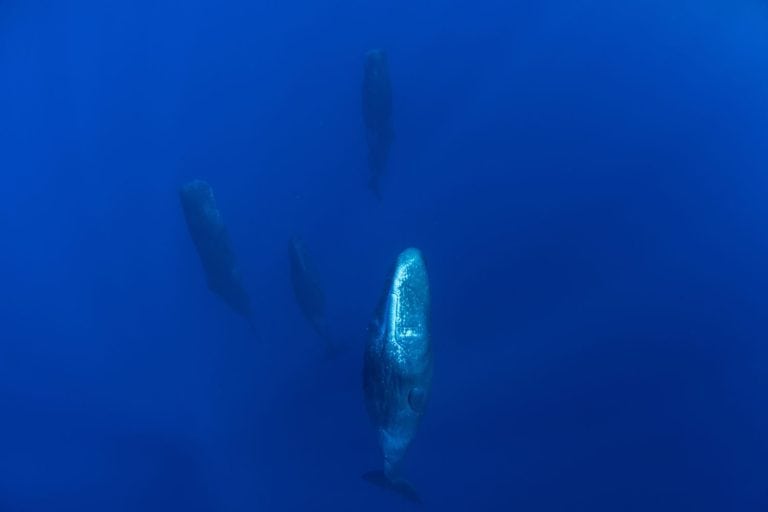
Sperm whales (Physeter macrocephalus) are the largest toothed whales on Earth and among the deepest-diving mammals we know of, routinely diving more than 2,000 feet into pitch-black waters to hunt squid and deep-sea fish.
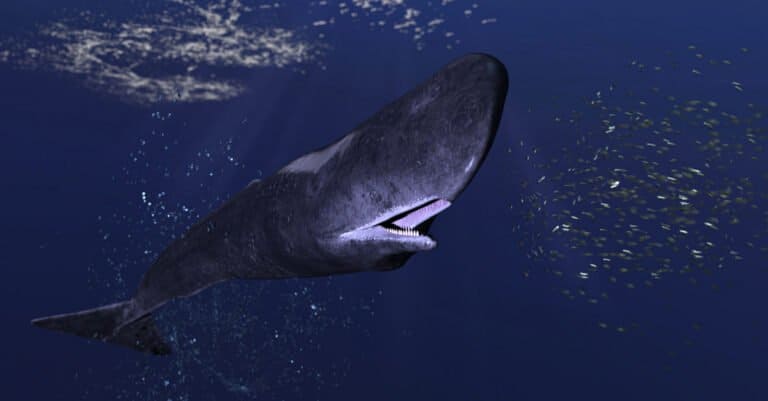
To find their food in the dark, they use powerful echolocation clicks, which happen to be the loudest biological sounds ever recorded in the ocean. Unfortunately, this incredible hunting strategy helps explain why they swallow fishing gear. A drifting net or plastic trap floating in deep water can bounce back an echo that mimics the echo signature of a squid or fish to the whale’s sonar. Once the whale closes in for the kill, it uses powerful suction to inhale its food, accidentally vacuuming up trash along with its actual prey.
When Digestion Stops Completely
The team did find actual food inside the whale, including roughly 100 squid beaks, a fish skeleton, and squid tentacles, proving the whale had been hunting normally until the end. Squid beaks are made of a tough material called chitin and cannot be digested, so they naturally pile up in a whale’s stomach. Scientists actually use these leftover beaks to reconstruct what a whale has been eating.
The real tragedy was the blockage. Researchers noted that nothing had passed beyond the valve leading to the rest of the whale’s digestive tract. In short, its digestion had shut down completely.
A Global Pattern
This Kauai whale is unfortunately not an isolated incident. Around the world, large whales are frequently found dead with stomachs full of trash. In 2013, a sperm whale in the Mediterranean died from a ruptured stomach caused by over 37 pounds of plastic waste. In 2019, a single, stranded sperm whale in Scotland was found with 220 pounds of debris packed inside it.
Tracking the “Ghost Gear”
The specific items found inside the Kauai whale tell a chilling story about how far marine debris travels. The hagfish traps found in its stomach are used in commercial bottom-fishing operations primarily off the West Coast of North America and East Asia, where hagfish are caught for their skin and for food markets.
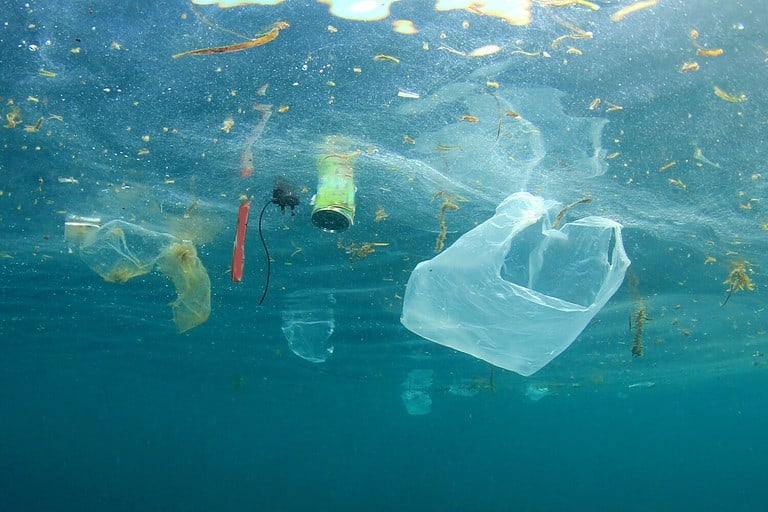
Finding them inside a whale near Hawaii shows just how far derelict gear can drift. The National Oceanic and Atmospheric Administration (NOAA) notes that this abandoned, lost, or discarded fishing equipment, often called “ghost gear,” constitutes a significant portion of plastic pollution in the open ocean, where it continues to trap and kill marine life indefinitely.
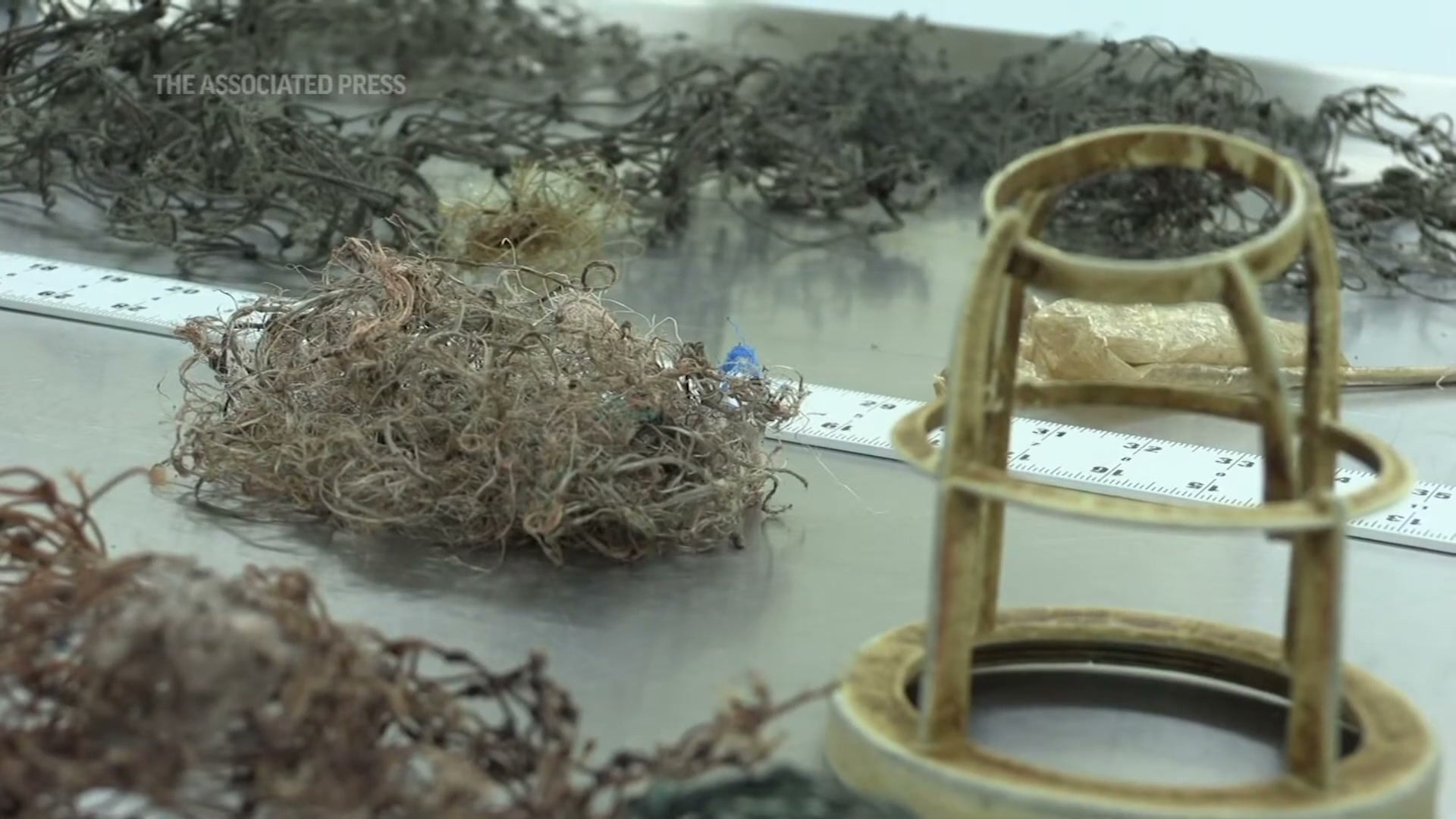
The debris discovered in this whale’s stomach include six different types of fishing nets.
©Associated Press via YouTube — used under fair use – Original / License
The Invisible Problem
The research team points out a sobering reality: we see only a tiny fraction of the problem. Most dolphins and whales that die in Hawaiian waters simply sink to the seafloor or drift far out to sea.
Wildlife experts generally estimate that the whale carcasses found on beaches represent only about 2% to 6% of total cetacean deaths. If each examined whale represents roughly 20 that died unseen, the plastic problem in our oceans is vastly larger than what washes ashore.
How Plastic Actually Kills a Whale
A common misconception is that swallowing plastic kills whales instantly. In reality, the process is much slower and more painful. Indigestible plastic fills up the stomach, tricking the whale into thinking it is full. Because the whale feels full, it stops eating enough real food. The trash also physically blocks nutrient absorption. Over weeks or months, the whale slowly starves, suffers from internal ulcers, or experiences a fatal stomach rupture. Whales with heavy plastic loads are almost always severely emaciated, with dangerously thin blubber by the time they strand.
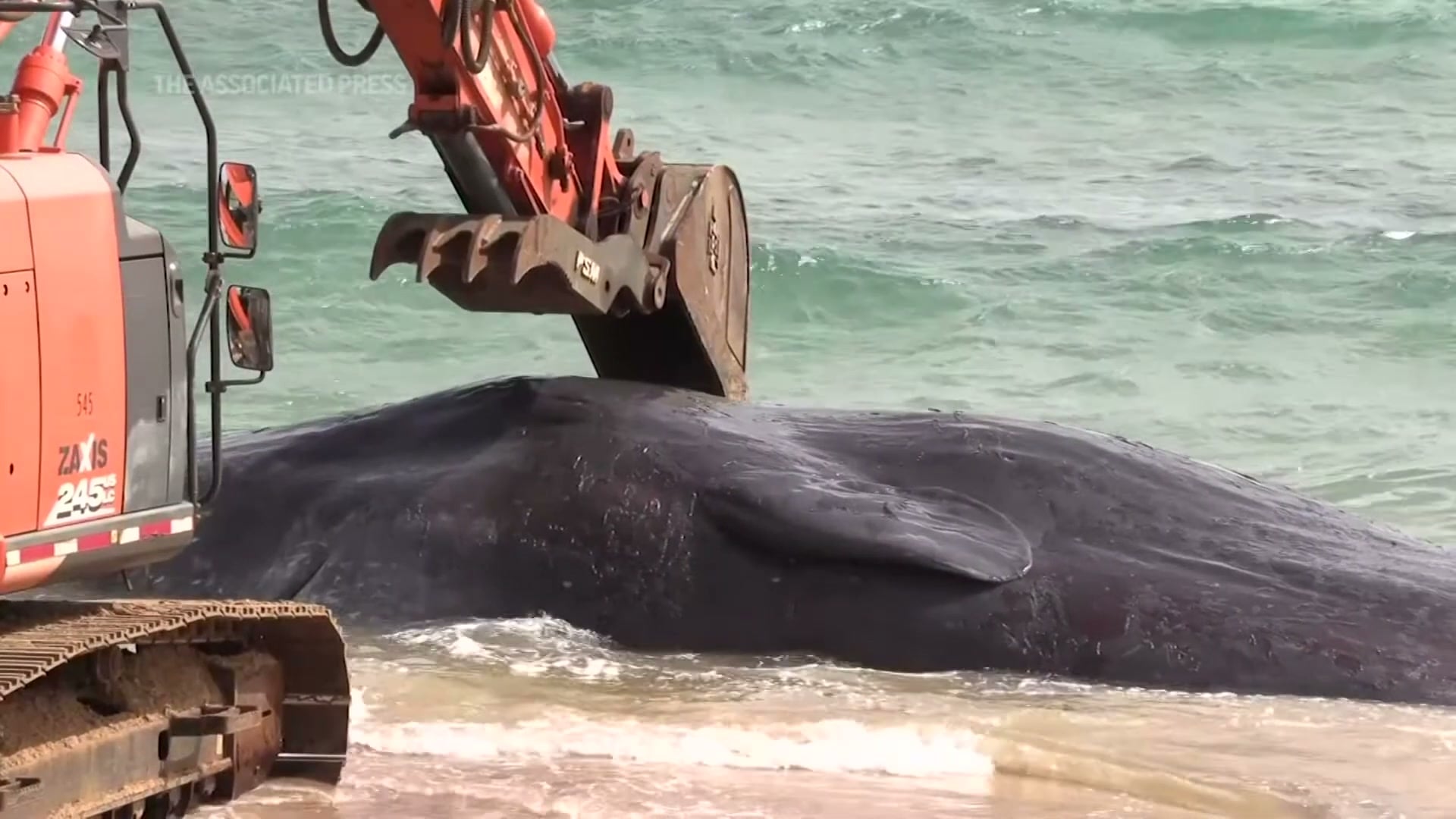
Consumption of plastics and other debris actually cause the whale to starve to death.
©Associated Press via YouTube — used under fair use – Original / License
Ultimately, this necropsy is another data point in a growing and alarming record. Because sperm whales are deep-diving suction feeders hunting soft prey in total darkness, they are uniquely vulnerable to mistaking plastic sheets and floating lines for a meal. The contents of this whale’s stomach serve as a direct, tragic map of the global waste we leave behind.