
Quick Take
- Physics says a whale should either sink or float, yet something keeps a sleeping sperm whale suspended motionless in the water column. Discover the buoyancy secret →
- Scientists were almost completely in the dark about sperm whale sleep until a single study changed everything, revealing something nothing like what anyone had expected. Explore the landmark study →
- Those rising air bubbles aren't a random byproduct of sleep. They're the key to a precise balancing act the whale must perform unconsciously. See how air bubbles balance →
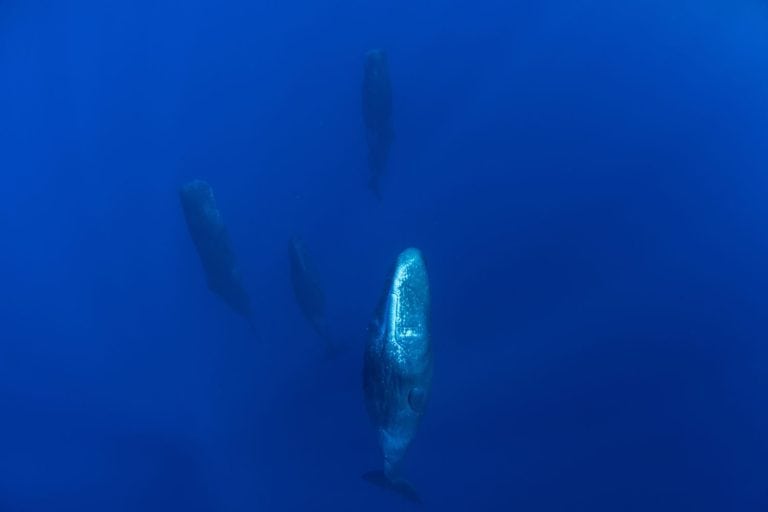
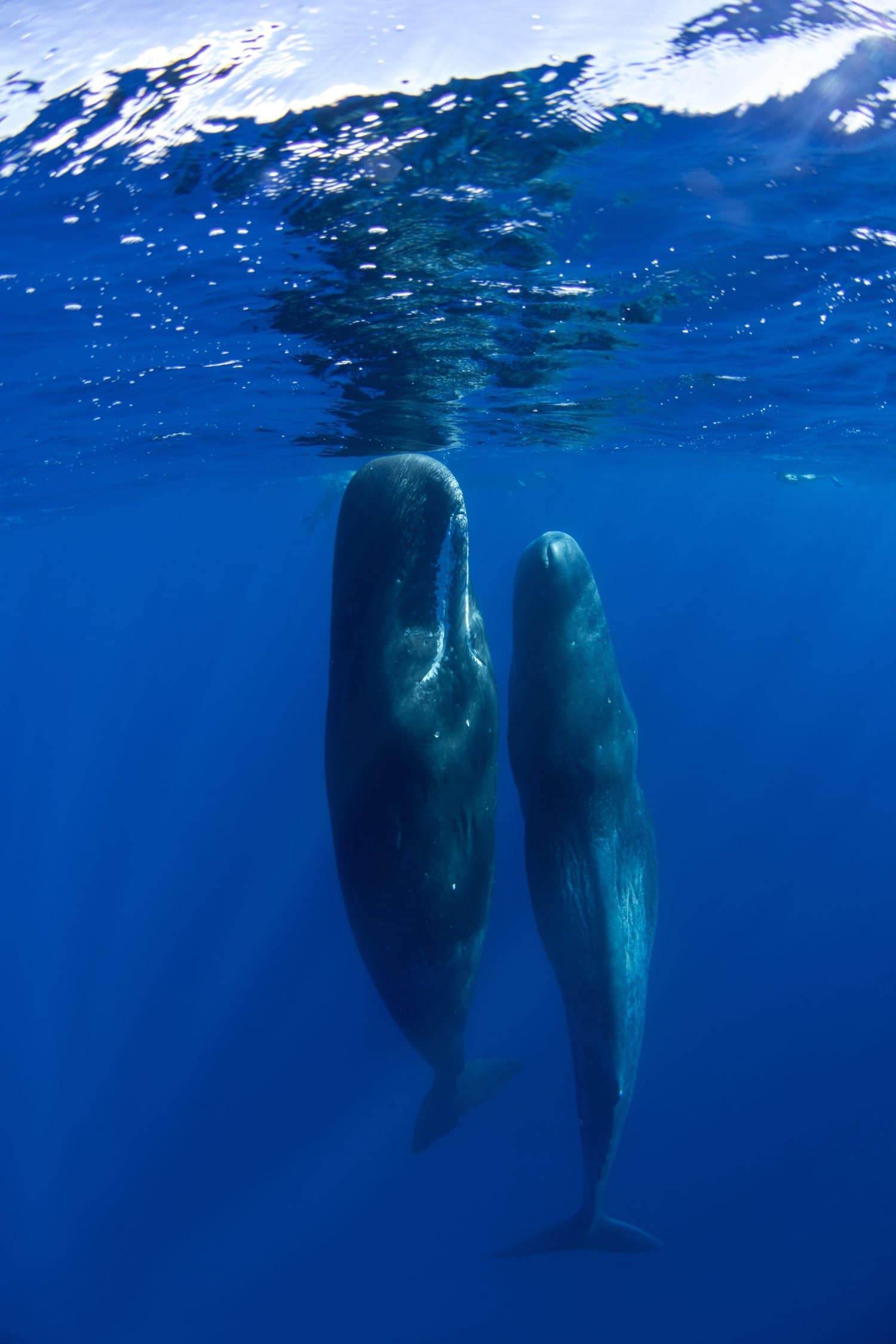
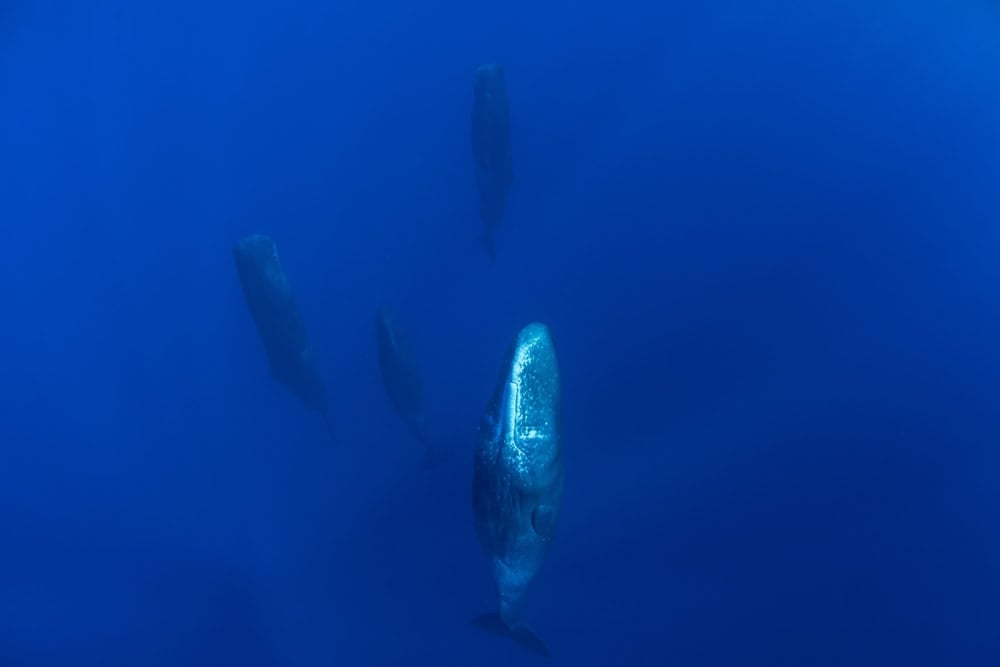
Just a few seconds into this YouTube clip, you are presented with one of our oceans’ most extraordinary scenes. A pod of sperm whales is in a deep slumber below the waves in the most unusual posture. They are vertical! Looking as if they are in suspended animation, they float eerily, with only the occasional air bubble rising from their bodies to reassure us that they are alive. In fact, the bubbles are part of a very important buoyancy regulation system that keeps the whales in their sleep position.
Sperm Whale Sleep Patterns
Little was known about sperm whale (Physeter macrocephalus) sleep patterns until a landmark study was published in 2008. It found that sperm whales take shallow ‘drift-dives’ to sleep and nap in a stereotypical vertical posture just below the surface, as you see in this clip. These drift dives only take up 7.1 percent of the whales’ 24-hour activity cycle. These ‘sleeps’ last for just 10 or 15 minutes and take place most often at night. That said, these whales also sometimes nap during the day. Sperm whales in this state have failed to respond to a boat approaching them with its engines off until it inadvertently bumped into them, suggesting that they were indeed asleep.
Slumber Floating Mechanism
Sperm whales get into their sleeping position—vertical with their head up—in one of two ways. They may let the rear part of their body sink, which causes them to end up in a head-up position. Alternatively, they may dive headfirst and then rotate their bodies to reverse into a head-up posture.
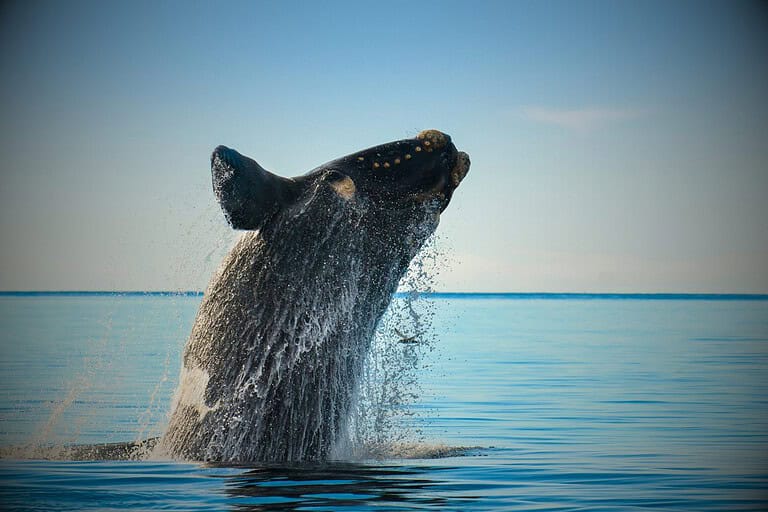
Sperm whales must stay buoyant when asleep.
©ohrim/Shutterstock.com
The problem is that an animal’s net buoyancy is proportional to the difference in density between an animal’s body and the water. If the whale is denser than the water, it will sink, but if it’s less dense, it will float up to the surface. Both situations pose a problem when trying to take a nap!
The sperm whale’s overall density is a combination of the density of their non-gaseous tissue and the volume of air in their lungs. As they drift upward after rotating into a head-up position, the decreasing hydrostatic pressure during the ascent causes the air in their lungs to expand. So, they release some air bubbles to balance this out and maintain their perfect napping position!