Adopting an older dog can be a rewarding choice, but most come with some training gaps. Past trauma, health issues, or age-related decline may require extra patience. Still, dogs are adaptable at any age. This article offers expert tips to help you tackle key training areas your adult dog may have missed.
Special Considerations in Training Mature Dogs
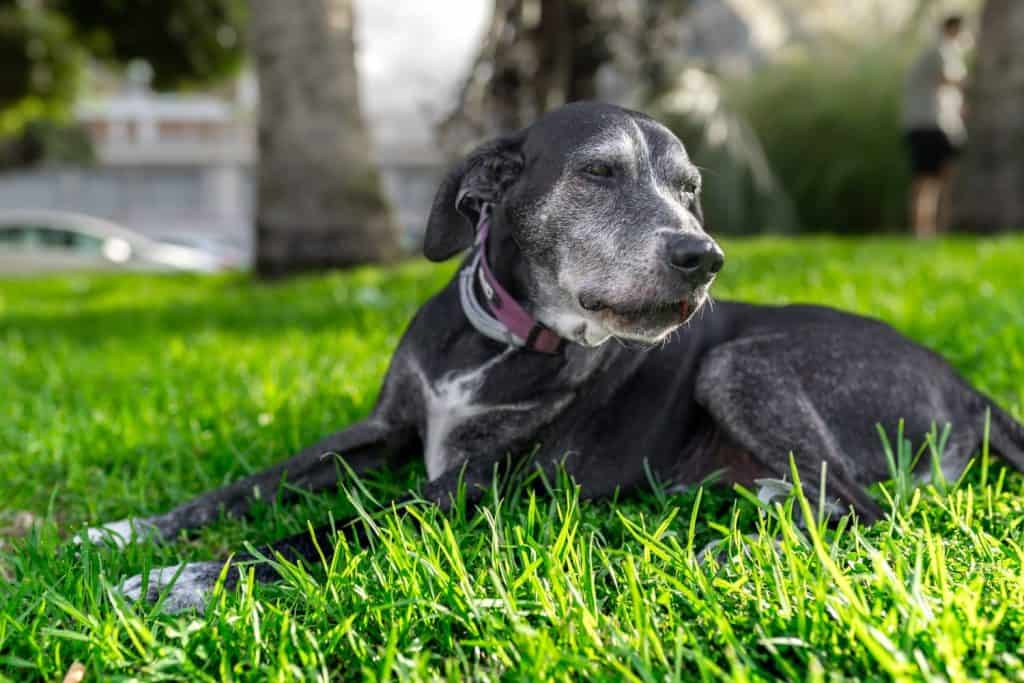
An older dog comes to you with a history that affects how it responds to training.
©Magui RF/Shutterstock.com
Unlike puppies, older dogs don’t arrive as blank slates. They may have learned bad habits from inconsistent training or carry trauma from unknown past experiences—harsh punishment, car accidents, or animal attacks can all shape behavior in ways you won’t see right away. Health issues might also go unnoticed until training reveals them. If your dog resists certain actions, it could be due to pain or problems with hearing, vision, joints, or internal organs. And like people, aging dogs can experience cognitive decline.
However, Sally Grottini, a certified trainer and AKC Evaluator, emphasizes that any dog can be trained. The decisive factor is not so much the dog, but the owner. “The only difference in training between a puppy and an older dog would be how much patience the owner has, how often they can train, and how consistent the owner is,” Sally says.
Housebreaking

This sad boy needs to go potty.
©Stacey Welu/Shutterstock.com
Toilet training is a top concern for dog owners, as a dog that is not housebroken creates stress for the whole family with its messes. Some owners try to save time with potty pads or doggy doors rather than walking the dog multiple times a day. Sally does not recommend this approach as, in her experience, dogs trained this way are more prone to accidents in the house later in life. Here’s how she recommends housebreaking a dog at any age:
- Use a leash to guide your dog to the same potty spot each time.
- Give a command like “go potty” and repeat it while the dog is going to help them stay focused.
- Reward immediately with a special treat; don’t wait until you’re back inside.
- Never scold for accidents. Punishment may cause the dog to hide future messes.
- Use a doorbell and ring it every time you go out for potty breaks. Over time, the dog will learn to ring it.
- If they don’t go, return them to their crate or keep them on leash near you for 10 minutes, then try again.
- Stick to a schedule—and remember that older dogs may need more frequent breaks or have medical issues affecting bladder control.
Biting and Other Aggressive Behavior

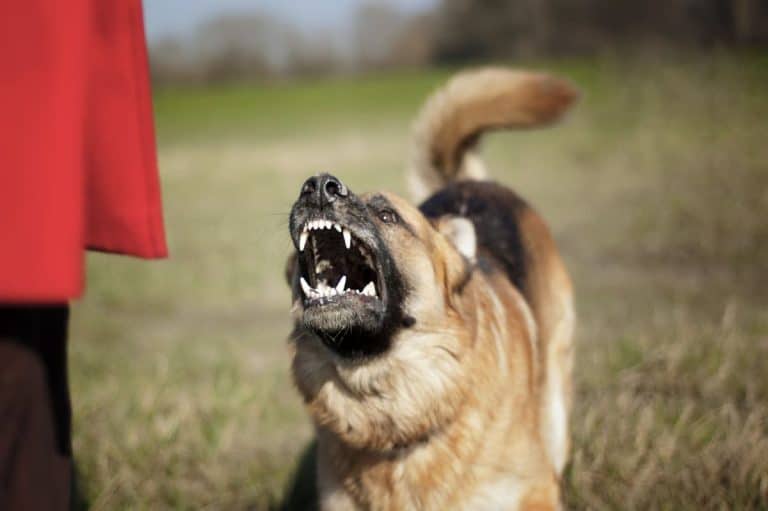
Aggression can be an indication of fear or pain.
©Mr.Sutun photographer/Shutterstock.com
Dogs may snarl, snap, or bite for many reasons. Some are highly territorial. Sometimes they are confused about their role in the family. For example, they may think they need to train small children as if they were puppies or herd them like sheep. Pain is another potential reason. An older dog might have arthritis and find it painful to be picked up or have its limbs handled during grooming or nail clipping.
Fear is another significant reason for aggressive behavior in dogs. This may stem from some past trauma, but timidity is also just a typical behavioral characteristic of some breeds. Sally says, “Inherently fearful dogs often get fearful of something new each year. We have to give dogs extra time and training if this is part of their temperament.”
If your dog shows aggression, introduce people slowly, provide a safe space where the dog can retreat, and teach kids to respect the dog’s boundaries. Pheromone collars may help ease anxiety in some dogs. Give the dog a time-out as a consequence for inappropriate behavior like this if it is not at a truly dangerous level. But if aggression is severe or resistant to your training efforts, don’t wait—contact a professional to resolve it before someone gets hurt.
Chewing
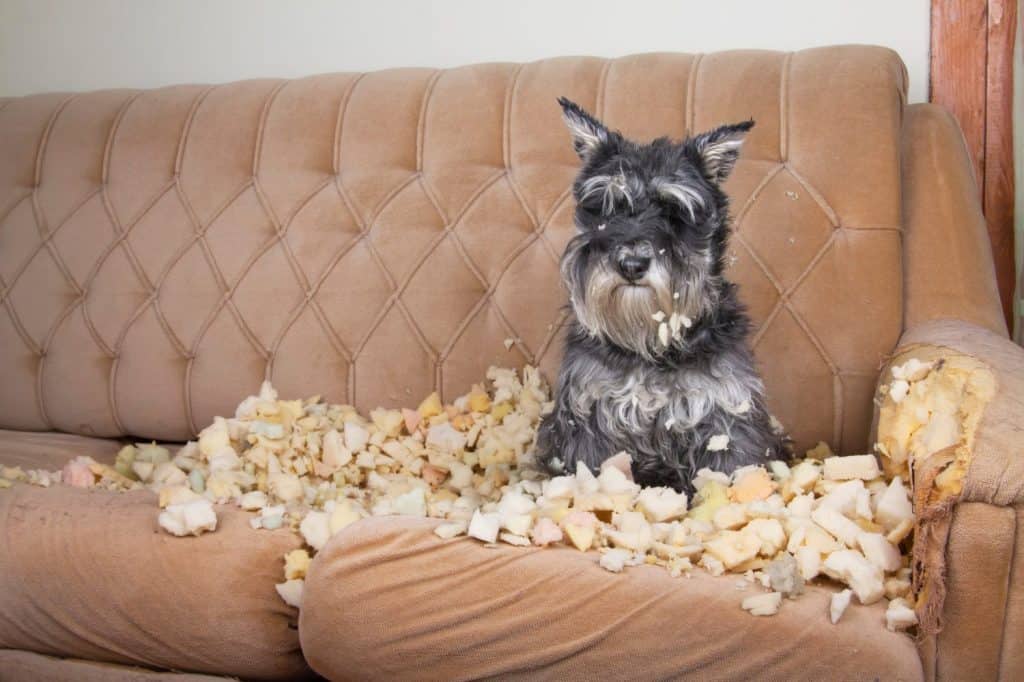
Chewing can be a sign of boredom or anxiety.
©Maximilian100/Shutterstock.com
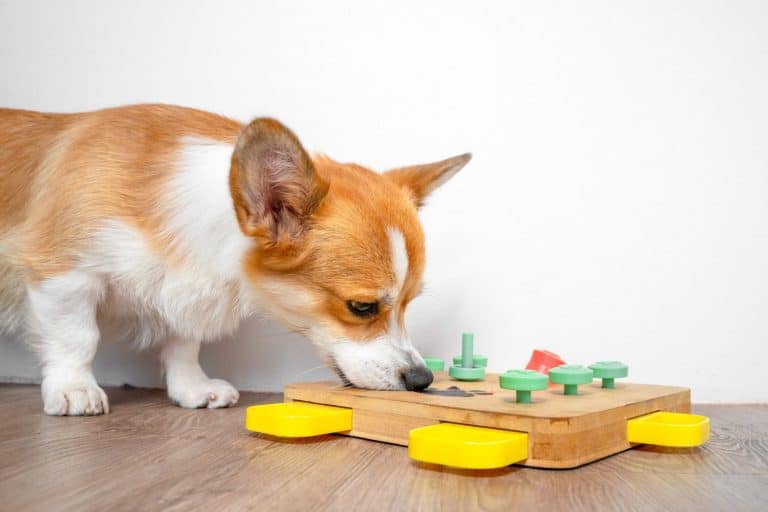
Chewing furniture, shoes, or remote controls is not just a puppy behavior. Dogs of any age might do it out of boredom, frustration, or anxiety. Some ways to prevent this are to get the dog plenty of exercise and provide it with safe chew toys, durable stuffed Kongs, or puzzle feeders. You can rotate these over time and smear them with peanut butter to keep them interesting and absorbing for the dog. You can also experiment with safe taste deterrents on furniture and other targets of bored doggie jaws.
How do you correct chewing? “For any age dog, time-outs work well,” Sally says. “These should be in a different room behind a gate, rather than their crate, as you don’t want the dog to associate the crate with punishment. After 30-60 seconds, let the dog out and repeat the time out every time the behavior repeats.”
A key to understanding why this works so well is simple. Sally says, “A dog’s desire is to be with their human, and so when they are taken away from you when they do an unwanted action, they will soon stop doing that action.”
Barking
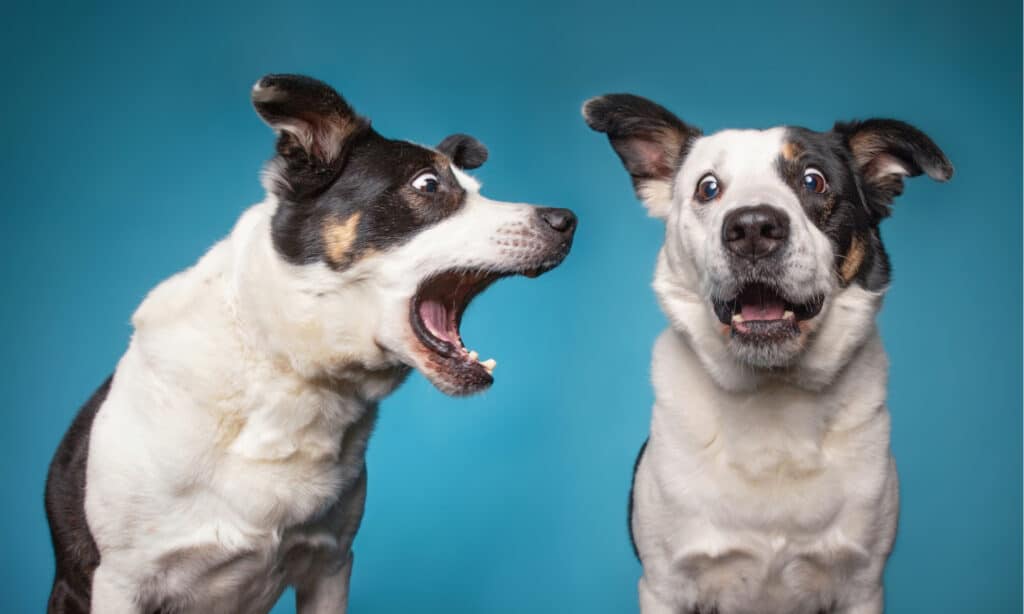
Some breeds are just more yappy than others. All can be trained to reduce the behavior at unwanted times, though.
©Annette Shaff/Shutterstock.com
Excessive barking can be tough to fix, especially in dogs with a history of stress or shelter life. Start by identifying the cause—whether it’s strangers, boredom, or other dogs. Once you know the trigger, begin desensitization. For instance, if your dog barks at the mail carrier, reward calm behavior as the person approaches. A counterintuitive but clever approach is to teach your dog the “speak” command: to bark on cue, then the “quiet” command to stop barking. They’ll learn to associate the treat with silence. Finally, with any kind of behavior that might stem from boredom and excess energy, giving the dog plenty of exercise and mental stimulation with various kinds of doggie puzzles to discover treats will help keep them calmer.
Leash Training
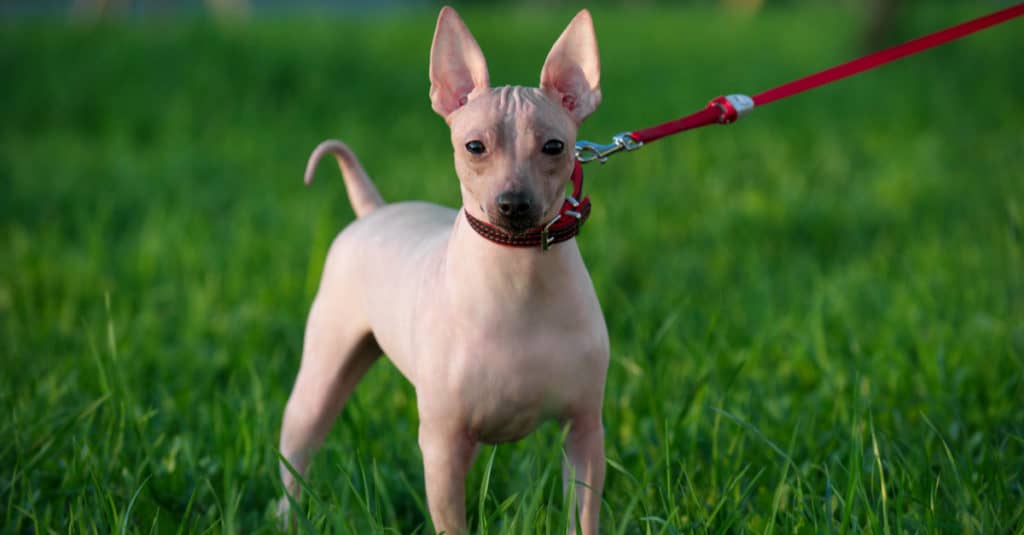
American Hairless Terriers are very intelligent dogs, which makes them easier to train.
©art nick/Shutterstock.com
Walking an adult dog that pulls can feel like a battle, but with patience, you can teach better leash manners. Start in a quiet spot indoors or in the yard. Let your dog wear their harness and leash around the house to get comfortable. When you start walking, if they pull at the leash, just stop and wait for them to stop pulling and let the leash go slack again before moving on. Keep walks short and positive at first—several mini-sessions are more effective than one long, frustrating trek.
You can also use treats strategically to reinforce desirable behavior. Grottini says an important key to remember is not just to correct bad behavior, but to get the dog to want to behave correctly. This can be especially effective if you give them highly desirable treats, like chicken slivers. And save these treats only for the training context, so they will strongly associate them with the desired actions.
Obedience Commands
©WilleeCole Photography/Shutterstock.com
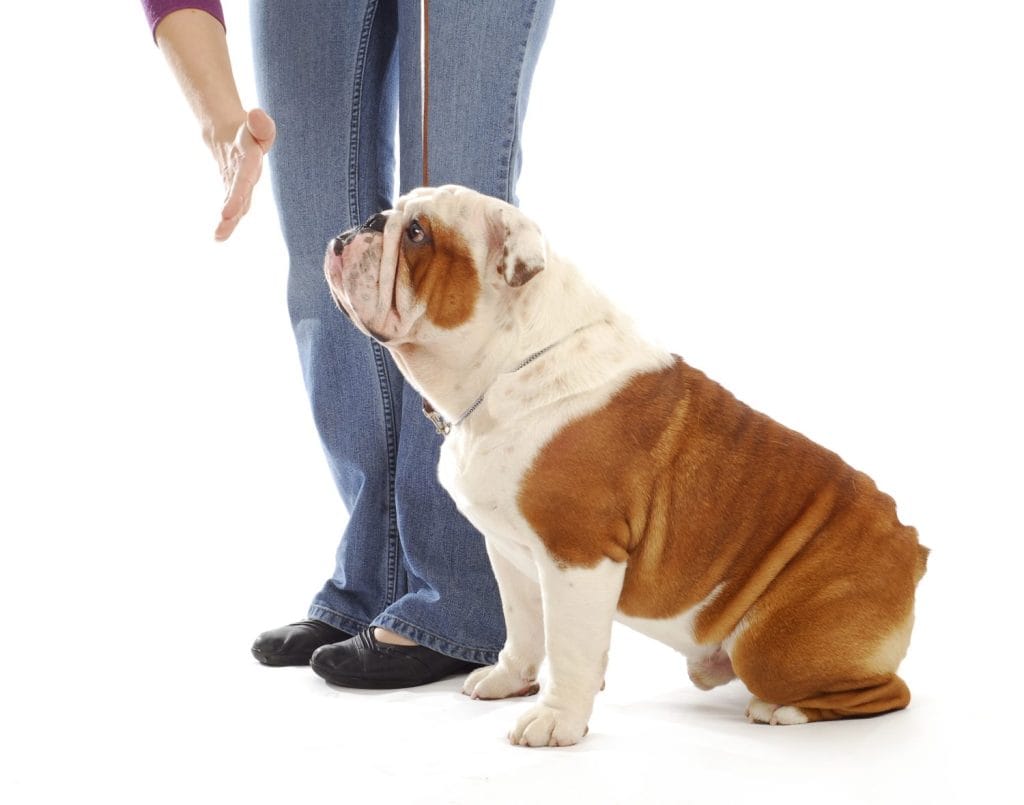
Basic commands like “sit,” “stay,” “come,” and “leave it” aren’t just for young dogs—older dogs can learn them too. And these aren’t just tricks to entertain party guests. If your dog gets off its leash and runs toward a busy road, or tries to eat a dead bird off the sidewalk, these are situations where you want it to immediately stop for its own well-being and your peace of mind.
Stick to short training sessions (5-10 minutes) and always use positive reinforcement—treats, praise, or a favorite toy. For tougher commands like “stay,” begin with just a few seconds and slowly build up. Use the same words and hand signals every time, and make sure everyone in the household is using the same cues to avoid confusing your dog.
What if your dog obeys a command in the house, but on walks gets so distracted it acts like it’s never been trained? Sally has an answer for that as well: “Always start your training of any dog in a calm, quiet place, and only when the dog has learned in that calm place, do you move to a more distracting place. If you move to the next place too soon and the dog stops paying attention, go back to the last place the dog was listening to you and train longer before moving forward.”
Small Wins Add Up
©Budimir Jevtic/Shutterstock.com
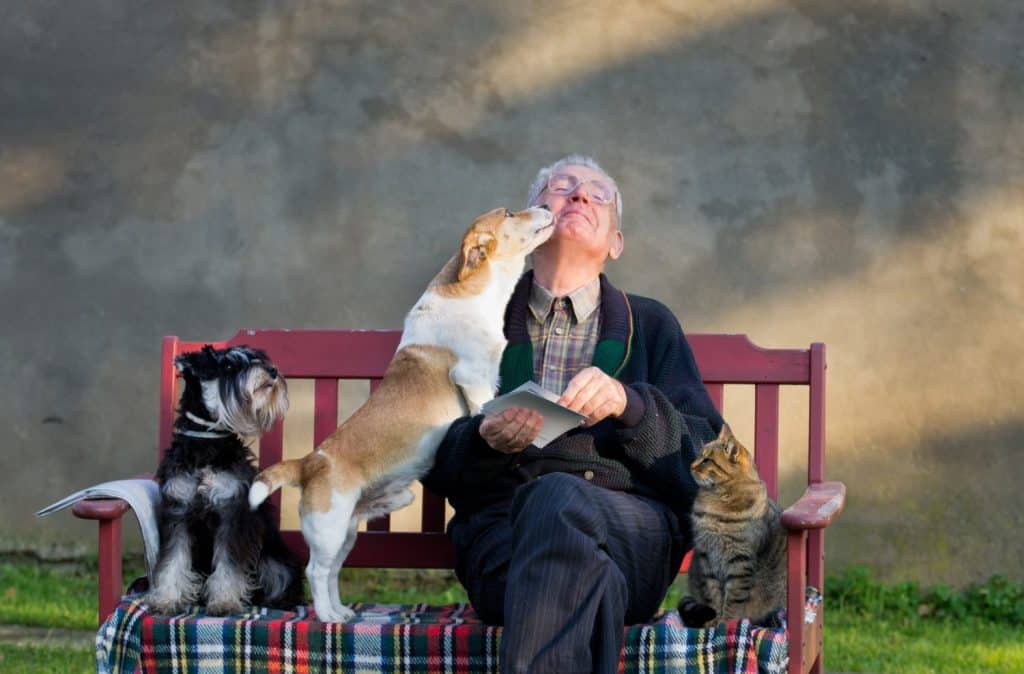
Training an older dog takes patience, not perfection. They’re not starting from scratch—they’re just adjusting to a new way of life. Be mindful of possible health issues like joint pain or hearing loss, and check with a vet if responses seem slow. If you find it more than you can handle, call in a pro. Celebrate every small success, whether it’s a calm walk or a well-timed potty break. With time and consistency, your adult dog can learn what you want from it—and reward you with loyalty and love that make every effort worthwhile.