
Quick Take
- A bear yawning looks like calm, but that appearance can mean something completely different. See what yawning signals →
- Habituation makes a bear tolerate humans, but there's a dangerous misconception about what that tolerance actually means. Understand habituation risks →
- A bear doesn't have to growl, charge, or rear up to be seconds away from a life-threatening reaction. Explore the hidden danger →
- If you ever freeze up facing a wild bear, the instinct most people follow is exactly the wrong move. Get the right response →
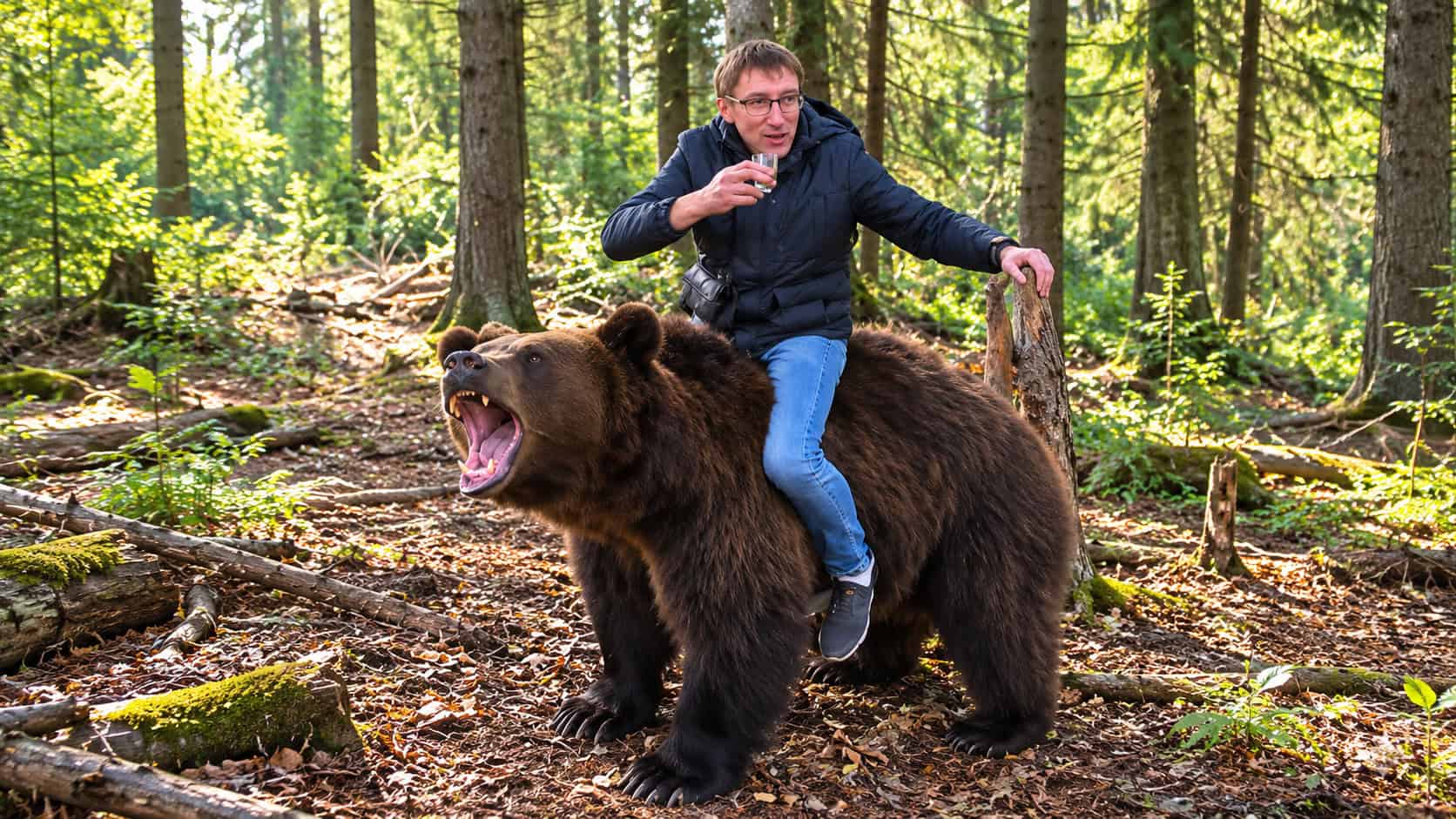
At first glance, the bear in this video looks almost impossibly relaxed. A man is sitting directly on the enormous animal’s back while holding a small drink, and the bear barely seems interested in what is happening.
Then the bear yawns. That may look like another sign that the animal is completely comfortable, but yawning can sometimes appear alongside stress or unease in bears. One yawn cannot tell us exactly what this particular animal is feeling, but it is a good reminder of how easy it is to misread the body language of an animal powerful enough to change the situation in seconds.
Quick Take
- The viral footage shows a man sitting on the back of a large brown bear while holding a small drink.
- The bear appears tolerant of the interaction, suggesting it may be highly accustomed to people, although the clip alone does not establish its history.
- Yawning can sometimes occur as part of a bear’s stress response, but a single yawn is not enough to determine what the animal is feeling.
- The behavior shown in this video should never be treated as an example of how to approach or interact with a wild bear.
This Bear Is Tolerating Something a Wild Bear Usually Wouldn’t
The footage shows a man sitting astride a large brown bear while casually holding a small glass. Whatever relationship exists between the man and the animal, this is not normal behavior to expect from a wild bear encountering an unfamiliar person.
Brown bears generally prefer to avoid people when they are given enough warning and space. Bears that spend significant time around humans, however, can become habituated to their presence. That can make an animal appear surprisingly tolerant of close contact without changing the fact that it remains an extremely large and powerful predator.
That Yawn May Not Mean the Bear Is Tired
One of the most interesting moments comes when the bear opens its mouth in a large yawn. Humans naturally associate yawning with boredom or sleepiness, but animal body language does not always translate that neatly.
Bear behavior specialists have identified yawning as one of several behaviors that can sometimes appear when a bear is uncomfortable or stressed. Other possible warning signs include huffing, jaw popping, salivating, lowering the head, pinning the ears back, or making defensive movements.
That does not mean the yawn in this particular video proves the bear is distressed. Context matters, and it would be impossible to diagnose the animal’s emotional state from one gesture in a short clip. The important point is that a bear appearing calm does not necessarily mean every behavior should be interpreted the same way we would interpret it in a person or pet.
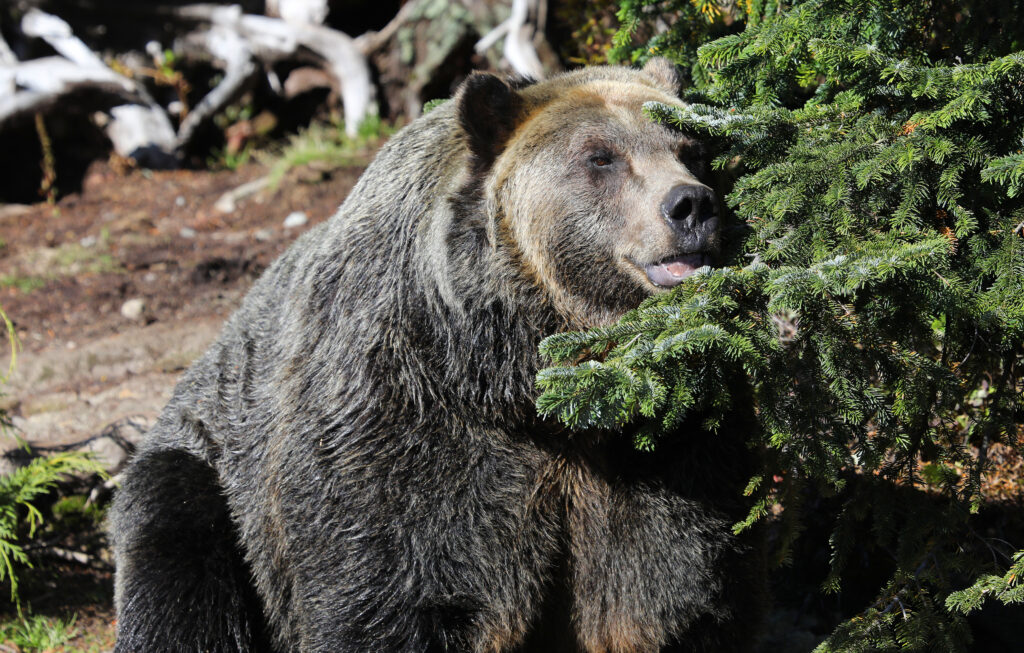
Reading a bear’s body language requires looking at the entire situation rather than a single movement.
©Jacqui Martin/Shutterstock.com
Why a Calm Bear Can Still Be Dangerous
A bear does not need to be growling, charging, or standing on its hind legs to deserve caution. Individual bears can react differently depending on their experiences, surroundings, food, cubs, and how close a person gets.
A bear that has become accustomed to people may tolerate behavior that a truly wild animal would never accept. That familiarity can create a false sense of security. Habituation does not remove a bear’s strength, speed, claws, teeth, or ability to react suddenly if it becomes frightened, irritated, or overstimulated.
That is why clips like this are fascinating to watch but terrible examples to imitate. Whatever training, history, or circumstances led to this interaction are not visible in the video, and viewers should not assume another bear would respond the same way.
What Should You Do If You Encounter a Wild Bear?
If you encounter a wild bear, the goal is almost the exact opposite of what is happening in this video. Give the animal plenty of space and avoid approaching it for a photograph, video, or closer look.
The National Park Service advises people not to run from bears. Instead, stay calm, identify yourself by speaking in a calm voice, and slowly move away while keeping an eye on the animal. Pick up small children immediately, and avoid sudden movements or high-pitched screaming.
In bear country, properly carrying bear spray and knowing how to use it can provide another important layer of protection. Specific recommendations can vary depending on the bear species and whether an encounter becomes defensive or predatory, so local wildlife guidance should always take priority.
The Video Is Amazing, but Don’t Try This Yourself
There is a reason the clip is so difficult to look away from. Seeing a person casually sitting on an animal this large goes completely against what most of us know about interacting with bears.
But the most interesting part may not be the stunt itself. It is how difficult the bear’s behavior is to interpret from a few seconds of video. An animal can appear relaxed while still displaying subtle signs that deserve attention, and even a bear that is comfortable around people remains capable of reacting with extraordinary speed and force.
Enjoy this one from the safety of your screen.