
Quick Take
- Achieving state symbol status in 1933, the American goldfinch proved itself with its winter endurance.
- The Spinus tristis, eastern goldfinch, and wild canary, are all names for a small finch that inhabits much of North America.
- The American goldfinch species utilizes a counterintuitive midsummer nesting strategy instead of a traditional spring cycle.
- The 1932 union committee praised the goldfinch as helpful rather than ornamental.
On a windy spring day in Iowa, the American goldfinch frequently darts through the gray sky with a quick burst of yellow and a looping flight over last year’s corn stalks. The bird’s presence feels ordinary to many residents, and it is this familiarity that explains why Iowa chose it as an official symbol. In 1933, state lawmakers wanted an animal people already recognized, one that stayed through cold winters and showed up in farm fields, roadside weeds, and town yards. During a decade shaped by drought and economic strain, the small finch represented endurance and continuity rather than escape.

The goldfinch’s selection reflected everyday experience rather than grand scenery or rare wildlife. Iowans saw these birds feeding on thistles and sunflower heads long before anyone debated symbols at the Capitol. By choosing a species woven into daily life, the state affirmed a connection between people and the working landscape around them. That decision still shapes how Iowans think about their state bird today.
A Common Bird with Many Names (Spinus tristis)
Most people now call Iowa’s state bird the American goldfinch, though earlier generations often used names like eastern goldfinch or wild canary. All refer to the same species, Spinus tristis, a small finch found across much of North America. The bird favors open areas filled with seed-producing plants, including fields, roadsides, stream edges, and gardens. This preference made it especially visible as Iowa’s tallgrass prairie gave way to farms and towns.
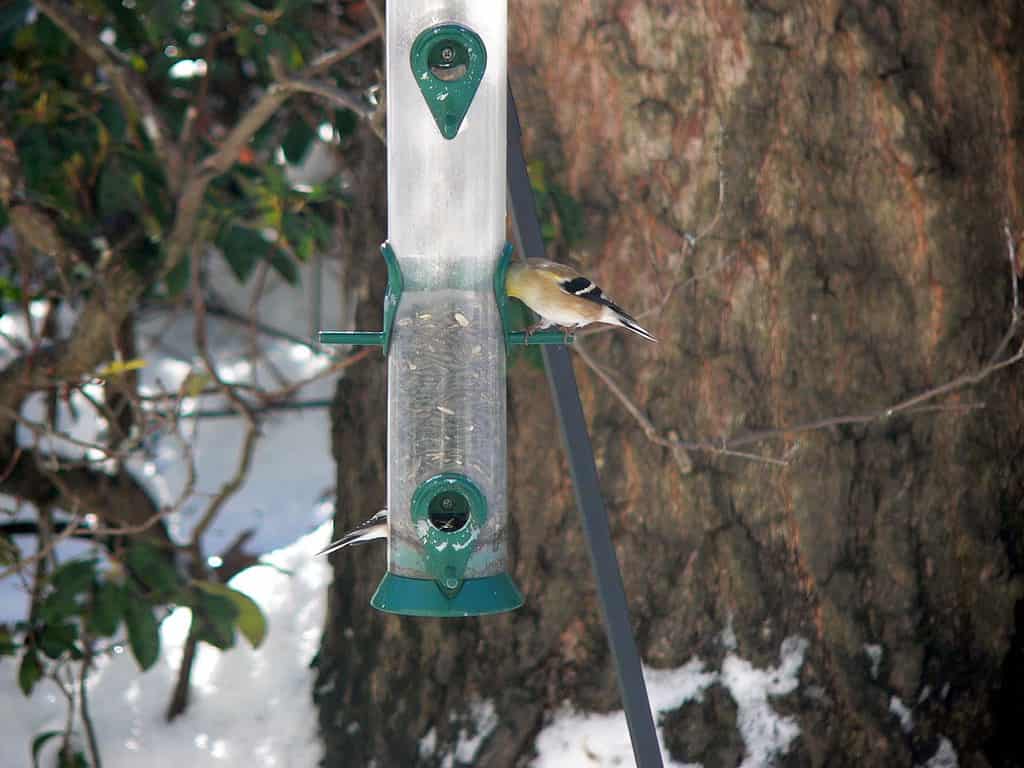
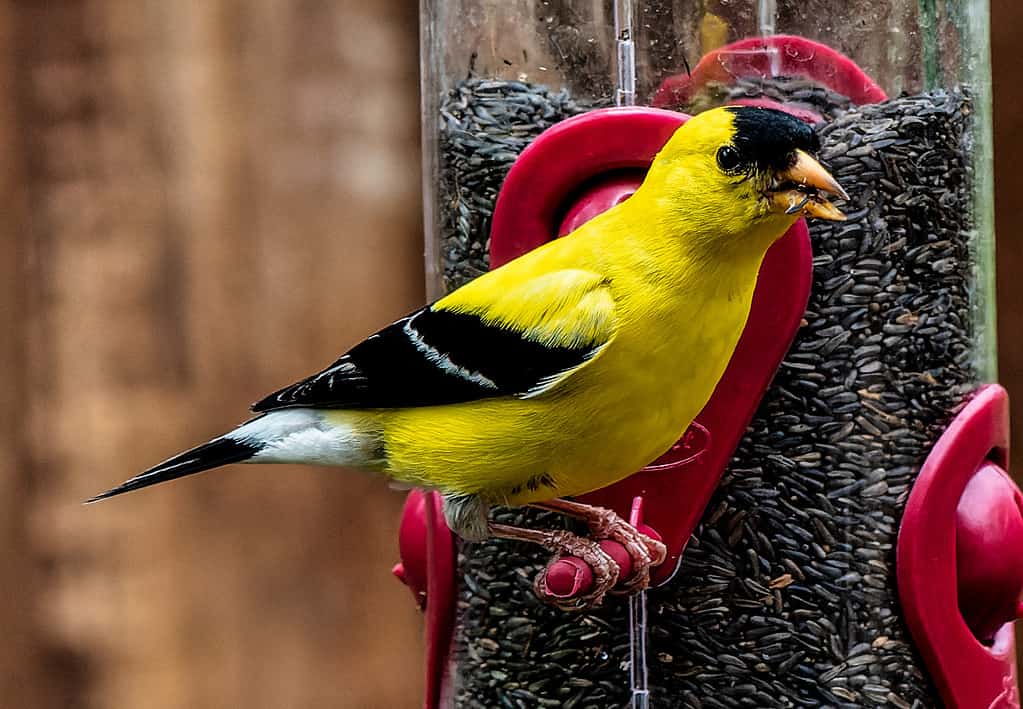
Frequently seen at backyard feeders, the American goldfinch became a familiar presence in Iowa long before it was named the state bird.
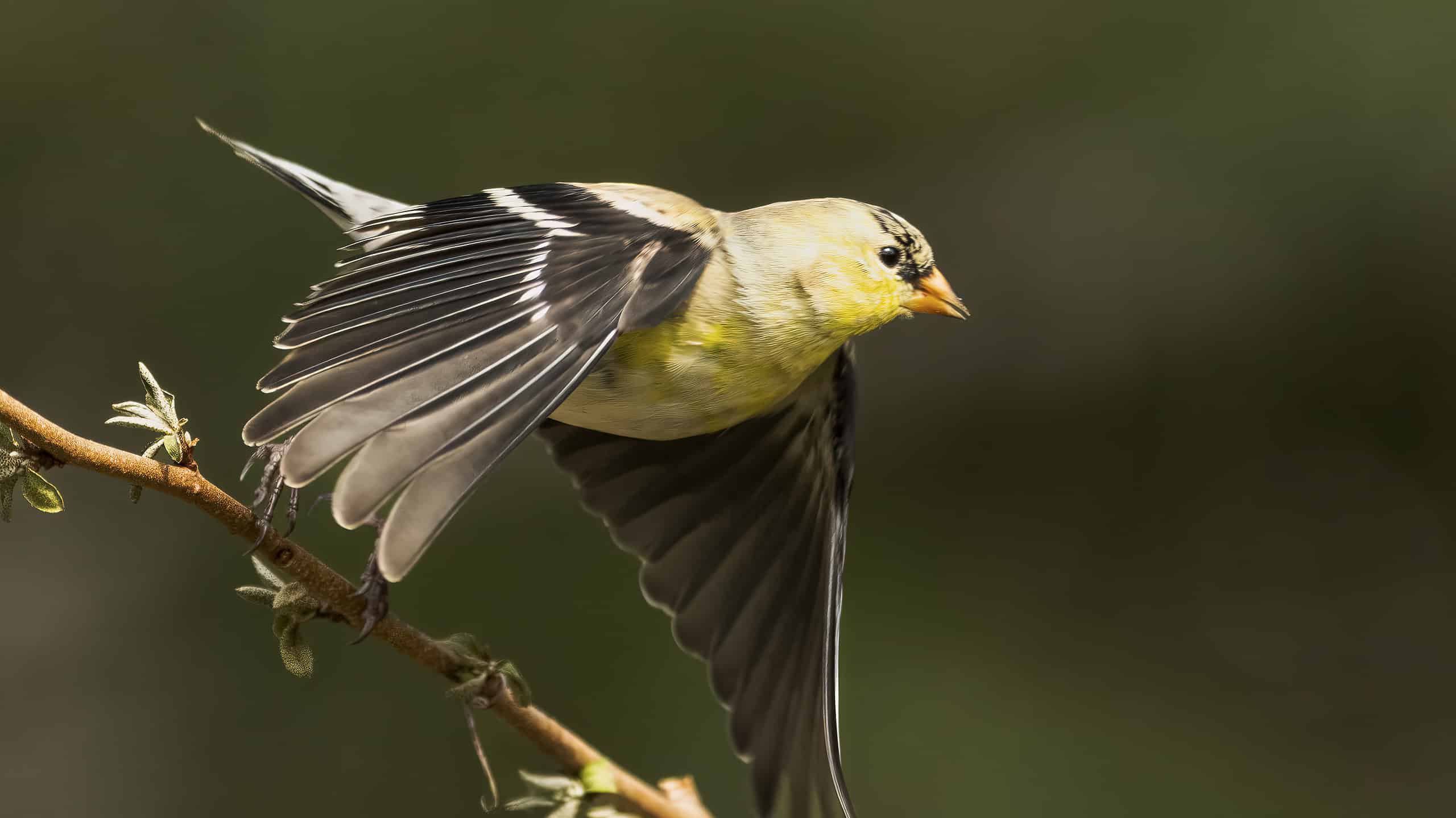
Male goldfinches turn a bright yellow during the breeding season, marked by black wings and a dark cap. Females and nonbreeding birds wear softer tones of olive and tan that blend into dried grasses. This seasonal change helps explain why the species feels present year-round without always drawing attention. Long before the Legislature acted, many Iowans already felt a sense of familiarity with a bird they could identify without effort.
The Long Delay in Choosing a State Bird
For many years, Iowa stood apart from its neighbors by lacking an official state bird. While the state had already adopted the wild rose as its flower, discussion about an avian symbol drifted without action through the early twentieth century. Other Midwestern states had made their choices, and by the 1920s, that absence began to bother bird enthusiasts.
In 1926, Walter Rosene of the Iowa Ornithologists’ Union publicly raised the question of why Iowa had not acted. Suggestions surfaced in newspapers and civic groups, ranging from robins and bluebirds to species that stayed through winter, but no consensus formed. The issue lingered for years, leaving Iowa among the last states without a designated bird.
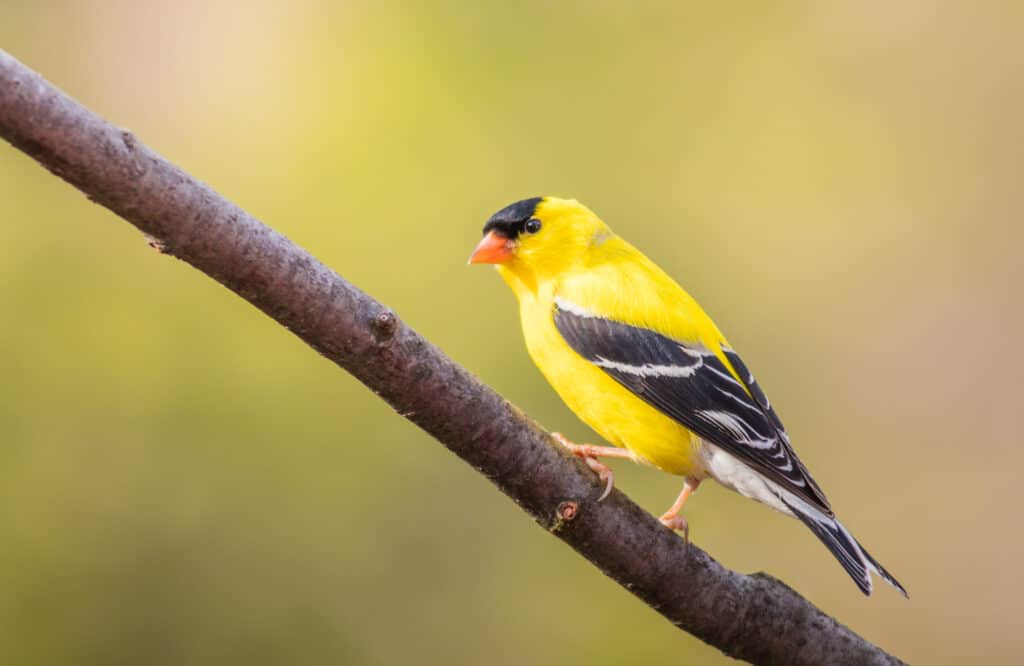
For years, Iowa lacked an official state bird, as discussion and debate lingered without action.
©Rabbitti/Shutterstock.com
Momentum finally arrived in the early 1930s when leaders of the Iowa Ornithologists’ Union decided to push for a decision. A committee narrowed the options, and at the union’s 1932 meeting in Des Moines, members agreed on the goldfinch because it lived statewide, appeared year-round, and was easy for residents to recognize. Former union president Arthur Palas carried the recommendation to lawmakers, and in 1933, Representative J. Wilbur Dole introduced a resolution at the Capitol. Though a few legislators questioned whether another bird might be better known, the measure moved quickly. Both chambers approved it without recorded opposition, and by spring, the goldfinch officially joined the wild rose as an emblem of Iowa, ending decades of delay once formal action finally began.
Why the Goldfinch Fit Iowa’s Identity
Lawmakers did not choose the goldfinch randomly. They wanted a symbol that reflected how Iowans viewed themselves and their land. The bird’s tendency to remain through winter carried weight, suggesting a willingness to endure difficult seasons rather than avoid them. Its diet of weed seeds also appealed to agricultural interests, as the species reduced unwanted plants in fields and fence lines.
Newspapers at the time praised the goldfinch as helpful rather than ornamental. The bird’s steady presence aligned with values of reliability and modest effort that resonated during the Great Depression. Instead of grandeur or rarity, the goldfinch represented persistence and usefulness. That framing helped the symbol gain acceptance across rural and urban communities alike.
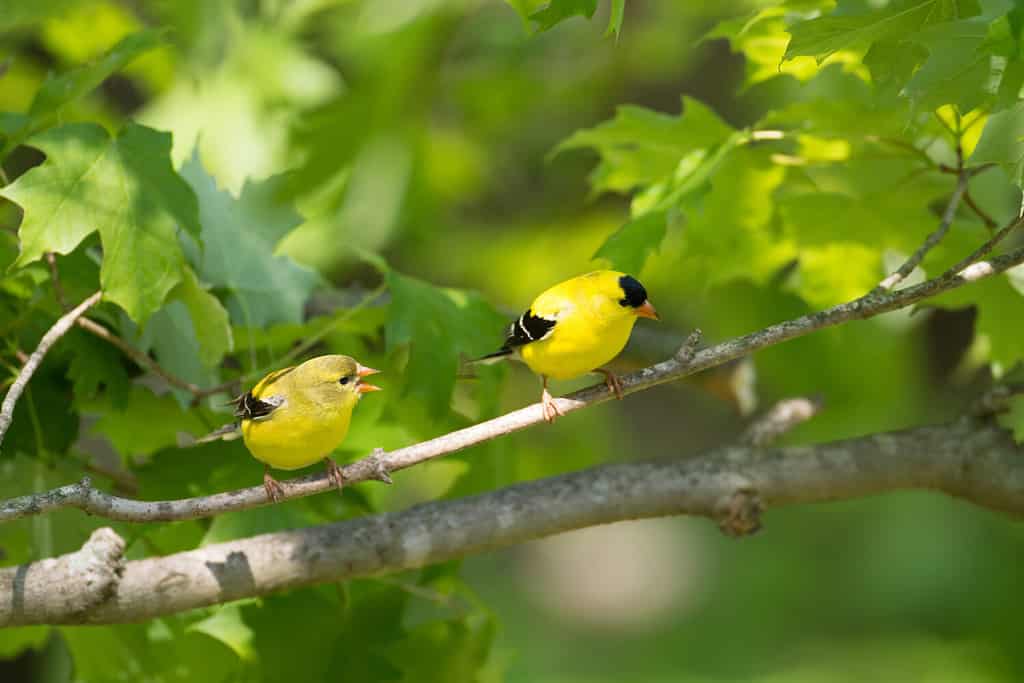
The goldfinch’s calm presence and practical habits reflected ideals of persistence and reliability during difficult times.
©Tony Campbell/Shutterstock.com
Living Through Hard Years
The early 1930s brought drought, falling crop prices, and uncertainty across Iowa. Against that backdrop, the goldfinch’s color and energy offered a small counterpoint to daily strain. Flocks moved through frozen fields and clung to roadside weeds, providing motion and sound when much of the landscape felt still. Their song, delivered in flight, struck many observers as unusually cheerful for such lean times.
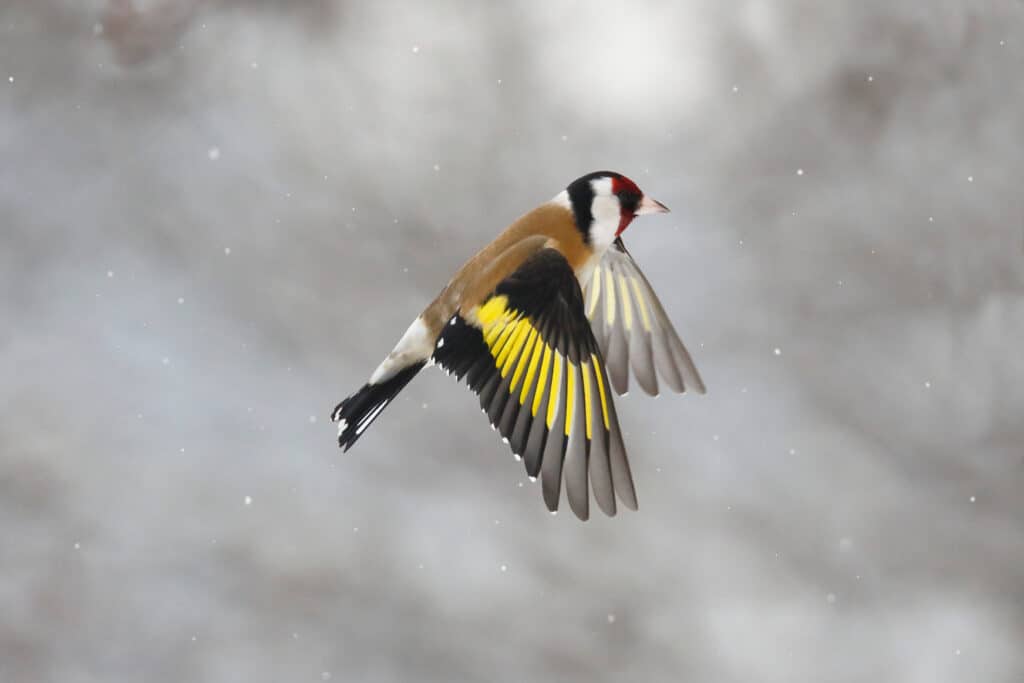
Praised as practical rather than ornamental, the American goldfinch reflected ideals of persistence and reliability during difficult times.
©Massimiliano Paolino/Shutterstock.com
Choosing a bird unconnected to controversy also mattered. The goldfinch did not spark debates over seasons or land use, which allowed lawmakers to act without division. Its symbolism rested on shared experience rather than ideology. That quiet suitability explains why the vote passed so smoothly during a period when many other issues divided the state.
A Bird Shaped by Fields and Seasons
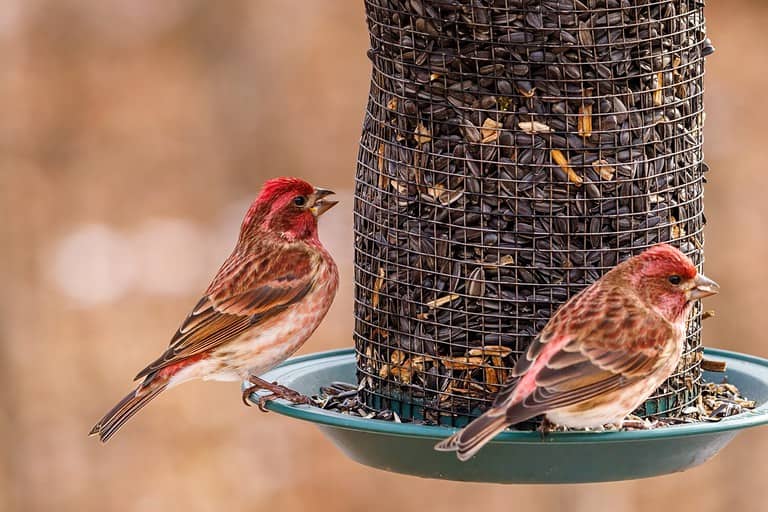
The American goldfinch thrives in landscapes that mix open ground with scattered trees and shrubs. Iowa’s patchwork of farms, ditches, pastures, and towns suits the species well. In summer, goldfinches feed heavily on thistle, sunflower, ragweed, and dandelion seeds. Backyard feeders offering nyjer or sunflower chips draw them close to homes, reinforcing daily contact between people and bird.
During winter, many goldfinches remain in the state rather than migrating far south. Their plumage fades to muted tones, but their social behavior becomes more noticeable as they gather in flocks. These groups move across harvested fields and snowy yards, turning overlooked spaces into active corridors of bird life throughout the colder months.
Late Nesting and Family Life
Goldfinches follow an unusual breeding schedule compared to many songbirds. Instead of nesting in late spring, they wait until midsummer when seed supplies peak. In Iowa, nesting often begins in July and continues into August. This timing ensures that adults have access to food needed to raise young and line nests.
Goldfinches delay nesting until midsummer, when abundant seeds provide the resources needed to raise young.
©blightylad-infocus/iStock via Getty Images
Females build compact cup nests from plant fibers, spider silk, and seed down, often placing them in shrubs or small trees. The structure is tight enough to hold water, which helps maintain shape. Eggs incubate for roughly two weeks, and young birds leave the nest within another two to three weeks. As a result, families appear along hedgerows and shelterbelts later than many other species.
The Goldfinch as a Modern Symbol
Nearly a century after its designation, the goldfinch remains a recognizable symbol across Iowa. It appears in classrooms, on local murals, and in educational materials that introduce children to native wildlife. Because the bird is easy to attract and observe, it serves as an entry point for learning about ecology and seasonal change.
The species also highlights the value of modest habitats. Weedy edges, native plantings, and untidy corners of farmland support goldfinches along with pollinators and other birds. In that sense, the state bird encourages stewardship that benefits more than a single species. Its symbolism has shifted from simple cheer to a reminder of shared responsibility for everyday landscapes.
Where to See the Goldfinch in Iowa
Goldfinches can be seen across Iowa in nearly every county, especially where open land meets patches of shrubs or trees. Roadsides lined with thistles and sunflowers are reliable spots during summer. Prairie restorations and conservation areas also attract flocks, as native plants provide abundant seed sources throughout the year.
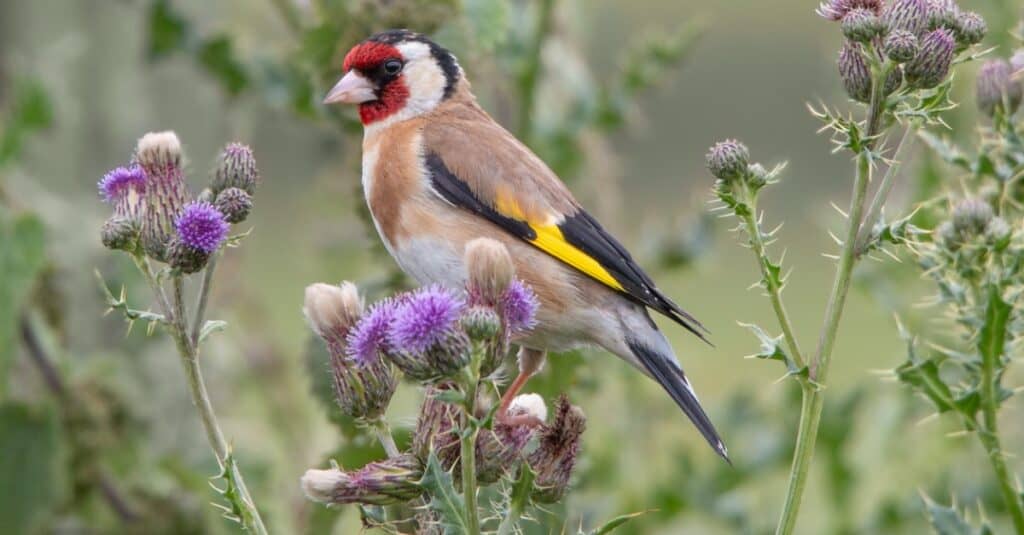
Female goldfinches are commonly seen on thistles and roadside weeds, especially where open land meets shrubs and trees.
©iStock.com/DFBridgeman
Urban and suburban areas offer some of the best viewing opportunities. Backyard feeders stocked with nyjer seed draw goldfinches close, allowing clear observation without travel. Parks, schoolyards, and community gardens often host small groups, especially in late summer when young birds join adults at feeding sites.
Watching Goldfinches Through the Year
Seasonal changes shape how and where goldfinches appear. In spring and summer, males stand out as they move between nesting areas and feeding sites. Their flight pattern, marked by rising and falling arcs, makes them easy to spot over fields and lawns. Listening for their calls often leads observers to nearby flocks.
In winter, muted plumage requires a different approach. Watching for movement along fence lines or listening for soft contact calls helps locate groups. Offering food during colder months increases the chances of close viewing. Through these simple observations, Iowans continue a quiet tradition of living alongside the bird that represents their state.
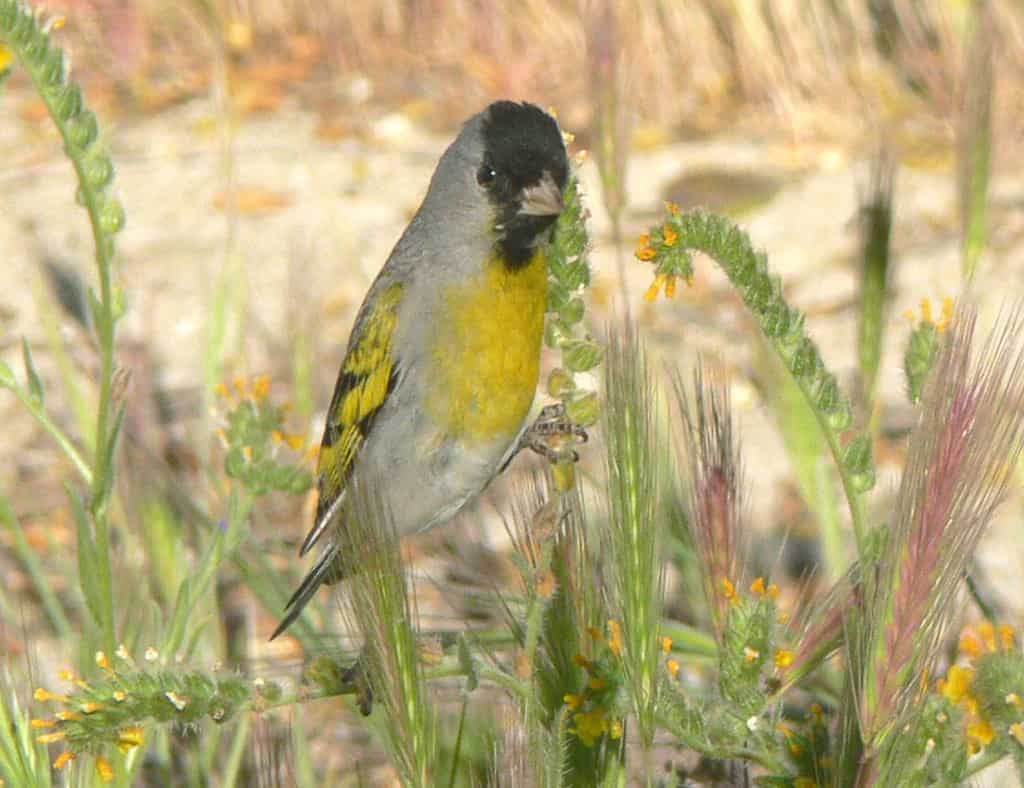
Found across Iowa, goldfinches are especially easy to spot at backyard feeders, parks, and gardens.
©Linda Tanner from Los Osos, California, U.S.A. / CC BY 2.0 – Original / License
Attracting Goldfinch to Your Backyard
Attracting the American goldfinch to a yard mostly comes down to food and consistency. Goldfinches eat seeds almost exclusively, especially thistle and sunflower. Tube feeders filled with nyjer seed work well because they resemble the small seeds goldfinches pull from wild plants. Black oil sunflower seeds are also effective and familiar to the species. Keeping feeders filled through late spring and summer matters, since goldfinches nest later than many other birds and follow regular feeding routes once they settle in.
The yard itself can help keep them around. Native plants such as sunflowers and coneflowers provide natural seed sources and places to perch. Leaving seed heads standing into fall and winter gives goldfinches food even after flowering ends. A shallow birdbath offers water for drinking and bathing, which they often use in warm weather. The American goldfinch prefers spaces that feel quiet and lightly maintained, so reducing pesticide use and allowing some natural growth makes a yard more inviting and closer to the open areas where the species is commonly found.
A Modest Choice with Lasting Meaning
Iowa did not select the American goldfinch for size, rarity, or spectacle. The state chose this tiny bird because it was already a large part of daily life. From early letters among birders to a swift legislative vote in 1933, the story reflects how ordinary experience shaped an official symbol. The goldfinch’s endurance through winter and reliance on common plants mirrored the character Iowans admired in themselves.
As flocks still trace looping paths over fields and yards, the state bird continues to reflect resilience grounded in familiarity. This small bird’s presence suggests that meaning does not require grandeur, only continuity and attention. In that sense, the goldfinch remains well-suited to represent Iowa.