
If you think your dog’s obsession with fetching a tennis ball is impressive, you should meet the pups at the National Disaster Search Dog Foundation (SDF) in Southern California. These dogs don’t just play; they save lives. Believe it or not, it all started with a Labrador named Murphy and one woman’s determination to make sure disaster response in America had more than just good intentions behind it.
And boy, did she ever deliver on that.
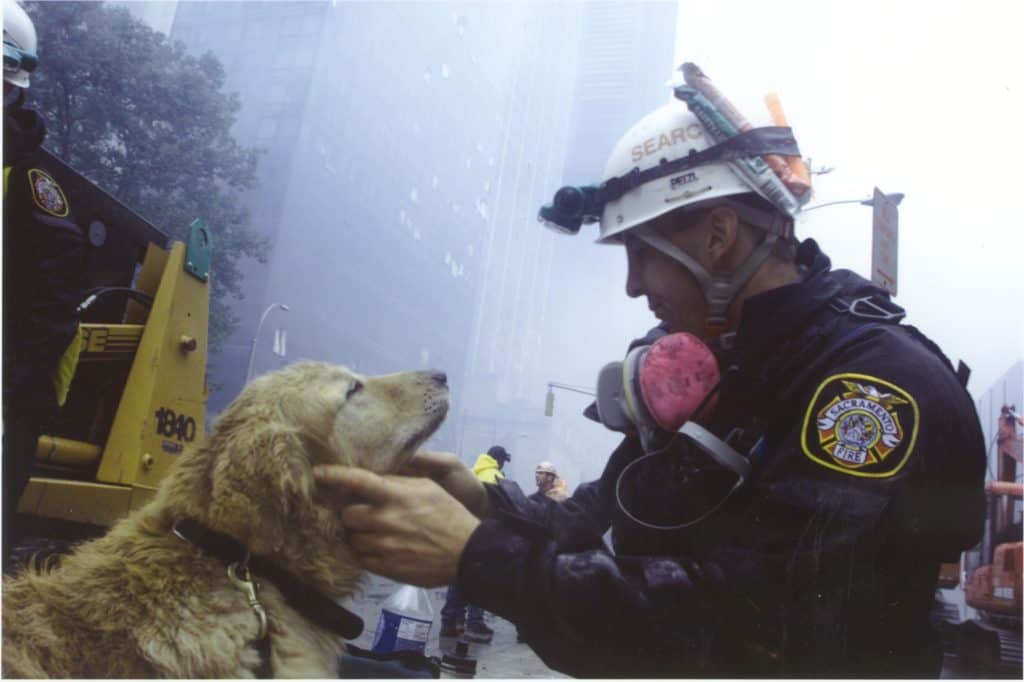
Rob Cima and his search partner Harley respond at Ground Zero following the 9/11 attacks — one of many deployments by Search Dog Foundation teams to major disasters across the globe, from terrorist attacks to natural catastrophes.
©Search Dog Foundation – Original
In the wake of the 1995 Oklahoma City bombing, Wilma Melville deployed to the scene of the explosion with her pup Murphy and quickly realized something vital was missing: a trained canine disaster response force. “They did the best work that they possibly could at that moment,” says Denise Sanders, SDF’s Senior Director of Communications & Search Team Operations. “But she knew there needed to be more, and she knew that they needed to be highly trained — that we needed to elevate disaster responses, specifically canine disaster response in America.”
And Wilma isn’t the type to sit still. “Wilma is just as driven as any search dog I’ve ever met,” Denise tells us. “So, when she came back with that mission in mind, she said, ‘I’m going to find the dogs that need to be doing this line of work … and I’m going to create a training center where they can train together, reach their highest ability, and we’re going to make sure that we do this right.’”
Fast-forward 30 years, and that vision is very much alive. In fact, it’s thriving.
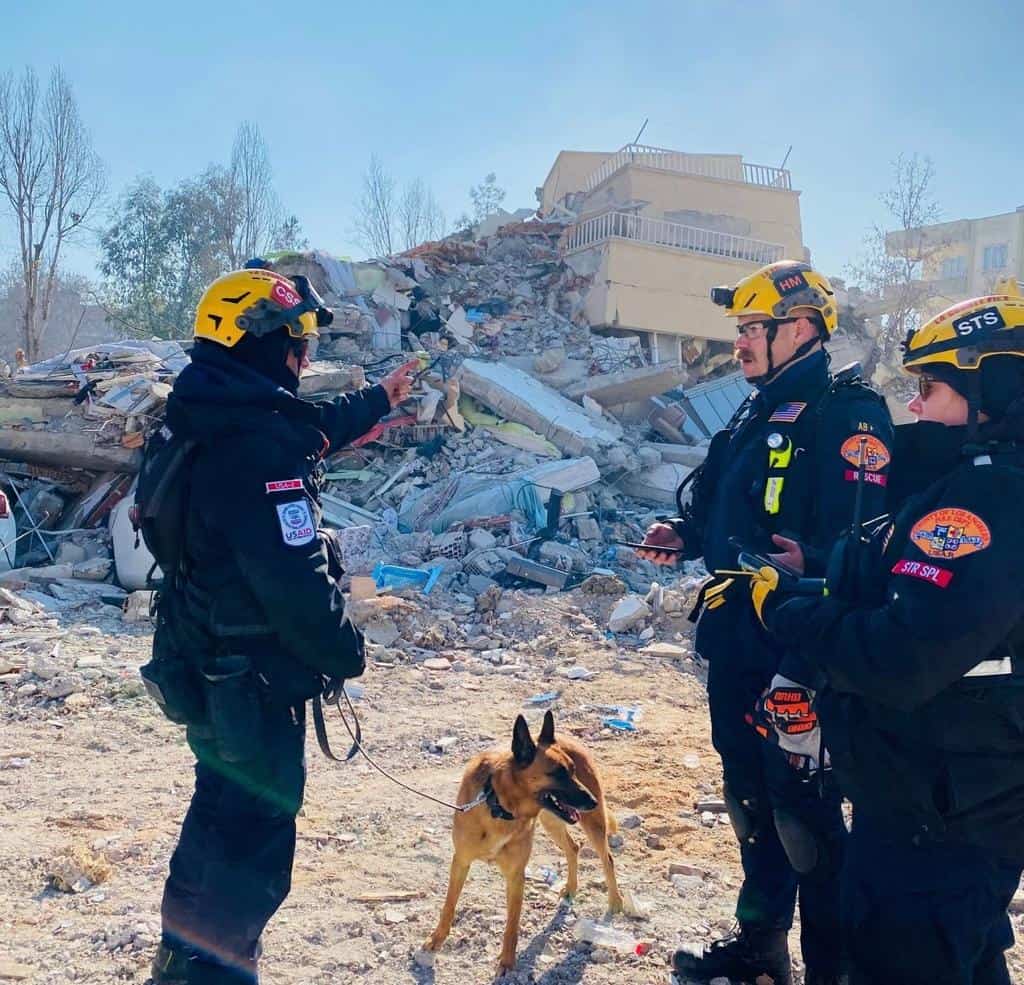
Diva and her handler Cory search through earthquake wreckage in Turkey on February 12, 2023 — part of the U.S. response team working alongside local crews in the aftermath of the devastating quake.
©Search Dog Foundation – Original
Born to Fetch, Built to Search
When it comes to what makes a good search and rescue dog, breed isn’t everything. “A lot of people ask us what breeds we look for. And to be honest, I can say the hunting and herding breeds typically are what we see,” says Denise. “But more importantly, it’s the behavioral traits that we look for.”
Specifically? The SDF team focuses on toy obsession. We’re talking the kind of toy drive that borders on comical, but also makes for a dog that won’t stop until the job’s done. “We’re talking about the dog that will not quit and has to possess that toy,” says Denise, “meaning they’ll play fetch, but then they’re not necessarily going to want to bring it back to you. They want to keep it and possess that toy, though not to the point of aggression. Because if that is the case, then they will play for the rest of their career and lives with their handlers. It’s a big game of hide and seek.”
They’ve always been good dogs. They just needed a little bit of help getting there.
Denise Sanders, Senior Director of Communications & Search Team Operations, National Disaster Search Dog Foundation
That drive — relentless, joyful, and slightly unhinged — is exactly what makes these dogs perfect for the job. It’s not about obedience or discipline in the traditional sense. It’s about tapping into what they already love and letting that lead the way.
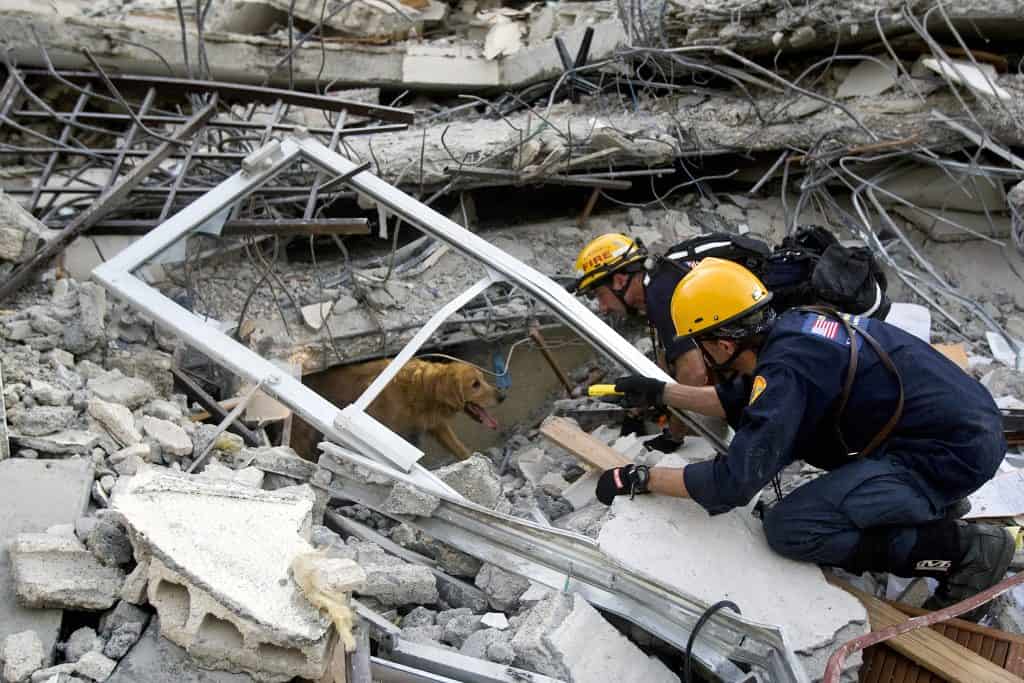
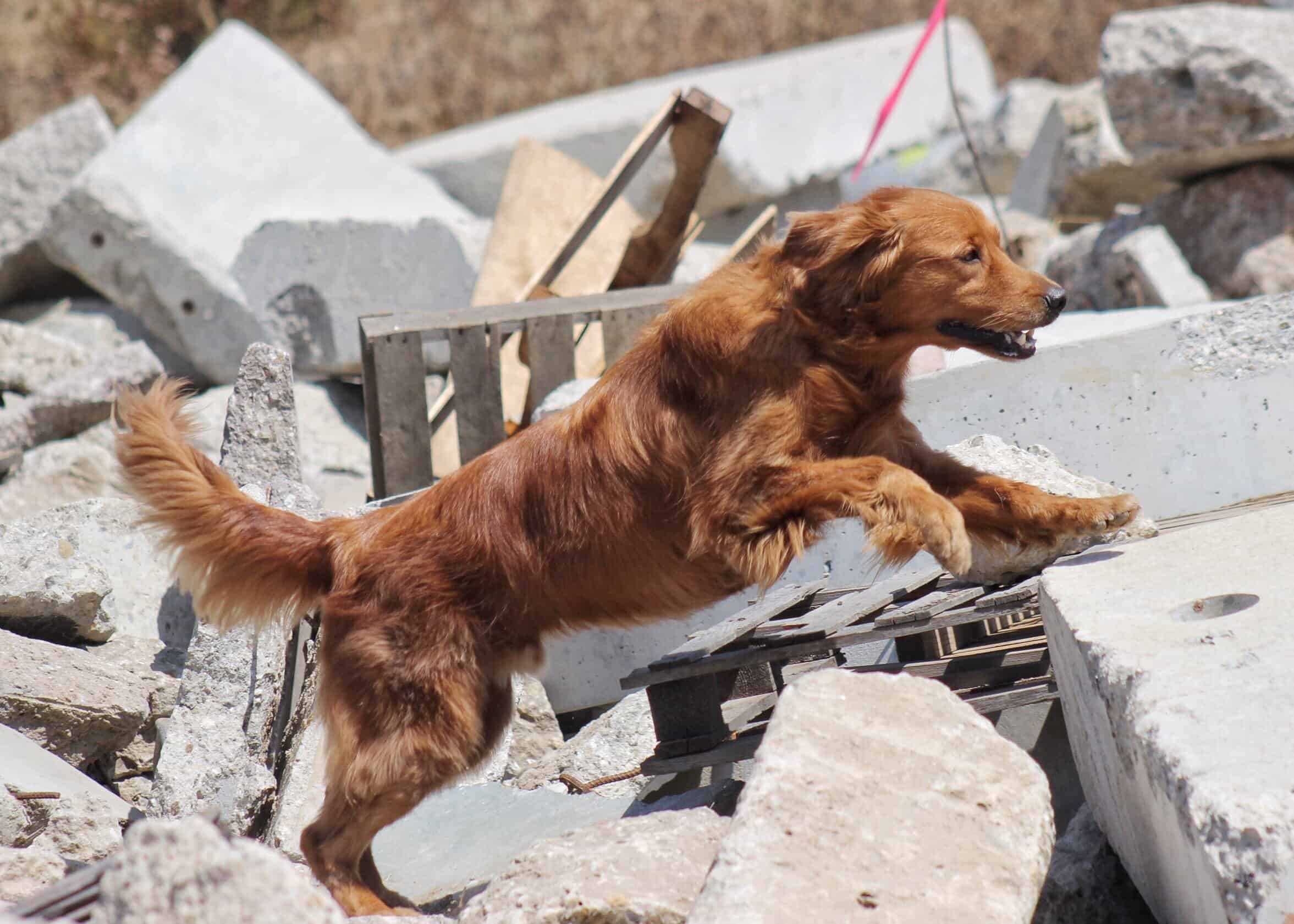
A search dog emerges from the rubble, focused and determined — trained to turn chaos into hope with every step through the debris.
©Search Dog Foundation – Original
“While we know that a [search and rescue] is a very serious, grave situation, the dogs are just getting to play their favorite game with their favorite person, and that’s how we want to keep it,” explains Denise. “That type of motivation is so much better and healthier for them than trying to force a dog to do any sort of work like this. So we select them for that drive: that toy possession, the focus, and the energy.”
It’s those same star qualities that sometimes make these dogs less suited to life as pets — they’re too focused, too intense, too energetic. “I understand that as a family, it is difficult to have a dog like that,” Denise explains. “But that’s why they need a job; they need that outlet. We need to teach them how to utilize those behaviors and channel them into something productive. So, unfortunately, we tend to see those dogs end up in the shelter. Oftentimes, they end up in bad situations before they end up in the shelter because of who they are. It’s our job to teach them that who they are is exactly who they need to be, and we love them for it.”
Through structured play and emotional connection — not control — these dogs slowly realize they’re not “bad.” They’re just built for something bigger. “They’ve always been good dogs,” says Denise. “They just needed a little bit of help getting there.”
Matchmaking, Canine-Style
Once trained, the dogs are introduced to cohorts of human handlers. But this isn’t a blind date; it’s more of a dance. “We see which dogs gravitate toward which handler. It’s very natural and instinctive,” says Denise, “and it’s fascinating to watch!”
That bond — forged through training and trust — is the cornerstone of successful deployments. “If you don’t have a solid relationship with your partner, it’s not going to work as well as it should,” she explains. “And in this line of work, it has to work.”
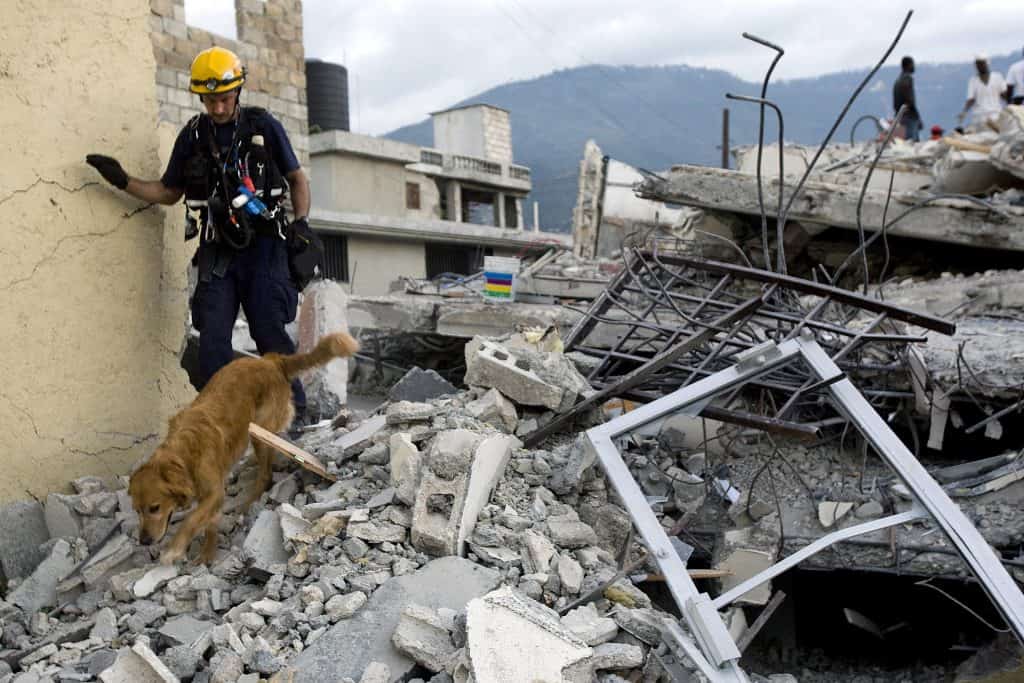
Rescue team members search the wreckage of a collapsed bank in Port-au-Prince after a powerful earthquake, measuring over 7.0 on the Richter scale, struck the city on Tuesday, January 12, 2009.
©Search Dog Foundation – Original
From the Streets to the Spotlight
Every search dog has a story, but for Denise, Shadow’s stands out. Once a stray, Shadow was rescued by one of SDF’s partner organizations. “Our dogs are mostly rescues; the majority of them come from shelters,” Denise says. “And one of them, Shadow, who’s nearing retirement now, came from the streets of a small town in Northern California. There’s no logical reason why he would eventually end up helping to save lives in Turkey after a major earthquake.”
But he did.
Shadow trained with SDF, was partnered with a Los Angeles County fire captain, and has deployed multiple times — including to the devastating 2023 Turkey earthquake. “He went through all of the evaluations and flew through with flying colors,” shares Denise. “I mean, this dog is obsessed with the toy, which we love. And then, he flew through his training as well. He easily could have lived on the streets forever; he easily could have been euthanized as a stray, or hit by a car, or any number of things. But for some reason, the universe felt this was where he needed to be. And we couldn’t agree more. He’s lived this full life with his handler and family and gone off and done great things through his work.”
Now, nearing retirement, Shadow’s future holds fewer deployments and more tennis balls. “Even once we get to the point of unfortunately saying goodbye, we know he has been given every opportunity to have the life he deserves,” she says. “He’s thrived every step of the way.”
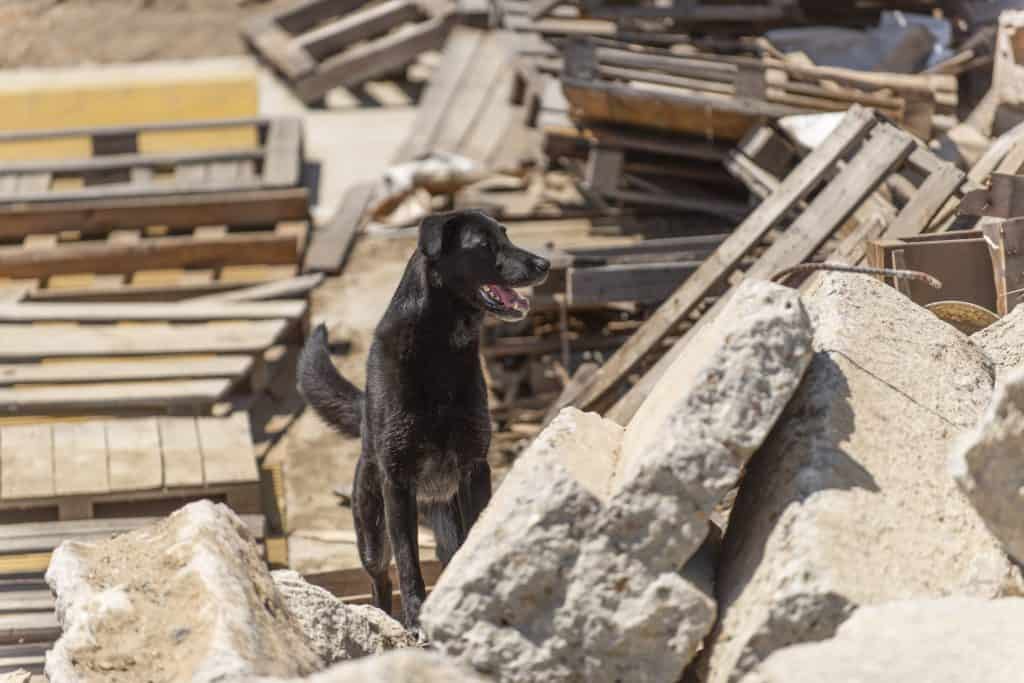
Shadow, once a stray on the streets of Northern California, now stands confident atop a rubble pile during training — proof that some dogs are just waiting for the right job to unleash their potential.
©Search Dog Foundation – Original
When the Work Gets Muddy … Literally and Emotionally
Not all disasters are created equal. Earthquakes leave behind jagged rubble. Tornadoes scatter green debris and twisted metal. And floods? Floods are their own beast, especially the catastrophic ones that just inundated the South.
In the wake of the recent Texas floods, which displaced thousands and turned entire communities into mud-choked danger zones, SDF-trained dogs were among the first responders. “We have one team over there right now alongside teammates,” says Denise. “They were deployed early in the week of the flood and were able to get over there and start helping — hopefully, to find those who are still lost.”
Unlike search and rescue operations, where the goal is to locate survivors, this deployment was part of the recovery phase — a heartbreaking but vital part of the job. And the conditions? Brutal.
“Each area is drastically different,” Denise explains. “This wasn’t just soft mud where you sink — it was tree branches, cars, buildings, gasoline, oil. The hazards are endless.”
For both human and canine responders, flood zones can be treacherous. The thick mud, hidden debris, and unstable ground make every step a calculated risk. “The handler’s job becomes making sure that the dog is being utilized in situations where not only are they successful, but they’re going to be safe,” explains Denise, who has unique insights given that she used to be a handler herself.
That’s exactly why SDF invests so heavily in training. On their 145-acre campus, dogs are introduced to a wide range of disaster environments — from rubble piles and trench voids to diffuse scent challenges. Mud, of course, is harder to simulate in Southern California, but the foundation emphasizes adaptable skills over picture-perfect recreations.
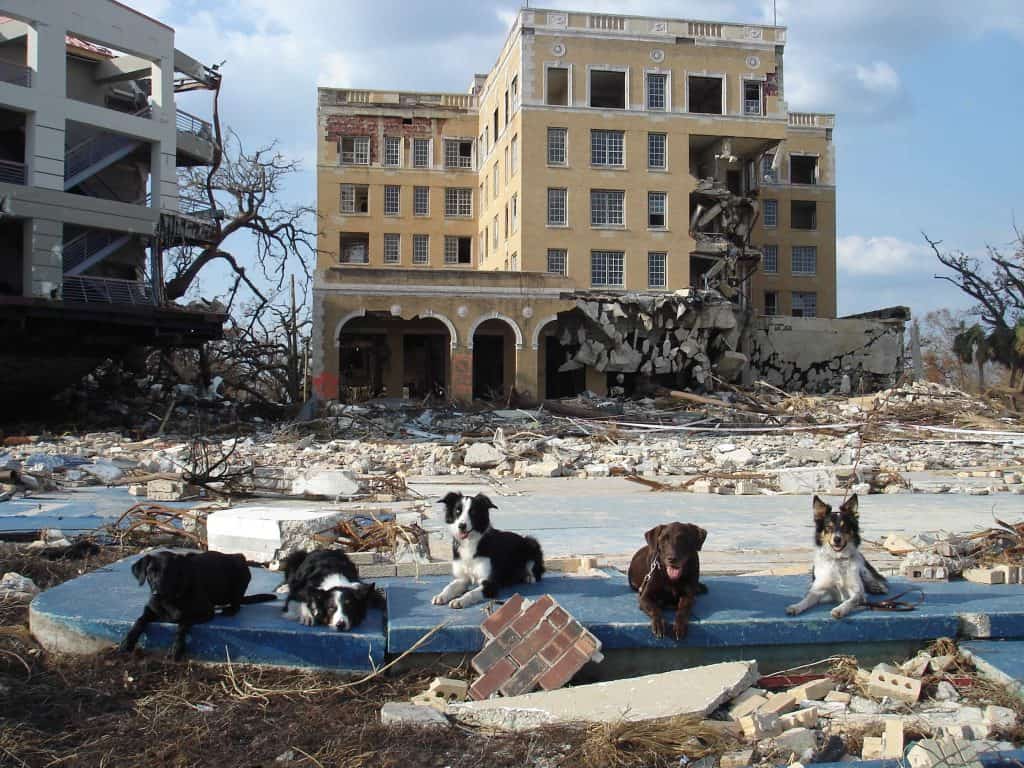
Canines Abby, Manny, Dawson, Duke, and Ranger brought determination and focus to the front lines in Gulfport after Hurricane Katrina, navigating debris and devastation to aid first responders in the aftermath of the storm.
©Search Dog Foundation
“We want to make sure that no matter what they come up against, they have something that they can fall back on,” says Denise. “Something in their training memory that says, ‘Okay, this doesn’t look exactly like what I trained on, but I learned something similar, and I know what to do.’”
And the learning doesn’t stop once a dog graduates. SDF requires teams to return at least once a year for continued education, kind of like disaster-response grad school. “We put them through more advanced scenarios,” Denise says. “We throw in distractions, pressure, variables — things that make them think on their feet.” Or, perhaps their paws.
Not All Dogs Wear Capes… Or Stay in Search and Rescue
The reality is, not every dog thrives on rubble piles. “It is not necessarily for every dog,” Denise admits. But that doesn’t mean they’re left behind.
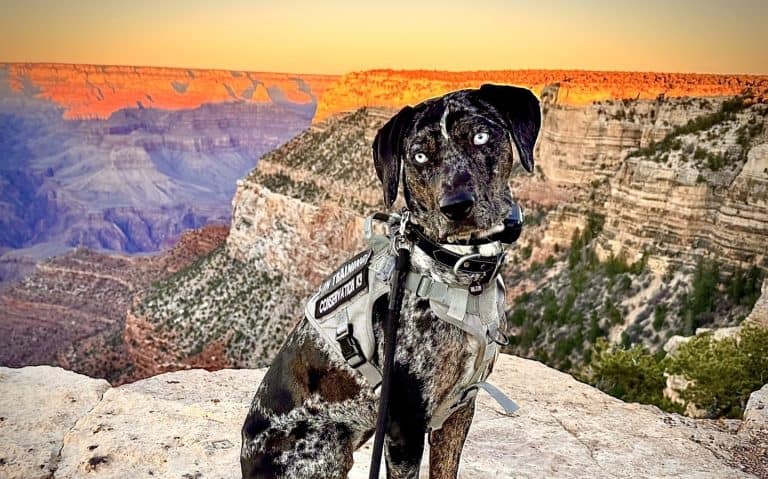
Some pups become conservation detection dogs, sniffing out scat to help scientists study wildlife. Others switch to wilderness search and rescue or even bed bug detection. “They’re still using their nose, but it doesn’t have to be in disaster search,” says Denise.
And for those who are simply high-energy companions at heart? SDF finds them loving homes through their lifetime care program. After all, every rescue pup has its place in the world.
One of the biggest misconceptions Denise encounters is that working dogs live isolated, utility-driven lives. That’s not the case at SDF. “These dogs are meant to be around their families, interact with humans, and coexist alongside us,” she emphasizes. “They are our partners, not just a tool.”
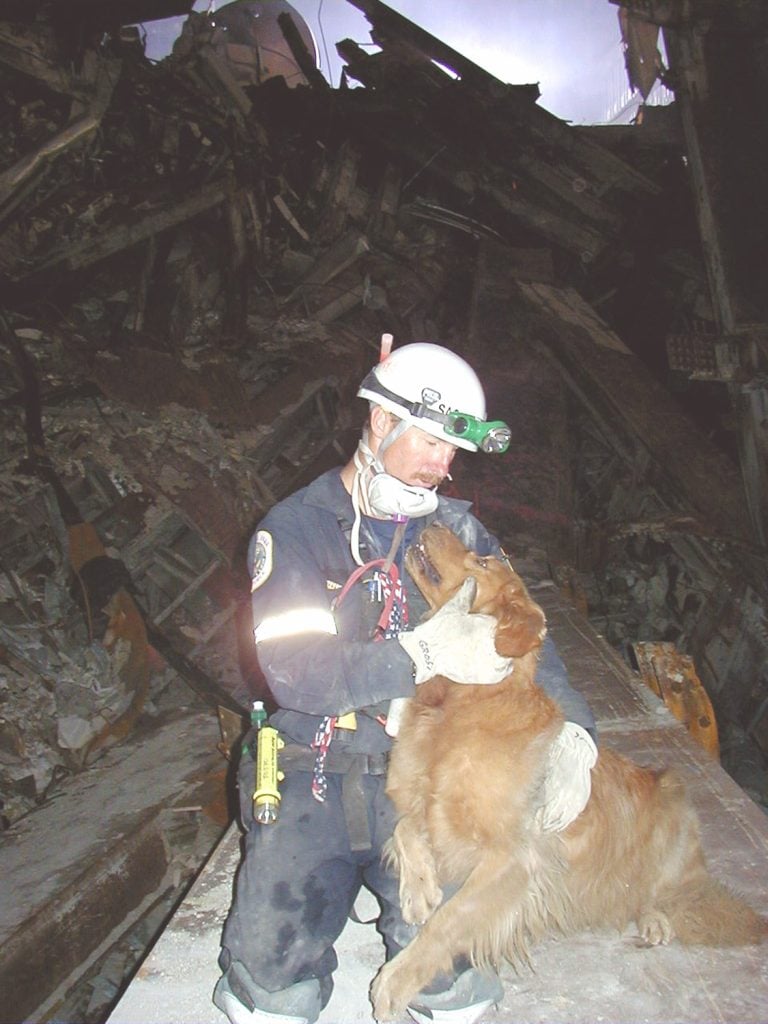
Randy and his canine partner, Dusty, were at Ground Zero, where their bond and training were put to the ultimate test in the aftermath of 9/11. Together, they searched tirelessly for signs of life amid the wreckage.
©Search Dog Foundation – Original
At SDF’s training center, there’s a canine gym, enrichment activities, and plenty of time for play. “We actually get better responses and better work from them when they are living a full life,” Denise tells us.
Every deployment is different, and every dog is unique. But the mission remains the same: to save lives, one search at a time. As a nonprofit, the Search Dog Foundation relies on donors to make that happen.
“Everything that we’re able to do is because individuals or foundations believe in the mission and in these incredible dogs,” says Denise. “It’s not a matter of if, but when, that next disaster is going to happen. And our entire world revolves around making sure that we’re prepared to help when help is needed.”
Thanks to Wilma’s vision, the relentless dedication of people like Denise, and a whole lot of tennis balls, we have faith that SDF and its canine teams will be ready.