
Quick Take
- The very thing that makes vultures master flyers also makes a single weather shift potentially deadly for them. See how thermals work →
- Once a vulture hits the water, there is a biological reason it can never take off again, and that reason has nothing to do with injury. Why water grounds them →
- This isn't a freak accident. Scientists have a name for it, and it's happened before in the same waters. Past strandings explained →
- A chance encounter on the water with the wrong people or the right people determines whether these birds live or die. See the 2023 rescue →
We recently saw this thread on Reddit with a video clip and were both horrified and fascinated. It shows some kind sailors rescuing a group of vultures that have literally fallen from the sky and are floating in the water off the coast of Florida. And when we say floating, we don’t mean the graceful floating that seabirds can manage. We mean the vultures were sprawled out, half-dead, on the surface of the ocean. There were between 100 and 150 birds altogether; some appeared to be dead or in extremely poor condition, but the sailors made a great effort to save those that were still alive. So, why did vultures start falling from the sky?
Continue reading
Which Vultures Live in Florida?
Two species of vultures occur in Florida, the turkey vulture (Cathartes aura) and the black vulture (Coragyps atratus). From looking at the video clip, these look like turkey vultures, but identification is not easy under these conditions.
Turkey vultures live as far north as the southern border of Canada and as far south as Tierra del Fuego in Chile. They inhabit a diverse range of habitats. These include both forested and open environments, and just about anywhere they can find food. This includes areas close to human settlements. Vultures primarily eat carrion. In agricultural areas, they feed on dead livestock. However, they also rely heavily on roadkill. They prefer smaller carcasses, but are willing to consume dead animals of any size. Carcasses are located using their keen sight and sense of smell. By consuming dead animals, they play an important role in biodegradation and in ecosystems in general.
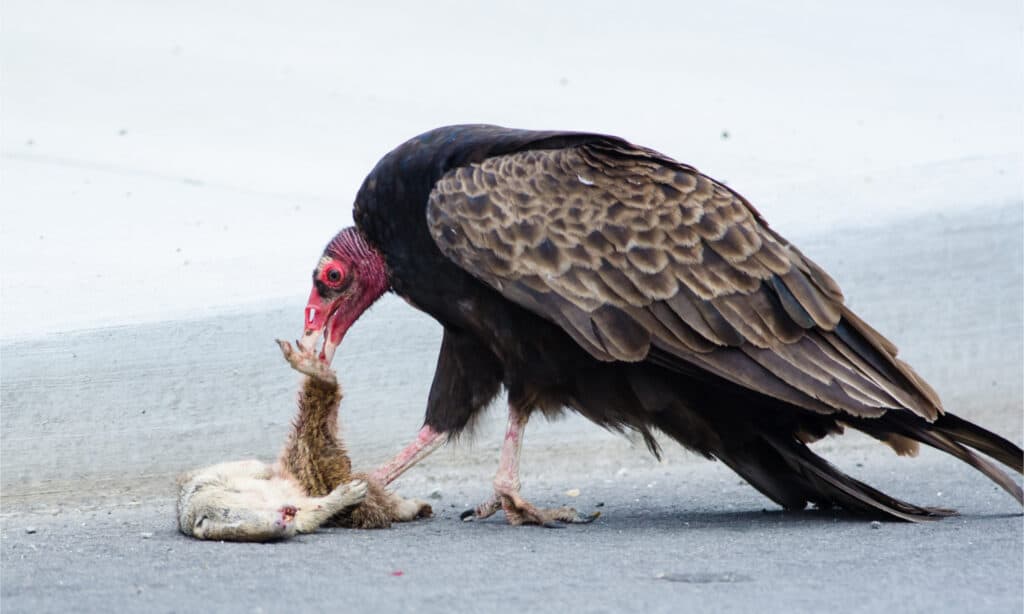
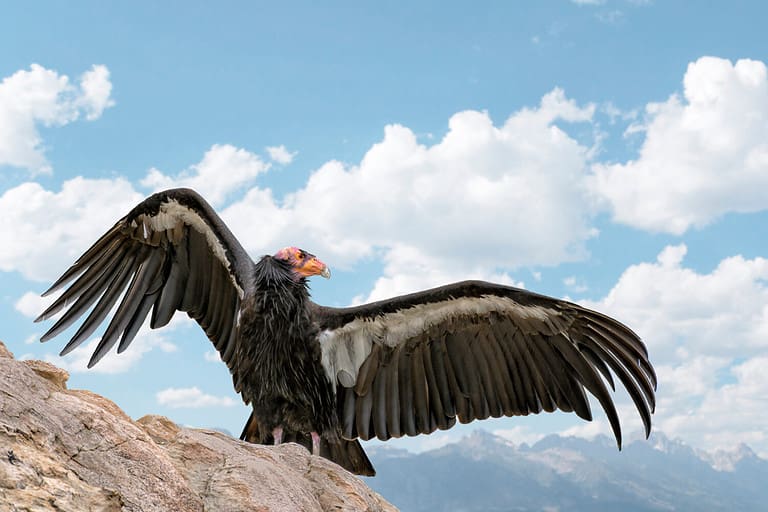
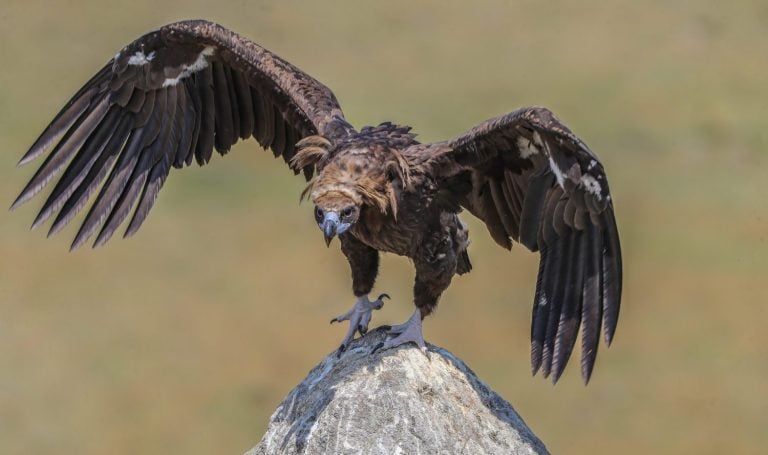
Turkey vultures eat carrion, which is why they are known as nature’s clean-up crew.
©hubert999/Shutterstock.com
In Florida, vultures are state and federally protected as migratory birds. They congregate in large community groups, which explains why so many birds were found together in the sea.
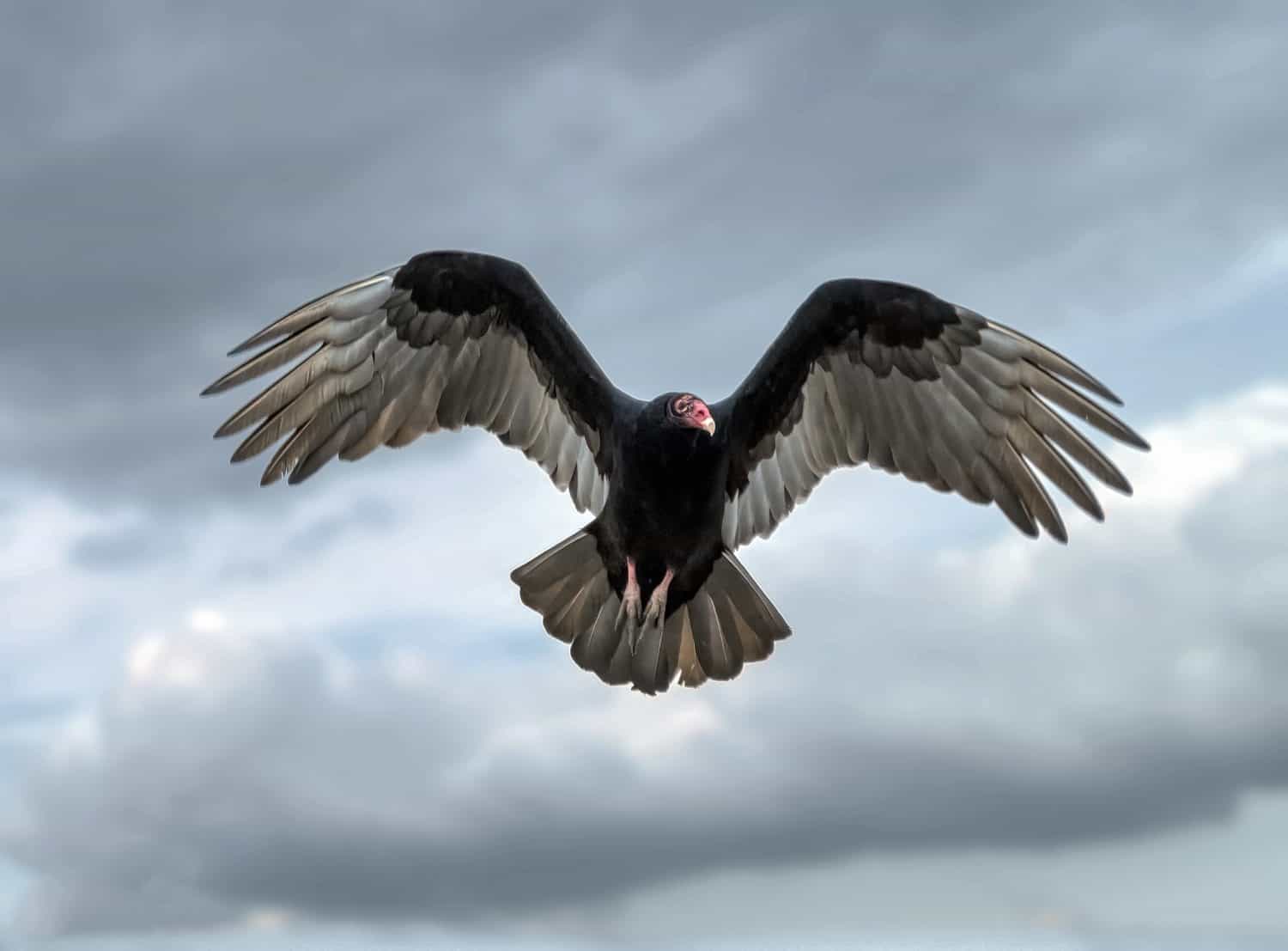
They are medium-sized birds with a wingspan of 66 to 72 inches. These vultures can weigh up to 4 pounds. Importantly, they have a light wing loading. This means that they are more buoyant in air than other vultures. The way in which they fly may be a clue as to why they ended up in this predicament.
How Do Vultures Fly?
Turkey vultures constantly scan for food from above. They soar with their wings raised in a V, making wobbly circles. They use updrafts to carry them into the sky. In the Reddit clip, you can hear the sailor explaining that there had been a north wind in that location, which the vultures love to soar in. Then, that switched to a very light south wind, and they “all just fell from the sky”.
Vultures are efficient flyers and can stay airborne for long periods without expending much energy. They need to do this to search for carrion over a wide area. They have large wingspans in comparison to their lightweight bodies. This allows them to catch warm, rising air and glide for hours without having to flap their wings. However, if those thermals suddenly disappear, down they come!
Once the birds hit the sea, they are in trouble because they are not built to float on water. Some suffer blunt force trauma from the hard landing and their feathers soon get waterlogged. This makes them cold and less likely to survive if they are in the water for a while. Once in the water, they have no chance of taking off and flying again. There may even be a strong downdraft that forces them down into the water.
Does This Happen Often?
A quick search on social media reveals that, while this is not very common, it does happen from time to time. Scientists call it an aquatic stranding, and if the birds are not rescued, it invariably leads to their deaths. Any time wind patterns shift, there is a danger of this happening. Additionally, vultures can become weak and disoriented from sudden drops in temperature or pressure. The phenomenon has been recorded several times in the Gulf of Mexico.
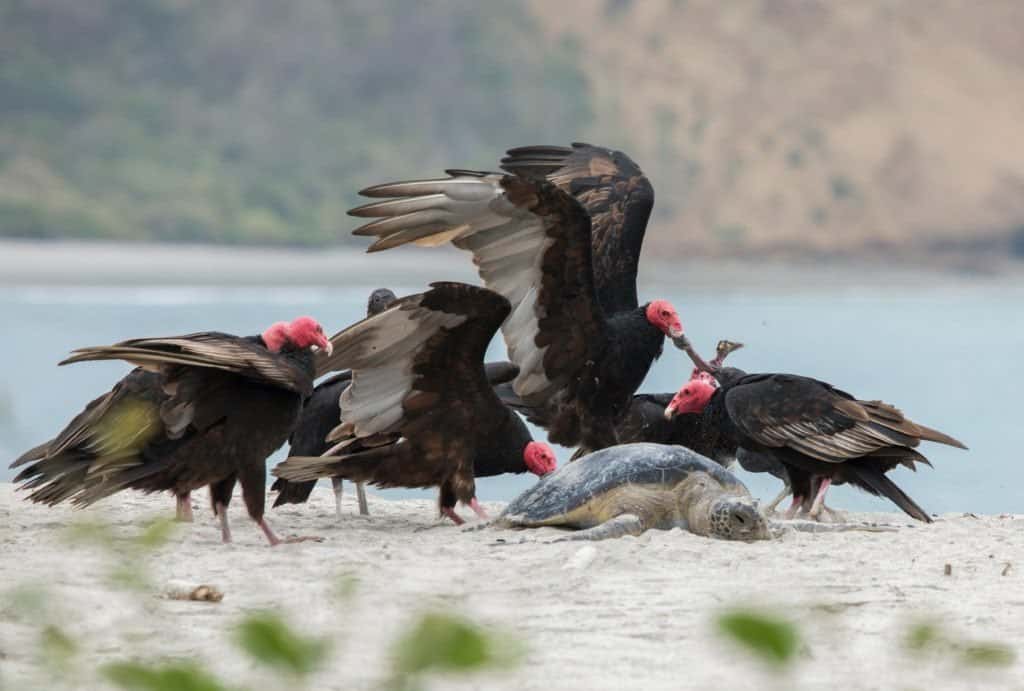
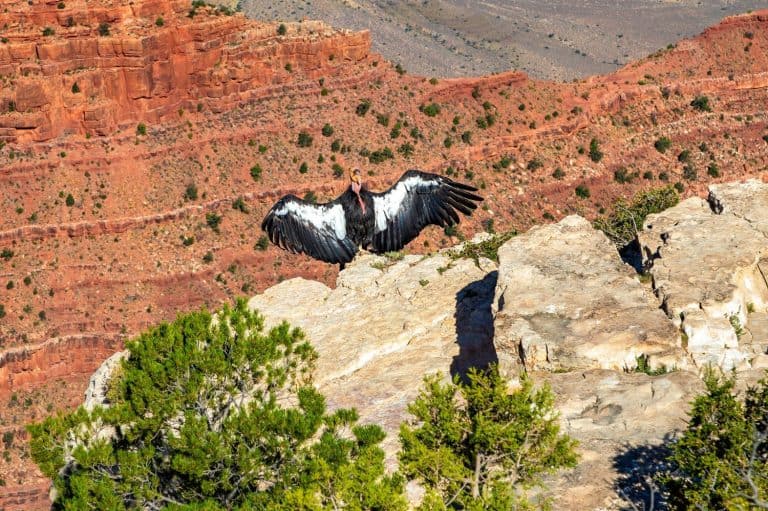
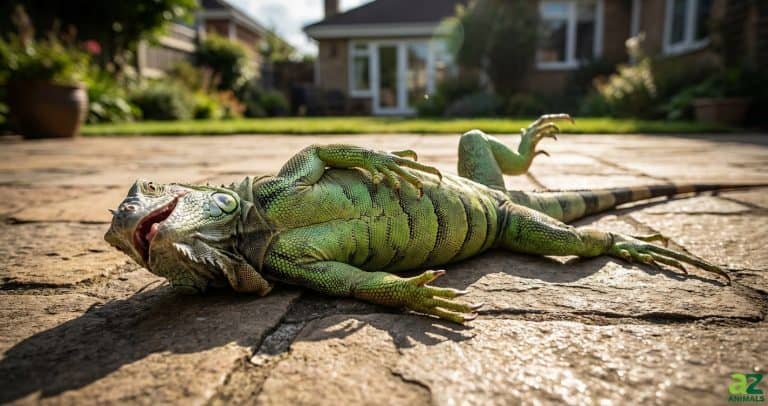
Vultures cannot take off again once they land in water.
©Ana Dracaena/Shutterstock.com
In a previous incident, a research team helped a group of turkey vultures from drowning after they fell from the sky into the waters off the Florida Keys in 2023. Fortunately for the vultures, they were spotted by members of a marine mammal rescue nonprofit organization conducting research on the Gulf of Mexico side of Marathon. When they saw one vulture struggling in the water, they contacted the Marathon Wild Bird Center, which informed them that there were likely more vultures nearby.
Sure enough, the team ended up rescuing around 53 vultures, and even more were saved by local fishermen and the Florida Fish and Wildlife Conservation Commission. As we saw in this clip, the birds were hauled onto a boat and taken to the Marathon Wild Bird Center for evaluation.