
Quick Take
- Achieving a calmer, organized nervous system in dogs requires scent-based activities instead of routine physical exertion.
- Standard 6-foot leashes create constant stop-start conflict that prevents nervous system regulation in dogs.
- A 2019 study found that nosework induces a more optimistic judgment bias in dogs compared to heelwork, suggesting that allowing dogs to use their sense of smell can improve their emotional state.
- Integrating decompression walks and sniffaris into your dog’s routine may help relax them, especially if your dog is reactive.
A lot of dog owners walk their pups with fitness and speed in mind, leaving little room for much else besides the route ahead. However, what if we told you swift walks offer very little benefit to your dog? There’s another type of stroll you should try instead.
Today, we’re detailing why decompression walks and aptly-named “sniffaris” can do more for a dog’s nervous system than a routine lap around the neighborhood, especially for dogs who live with chronic reactivity or anxiety. We’ve reached out to dog behaviorist and trainer Teagan Coleman of NLR Explore Dog Training for answers, in conjunction with information from trainer Sarah Stremming’s decompression walk framework.
By the end of this piece, you’ll have a practical blueprint you can use to change your dog walking game, ways that help your dog relieve more anxiety than standard walks can provide. We’ll also incorporate research on scent-based activities and other behavioral studies. Let’s leash up and go on a sniffari now!
The Myths of Dog Walking
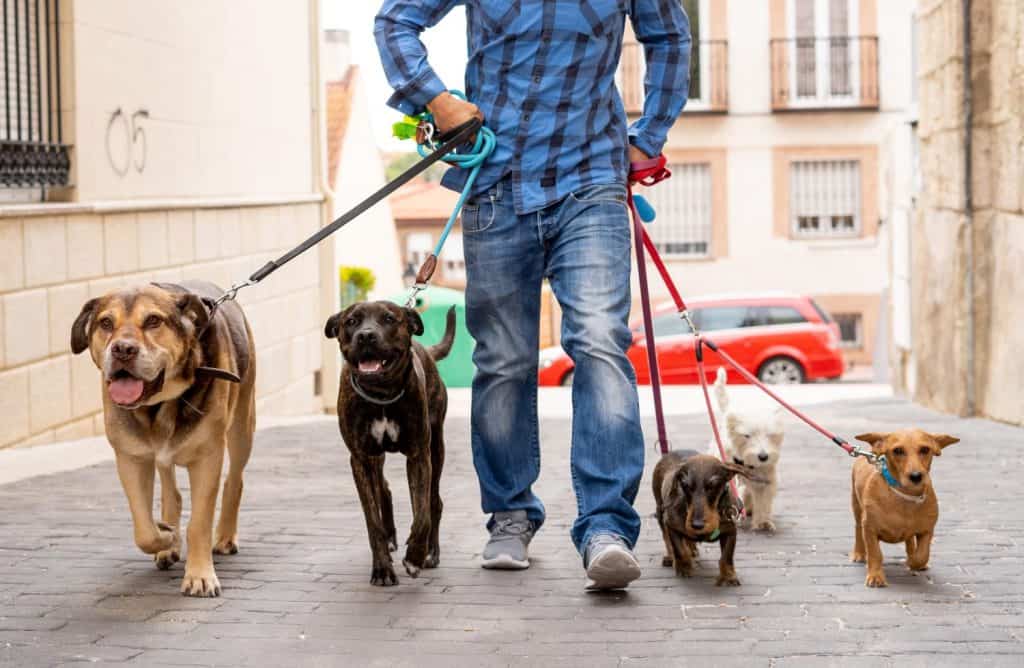
A fast-paced walk rewards forward motion and compliance in a dog, which may sound good in theory. However, it’s likely that, anytime your dog tries to pause, sniff, scan, or choose a different route, the leash tells them no. Over time, many dogs learn to cope with this constant negative stimulus by staying tightly wound and hypervigilant, as the outside world becomes something that happens to them rather than something they get to interact with intentionally.
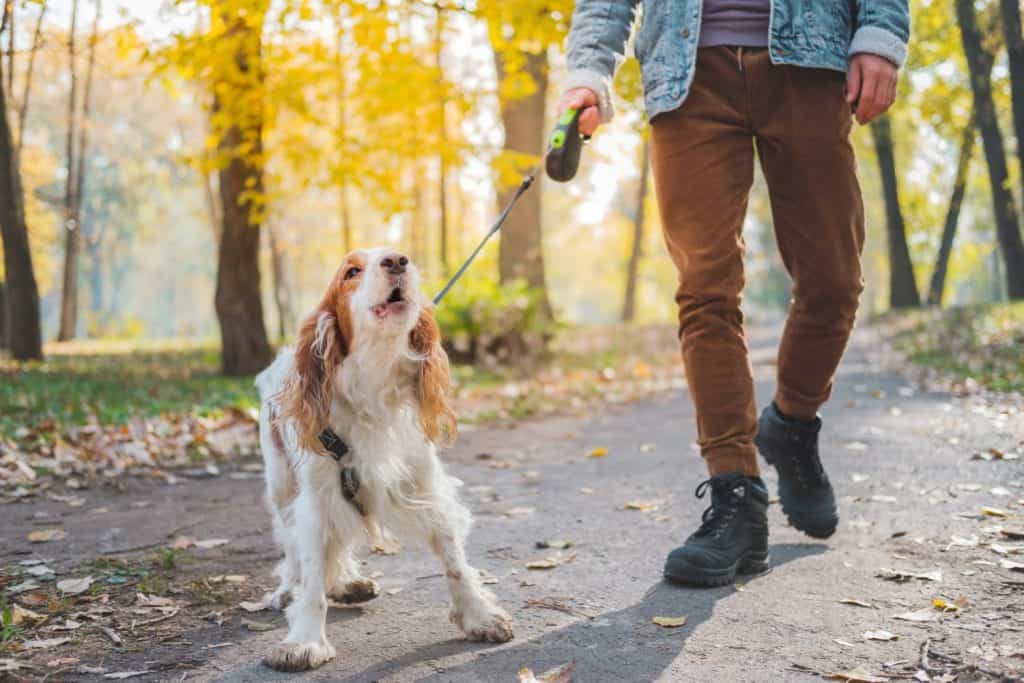
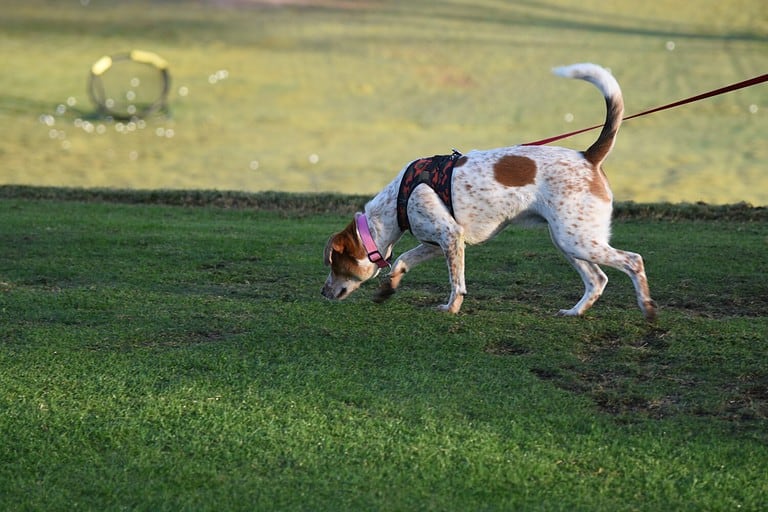
Dogs don’t relax on a routine walk as much as you may believe.
©Aleksey Boyko/Shutterstock.com
“A lot of dogs look obedient on a walk, but they are not relaxed. They are bracing through it and getting nothing out of it.” Coleman notes. When a walk is built around control, a dog’s nervous system often stays in high alert. That is why some dogs come home from a fast walk and still engage in anxious or energetic behaviors. Why, and what can be done?
How Smelling Regulates a Dog’s Nervous System
A dog’s nervous system is constantly sorting the outside world. It must determine what in its environment is a direct threat versus something it genuinely wants to explore. Speed-walking through a neighborhood often pushes dogs into a place of stress because the leash keeps them moving forward even when their senses are telling them to pause and gather information. Plus, when the walk ends, that stress doesn’t always drop back down, which is why a dog can come home physically tired but still mentally unsettled.
Smelling is the ticket, as it gives your dog’s brain something it is built to do on purpose. You can often see the shift in real time when a dog finds a scent trail they care about; their bodies and moods change. Choice and scent work tend to pull a dog out of a stressed, hypervigilant state and into a calmer, more organized one.
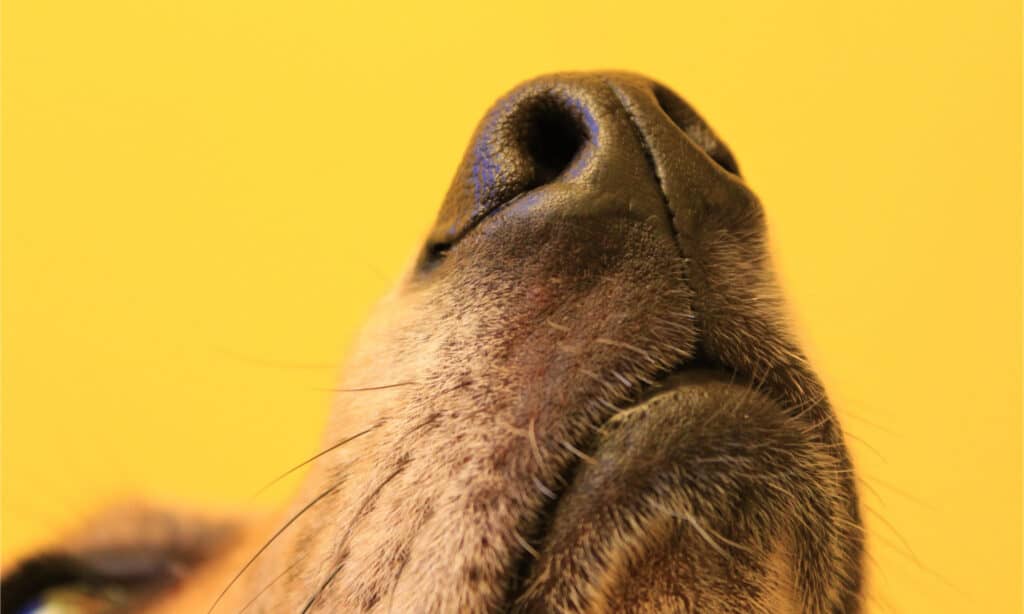
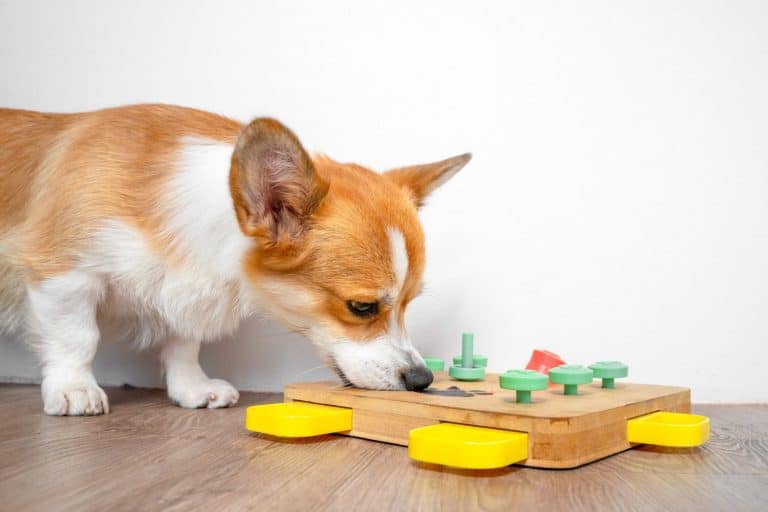
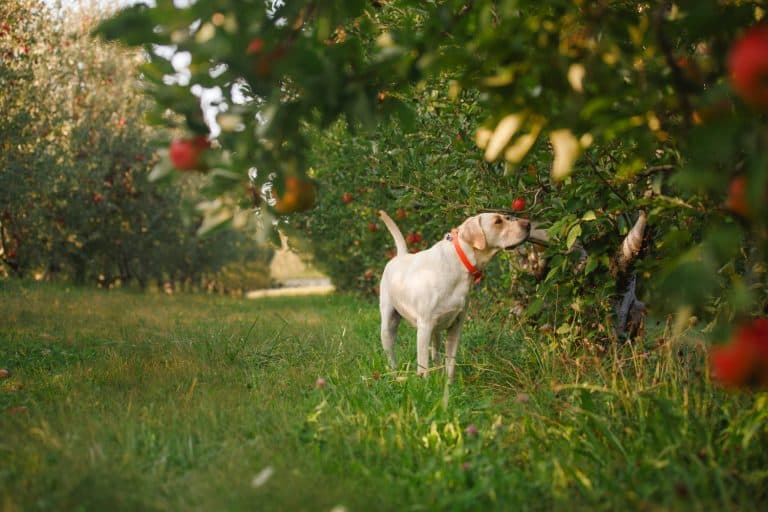
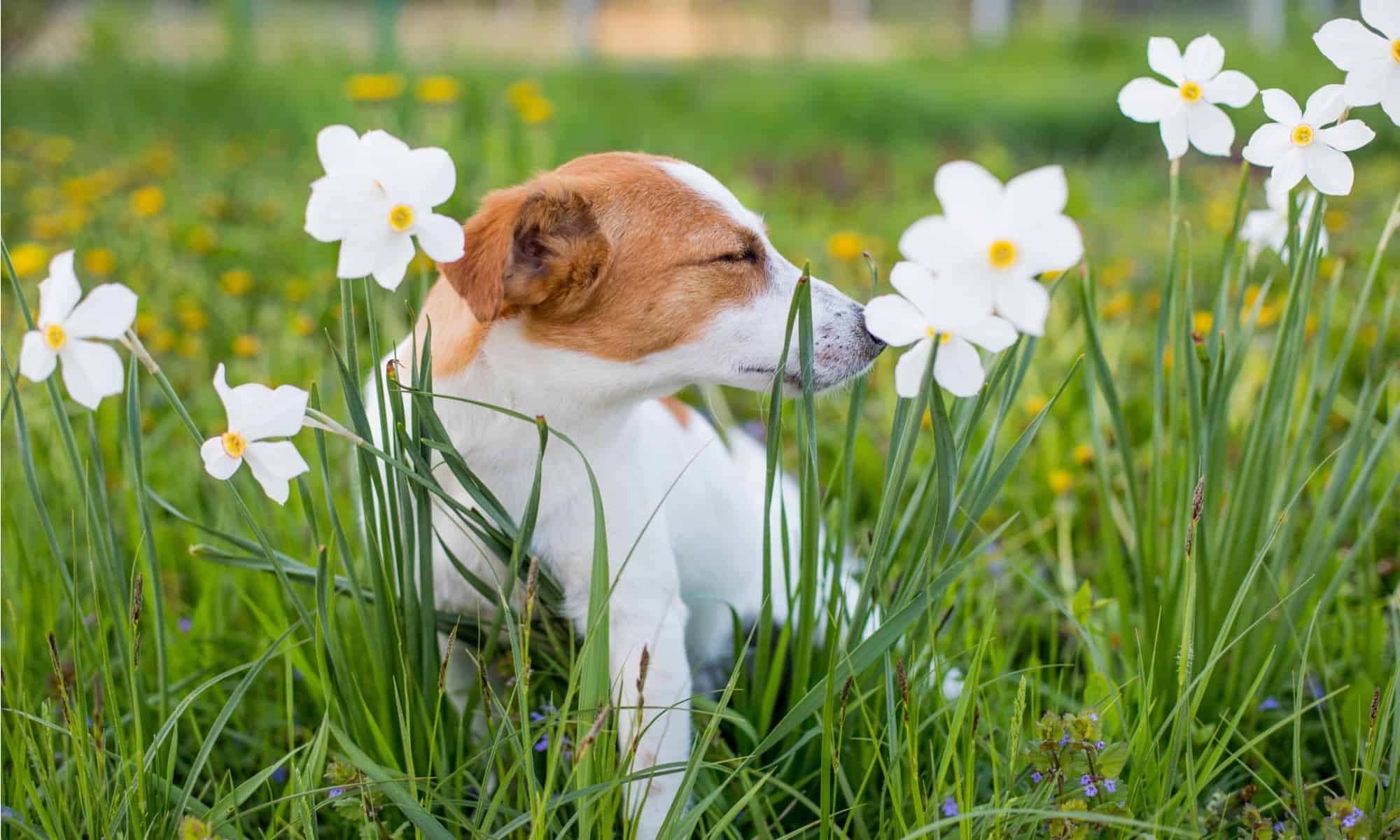
Sniffing is one way that dogs get information, and this processing can help them relax.
©Fernando Coelho/Shutterstock.com
This is why sniffing can make such a difference in reactive and anxious dogs. A reactive dog is noticing triggers fast and therefore escalating fast. However, a sniffari gives them an alternative job that competes with scanning for threats, and it does it without you having to correct anything, lending them the positive reinforcement they need to feel confident. But what does a sniffari or a decompression walk look like in practice, and how can you achieve one on your next stroll with your dog?
What Are Decompression Walks and Sniffaris?
A decompression walk is still a walk, but the intention behind it is very different from our human way of looking at this routine activity. In Stremming’s decompression walk information, freedom of movement in a low-pressure environment, typically in nature or at least away from heavy foot traffic and tight sidewalks, is a must. In practice, it means your dog is allowed to pause, sniff, backtrack, and take its time.
“Decompression walks are where I want to watch a dog’s body soften,” Coleman says. “If the dog can make choices, you usually see the breathing change first, then the rest of them relaxing follows.”
When dogs are allowed to have agency, even when leashed, they often stop scanning for threats and start engaging with the environment in a calmer, more organized way. This calmness continues long after the walk is through, leading to a more confident dog who has had its excess energies properly placed.
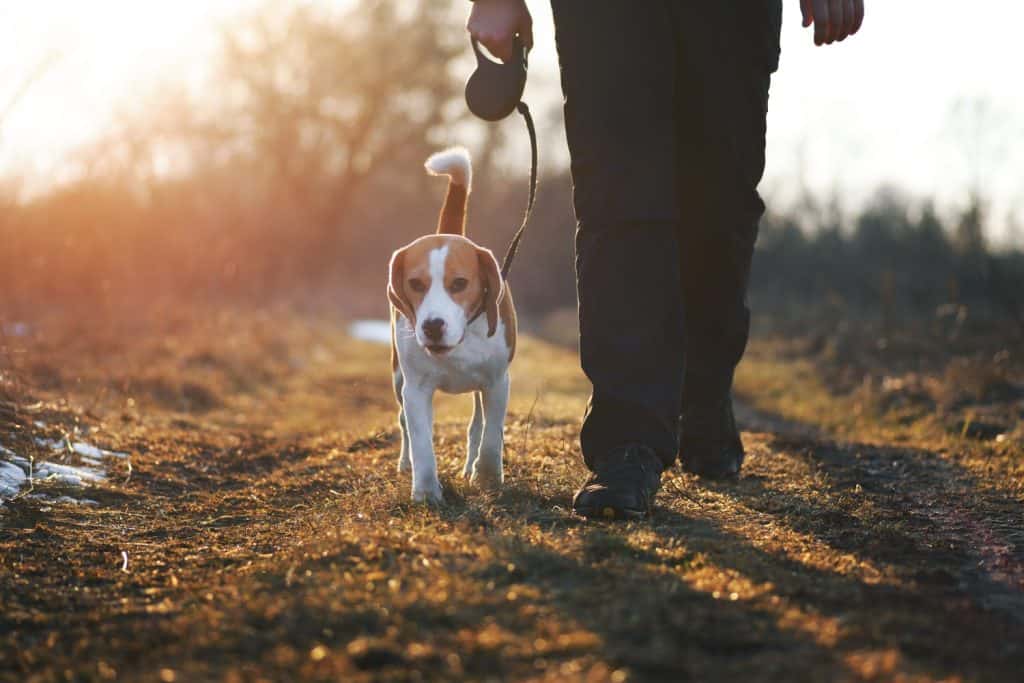
Allowing your dog more freedom to sniff on walks helps regulate its nervous system.
©tetiana_u/Shutterstock.com
While the name may sound gimmicky, sniffaris are designed to work in a similar fashion. It’s really just a practical, approachable way to give a dog the kind of mental work they are built for. Scent-based activities have been studied across dogs of all breeds and backgrounds and, while the details vary by study, the results appear consistent. When dogs get meaningful scent engagement, many show signs of reduced arousal and more settled behavior afterward.
“Sniffing is how dogs read the world. It’s their main way of understanding things.” Coleman reports. “If you rush them past every message, you should not be surprised when they feel unfinished and frustrated because of this.”
With these details in mind, how can you facilitate a relaxing and enriching walk for your pup? We have some tips.
A lot of dogs look obedient on a walk, but they are not relaxed. They are bracing through it and getting nothing out of it.
Teagan Coleman of NLR Explore Dog Training
Longer Leashes Help Dogs Relax
Short leashes create a constant stop-start conflict, one you likely know about if you have a dog that likes to pull on your walks. They also keep dogs moving in straight lines, which reduces a dog’s sniff time and blocks their natural patterns of movement, such as arcing away from any new or overwhelming stimuli.
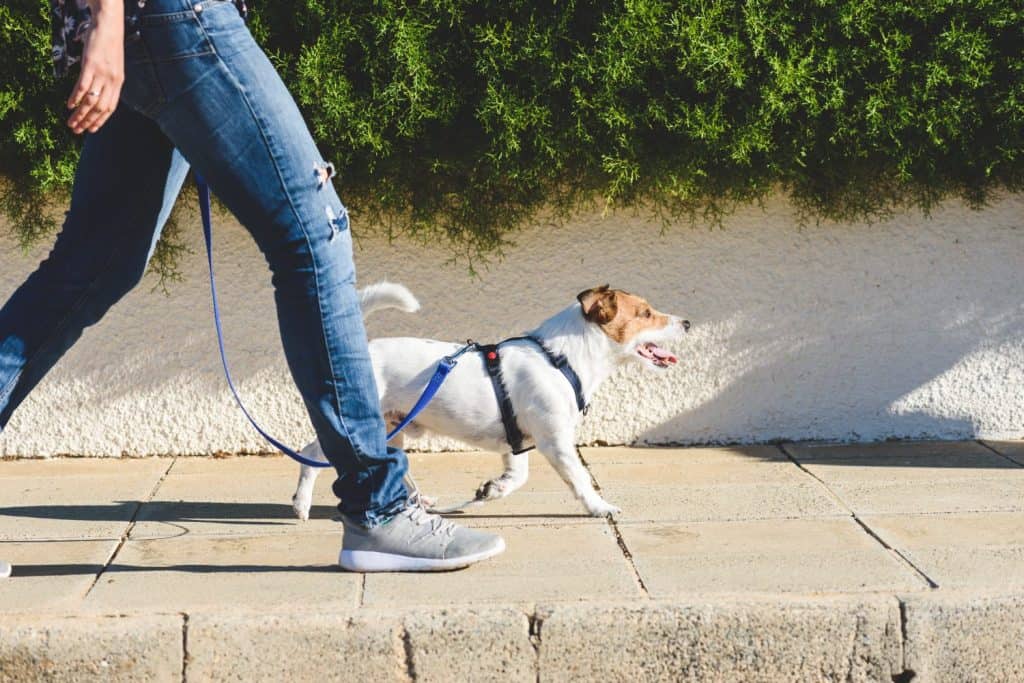
Longer leashes give your dog more freedom to investigate the world around it.
©alexei_tm/Shutterstock.com
Using a longer lead gives your dog room to investigate without repeatedly hitting the end of the leash, which can make them feel more stressed and controlled. It also changes your job while on a walk; you don’t need to steer them, which gives them more freedom overall.
Coleman describes the long line as structure, something every dog needs. “A long lead gives dogs freedom, but it also keeps the walk predictable. Dogs need predictability in some form, but it doesn’t have to come from walking the same route every single day.”
A Back-Clip Harness Matters for Overall Safety
If you are going to give your dog more leeway, you need gear that protects them. Harnesses are often recommended for sniffaris, not solely to ensure they stay on the lead; they also help take some literal pressure off.
A 2025 review on restraint devices for dog walking discusses how different tools distribute pressure and how that can affect the overall health and wellness of dogs. Many owners don’t consider neck pressure and force during leash walking, but it can be vital, especially for certain breeds. Regardless of the type of dog you have, a constant tightness where they need to breathe can be harmful.
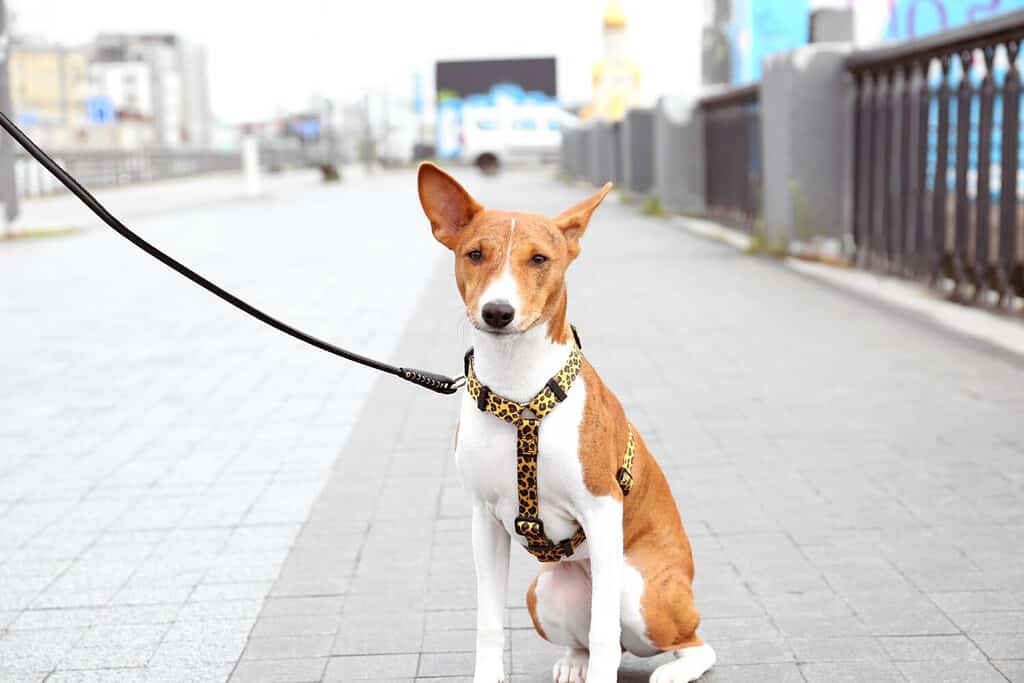
A properly fitting harness can help relieve additional pressure from your dog on walks.
©New Africa/Shutterstock.com
While a back-clip harness does not magically prevent pulling (and may encourage it more than you expect), It reduces any neck risks and gives you a safer foundation for long-line work. Your dog can feel an additional level of freedom if you switch from a collar or slip lead to a harness.
Preparing For a Decompression Walk
There are a few intentional ways you can prepare to take your dog on a sniffari or decompression walk. Start with your well-fitting harness, one that does not restrict the shoulders. Then, opt for a long leash that fits your local environment, keeping in mind any regulations or parks that might limit leashes to 6 feet or less. BioThane long lines tend to clean up easily, which makes them easier to manage compared to fabric lines that soak up water and snag frequently.
Organizing a long leash is half the battle, especially if you have a pup that’s eager to explore. Coleman notes, “Most tangles or accidents happen because people try to manage a long line like a short leash. But remember that freedom is what’s necessary here. Feed the leash through your hands and keep the extra line loose. Oh, and never wrap it around your wrist; that’s the fastest way to break it, especially if you’re walking a larger dog that loves to chase.”
Choosing a calm location for your decompression walk is a good place to start.
©SB Arts Media/Shutterstock.com
Finally, your location choice matters, no matter the type of dog you have or the place that you live. A decompression walk should start in a low-conflict environment and stay that way, especially if your dog is reactive. Allow plenty of time and room to explore, but make sure the overall area is relatively calm to begin with.
How To Best Support Your Dog On a Decompression Walk
It’s difficult for many dog owners to relinquish control, especially if you’re hoping to get a bit of cardio in for yourself while walking the dog. However, remember that a sniffari or decompression walk is more for your dog’s benefit than your own.
On a decompression walk, let your dog choose; its decision-making abilities are vital to this process. They choose the direction at intersections; they choose how long they want to sniff a spot or whether or not to return to it. Your job? Keep them safe and prevent the line from becoming a hazard, however you can. If you try to get your dog to move past a particular smell or area, pause and allow them more time.
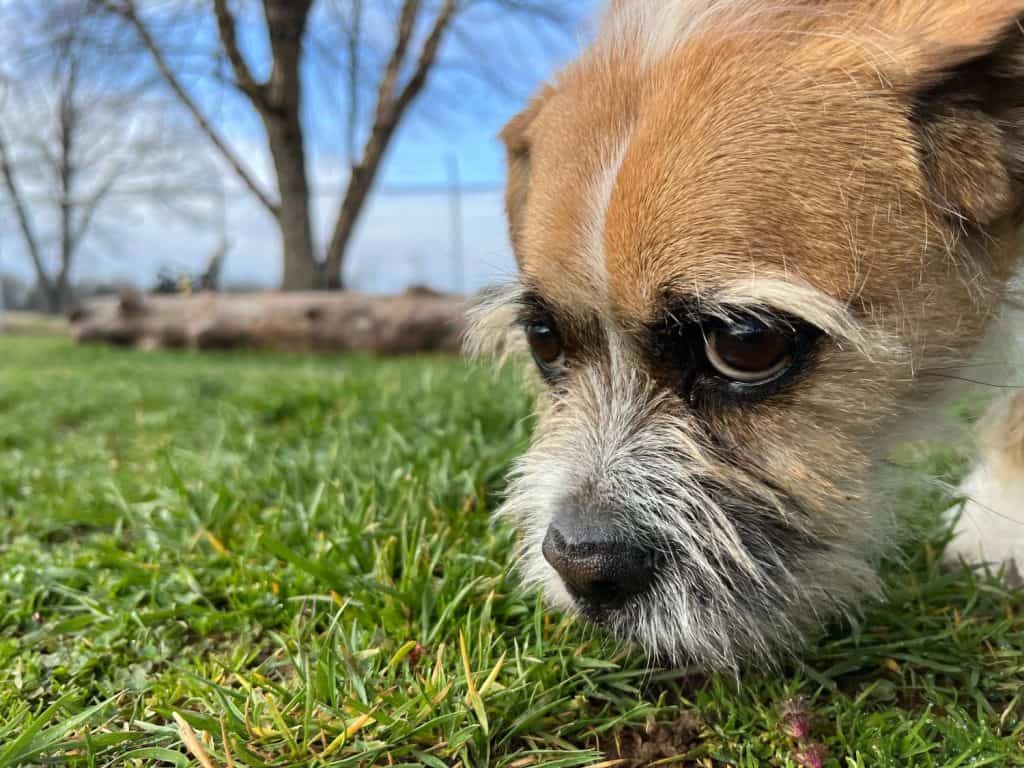
The key to any sniffari is allowing your dog plenty of time to sniff.
©Ryan Brix/Shutterstock.com
This is important, as sniffing is information processing for pups. It can also change emotional state, as a well-cited 2019 study found that nosework can induce a more positive judgment bias in pet dogs, which is commonly interpreted as improved optimism.
Ultimately, sniffing is actual, real work for a dog’s brain, and it often produces a different kind of fatigue than straight-line walking. This is the fatigue you want to find, especially if you have a reactive or anxious dog.
“When the dog gets to sniff, and I mean really sniff for as long as its heart desires, the rest of the day looks different,” Coleman says. “You get a dog who settles down and acts like there’s nothing wrong instead of hunting for the next thing to bark at.”
Take a Decompression Walk Today
Decompression walks and sniffaris are all about changing what a walk is for: your dog’s nervous system. With a few minor adjustments to your routine structure, you can build calmness and confidence in your dog. It may seem slow and steady; it may be boring. But remember that your dog needs to explore in its own time. Exertion does not always equal exhaustion. Sometimes, a sniff is all it takes.