
Quick Take
- Venomous snakes are now turning up in regions where they've never been recorded, and the areas facing the biggest surprise are not the obvious ones. See the shifting ranges →
- One everyday hiking habit dramatically raises your snakebite risk, yet most outdoor enthusiasts don't even know they're doing it. Check the hiking tips →
- Summer used to be the only season you needed to worry about venomous snakes, but that assumption is quickly becoming dangerous. See how seasons are changing →
- Something most people keep in their backyard is quietly rolling out the welcome mat for venomous snakes. Make your yard less inviting →
Around the world, temperatures are increasing. This has put a strain on many species that will have to adapt to the heat to survive. It is easier said than done for some, namely, cold-blooded animals, who have had to extend their habitat in search of cooler temperatures and resources.
Venomous snakes are some of those reptiles that are on the move. Because of this, the risk of snakebite is rising as the world becomes a hotter, more crowded place. Unfortunately, those most affected are those who need the most help.
Risk of Getting Bitten by Snakes is Rising Due to Climate Change
As global temperatures rise, venomous snakes have had to move from their traditional habitats in search of cooler climates. This has put them in contact with more people than ever before. Consequently, the risk of snakebites is projected to increase in some regions as snakes move into new areas.
According to a new study published in PLOS Neglected Tropical Diseases, deadly, venomous snakes are on the move. As habitats become too hot in places like Africa, Europe, and even North America, cottonmouths, kraits, and vipers are being spotted in more densely populated areas. According to David Williams of the WHO and the University of Melbourne, one of the study’s authors, this trend is expected to continue and may become more pronounced in certain regions as temperatures rise.
“The overlap between humans and venomous snakes will be greater,” Williams explained to The Guardian. “You could consider this a risk of walking out of the back door, stumbling, and getting bitten.”
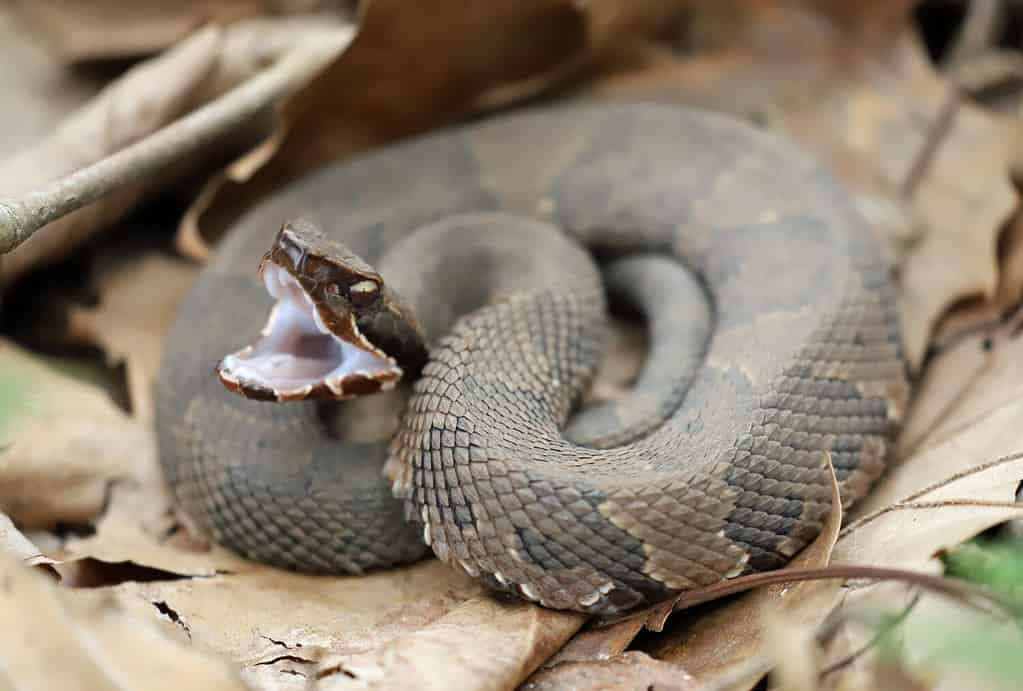
Cottonmouths are one of the snake species that are moving to escape the heat.
©KF2017/Shutterstock.com
As things currently stand, the statistics on snakebites worldwide are a bit of a guess. This has to do with many bites occurring in remote locations that go unreported. However, the best estimates put the annual number around four million.
Using the locations of snakebites, observations of venomous snakes, and private databases, researchers were able to create a map of where over 500 venomous snake species currently live. As their territories have shifted in recent years, this was taken into account when creating maps showing where venomous snakes are most likely to be in both 2050 and 2090.
“In 50 years,” Williams said, “species will appear where they have not been found before, putting them into contact with people who have not been used to this particular problem in the past.”
By mapping out where snakes are likely to move, antivenoms can be kept on hand to help prevent venomous snake bites from becoming deadly.
Summer Is Peak Snakebite Season
Snakes are cold-blooded creatures. During the winter, there tend to be fewer snakes seen because their metabolism slows, making the snakes more sluggish. However, as the weather warms and summer approaches, snake activity increases. This is often why summer is peak snakebite season.
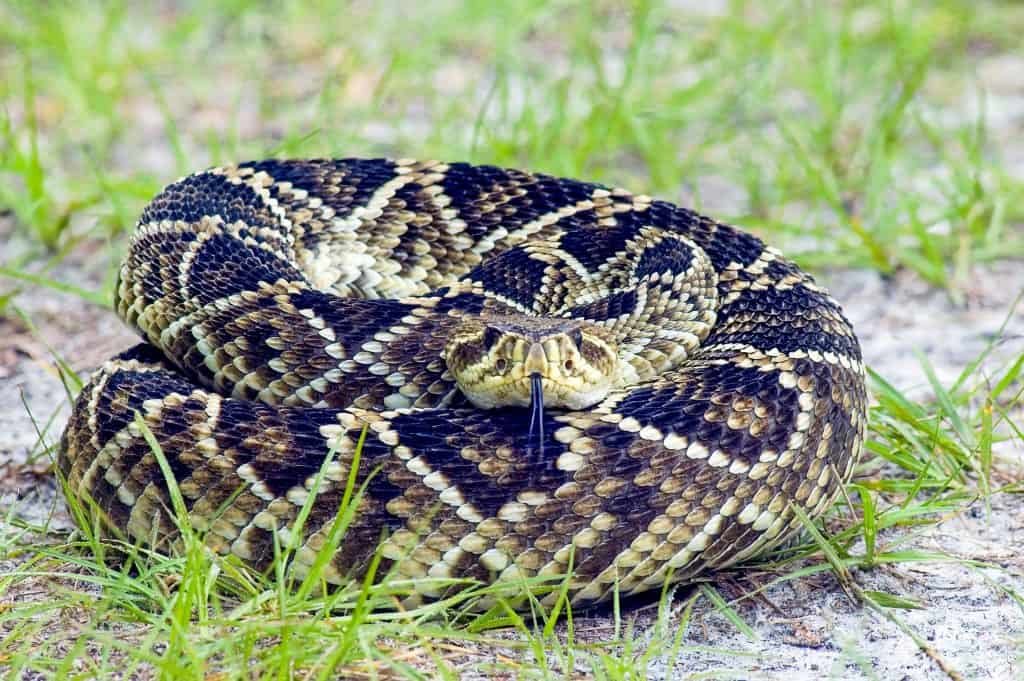
Summertime is when venomous snakebites are most likely to occur.
©Donna Bollenbach/Shutterstock.com
Is it possible to be bitten by a venomous snake during the winter? Yes. But with snakes typically in brumation, it does not happen often. Summer is when the snakes wake from their hibernation-like state to mate, hunt, and soak up the sun. This coincides with the time when people are more active outdoors, making encounters and bites more common.
With climate change making winters milder, there is a possibility that snake encounters will occur earlier in the year. It may also mean that areas where venomous snakes were not previously found may now have populations. Therefore, while snake bites occur most often during the summer now, it may not always be that way in the future.
How Can You Avoid Venomous Snakes When Hiking?
Summertime brings out hikers in droves. Therefore, it should come as no surprise that this is when snake bites tend to increase. Fortunately, there are surefire ways to minimize the risk of encountering a venomous snake when hiking.
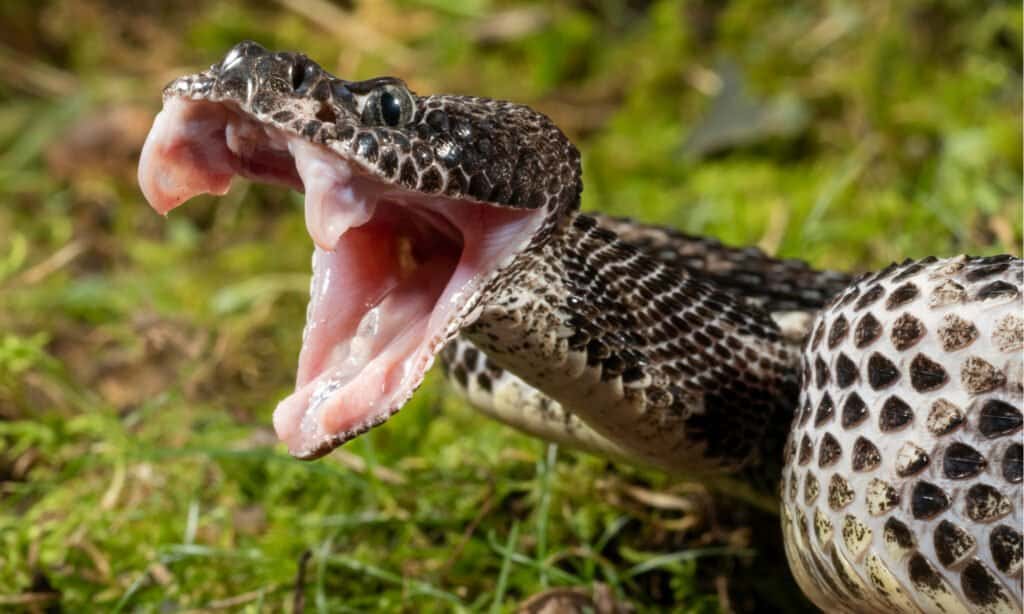
Staying on the hiking path, wearing proper hiking apparel, and being observant are some ways to stay safe while hiking in the summer.
©Joe McDonald/Shutterstock.com
Some of the best ways to avoid venomous snakes when out on the trail are as follows:
- Stay on the path
- Give a wide berth to tall grasses or dense shrubbery
- Step on rocks rather than over them so that snakes can feel the vibration and flee rather than strike
- Pay attention to warning signs at trailheads
- Do not hike at night as snakes are more active
- Wear hiking boots and pants
- Use trekking poles to alert snakes of your presence via vibrations
- Pay attention to rattling sounds or other signs of snake activity
- Keep dogs on leashes
Hiking does not have to end in the summer, even with increased snake activity. All it takes is observation skills and staying on marked trails to dramatically reduce the chances of being bitten by a venomous snake.
Preventing Snake Bites in Your Backyard
Being cognizant of snakes on hiking trails may no longer be enough in some regions of the U.S. and around the world. This is because regions that were never prone to venomous snake activity may soon be. Consequently, it will be necessary to take action to make backyards as undesirable as possible for these unwanted and potentially deadly predators to prevent them from moving in.
Some of the ways to discourage venomous snakes from entering a property include:
- Control the rodent population
- Do not put out birdseed, which attracts rodents, or clean up any spilled seed daily
- Clean up after fruit trees daily to prevent rodent activity
- Keep grass trimmed to prevent snakes from hiding
- Store firewood 20 feet or more from the home
- Clear trash and debris from the property
- Trim back bushes to prevent snakes from taking cover
- Plant flowers and other plants that are natural snake deterrents
- Install snake fencing to keep snakes from burrowing
- Do not allow standing water to prevent both rodent and snake activity
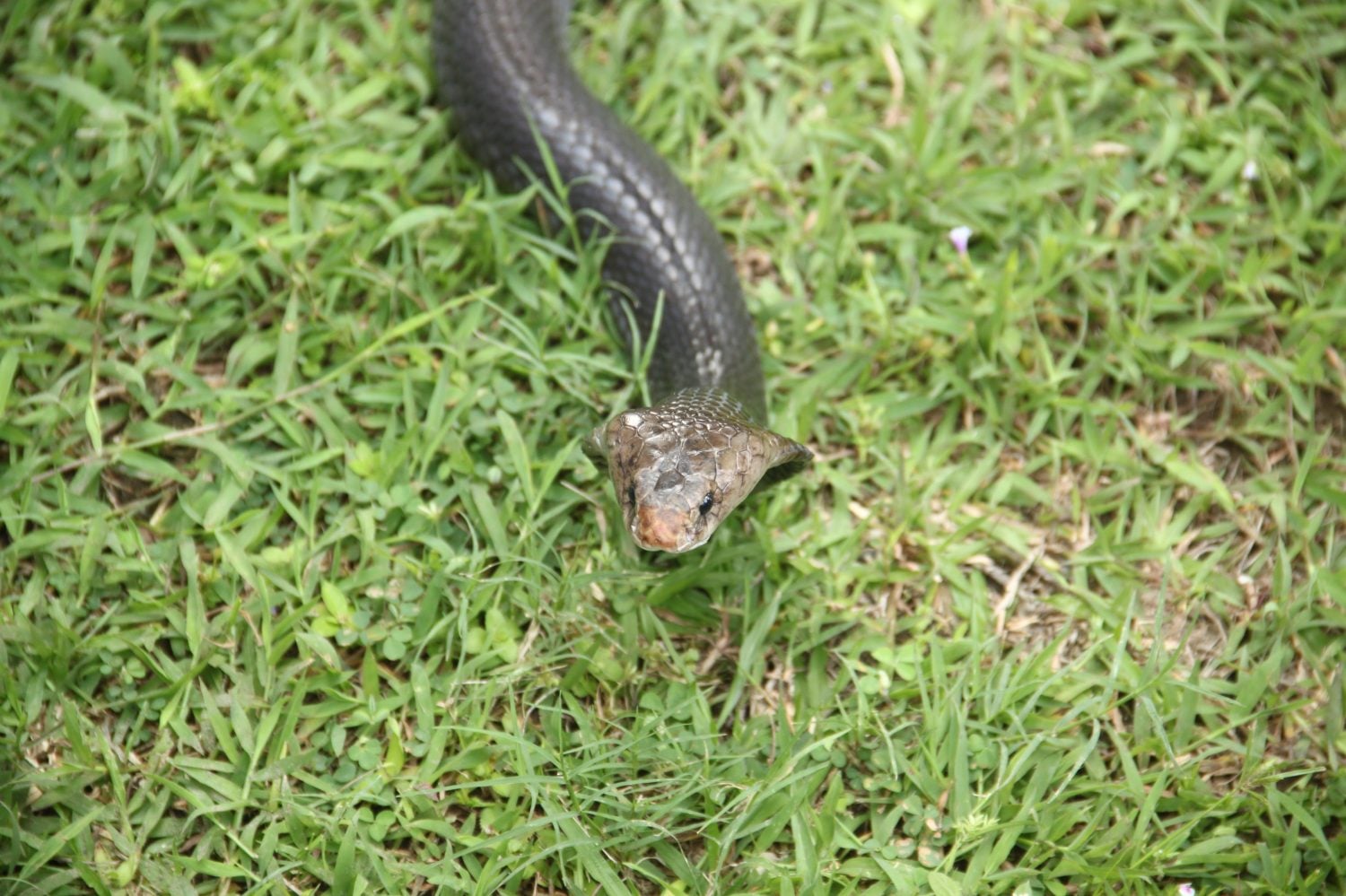
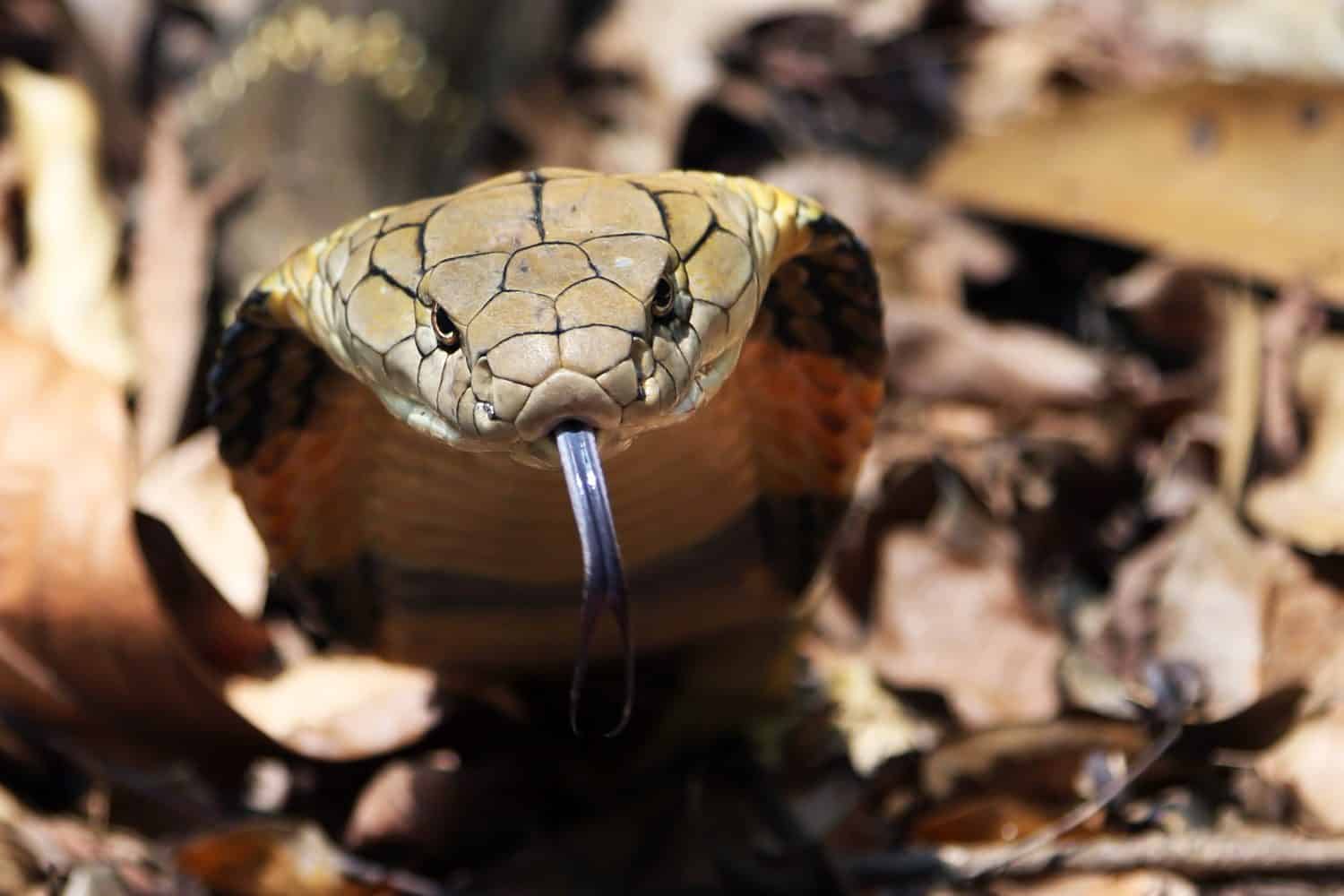
Venomous snakes, like the cobra, may become more of a common sight as global temperatures rise.
©denblangkon/Shutterstock.com
As global temperatures continue to rise, all animals, including snakes, will have to adapt to survive. One of the easiest ways to do so is to migrate to cooler regions. It is no longer safe to assume that because a venomous snake has never lived in a part of the country before, it will not in the future.
However, many nonvenomous snakes mimic venomous species as a survival strategy. Therefore, the snake that enters your property may be harmless. If you are unsure which species you are dealing with, the best course of action is to call experts for identification and removal, ensuring the safety of both people and the snake.