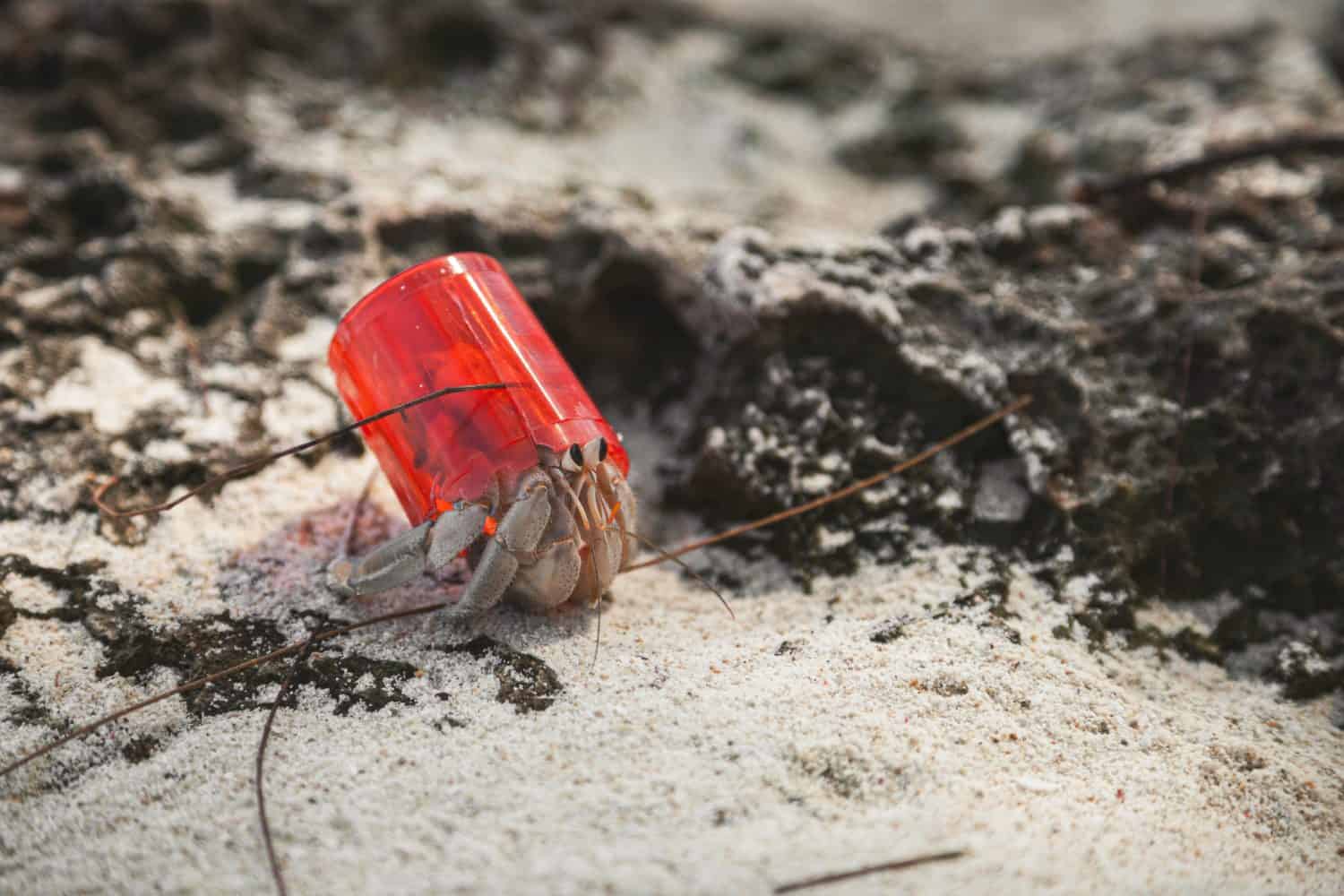

Hermit crabs are small crabs that carry shells on their backs, both for a home and for safety. But with shells being harder to find year after year, hermit crabs have had to spend more time in shells that do not fit and are uncomfortable. To combat this, an unusual housing solution for hermit crabs has come to light. Not only does it show the crabs’ adaptability, but it also demonstrates their resourcefulness.
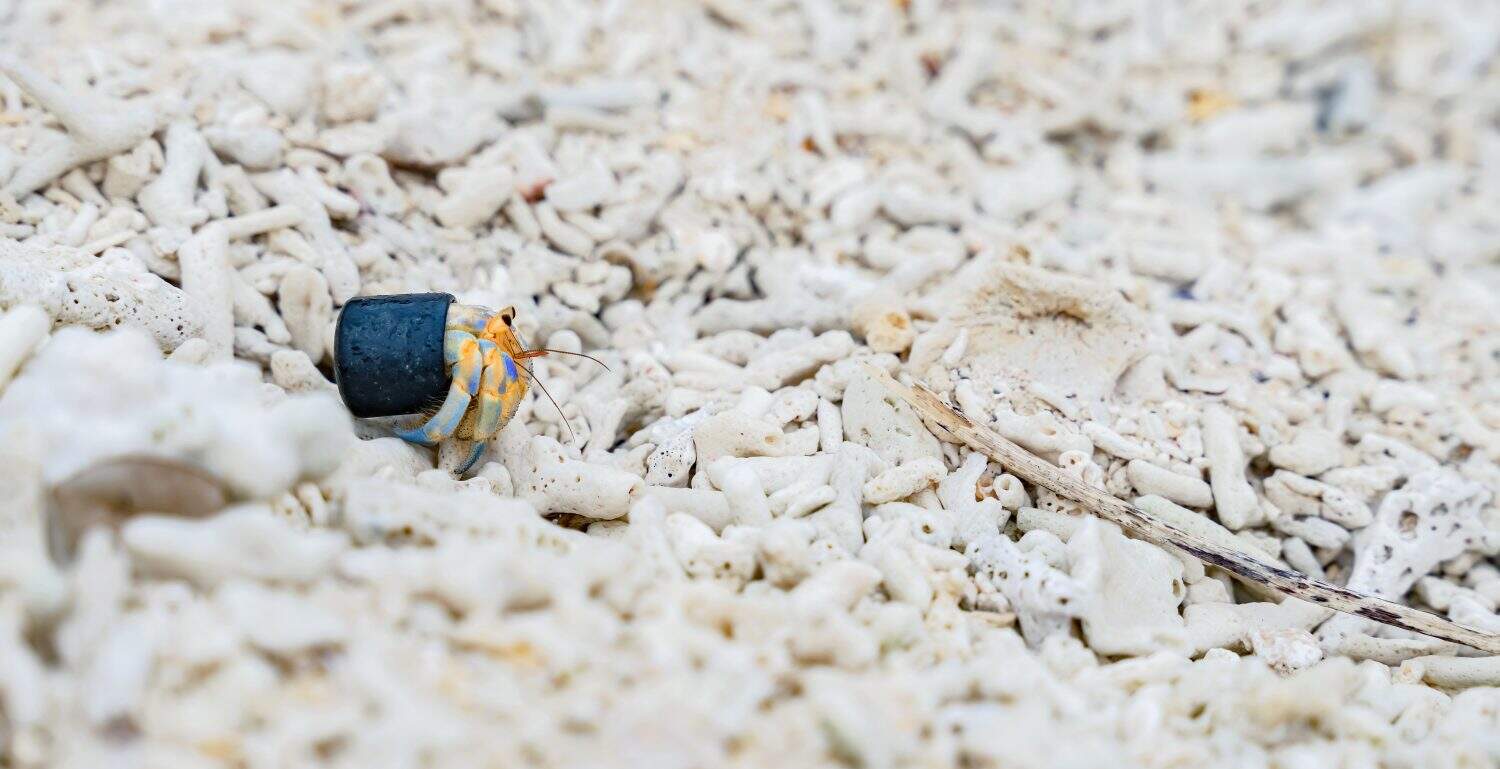
Instead of frantically looking for shells, a majority of terrestrial hermit crab species have been observed using trash for their homes, though most individual crabs still use natural shells when available. While this highlights the problem of waste in and near the ocean, it shows how animals are making the most of the available resources to survive. In the case of the hermit crab, using plastic may be the turning point in the way crabs evolve in the future.
Hermit Crabs Have Turned to Trash for Housing
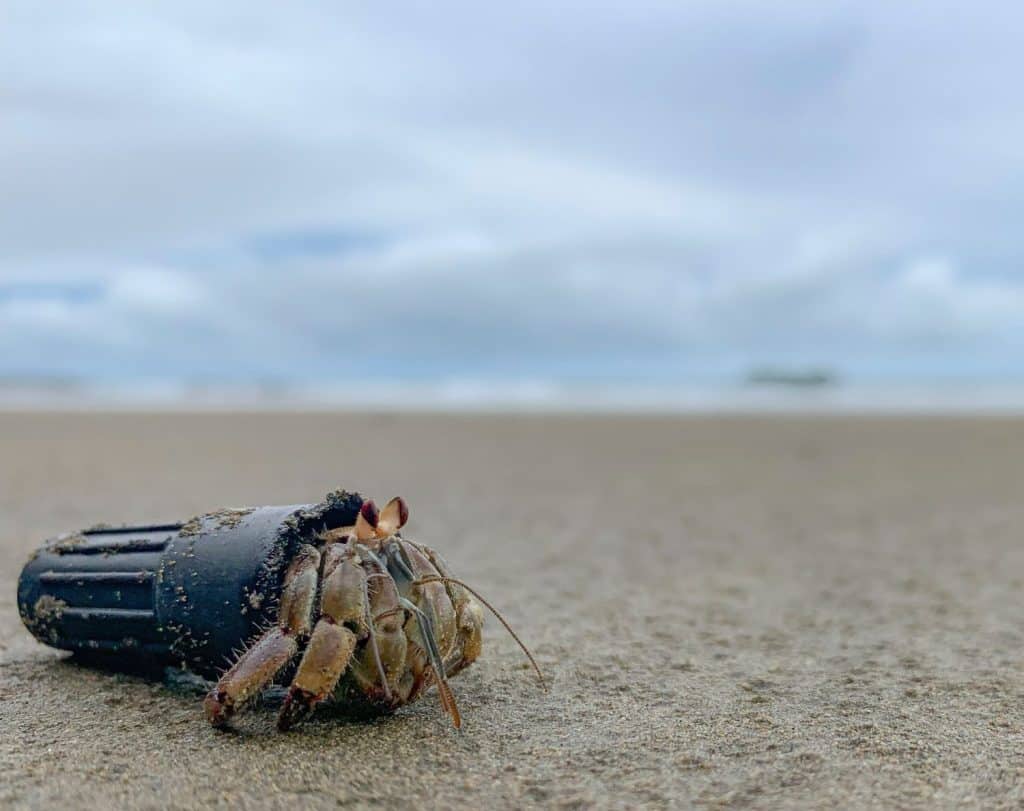
Hermit crabs are using trash, and often plastic, in place of their shell homes.
©Scupix/Shutterstock.com
Hermit crabs are known for wearing the shells of other animals for both protection and as their home. The crabs are notoriously very picky when it comes to a perfect shell for their abode. Therefore, they may spend days trying to find the right shell after molting, dragging around the old one in hopes of being able to abandon it quickly. Given that shells have become so difficult to find, hermit crabs have developed a unique solution to their problem, making housing easier to locate than ever. Instead of using shells, hermit crabs have turned to using trash as their homes.
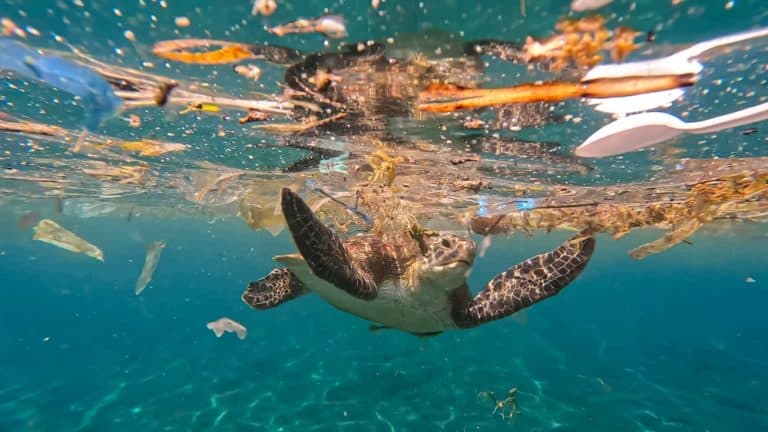
Currently, 10 of 16 species of terrestrial hermit crabs have been observed carrying pieces of trash on their backs rather than a shell. While most of this trash consists of plastic, cans and tins have also been observed. In total, there is an estimated 5.25 trillion pieces of plastic trash and debris in the ocean. While there is no total for the amount of plastic on beaches around the world, there are more types of certain plastics than others. Those types of plastic include:
- Bottle caps
- Plastic bags
- Drink bottles
- Wrappers
- Cigarette butts (contain “cellulose acetate, a plastic-like material that does not easily degrade”)
While bottle caps are one of the favorite items that hermit crabs choose to make their homes out of, it is clear they will not lack for trash to choose from should they want something else. In some cases, the option chosen is even more advantageous than the shell itself.
Advantages of Using Trash for Shells
Hermit crabs using plastic may have an advantage over other hermit crabs when it comes to camouflage, a lighter shell, and mating
©metamorworks/Shutterstock.com
Given how much sea trash there is, it seems strange to think that there may be some benefits to hermit crabs choosing a piece of plastic or metal over a shell. But that is exactly what scientists have discovered.
According to a 2024 study published in Science of the Total Environment, hermit crabs have been observed adapting to use trash for their homes, which comes with both potential advantages and significant risks. This is because, in addition to demonstrating adaptability to environmental changes, using smaller pieces of trash as shells may give hermit crabs an advantage over others in their community that use traditional shells.
Some of the advantages that hermit crabs have when using trash as a shell include:
- Hermit crabs may be better able to camouflage themselves, given the amount of sea trash there is in the ocean and on beaches
- Plastic is lighter than shells, making it easier for hermit crabs to carry around
- Brightly colored plastic may be beneficial for male hermit crabs when looking for a mate; they choose males that stand out
- With more trash being available than shells, hermit crabs may be able to live longer, not only having a more protective home but one that is easier to locate after molting
The fact that there is so much trash in the ocean and surrounding areas is not something to be celebrated, even if it has become a go-to habitat for many hermit crab species. While there are a number of benefits to hermit crabs using trash as their protective shell and home, there are some drawbacks to not using shells as well.
Disadvantages of Using Trash for Shells
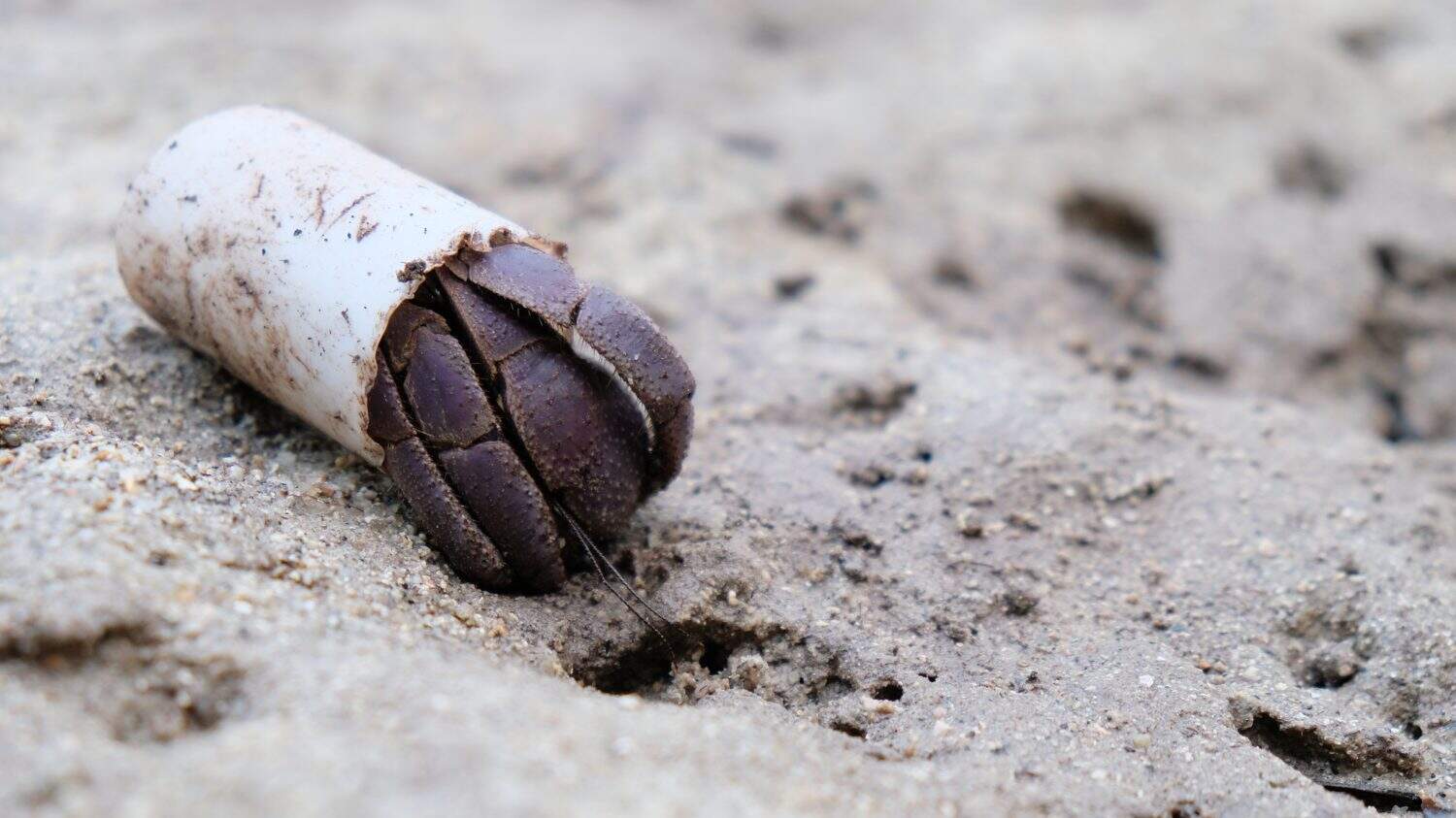
Hermit crabs can get stuck in the very object they were trying to use as their home.
©Karn wattanapintu22/Shutterstock.com
Unfortunately, there is not all positive news when it comes to hermit crabs using plastic and other types of trash as shells. There are some big drawbacks to trash being used versus shells when it comes to what hermit crabs carry on their backs. As plastic begins its slow decay, it begins to leach into the water. This can make the hermit crabs sick and shorten their lifespan.
Additionally, hermit crabs have to try out objects to see if they make a good home. Some of the plastic bottles hermit crabs squeeze themselves into are ones they are unable to get out of. Consequently, the hermit crabs die in the very containers they were considering using as a home. While in some instances hermit crabs can use trash for camouflage, in other cases it may make them more visible to predators. Therefore, hermit crabs may become a target when wearing plastic or other pieces of trash, whereas they may never have been seen wearing a shell home.
Hermit Crabs Need to Change the Size of Their Shells
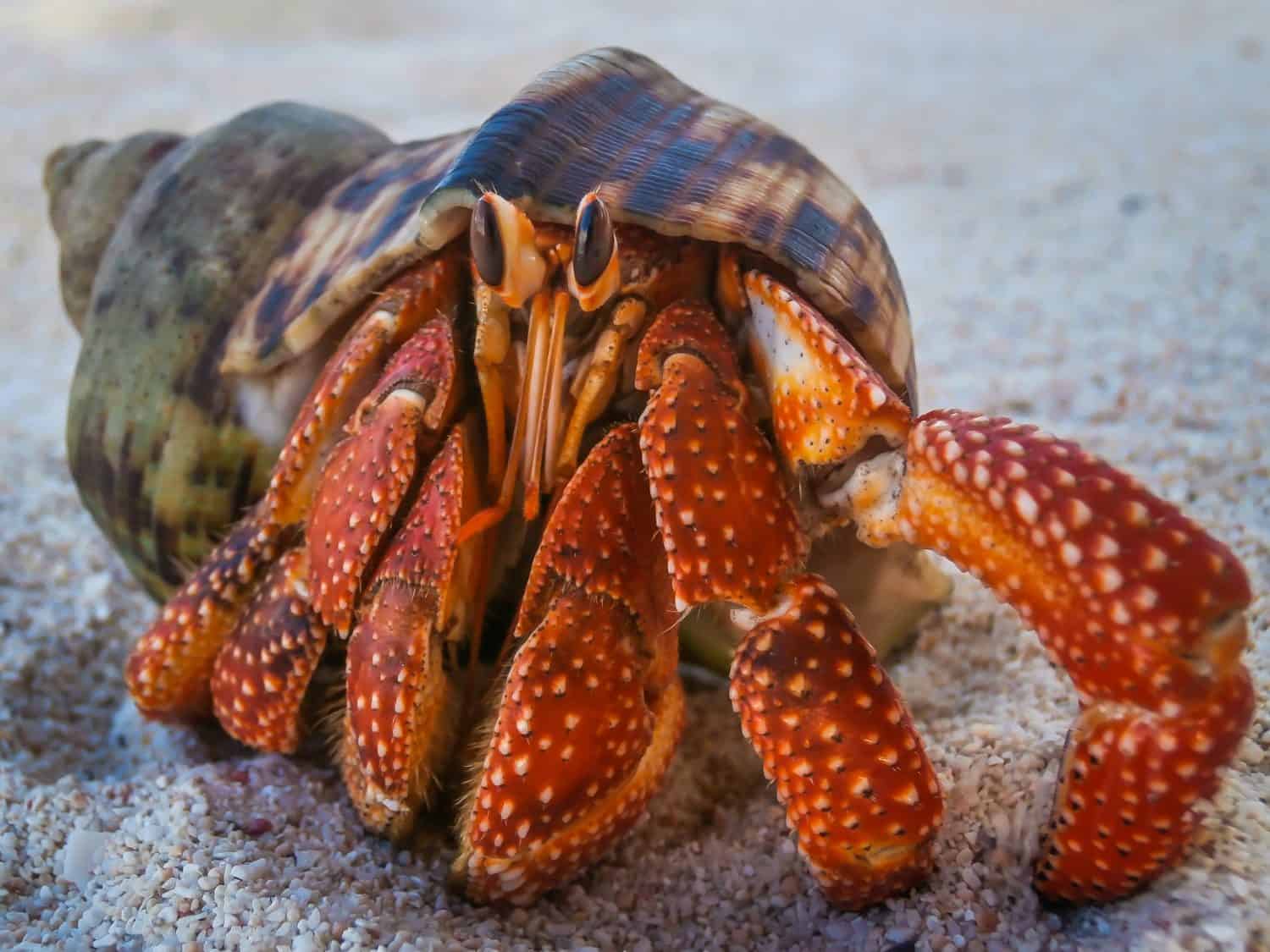
Hermit crabs must molt once or more per year, resulting in a change of shell.
©jbutcher/Shutterstock.com
Hermit crabs will need to change their shells when they are done molting. Molting occurs approximately once per year for older hermit crabs and more frequently for younger crabs who are rapidly growing. As hermit crabs get ready to molt, each species will take a different amount of time to get through the process. On average, it can take four to eight weeks for an adult hermit crab to complete the molting process. During this time, the crab will not be in its shell. Instead, it may bury itself in sand during this time, as it waits for the new exoskeleton to harden.
Once the process is complete, the search will be on for a new shell. The hermit crabs may carry their old shell with them until a new one is found for protection and camouflage. But as soon as the new shell fits, the old shell will be left behind for another hermit crab to find and call home.
What Hermit Crabs Look For in a Shell
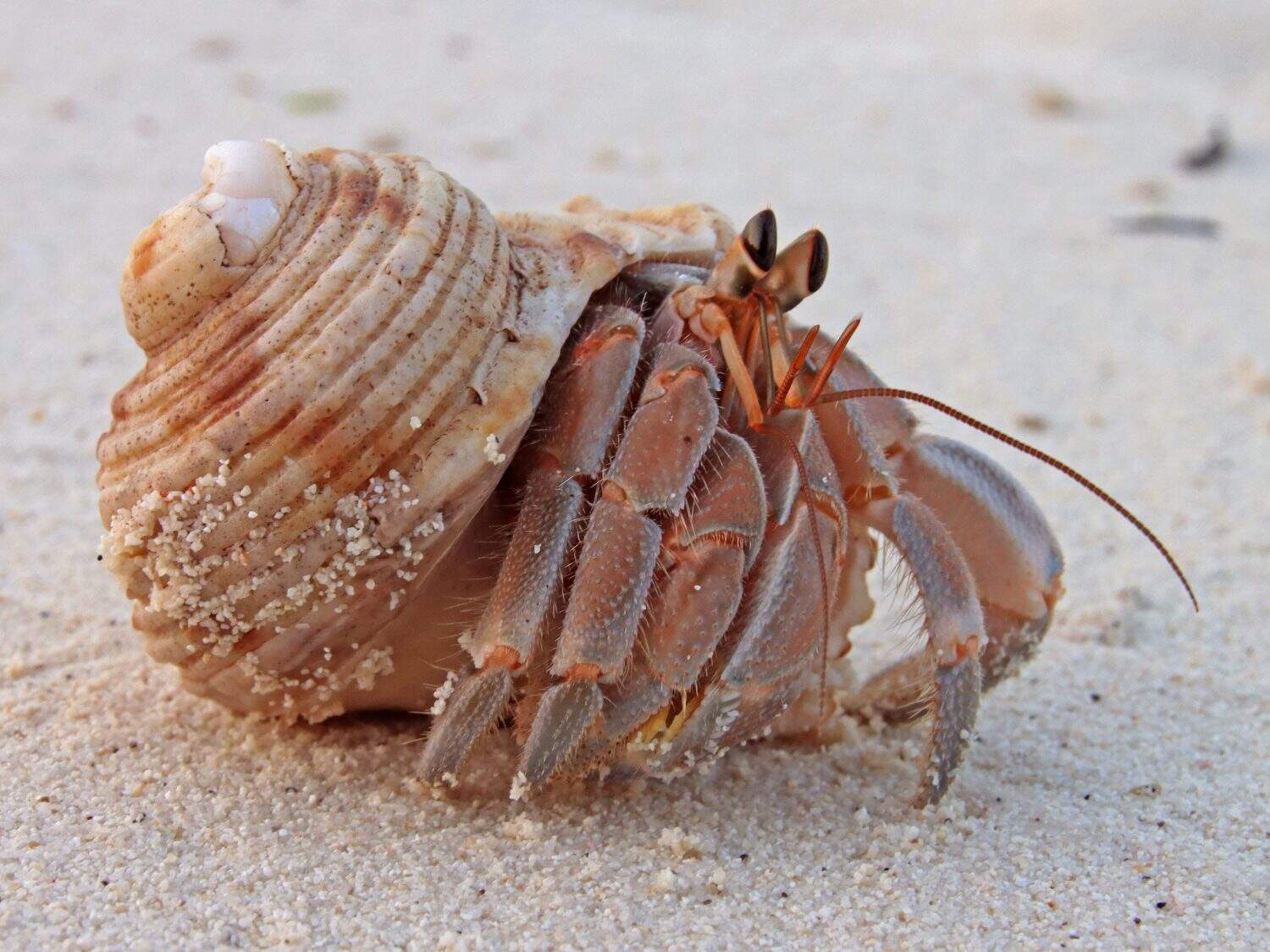
Hermit crabs are very particular when it comes to choosing their shells.
©thomaslabriekl/Shutterstock.com
It may seem like an easy task for a hermit crab to find a shell to call home. However, because hermit crabs need to change shells several times a year, finding the right shell can be a time-consuming process. There are specific requirements that hermit crabs look for in shells. Some of those requirements include:
- Strong and sturdy
- The ability to use the shell as camouflage in an aquatic environment
- Provides shade when out of the water
- Shell needs to allow the hermit crab to move, but not be so loose that it falls off
- Shell should not impede the hermit crab’s ability to grow
- The shell needs to be easy to get in and out of
When a shell meets all of these requirements, a hermit crab will happily cast aside its old shell in order to claim a new one.
Hermit Crabs Are Having a Hard Time Finding Shells for Homes
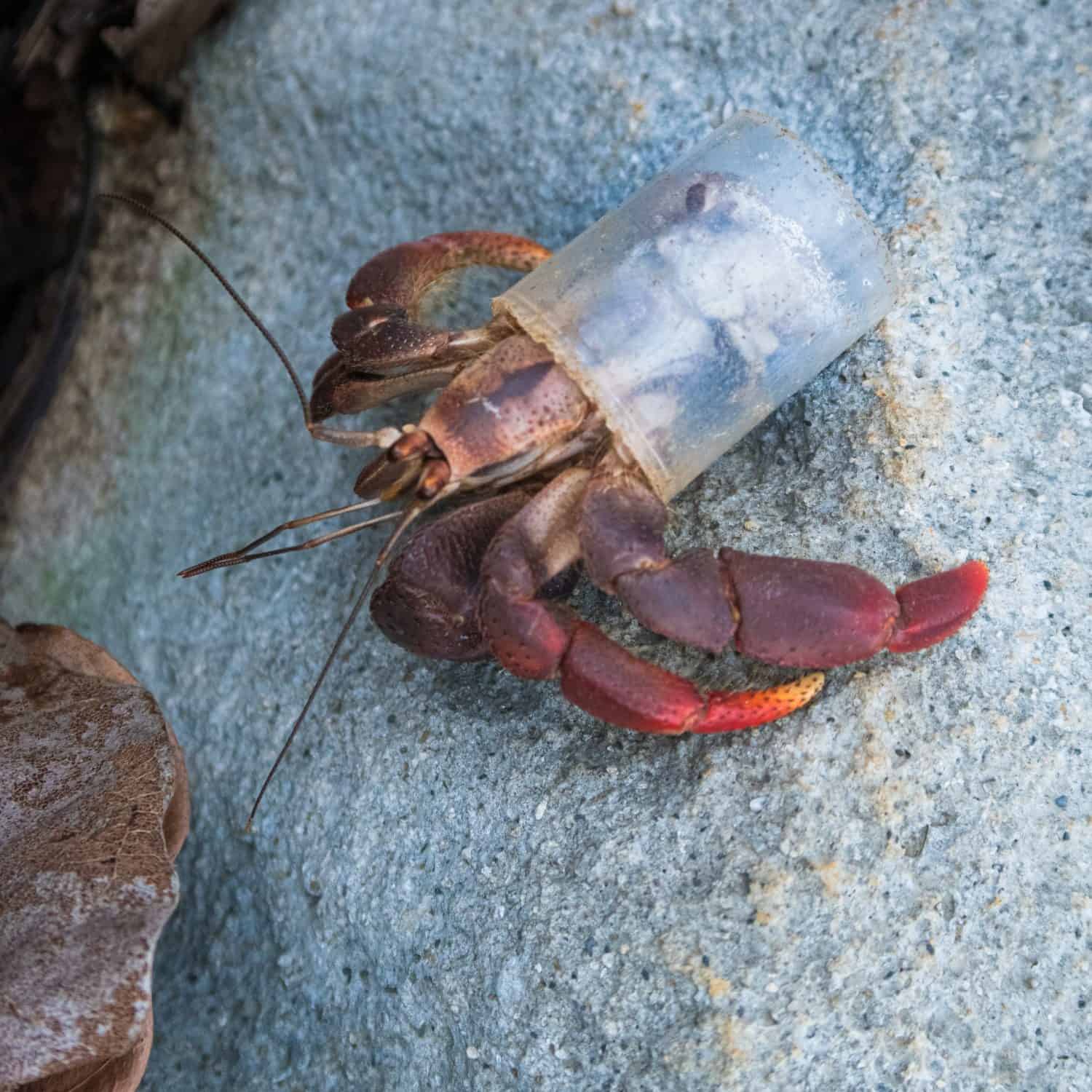
Because seashells are being taken from beaches, hermit crabs have no other choice but to use plastic and other trash for their shells.
©Martin Furtivo/Shutterstock.com
While there are advantages and disadvantages to hermit crabs using trash as their portable home, at the end of the day, many hermit crabs do not have a choice but to use trash, given that the once-abundant shells found in the ocean and on the beach are becoming harder to find. One of the primary reasons hermit crabs are no longer finding shells is due to the tourist industry. As people visit tropical islands, they want something to remember their vacation by. For many, taking a shell from the beach is an easy way to do that. But even if just one shell is taken by each tourist, the number of shells removed from the beach adds up quickly, leaving nothing for the hermit crabs to use as homes.
In some areas where it is clear that the number of shells has been decimated from beaches, shells are being left on the beach where hermit crabs are known to congregate. The hope is that the hermit crabs will abandon their trash shells and find a suitable, traditional shell instead. As people continue to visit tropical locations and remove shells, while also contributing to beach and ocean trash, hermit crabs may eventually have no choice but to use trash for their homes. What this will mean as far as the evolution of hermit crabs remains to be seen.