
Quick Take
- The anteater's tongue connects to a body part you'd never expect, and that unusual anchor is exactly what makes its feeding speed possible. See the sternum connection →
- Sticky saliva alone isn't enough to get the job done. A second feature on the tongue does the real heavy lifting when extracting insects. Discover the backward-facing spines →
- Anteaters deliberately avoid wiping out a nest, and their reason for doing so is more strategic than it sounds. Explore their feeding strategy →
- A sense of smell 40 times sharper than ours is just the starting point. What anteaters do with that information before a single flick of the tongue is the real surprise. See how smell guides the hunt →
Giant anteaters are fascinating animals with an intriguing anatomy, especially their extraordinary tongue. They are the largest of the four living anteater species and are around the size of a golden retriever. Here, we explore the details of how their tongue is perfectly adapted for their diet.
Anteaters and Their Diet
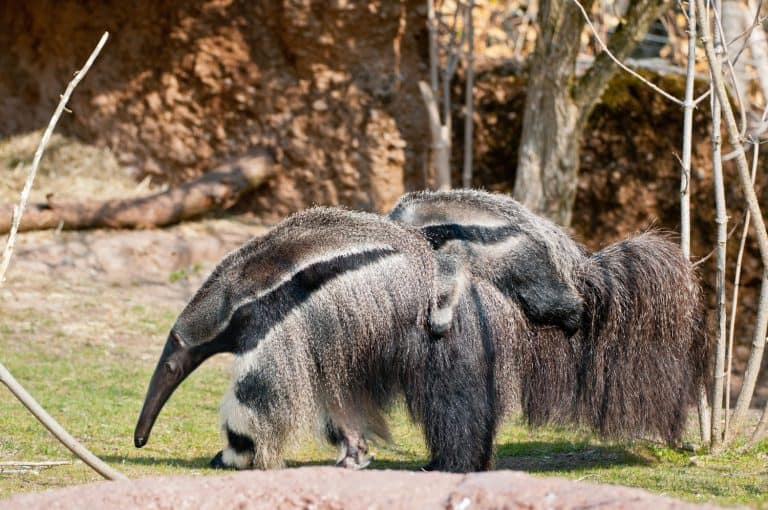
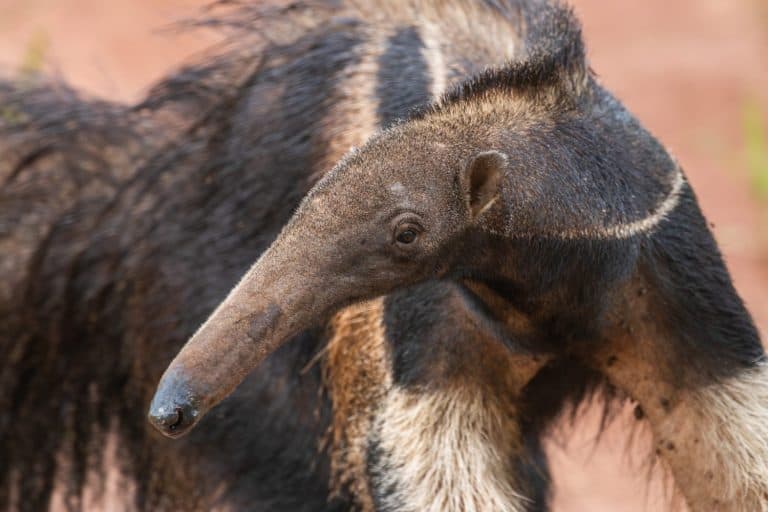
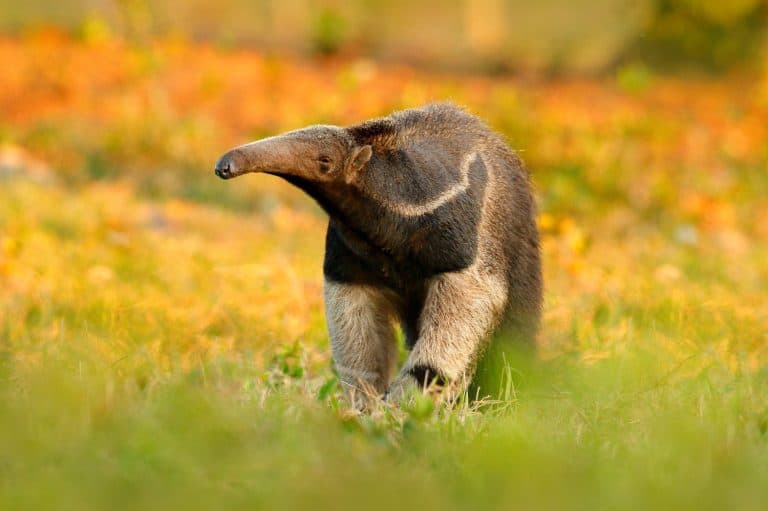
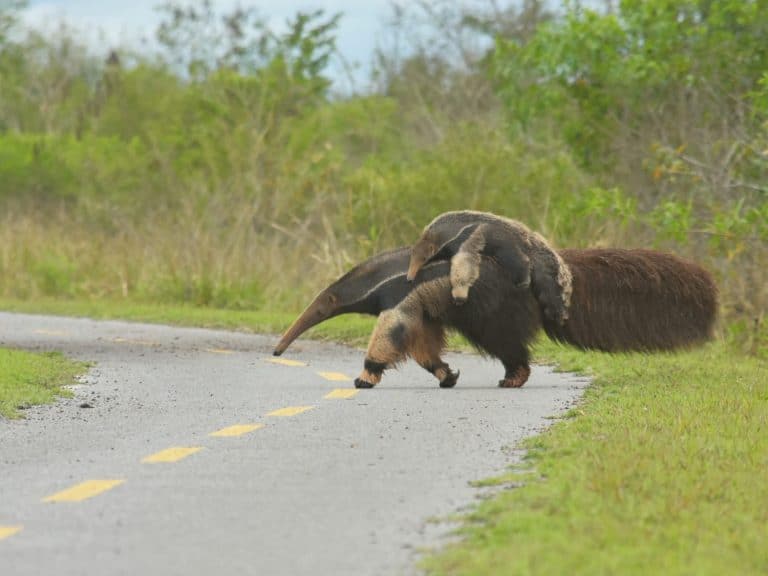
Giant anteaters (Myrmecophaga tridactyla) are found throughout Central and South America from Honduras to the Gran Chaco region of Bolivia. They live in tropical forests, savannas, and grasslands. They are easily recognized by their long snout and bushy tail. Their coarse fur ranges in various shades of brown, with wide black stripes running from their upper front legs toward their spine. They lead a solitary life except when breeding and raising young.
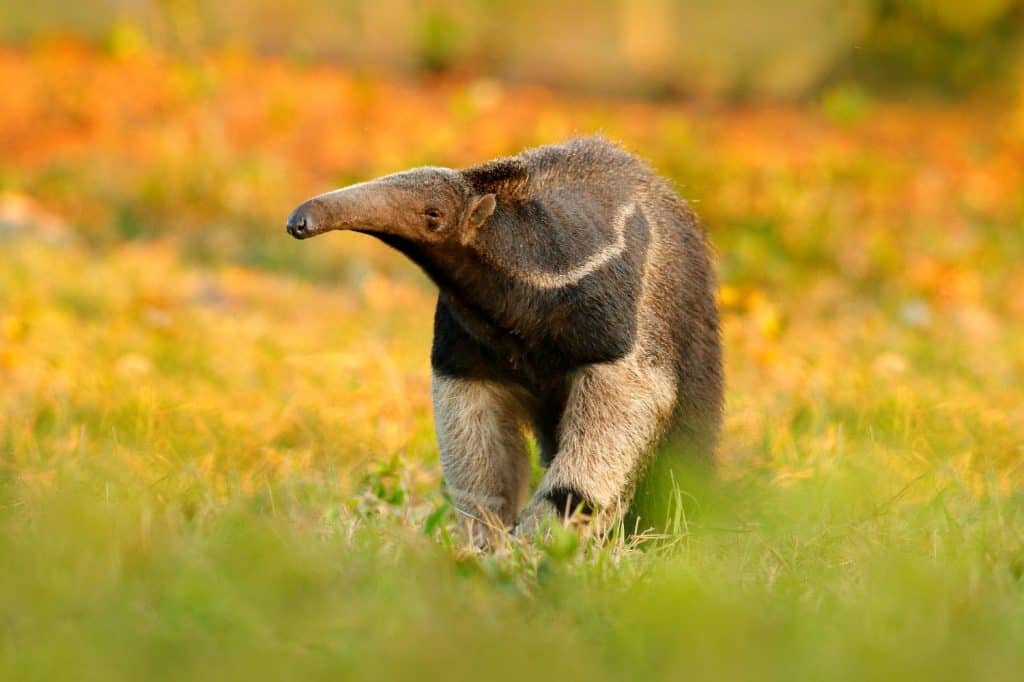
Giant anteaters have a long snout to reach into ant nests.
©Ondrej Prosicky/Shutterstock.com
They are insectivores, and their diet is mainly made up of ants and termites. Thanks to their excellent sense of smell—which is about forty times better than ours—they can identify particular species of ants or termites. They then rip apart the nest or mound using their powerful front limbs and claws. When not in use, they tuck their claws into their palms and walk on their knuckles.
How Does the Anteater’s Tongue Work?
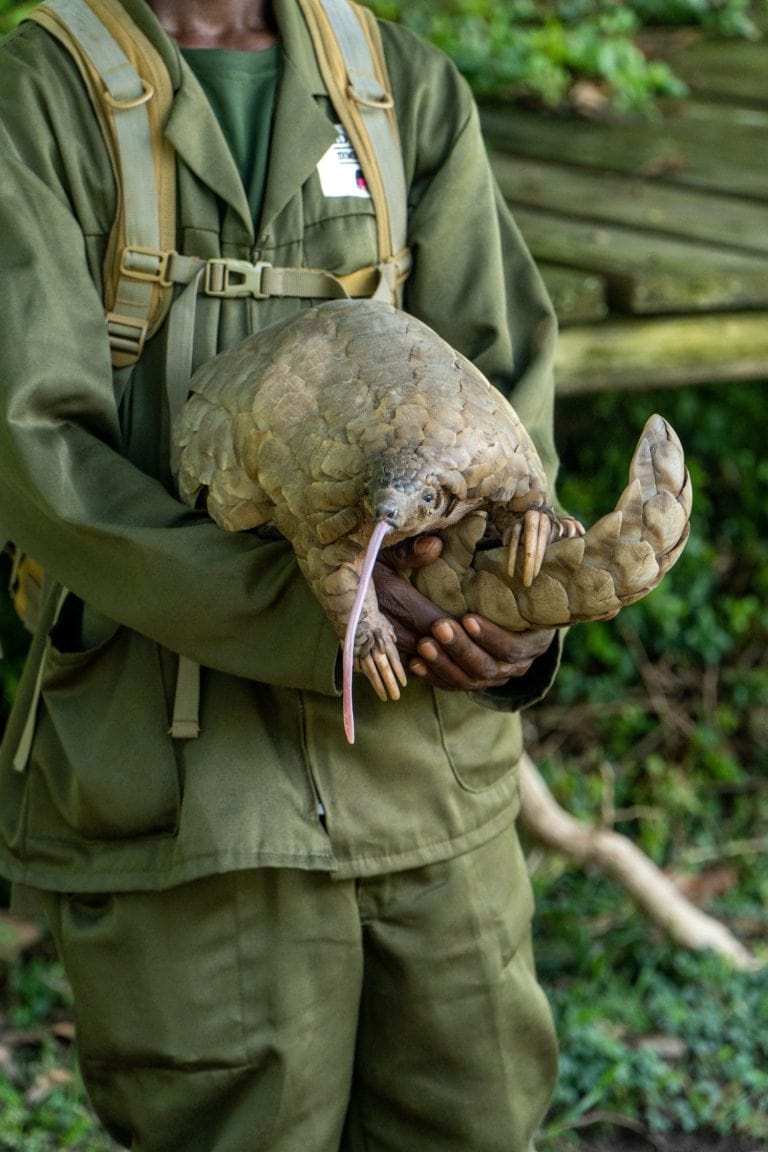
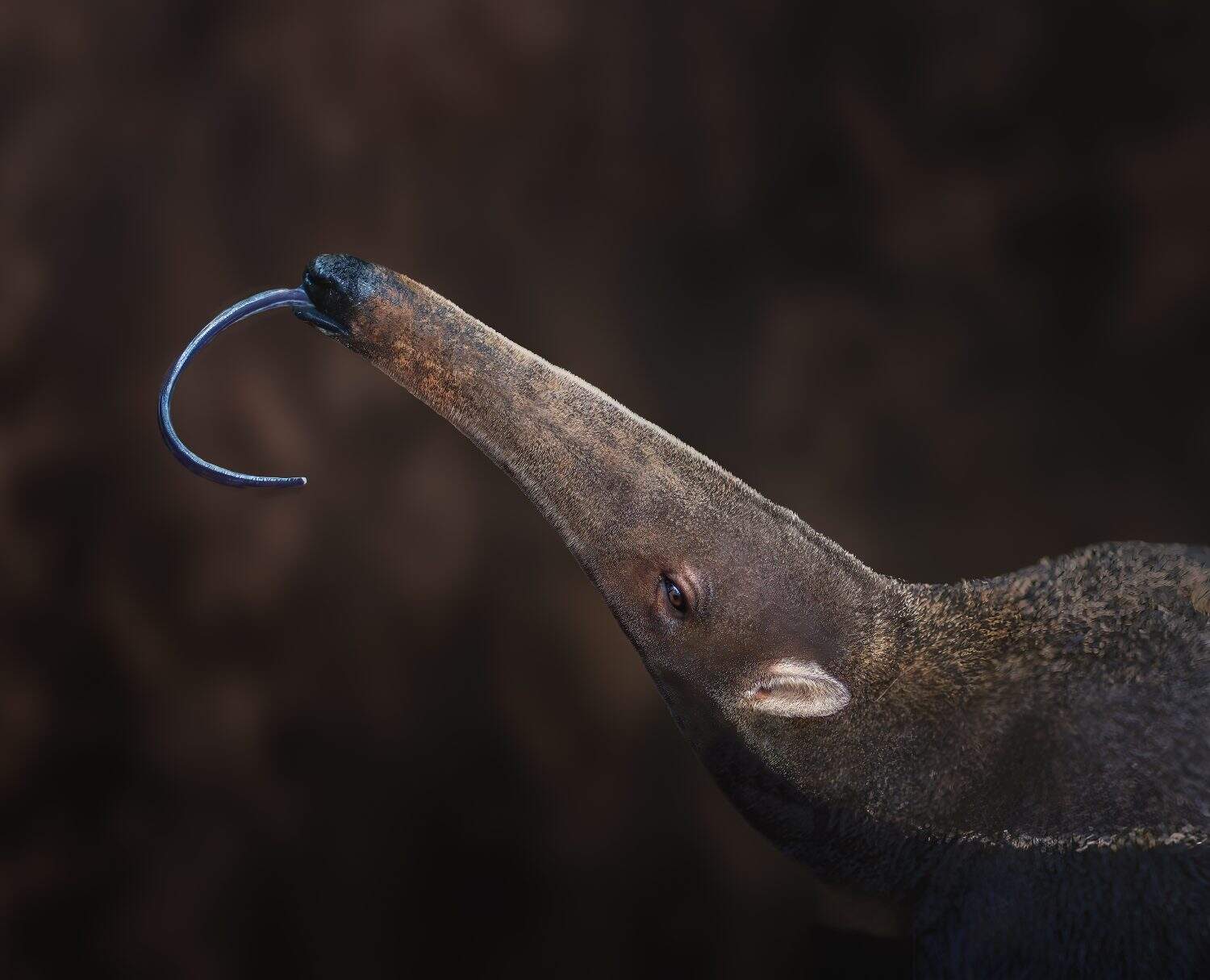
The giant anteater can consume up to 30,000 ants and termites a day, and that is all down to their amazing tongue. It is attached directly to their sternum by muscles that allow it to be flicked in and out very quickly. This two-foot-long tongue, which resembles a pink strand of spaghetti, can flick in and out of an ant’s nest up to 150 times per minute.
Additionally, their tongue is coated in sticky saliva and covered with tiny, backward-facing spines, which help extract ants and termites. Anteaters, however, are not greedy! They know that wiping out an ant’s nest is not to their advantage, and they are not immune to the insect’s bites. So, they feed at one mound for about a minute, consuming up to a few hundred ants, and then move on.