
It’s hard these days to tell whether a viral video is real or AI. Especially when it shows something as unlikely as three anteaters stacked on top of each other in this Instagram post. But in fact, it’s not that uncommon for anteater young to hitch a ride on a parent’s back. So why do anteaters display this unusual behavior? Is it all in fun, or does it serve some practical purpose for survival?
Anteaters vs Aardvarks
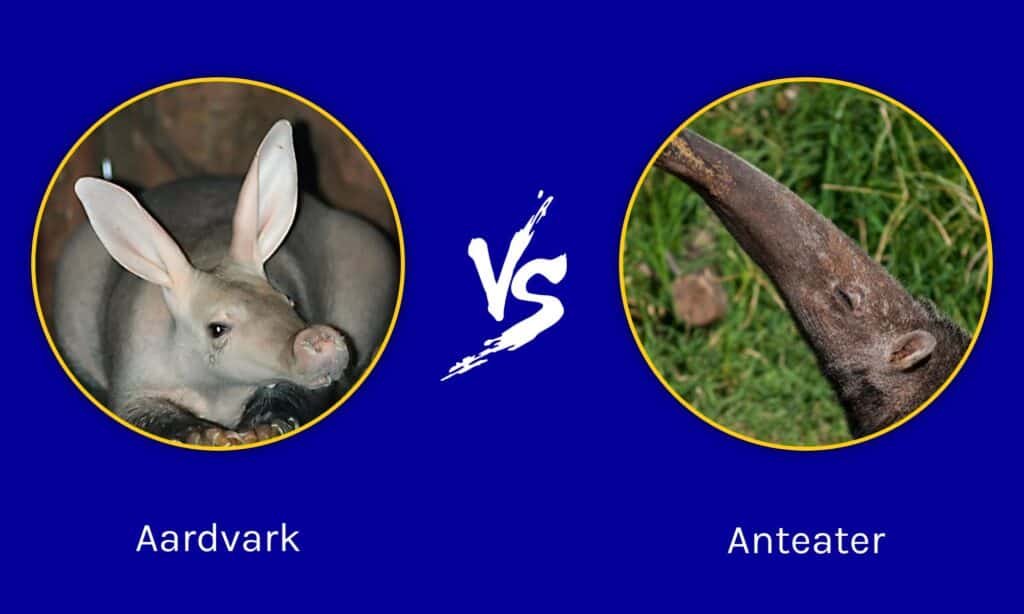
Anteaters are some of the most distinctive mammals in the natural world. They are found across a vast swath of Central and South America. While most people picture the giant anteater—the shaggy, elegant species with a long snout and sweeping tail—there are actually four recognized species: the giant anteater, the silky anteater, the northern tamandua, and the southern tamandua. Each species has its own preferred habitats, but giant anteaters are the best known. They roam grasslands, forests, savannas, and wetlands from Honduras all the way to northern Argentina.
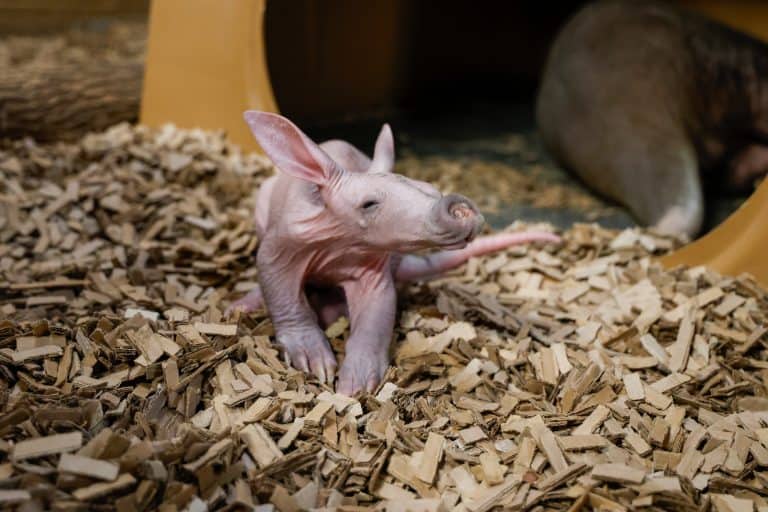
In Africa, the aardvark fills a similar role but is a very different animal. It’s the only member of its order (Tubulidentata), a nocturnal, solitary digger that sleeps in deep burrows by day and forages at night. Using shovel-like claws and a sticky tongue nearly a foot long, it rips open termite mounds and ant nests, then slurps up insects with its enamel-less, tube-shaped teeth. Aardvarks have poor eyesight but large ears, thick skin, and powerful forelimbs—perfect for excavation. When they move on, their abandoned burrows become shelters for warthogs, jackals, and reptiles, making aardvarks quiet engineers of the ecosystem.
What Are Anteaters Like?

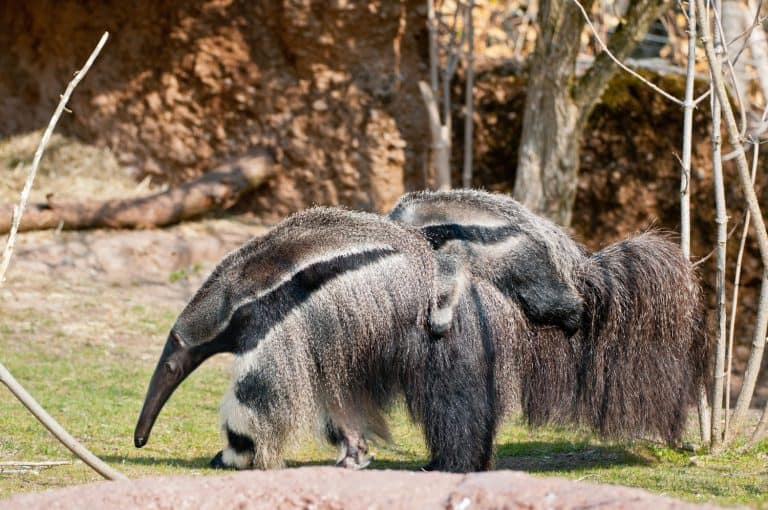
Anteaters have no teeth, but have a 2-foot-long sticky tongue to capture insect prey.
©Diego Grandi/Shutterstock.com
Anteaters are built for a specialized life: they have no teeth, but wield an incredible two-foot-long sticky tongue, perfect for gobbling up their favorite fare—ants and termites. A single adult can eat up to 30,000 insects in a day, using their keen sense of smell to sniff out nests and their massive foreclaws to rip open tough mounds. They walk on their “fists” to protect their claws, and can even defend themselves with surprising strength—sometimes fending off jaguars or pumas if threatened.
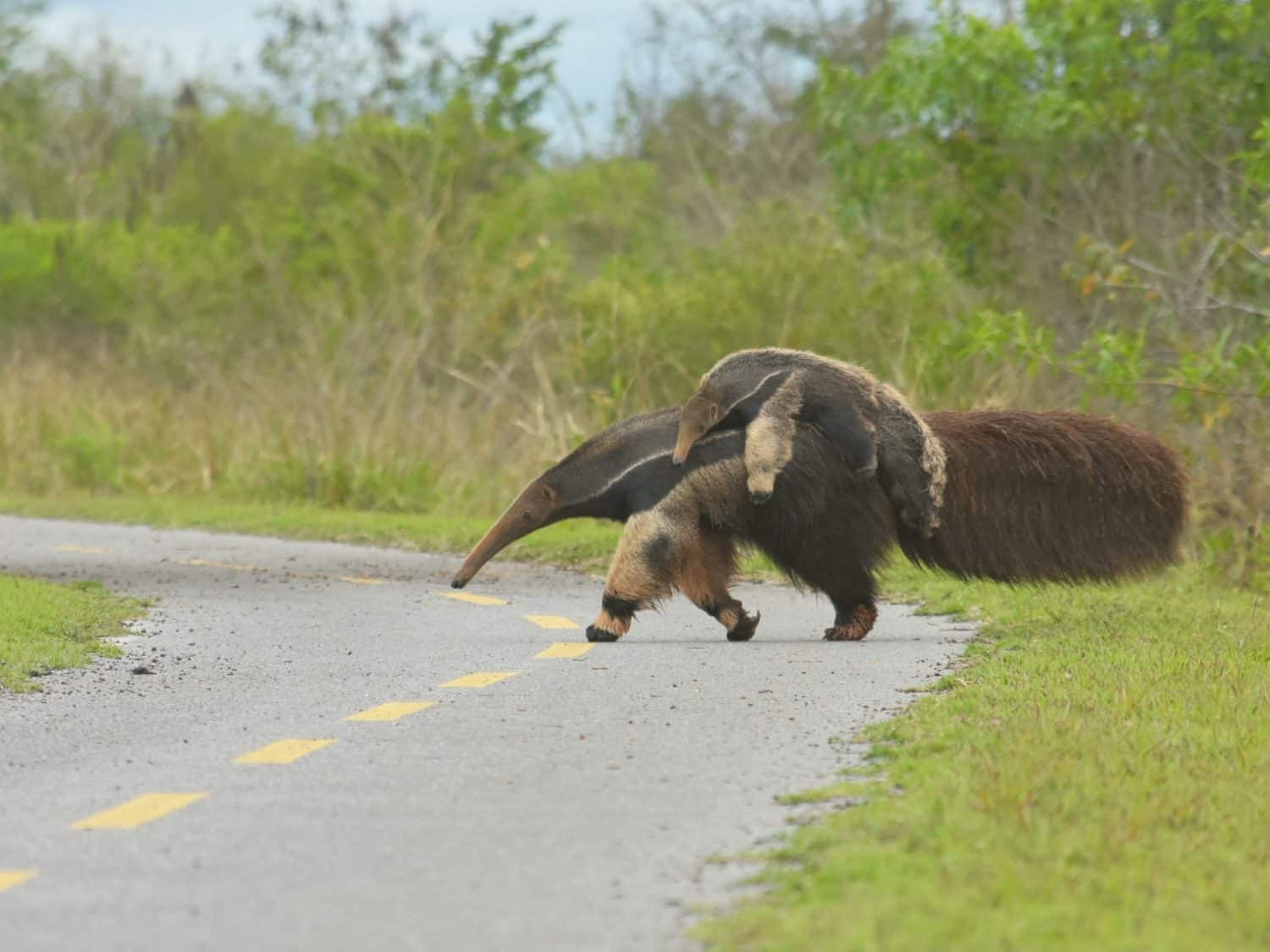
These mammals are mostly solitary, except when a mother is raising her young. Cubs are carried on the mother’s back, camouflaged by their matching markings, and ride along for months until they’re ready to be independent. Anteaters are generally quiet and shy, though vocal pups might let out high-pitched grunts to call for mom.
Baby on Board: How Anteater Pups Ride
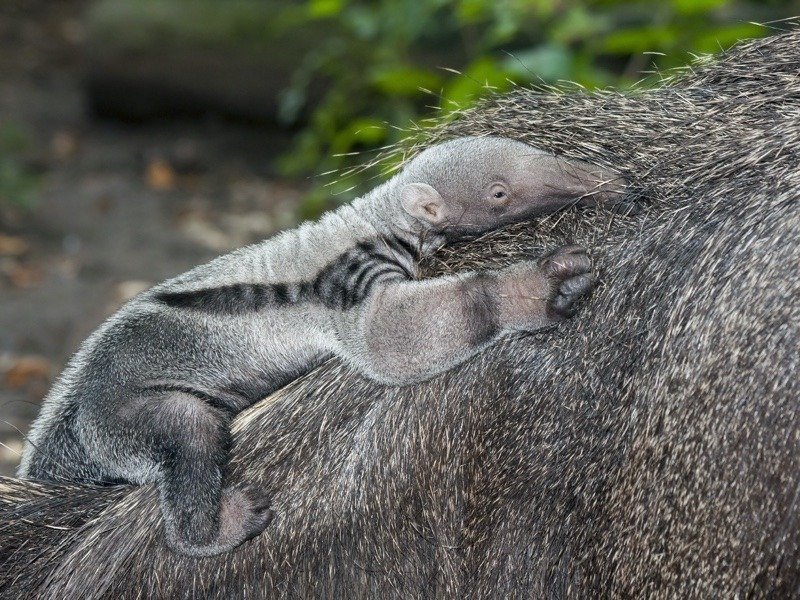
Baby anteaters remain attached to their mothers for up to a year.
©belizar/Shutterstock.com
Riding on a parent’s back is the classic travel method for young anteaters, especially for giant anteaters and their close relatives, the tamanduas. In nature, anteater moms almost always have a single offspring, which hitches a ride soon after birth and stays with her for up to a year. The baby clings tightly, perfectly blending into mom’s striped fur for camouflage and safety.
The mom can’t carry her young in her mouth because of its small size and lack of teeth for gripping. So this back-riding adaptation is essential. It lets the mother forage, travel, and even defend herself while keeping her baby safe, warm, and mobile.
During this time, the connection between mother and pup is close. The pup learns the smells, sights, and soundscape of the world while watching from its high perch. This is the safest place for a young anteater—in tall grass where jaguars, big snakes, and other predators lurk. Few places offer the same level of protection.
Stacked for the Camera: Is This Normal Behavior?
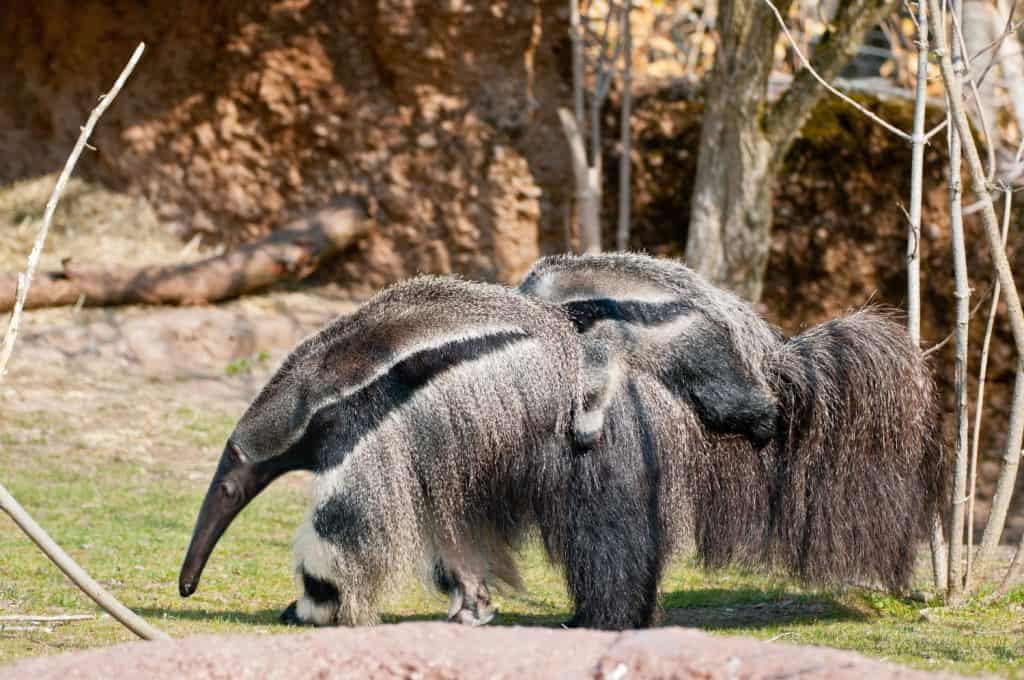
These anteaters are along for the ride.
©Martin Larcher/Shutterstock.com
The Instagram post that inspired this article shows an unforgettable sight: three anteaters stacked like a living totem, the one on the bottom strolling along patiently while two more cling to their back. The upper anteaters, with their long, fluffy bodies and curious snouts, peer around with childlike wonder as they ride along. It’s a scene full of humor and heart—and for those in the know, a behavior both familiar and extraordinary.
What makes the Instagram video so unusual is the triple-stacked parade. In the wild, anteater families don’t form these towers. Mothers generally only carry one pup at a time, as their bodies are adapted for just that weight. Dads don’t participate, and siblings are rarely born together. Three riding together, then, is a quirk rarely seen in nature. And as for the video claiming it’s a dad carrying the mother and baby, that’s highly unlikely. The only time an adult might mount another is during mating.
What May Have Caused It?

©Eric Isselee/Shutterstock.com
A three-month-old giant anteater. Who could resist?
Why might these anteaters have formed a tower of cuteness? In zoos and rescue centers, anteaters can be in closer contact than in the wild and may be raised with siblings from blended litters, or play with others of different generations under supervised enrichment. Caretakers in those environments sometimes glimpse these adorable stacks. It may happen when two pups are close in age, during introductions with fostered animals, or as juveniles play and bond in a safe environment. Zoo keepers have reported that a particularly tolerant adult, or a playful pair, may allow two or more little ones to ride before gently shaking them off. It’s a rare case of animal behavior shaped by safety and socialization in a protected setting. For viewers, it’s just irresistibly cute.
Why This Behavior Matters

A northern tamandua giving its baby a ride.
©Leonardo Mercon/Shutterstock.com
Back riding is more than adorable—it’s a testament to anteater adaptability. Riding allows mothers to keep moving and foraging in dangerous habitats. For the young, it’s a period of close learning. This is how they observe what to eat, how to move, and how to sense threats. In zoos, enrichment and a sense of safety can enhance animal well-being and encourage the kind of interactions—like gentle stacking and play—that keep anteaters physically and emotionally healthy.
For conservationists, each healthy pup or playful stack seen in a zoo is also a sign of hope for a species at risk. In the wild, all four species are at risk—some more than others. Giant anteaters are listed as “vulnerable” by the IUCN. There are as few as 5,000 individuals potentially remaining in the wild. They face threats from habitat loss, fires, road mortality, hunting, and even attacks by dogs. Conservation groups and zoos are working hard to protect these gentle, insect-eating giants before they disappear from their native ranges. With so many threats in the wild, the survival of each anteater and the chance for us to witness their unique behavior is a small but meaningful victory.
Want One as a Pet? Not So Fast
Private ownership of anteaters is illegal or heavily restricted in many places. They have dangerous claws that will rip up your yard, your carpet, your couch, and you (by accident). And they will mark territory in all those places to prove they did it. Exotic animal vet care is scarce and expensive.
So, look but don’t touch, support ethical zoos and conservation organizations. Watch the videos, learn about them. And if you want to see them in the wild, take an eco-vacation and low-impact photo safari in Latin America. Remember, anteaters are happier in the jungle just as much as you are happier in your house.