Quick Take
- Chimps are selective about which leaf they grab, since choosing the wrong species would make the whole ritual completely useless. Watch chimps choose carefully →
- The roughness of the leaf isn't just incidental. It triggers a chain reaction inside the chimp's gut that acts like nothing else in the animal kingdom. See the chain reaction →
- Leaf-swallowing is only the beginning. Great apes also treat injuries using the same active compounds found in human traditional medicine. Explore chemical treatments →
- This behavior is neither pure instinct nor pure learning, and the real answer reframes how we think about the origins of medicine itself. Discover medicine's origins →
For decades, scientists have watched chimpanzees go through strange morning rituals. On an empty stomach, chimps approach rough-leaved plants. They aren’t interested in nutrition; they do not chew to extract sugars or proteins. Instead, chimps take a single leaf, roll it into a cylinder with their mouth, and push it against their palate before swallowing it whole. This careful process is often repeated several times in a row, all before their first meal of the day. But why?
The fact that chimps swallow these rough leaves whole means they aren’t getting any nutrition out of them. Instead, scientists and primatologists believe that chimps are engaging in a form of self-medication. The leaves act as a purging mechanism; they strip parasites and other foreign bodies from the chimps’ gastrointestinal tracts and irritate the intestines, knocking loose other unwelcome freeloaders. Let’s learn more about this fascinating, primitive form of self-medication and how effective it is at making chimps feel better.
Rough Leaves
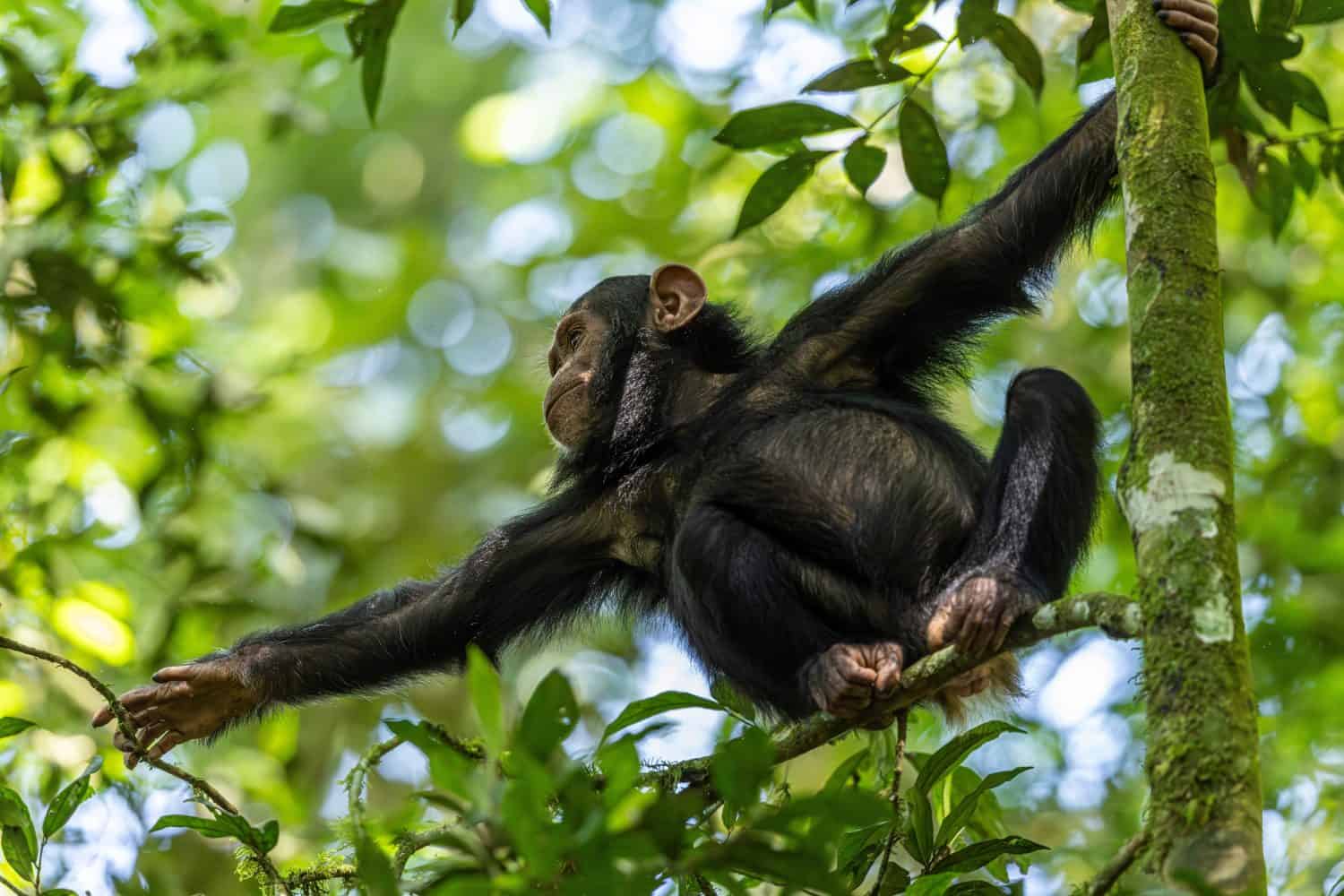
Researchers have long observed chimps swallowing rough leaves whole to expel parasites from their intestines.
©Dr_Flash/Shutterstock.com
Seeing a chimpanzee grab a rough-textured leaf and swallow it whole looks like a particularly rushed meal. Careful observers of chimps, however, like primatologists, have long witnessed this behavior and know the reason behind it. At certain long-researched sites like Gombe National Park in Tanzania and Gashaka-Gumti National Park in Nigeria, scientists have seen this behavior enough times to establish a pattern.
Typically, a chimp shows signs of discomfort or distress. They may be suffering from lethargy, loss of appetite, hunched posture, or other signs of illness. First thing in the morning, the suffering chimp makes a beeline for a plant with particularly rough-textured leaves. They pluck a single leaf, fold it with their tongue and palate, and gulp it down quickly without chewing. This typically occurs in the morning, on a relatively empty stomach, and sometimes they repeat the process several times in a row.
Several hours later, the affected chimp passes stools containing both the undigested leaves and often a considerable number of parasites like worms. Whatever the leaf did inside the chimp, it did it successfully. The chimp, once it passes stools, resumes its normal foraging activity with increased energy and fitness. It’s an effective self-administered treatment for parasites. How does it work?
All in the Leaf
Scientists who have watched chimps swallow leaves whole to treat parasites have noticed a key piece of the process: the type of leaf. When a chimp rushes out to find a leaf to swallow well before breakfast time, they specifically select leaves with rough textures. Certain plant species, such as Aspilia Africana, contain leaves with rough, microscopic hairs called trichomes. These trichomes are hard to break down, so when swallowed whole, they pass through the body relatively intact.
This retention of form is incredibly helpful in sweeping the intestines. When the rough leaves of the Aspilia species hit the gastrointestinal tract, they act like brushes, snagging and sweeping away parasitic nematodes attached to the gut mucosa. The rough texture also irritates a chimp’s intestinal lining. This prompts hyperperistalsis, a process that involves the gastrointestinal tract engaging in rapid, strong contractions. This makes the intestines flush out their contents quickly, before any dislodged parasites can re-attach to the lining.
It may be an uncomfortable process, but it is highly effective. Researchers and primatologists who have followed chimps through this process routinely find intact leaves covered in worms and parasites stuck to trichomes.
Types of Treatment
Chimps seem to understand how to treat their illnesses, both mechanically and chemically. Swallowing whole leaves to flush out parasites is only one treatment method at a chimp’s disposal. They are also known to engage in chemical self-medication through the chewing of plants like Vernonia amygdalina.
As noted in a 2024 study, scientists observed a male Sumatran orangutan with a facial wound. Several days after receiving the injury, the orangutan specifically sought out leaves from the Akar Kuning plant. He chewed on its leaves for a while, then applied the juice he produced onto his facial wound. After that, he covered the area with the chewed leaves as a sort of primitive band-aid.
Other studies have shown that plants like Vernonia amygdalina contain chemical compounds that have antibacterial, anti-inflammatory, and antifungal effects. This marks one of the rare instances in which an animal species engages in active wound treatment using the very same compounds humans use in traditional medicine.
Nature or Nurture
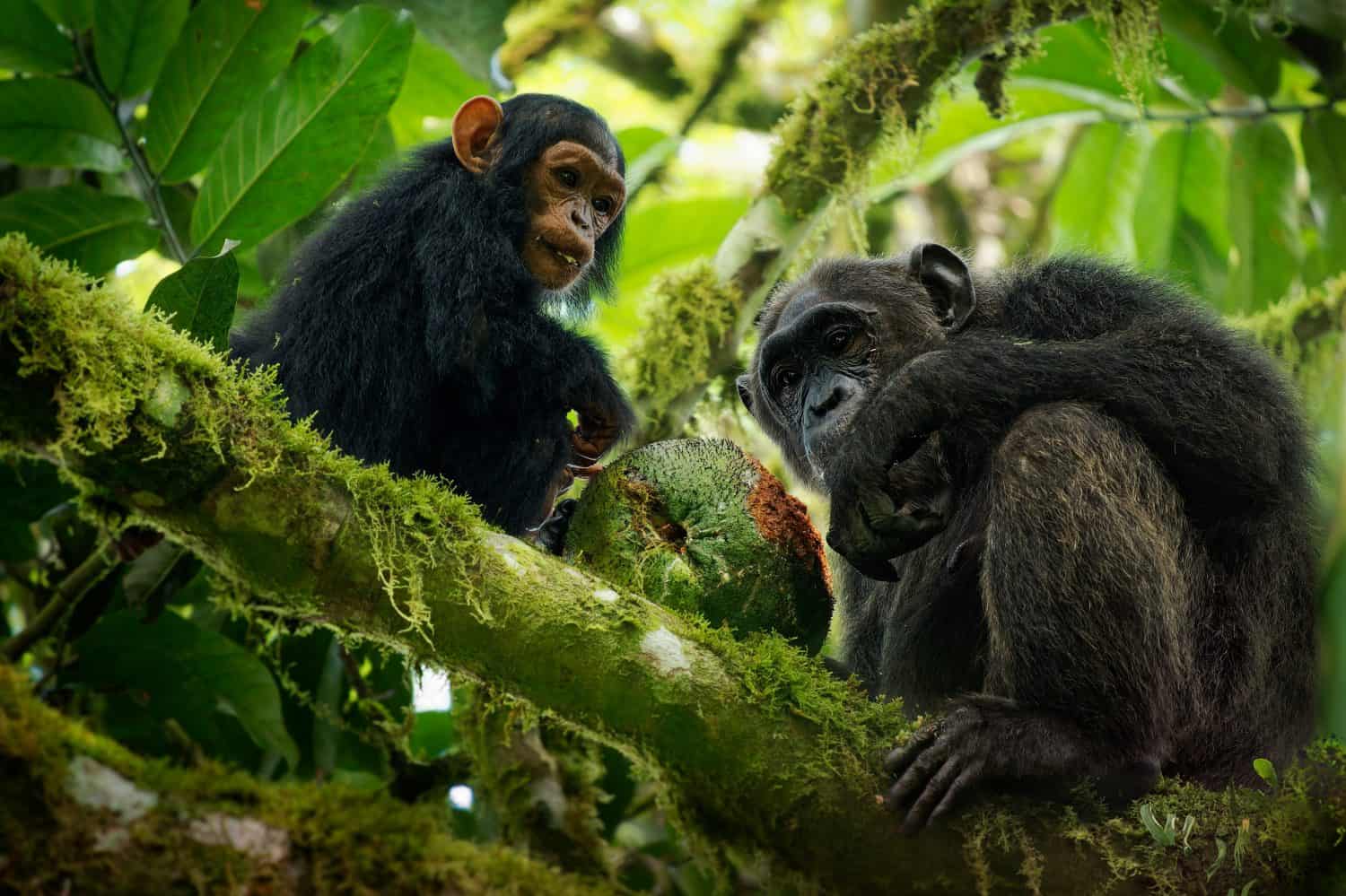
Repeated use of rough leaves to expel gastrointestinal parasites reinforces a behavioral pattern.
©Martin Pelanek/Shutterstock.com
It is hard to say exactly how aware chimps are of the nature of their home remedies, except that they work. Researchers can only infer so much about a chimpanzee’s mental state or intent when they engage in self-medication treatments like eating rough leaves. The fact that the rough-leaf-swallowing process is repeated is likely a mixture of adaptation and social learning.
It is possible that internal distress or nausea triggers an urge toward specific sensory textures. When a mother chimp gets sick and uses the rough leaf technique, her children watch closely and learn how to fold but not chew rough leaves and swallow them. Then, when one of the children matures and encounters the same type of gastrointestinal distress, they mimic the learned behavior. Once it provides near-immediate relief, the chimp realizes its effectiveness. After a lifetime of curing various ailments through this ritual, a behavioral pattern is cemented.
Swallowing rough leaves to expel parasites may be primitive, but its effectiveness reminds us of the earliest origins of medicine. Our modern medical system is the result of thousands of years of trial and error.