
Quick Take
- The Caribbean reef squid pulls off a biological trick that scientists say no other creature quite manages, and this feat happens right on the surface of its skin. See the skin mechanism →
- For reef squid, flashing the wrong color at the wrong rival is more than a social faux pas. It carries real consequences during mating season. See the rival consequences →
- Reef squid manage to court a female and threaten a rival at the exact same moment, and the way they do it is physically fascinating. See the dual-sided display →
The Caribbean reef squid, also known as simply the reef squid, has a unique evolutionary adaptation. The cephalopod species is known for dramatic color changes and has an unusual trick: it can maintain two different colors at once.
That’s right–the reef squid is the marine equivalent of the mayor from “Nightmare Before Christmas.” Instead of spinning its face to show two expressions, the squid displays one color on its front and another on its back. Each color has a specific meaning: one signals attraction, while the other warns of aggression.
How Does the Reef Squid Change Colors?
Like many other cephalopods, the reef squid can change colors thanks to thousands of chromatophores. These color-changing cells contain pigment sacs, which react when the squid expands and contracts its skin. As the squid stretches, its chromatophores also stretch, revealing the deepest pigment colors. When it retracts or loosens its skin, these colors are muted, dulled, or not visible at all.
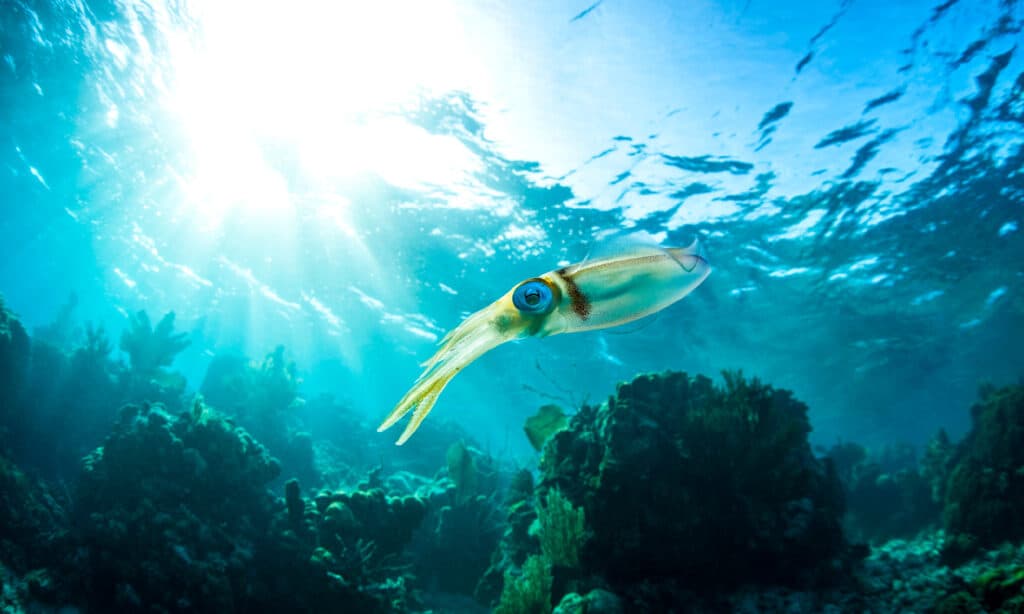
Caribbean reef squid hover between the ocean floor and the ocean surface, giving them an advantage when spotting predators.
©iStock.com/MichaelStubblefield
Color-changing chromatophores serve a variety of purposes. Reef squids use them for two primary purposes: mating and defense. As a result, two distinct colors are associated with each behavior. However, Caribbean reef squid can display different colors or patterns on different sides of their bodies simultaneously, a phenomenon observed in both males and females.
This complex behavior proves how intelligent reef squid are as a species. While it flashes one color to get the attention of a mate, there’s a good chance it’s flashing a warning signal to any other males. This unique, dual adaptation is highly effective, especially when it’s time to compete for a female’s attention.
Red and Pink: Mating Ritual Ahead
Male reef squid have color-coded changes depending on their intention. Squid flash a combination of bright reds and/or pinks when trying to catch the attention of a female. These colors are displayed as the reef squid contracts its chromatophores, displaying the bold color that signals it’s ready to mate.
When a female is nearby, males will also flash these colors for even clearer signaling. Sometimes, males will also flash these colors in a marquee-like pattern, making their display visible from greater distances. Those lucky enough to witness this intense mating ritual have described it as watching an underwater light show. Its color changes can shift in a matter of seconds, making it a spectacular sight to witness.
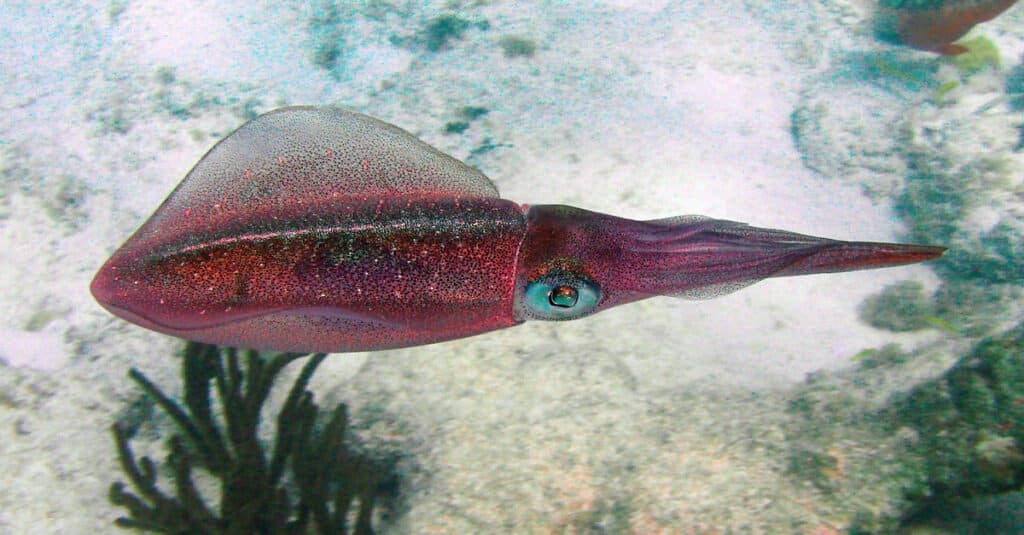
Changing colors and patterns is the primary method of communication between Caribbean reef squids, and red means it’s ready to find a mate.
©Ernie Hounshell/Shutterstock.com
Scientists are still learning about the reef squid’s mating habits. Given its geographic range and its fluid habitat, it’s challenging to study. But they have observed reef squid scouting nesting sites in search of females. This behavior also serves another purpose: locating and warning male competitors.
Bright White: This Squid Will Start a Fight
Since mating season is highly competitive among squid, most have the difficult job of searching for a mate while driving other males away. This would be nearly impossible were it not for the dual-color-changing abilities of the reef squid. While one side flashes red for its mate, its backside shows the opposite. Rival males will only see the bright white display, which is often flickered aggressively as a warning.
Sometimes, reef squid punctuate their warning by keeping their brow ridges gold. This display stands in stark contrast to the opposite side, which appears pleasant and inviting, lacking the same assertive energy. Flashing white also helps reef squid appear larger, increasing the likelihood of intimidating male rivals. This color-changing ability is also controlled by the reef squid’s nervous system.
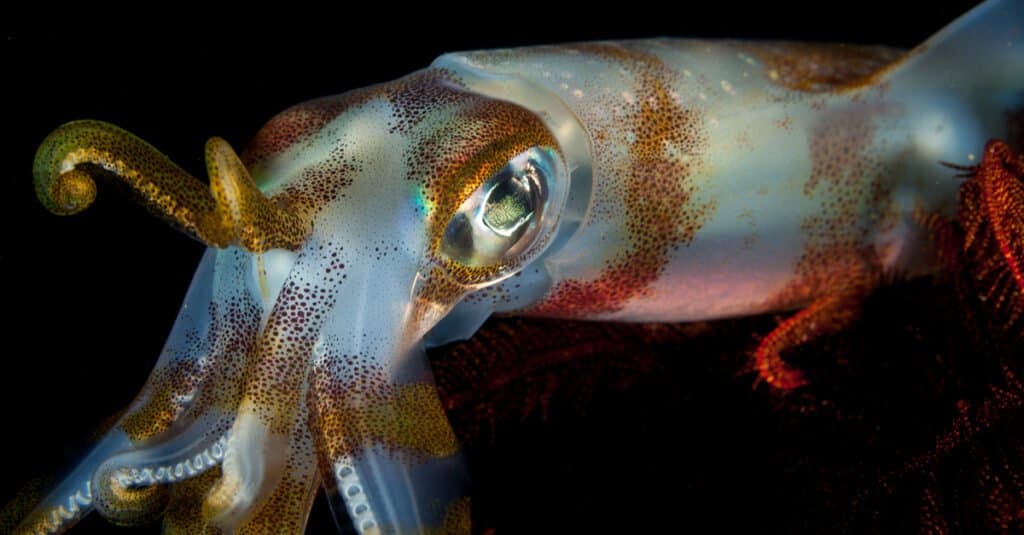
When a Caribbean reef squid displays bright white and color bands, it usually means “stay away from my mate.”
©Gerald Robert Fischer/Shutterstock.com
We don’t often think of marine species having emotions. And while it’s unclear what squid can process on an emotional level, their signaling does confirm heightened states of awareness, stress, and even lust. Highly agitated reef squid may even display a zebra stripe pattern, signaling unequivocally that they will defend their mate. Larger squid have an advantage when it comes to winning their mates’ affection. Sadly, as is the cycle of life, both male and female squid die soon after reproducing. Their duet is short-lived, but not before both put on a dramatic display as they strive to create the next generation of squid.