
Quick Take
- A fly's optic nerve does something bizarre inside the pupa that makes the entire eyestalk inflation possible, and this phenomenon has nothing to do with growth. See how nerves coil →
- The whole head transformation is over in 15 minutes, though what the fly has to do first to trigger it is weirder than you'd expect. Watch the inflation unfold →
- Pushing its eyes further apart gives the fly a powerful advantage, yet the physical cost is steep enough to force other body parts to evolve alongside them. Explore the trade-offs →
- Male stalk-eyed flies can settle a rivalry just by standing still, which reveals something surprising about how females choose mates. Discover how rivals compare →
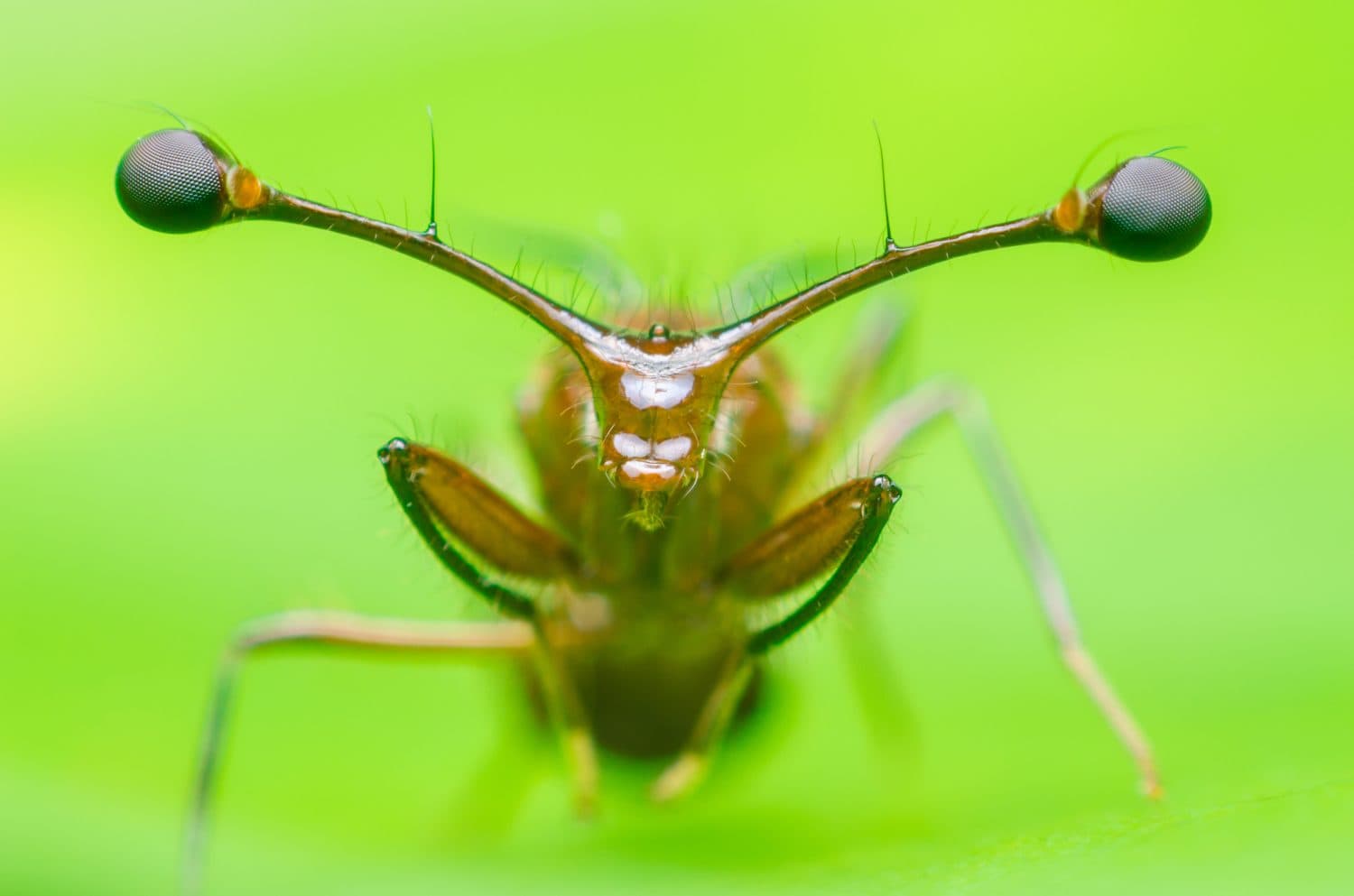
Stalk-eyed flies (family Diopsidae) are among the world’s most unusual insects. While typical flies have large compound eyes set directly into their heads, a stalk-eyed fly’s eyes — and antennae — perch at the ends of long, rigid stalks that project outward like tiny binoculars. Other insects also have eyestalks, but what truly sets stalk-eyed flies apart is how their eyes get there. Moments after emerging from its pupal case, the stalk-eyed fly pumps air directly into its head, inflating the stalks and pushing its eyes outward like tiny little balloons.
How Stalk-Eyed Flies Grow Their Eyes
Early in pupal development, a stalk-eyed fly’s head and nervous system look nearly identical to those of the common fruit fly (Drosophila melanogaster). Instead of evolving an entirely new design from scratch, stalk-eyed flies have adapted an existing ancestral design.
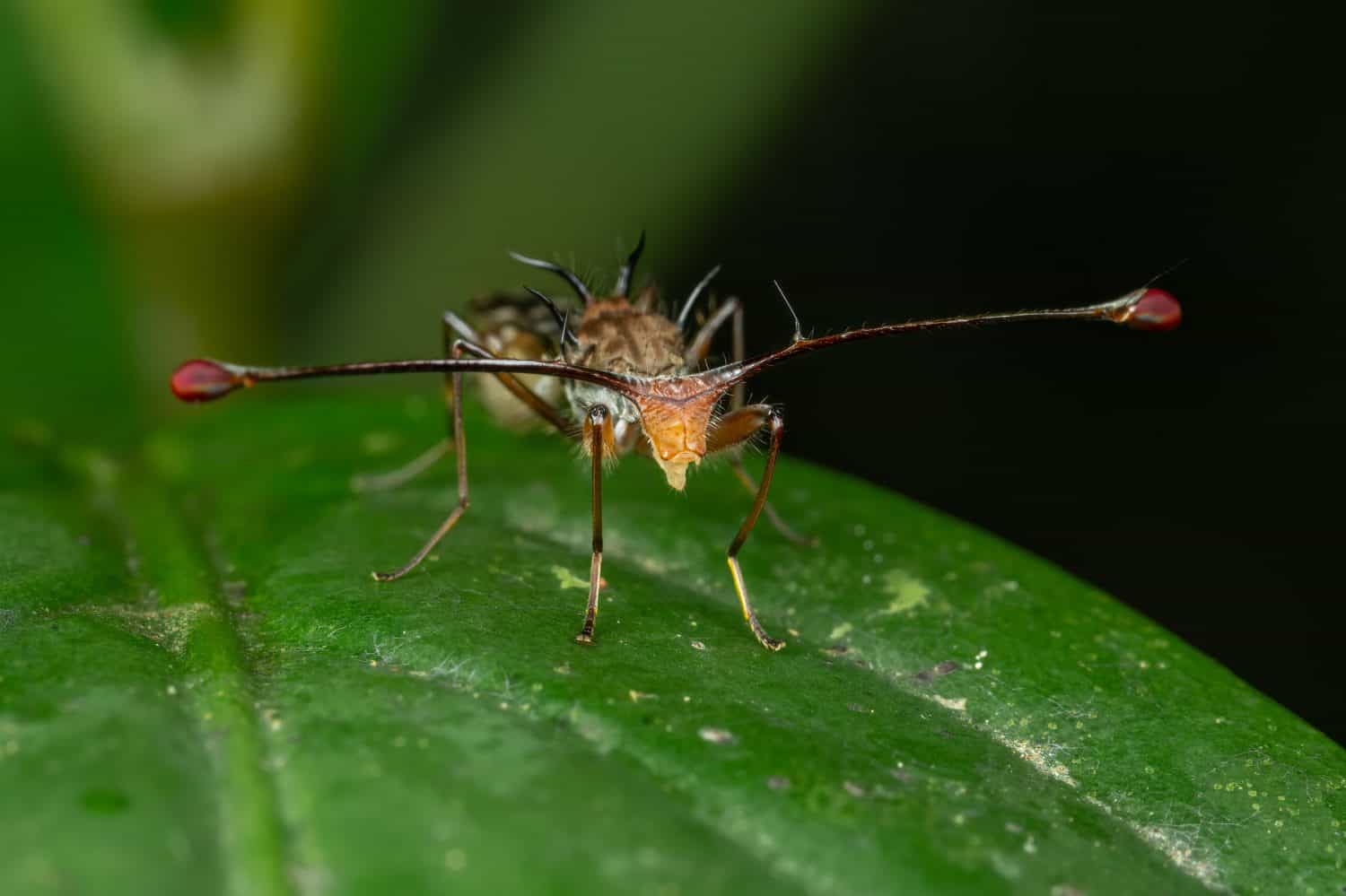
Unlike most flies, stalk-eyed flies carry their eyes and antennae at the ends of long extensions of their heads
©Chui Wui Jing/Shutterstock.com
As development continues, however, their head designs diverge. The optic nerve gradually narrows, lengthens, and coils tightly inside the pupal head, while the outer layer of the head forms dense, accordion-like folds. This compact arrangement allows the developing eyestalks to fit inside the pupa, creating the extra ‘slack’ needed for inflation after emergence.
The 15-Minute Head Transformation
The real spectacle begins as soon as the adult fly emerges from its pupal case. Within 15 minutes, the fly swallows air through its mouth and pumps it into cavities inside its head capsule. As pressure builds, the folded head inflates, driving the eyes outward until they reach their full span.
Because the tissues are pre-assembled during the pupal stage, the transformation is almost entirely mechanical: the accordion-like skin unfolds, and the coiled optic nerve simply unrolls as the stalks lengthen. The optic nerve narrows only slightly as it extends from its pre-packed state and requires minimal growth during this phase. In just a few minutes, the fly’s compact head transforms, producing a pair of long, rigid eyestalks.
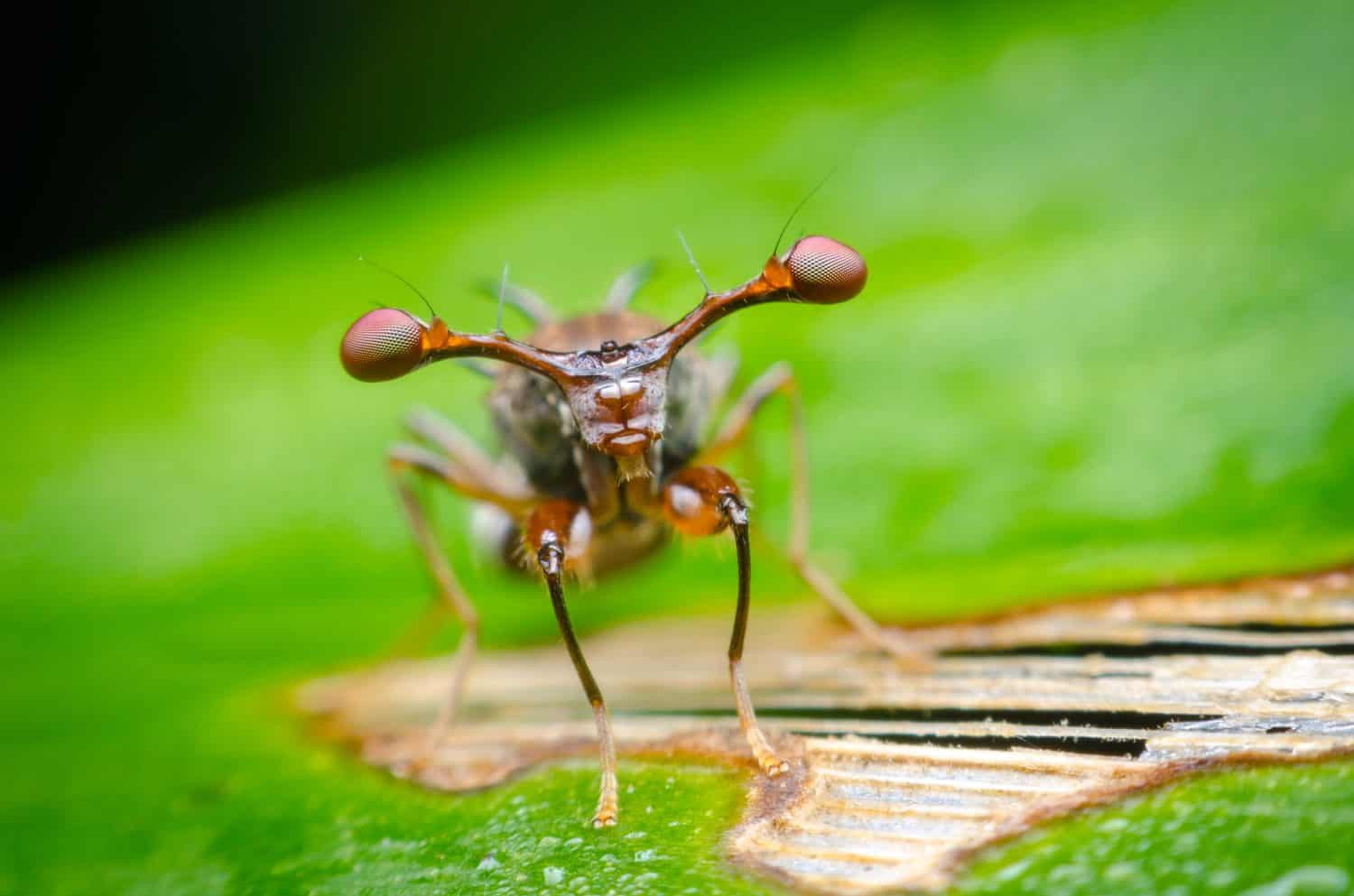
Stalk-eyed flies typically eat decaying organic matter.
©khlungcenter/Shutterstock.com
Why Would a Fly Need Eyes This Far Apart?
Moving its eyes so far apart does more than change the fly’s appearance — it creates a broad field of binocular vision that improves depth perception, allowing the insect to spot rivals and objects from much farther away.
However, this advantage comes with a steep physical cost. The extra-long eyestalks create significant drag and make flight much more difficult. To compensate, species with exaggerated eyestalks have evolved broader wings, larger thoraxes, and more powerful flight muscles.
The Evolutionary Battle Over Bigger Eyes
The stalk-eyed fly’s extreme eyestalks also play a central role in sexual selection, serving as a visual signal of health, fighting ability, and genetic fitness. In species such as Teleopsis dalmanni and Diasemopsis, eyestalks drive both competition and courtship. Males gather at communal roosts and face off head-on to compare eye span; the fly with the wider reach usually wins without a fight. If a dispute escalates, rivals wrestle directly using stout, spiny front legs.
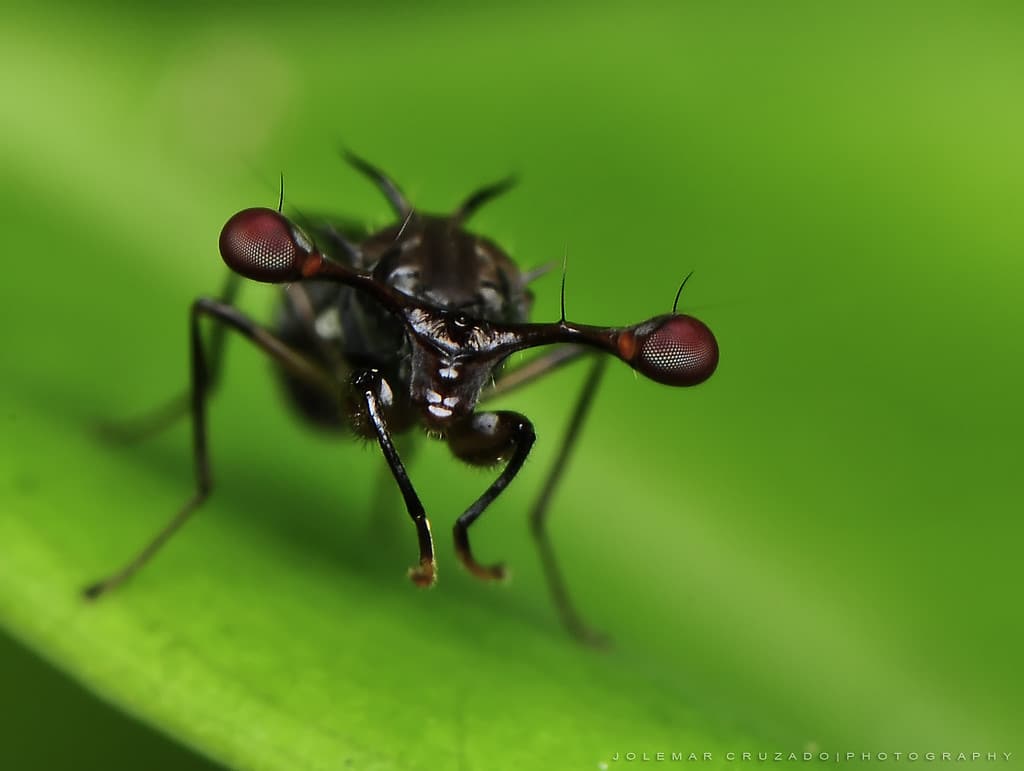
Stalk-eyed flies can measure up to 0.4 inches long.
Females also strongly prefer males with longer eyestalks. Because only the healthiest flies can grow and support these bulky structures, a wide eye span serves as an honest indicator of physical condition and genetic quality. By choosing these males, females gain direct reproductive advantages and pass on high-quality genes to their offspring.
From air-powered head inflation to a high-stakes evolutionary contest, stalk-eyed flies demonstrate how developmental mechanics and sexual selection work together to shape one of nature’s most bizarre adaptations.