Quick Take
- Hoverfly larvae are blind but locate aphids using chemical cues like honeydew and physical contact.
- They use sharp mouth hooks and external digestion to liquefy and suck out their prey.
- As adults, hoverflies become pollinators, making them beneficial at two completely different life stages.
You’ve probably seen a hoverfly. It’s a small, bee-like insect that hovers over your flowers in summer. Though they look like tiny bees or wasps, they don’t sting. They’re actually some of the most helpful insects in your yard. The adults are master pollinators. Their larvae help out by getting rid of aphids, which is great if you’re a gardener, but not so much if you’re an aphid. In fact, the way they do this is downright horrifying.
These sluglike little predators stalk the aphids, latch onto them with hooklike mouthparts, and literally suck them dry. It’s one of the more dramatic scenes playing out quietly in gardens across America, and it happens thousands of times a day. Oh, and also, the hoverfly somehow manages this feat while being completely blind.
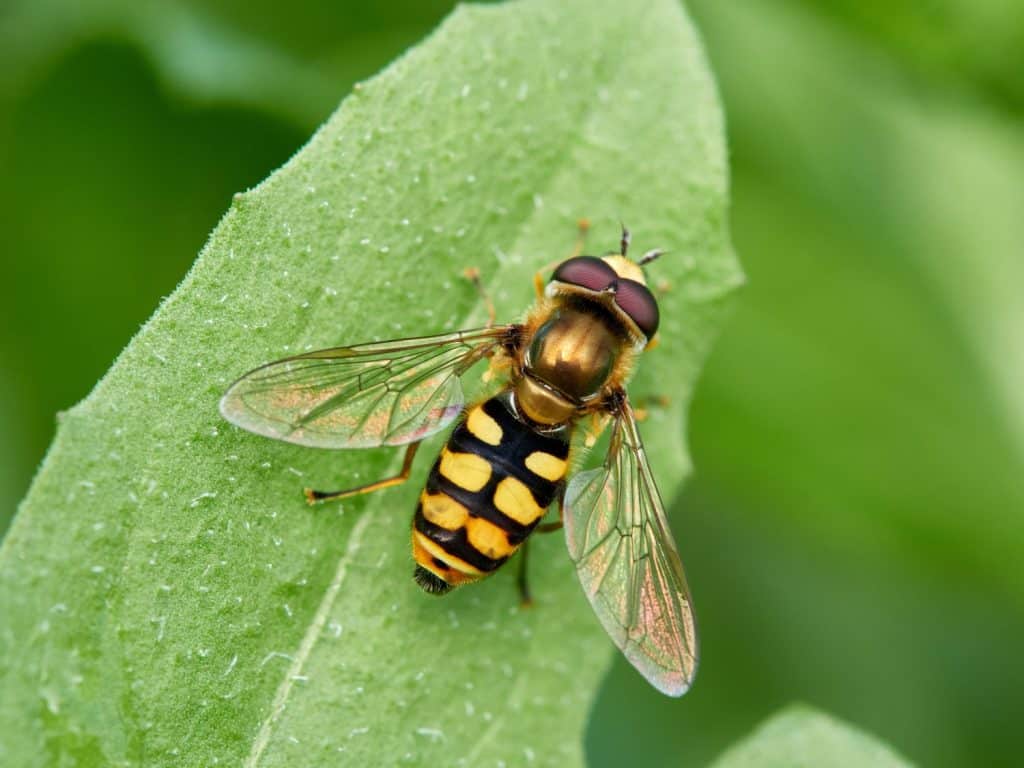
Hoverflies belong to the family Syrphidae, which includes more than 6,000 species worldwide, many of which mimic bees or wasps to avoid predators.
©Macronatura.es/Shutterstock.com
What Exactly Is a Hoverfly?
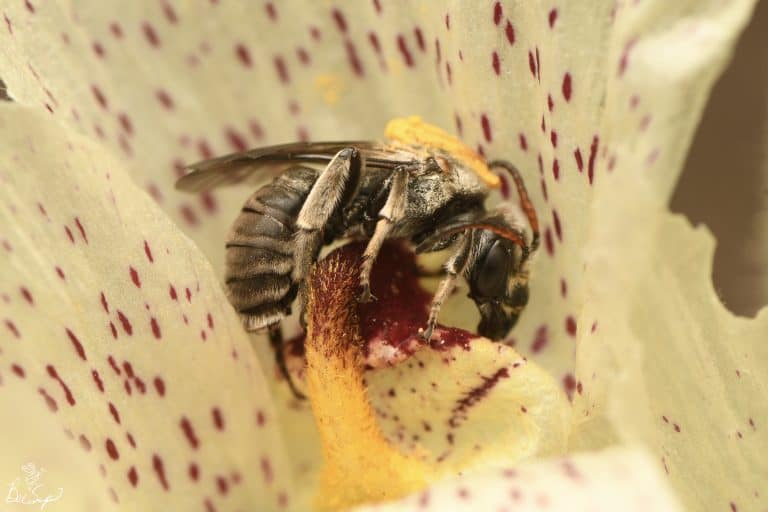
Hoverflies belong to the family Syrphidae, a large and diverse group of flies with more than 6,000 described species worldwide. Many species mimic bees or wasps in color and pattern, a trick that likely helps protect them from predators, who fear they may get stung. Despite their striped looks, they’re true flies—meaning they have only one pair of wings instead of two—and true flies don’t sting.
Adult hoverflies feed mainly on nectar and pollen. They’re important pollinators, especially for crops and wildflowers. But when it comes time to lay eggs, many female hoverflies search for something very specific: aphids.
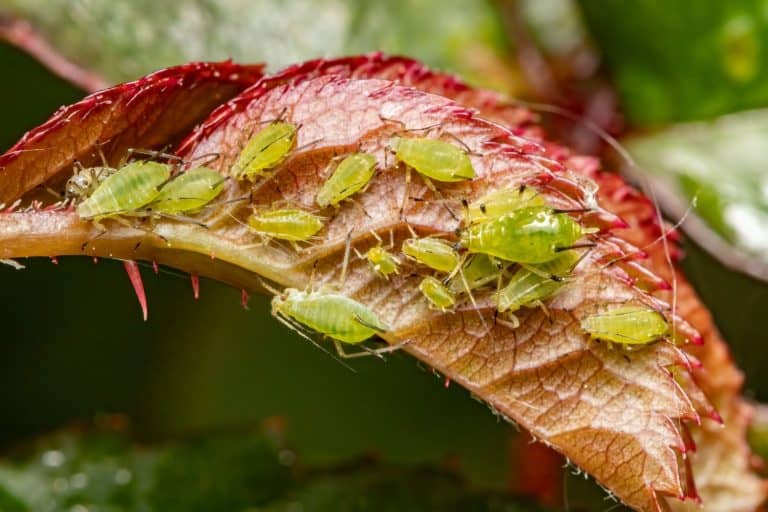
Aphids are soft-bodied plant pests that cluster on stems and leaves, sucking sap and reproducing at astonishing rates. For a hoverfly mother, an aphid colony isn’t a problem. It’s a nursery. She’ll lay her tiny white eggs right in the middle of the crowd of aphids.
When those eggs hatch, the real action begins. And you don’t want to be an aphid when that happens.
Strong Senses
Hoverfly larvae resemble small, legless maggots or slugs. They don’t have visible eyes, and in fact, they’re considered blind. Instead of relying on vision, these larvae depend on touch and chemical cues to navigate their world. They respond to the smell and taste of aphids and the honeydew they produce. Honeydew, the sugary waste aphids excrete as they feed on plant sap, is just a sticky residue on leaves to us. To a hoverfly larva, however, it’s a dinner bell.
The larva moves in a looping, searching pattern across the plant surface. When it bumps into an aphid, it doesn’t hesitate. It arches its body and swings its head toward the prey. If it makes contact, that’s it for the aphid.
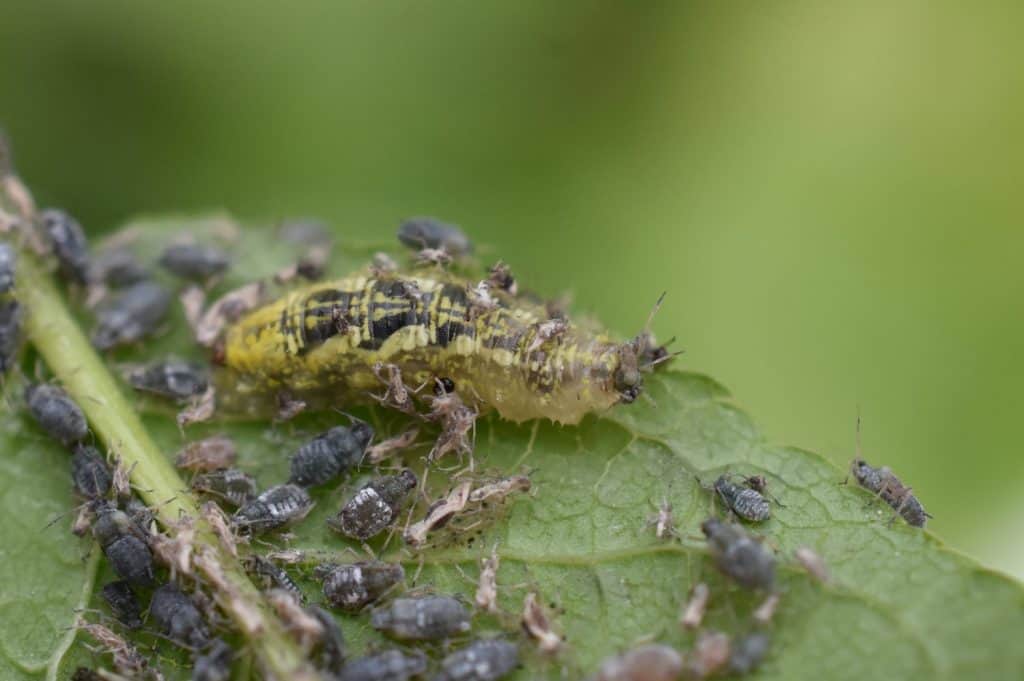
Though completely blind, hoverfly larvae locate aphids by detecting honeydew, the sugary waste aphids leave behind on plants.
©HHelene/Shutterstock.com
The Deadly Mouthparts
So how does a soft, legless larva overpower a living aphid? Hoverfly larvae have a pair of sharp, hook-like mouth hooks, sometimes called mandibular hooks. These structures are part of a specialized feeding apparatus adapted for piercing and sucking.
When the larva strikes, it uses these hooks to grab and puncture the aphid’s soft body. The hooks anchor the prey in place. Then the larva injects digestive enzymes, which liquify the aphid’s insides, which the larva then sucks out like a milkshake, draining the aphid completely, leaving behind a shriveled, empty shell.
This feeding method is known as extraoral digestion. Instead of chewing and swallowing solid food, the larva digests much of its meal outside its own body, then sucks in the nutrient-rich fluids. Depending on the species, a single hoverfly larva can consume dozens or even hundreds of aphids during its development.
For gardeners dealing with aphid outbreaks, that’s very good news. Even a single larva can make a serious dent in an aphid population. But where populations are high, they can significantly reduce aphid numbers. In some crop systems, they’re considered one of the most important natural enemies of aphids, alongside lady beetles and parasitic wasps.
Their impact is greatest when hoverfly adults have plenty of nectar sources nearby. Adult hoverflies need nectar and pollen to survive and reproduce. Gardens with flowering plants tend to support higher hoverfly populations, which in turn leads to more larvae and fewer aphids.
Do They Only Eat Aphids?
Aphids are the main prey for many hoverfly larvae, especially in species that are used for biological control. But they’re not always limited to aphids. Some species also feed on other soft-bodied insects, including scale insects, thrips, and small caterpillars. A few will consume whiteflies or other tiny plant pests if aphids are scarce. They use the same mouth-hook and liquefication process on this other prey that they use on the aphids.
However, not all hoverfly larvae are predators. The family Syrphidae is diverse, and feeding habits vary. Some species have larvae that feed on decaying plant material, rotting wood, or organic matter in soil. Others develop in water and feed on microorganisms. A few even live in ant nests. So when we talk about aphid-eating hoverfly larvae, we’re usually referring to specific predatory species within the family. Those are the ones gardeners love.
From Larva to Hoverfly
Hoverfly larvae, not surprisingly, are typically found on plants infested with aphids. That includes vegetable crops like lettuce, cabbage, and tomatoes, as well as ornamentals like roses. They’re also common in fields of wheat, corn, and other agricultural crops where aphids can become serious pests.
The larvae stay right in the thick of the aphid colony. Their green, brown, or translucent bodies often blend in with the plant and surrounding insects—camouflage that helps protect them from predators such as birds and predatory insects. They don’t wander far from food. As long as aphids are available, they’ll remain in the area.
After completing their feeding stage, the larva will attach itself to a leaf or stem and transform into a pupa. The pupal case often looks like a small, oval capsule stuck to the plant surface. Inside, the dramatic transformation into a winged adult takes place.
One of the most interesting aspects of hoverflies is the dramatic difference between the adult and larval stages. The adults are delicate, fast-flying pollinators that hover gracefully over blooms. The larvae are blind, slug-like predators that lurk among plant pests. They don’t look related at all.
This kind of complete metamorphosis is common in flies, butterflies, and beetles. But the contrast between the two stages is especially stark in hoverflies. It’s almost like two completely different animals sharing the same life cycle.
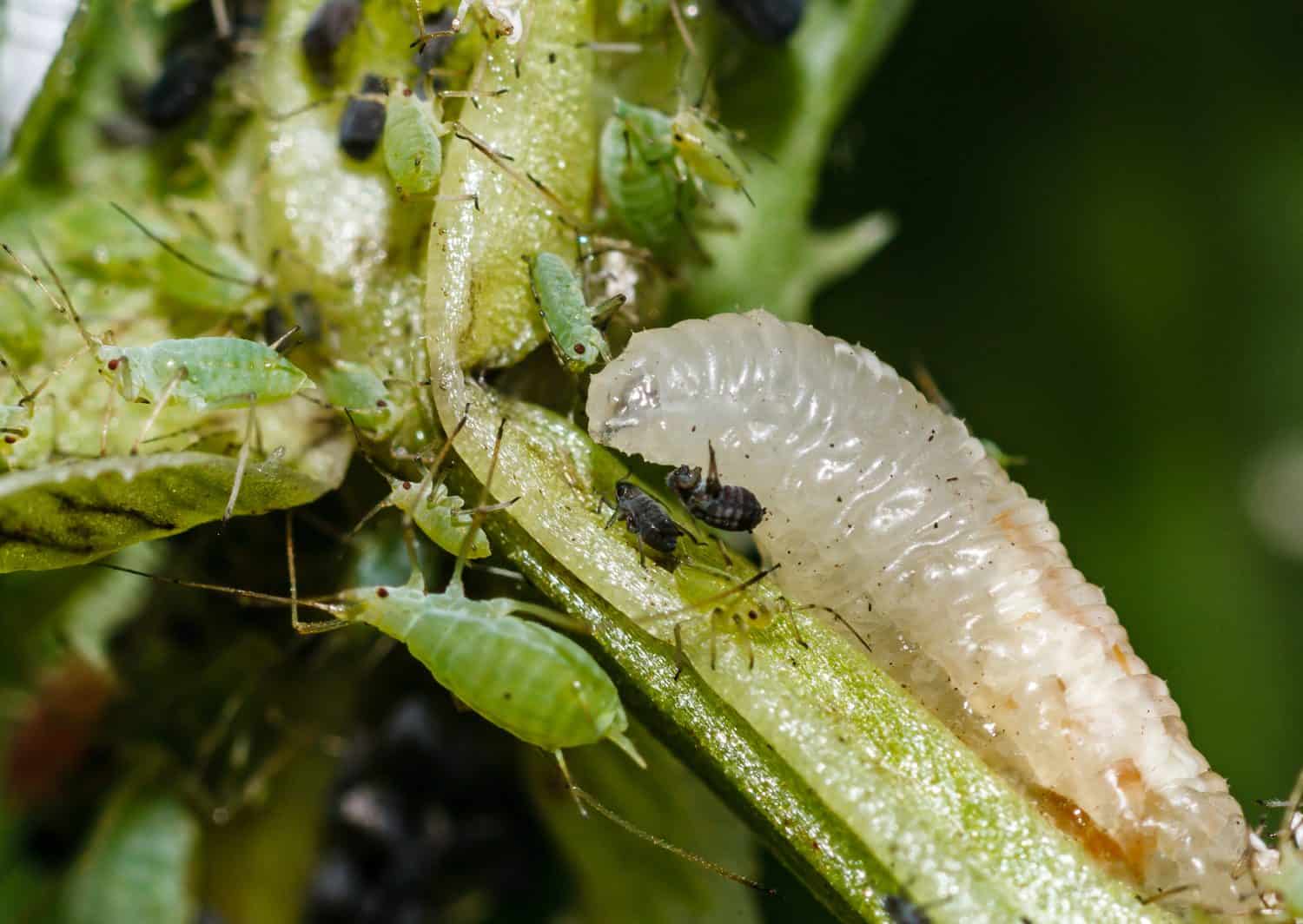
Using sharp mandibular hooks, hoverfly larvae pierce aphids, inject digestive enzymes, and suck out the liquefied insides.
©Blackthorn Arable/Shutterstock.com
Making Contributions at Every Stage of Life
Hoverflies don’t have the fame of honey bees or the bright appeal of monarch butterflies, but they’re incredibly important. As adults, they contribute to pollination. As larvae, many species provide natural pest control. In agricultural systems, they can help reduce the need for chemical insecticides. In backyard gardens, they keep aphid populations in check.
Encouraging hoverflies is simple. Plant a variety of flowering species that bloom throughout the growing season. Avoid broad-spectrum insecticides, which can kill both pests and beneficial insects. If you see a strange, slug-like larva among your aphids—good. It may be working on your behalf.
It’s not glamorous work. In fact, it’s quite gross. But these tiny predators are making a huge difference in your garden, one drained aphid at a time.