
Quick Take
- Indian meal moths breed and consume common pantry items, making them difficult to get rid of once they’re established.
- The Indian meal moth creates invisible contamination risks through webbing and larvae laid in dried food goods.
- Most Indian meal moth infestations originate from products purchased directly from grocery stores.
- A deep cleaning process is necessary to stop an infestation, while professional extermination may prove to be the only solution.
Indian meal moths are also called pantry moths for a reason. They feed on pantry goods for their entire life cycle, and you may not notice these pests until it’s too late. The larvae of the Indian meal moth contaminate dry goods with a unique type of webbing alongside debris. How do you know whether or not you’re dealing with an Indian meal moth infestation, and how can you best control it?
There is some good news: most infestations can be eliminated with targeted food removal and deep cleaning, which is exactly what we’re going to outline today. But first, let’s identify these moths, how they enter a home, what you should look for in a potential infestation, and how you can take control.
What Are Indian Meal Moths?
Indian meal moths are one of the most notorious stored-product pests out there. They target any and all dry foods such as flour, cereal, rice, nuts, dried fruit, chocolate, spices, birdseed, and even pet food.
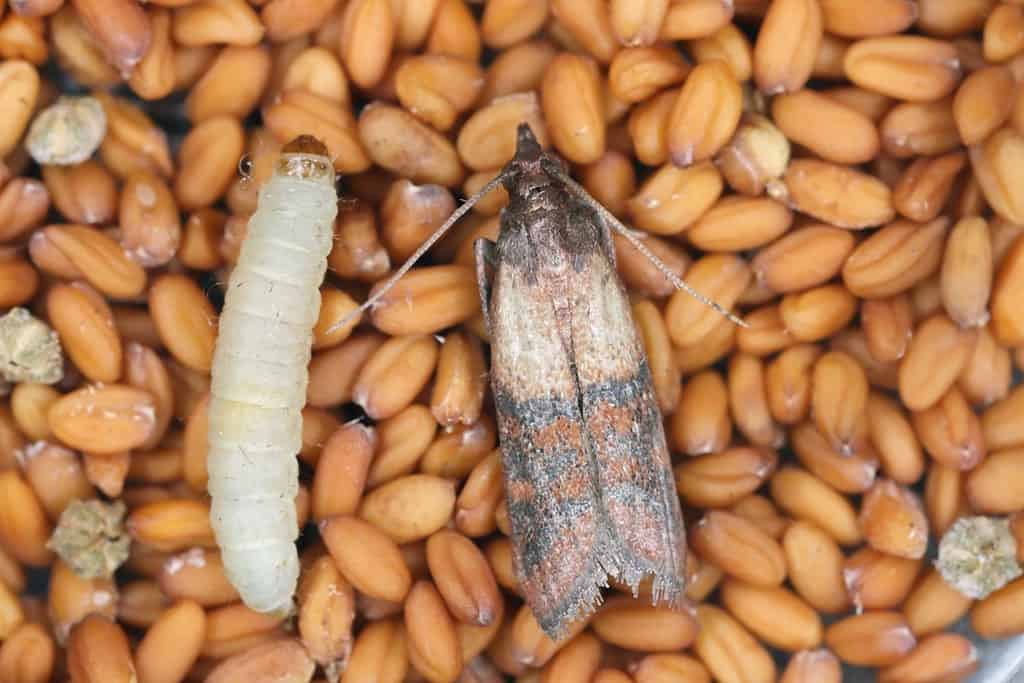
Most Indian meal moth infestations begin as soon as you bring a contaminated food home from the store.
©Tomasz Klejdysz/Shutterstock.com
These insects are unique from other moths in that they don’t need dampness or dirty conditions to thrive; they just need a neglected or loosely stored food source where eggs and larvae can develop undisturbed.
Where They Live Inside Your Home
These moths typically establish their homes in our pantries and cupboards, essentially any food-storage space where dry goods sit for weeks. Garages and mudrooms can also be frequent hotspots because of birdseed or bulk food storage, including pet food or home products.
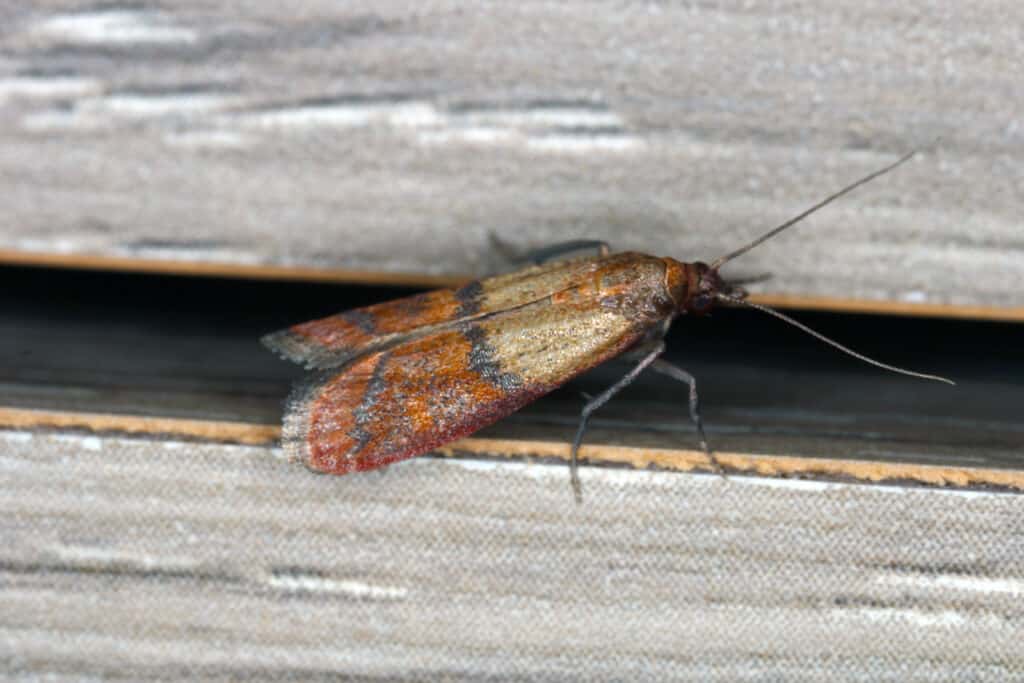
Indian meal moths commonly attack household food products and pantry goods.
©Tomasz Klejdysz/Shutterstock.com
Additionally, the moths you end up seeing in your home are often spotted wandering away from their preferred food source, which is how they can remain undetected for long periods of time. Their larvae lie in wait, transforming and further adding to your infestation if their breeding ground is never found.
How Indian Meal Moths Get Into Your Home
While it may sound scary, most Indian meal moth infestations start because you accidentally bring them home inside a product, even a fresh product from a grocery store. Eggs and tiny larvae can be present in a bag or box long before you notice anything, making it too late to stop them.
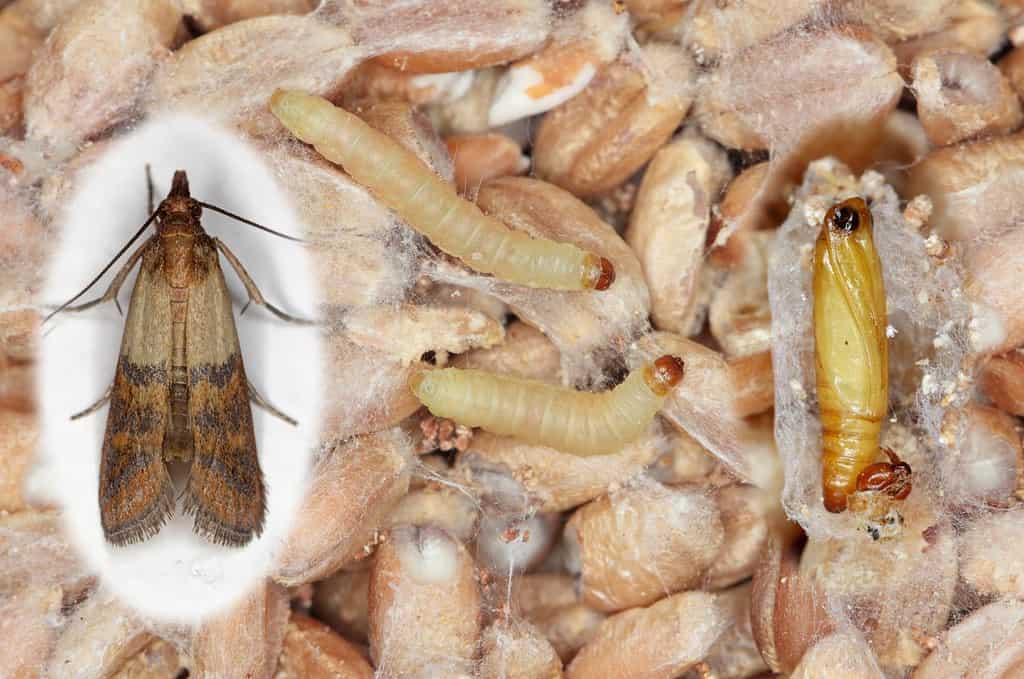
A webbing material is a common sign that you may have an Indian meal moth infestation.
©Tomasz Klejdysz/Shutterstock.com
Less commonly, adult moths can fly into your home from outside and discover a convenient pantry setup. However, their young laid in stored goods are usually the biggest contributor to an infestation within a home. This is why preventative methods focused on storage and inspection matter much more than sealing every crack or crevice in your home.
Signs You Actually Have an Indian Meal Moth Infestation
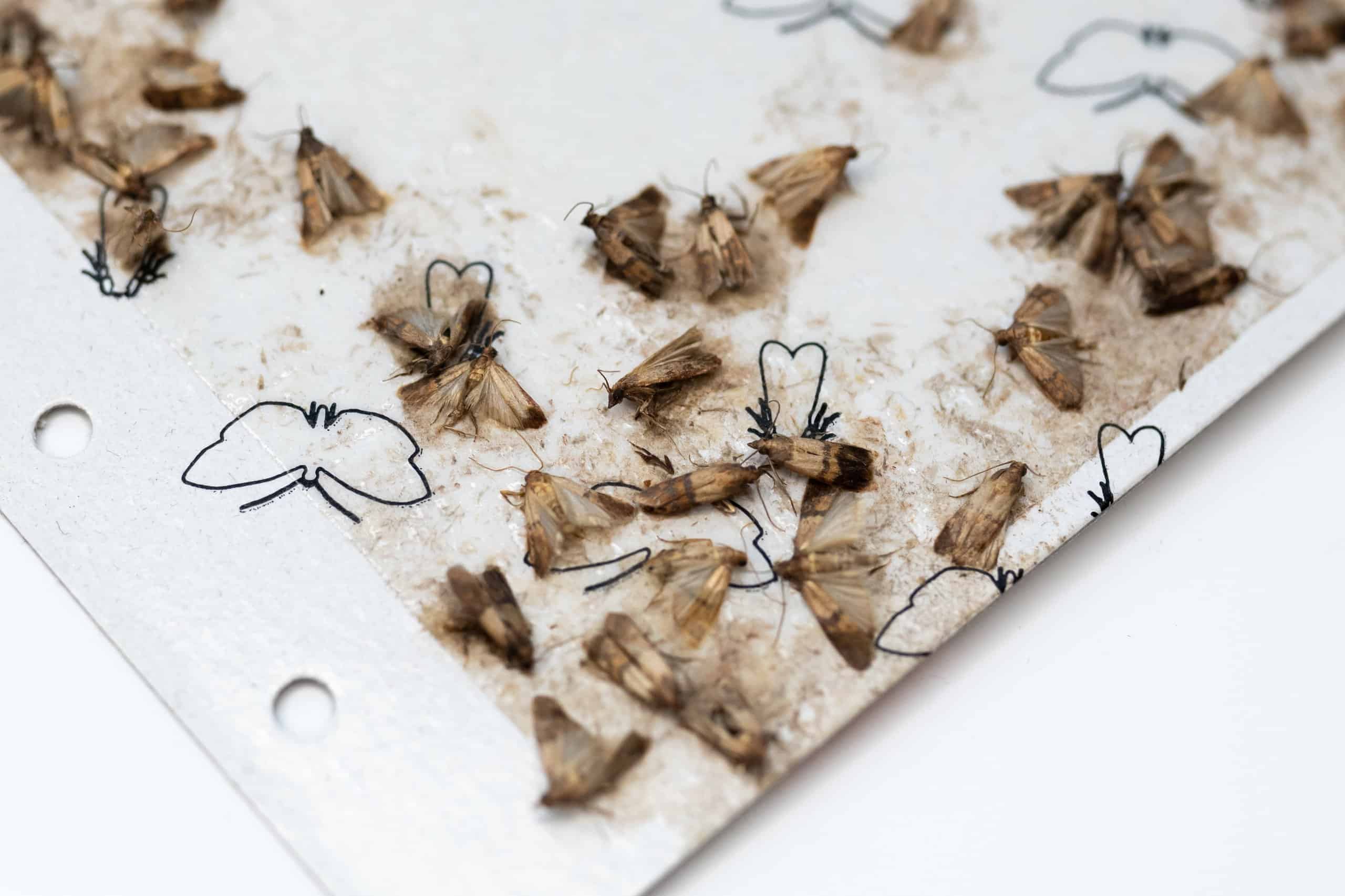
Webbing and larvae, as opposed to adult moths, tend to indicate an infestation. Keep an eye out for silky threads in the corners of food packages or clumped in flour and grain products; larvae may also be seen crawling on shelves or up walls, and repeated adult moth sightings near lights are your final indication.
If you have old pantry goods, it may be time to throw them out!
©Jurik Peter/Shutterstock.com
The source of your infestation is almost always an old, forgotten product or two that needs to be found and removed. But this is where the extermination begins, as you may need to do a bit more work than first expected to keep these moths away.
How to Eliminate an Infestation
Getting rid of Indian meal moths is a process, and removing all breeding sites should be your ultimate goal. If you find and eliminate these locations effectively, most households can clear an infestation without needing to use insecticides in your food storage areas. Let’s check out a step-by-step breakdown of how to get rid of Indian meal moths now.
1. Find the Source Food
Pull everything out of your pantry, as well as any nearby storage areas. Inspect every container, especially any seams, folds, cardboard, and corners, as larvae and webbing often hide there. If you don’t remove the source of their breeding grounds, traps and cleaning won’t end the problem, so be thorough here.
2. Discard or Treat Anything Suspicious
If you find webbing or larvae in your food items, treat that product as contaminated. Seal it in a bag and take it to an outdoor trash bin as opposed to your indoor trash so that moths can’t continue emerging indoors. If you are unsure whether an item is infested, freezing it for several days is a common solution; however, consider whether it is worth keeping the item.

Vacuuming your cupboards is a must to stop Indian meal moth infestations.
©RossHelen/Shutterstock.com
3. Vacuum Everywhere
Vacuum the entire area where the moths might’ve been, including shelves, shelf pin holes, corner seams, hinges, shelf tracks, and anywhere that crumbs collect. Larvae often leave food in select areas to pupate in crevices, so deep cleaning and targeting cracks is central to controlling the entire population. Also, immediately empty your vacuum canister/bag into an outdoor trash bin, just in case you picked up any eggs along the way.
4. Wash Shelves and Let Them Dry
After vacuuming, wipe down shelves and cabinet walls with warm soapy water or a standard household cleaner, then dry them thoroughly. Even the smallest amount of food dust can support larvae, so be sure to remove any remaining webbing residue or food particles that vacuuming may miss.
5. Use Pheromone Traps
Pheromone traps won’t fix an infestation by themselves if you haven’t removed the source food, but they’re excellent for catching male moths following your deep clean. These traps are ideal, as they show whether adults are still emerging in your home. Place these traps near your pantry or main storage area and replace them on a set schedule; if you capture any adult moths, they’re still hiding somewhere.
6. Avoid Spraying Insecticide in Food Cabinets
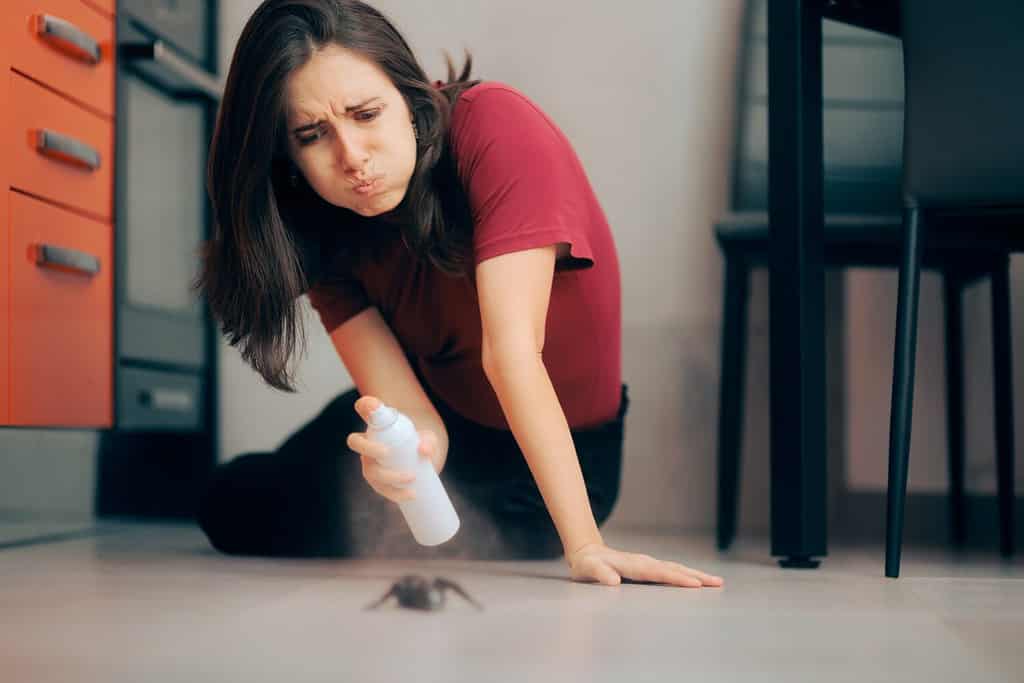
Insecticides can be dangerous when used around food goods, so it’s best to avoid doing so.
©Nicoleta Ionescu/Shutterstock.com
If you remove the infested food source and clean thoroughly, insecticides are usually unnecessary, and spraying inside food storage areas can create contamination concerns for you and your family. If the infestation is extensive or keeps returning, it’s safer to bring in a licensed professional, as they can use targeted methods and approved treatments that minimize risk to your food and home environment.
How to Prevent Indian Meal Moths From Coming Back
Prevention is key to keeping Indian meal moths from returning to your pantry. If moths can’t access your food and can’t breed, infestations usually fizzle out. However, here are some tips to ensure these moths keep away for good.
Store Dry Goods in Hard, Airtight Containers
Transfer your flour, cereal, rice, nuts, and other baking supplies into glass or thick plastic containers with tight seals. Plastic bags and cardboard boxes are not effective once these pests are present, but airtight containers can prevent a single contaminated item from spreading moths to the rest of your food.
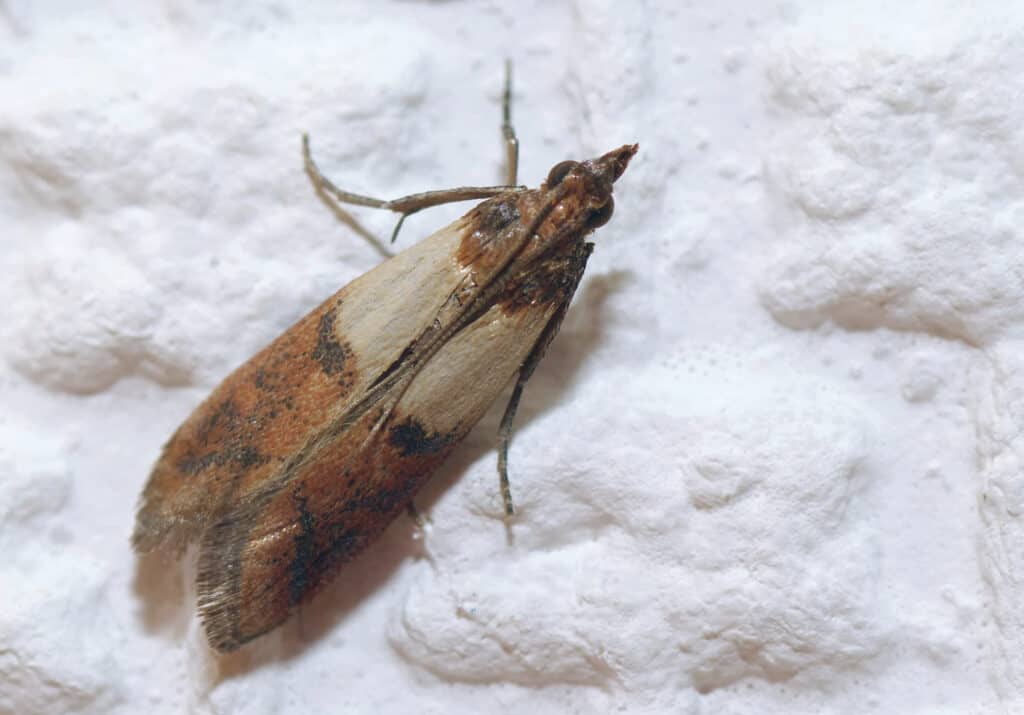
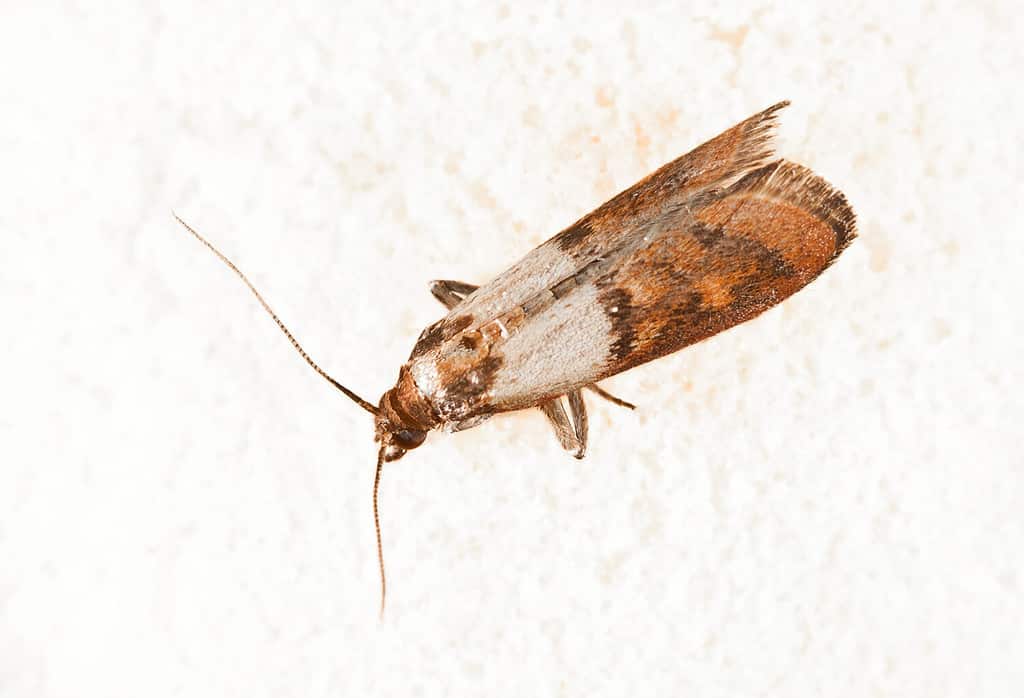
Indian meal moths have primarily grey and brown wings, and their larvae will be laid in food sources.
©Bildagentur Zoonar GmbH/Shutterstock.com
Quarantine Certain Items If You Suspect An Infestation
Birdseed, pet food, bulk grains, and nuts are frequent food sources for Indian meal moths. Store these in airtight bins immediately; if you’ve had moths before, consider freezing new purchases that fall under these categories for several days before putting them away.
Inspect Groceries Before They Go in the Pantry
Check any and all package seams and corners for telltale webbing. While it may seem odd that Indian meal moths may emerge after bringing something home from the store, this is the main way infestations start. It’s better to take an extra second and be safe rather than sorry!
Keep Shelves Clean of Food Dust
A light layer of food dust in corners and shelves can hide all of the early signs of an Indian meal moth infestation. A periodic vacuuming or wipe-down of your pantry makes it much harder for these pests to take hold.
When to Call an Exterminator On Indian Meal Moths

Exterminators can help you take care of your Indian meal moth problem when all else fails.
©LightField Studios/Shutterstock.com
If you’ve done all of your cleaning but are still seeing moths after a few weeks, it’s time to call a licensed pro for help. This is especially true if multiple storage areas within your home are involved, or if you live in a multi-unit housing scenario where the source might not be confined to one pantry. A professional can help find the source of your infestation and use safe, targeted methods to address the problem!