Quick Take
- Some of these insects don't use their foul odors as weapons at all. The real purpose is stranger than defense.
- One insect on this list has a smell some people actually find pleasant, and it may not be the one you would expect. The surprisingly pleasant smell →
- At least one insect's spray can blister your skin, stain it for days, and still air out of a room faster than you'd think. See the blistering spray →
- A beetle that stands on its head before attacking is real, and what it sprays is notoriously hard to remove. Meet the head-standing beetle →
Many insects release unpleasant, even noxious odors as a matter of survival. Emitting bad smells is often a defense mechanism; it distracts predators and buys a small insect just enough time to get away safely. In other instances, insects use their odd odors as a form of communication with one another.
The foul smells that certain insects emit run the chemical spectrum. There are quinones, aldehydes, and even caustic acids. And the smells they produce come in an equally wide range. Some stinky insects smell almost like bleach. Others are reminiscent of rotting meat. A select few are even marginally pleasant to the right nose, producing the scent of cilantro or crushed pine needles. Make no mistake, however: insect odors can be dangerous. Whether they linger in a room for days, cause painful blisters, or warn of a harmful pest, insect smells run the gamut. Let’s learn more about which insects produce unpleasant smells, why they do it, and what those smells signal.
Cockroaches
These tenacious insects are the scourge of homeowners everywhere, and it’s not just because of their uncanny ability to infest a building. Cockroaches also produce pungent chemical signals. They release several chemicals in a cocktail, including carboxylic acids, cuticular hydrocarbons, and oleic acid. Combined, they smell like grease with a sour note. Others describe the smell as musty, oily, or reminiscent of damp cardboard.
Cockroaches release these odors to create trail markers for finding food and other cockroaches. When they die, cockroaches produce an oily smell that is almost sickly sweet. Worse, these chemical signals can leave dark smears on wood and, when airborne, irritate the eyes and skin, and even trigger asthma.
Stink Bugs
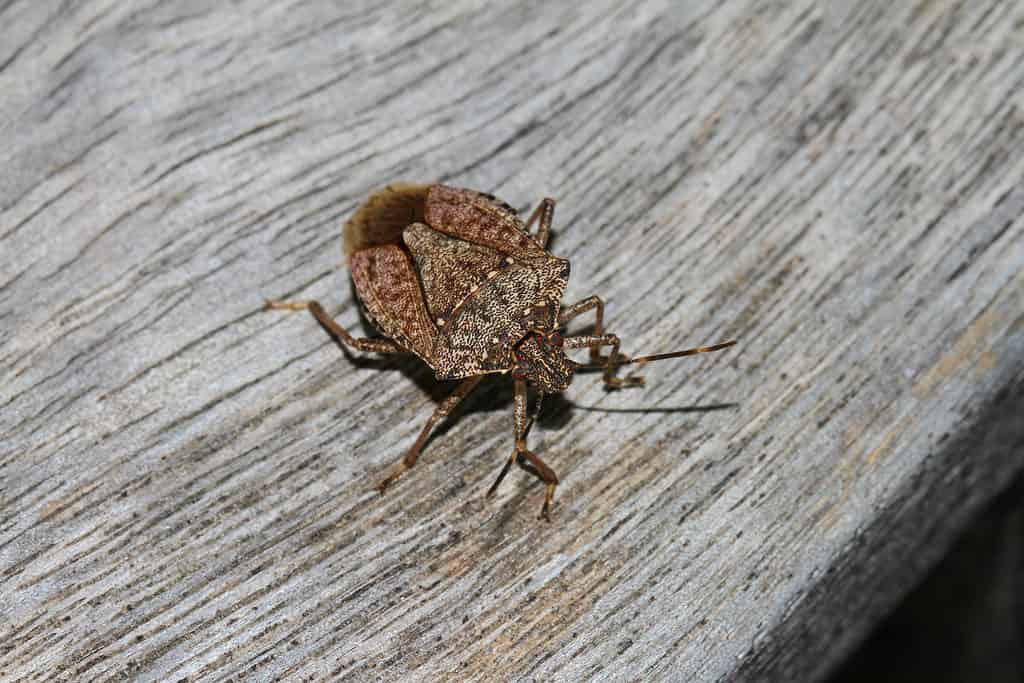
The smell stink bugs produce reminds some people of cilantro or burnt rubber.
©Ruth Swan/Shutterstock.com
Despite their name, stink bugs have one of the more pleasant smells among insects that produce foul odors. These chemicals remind some people of cilantro, others of crushed pine needles, and some of burnt rubber. If crushed, they release unsaturated and oily aldehydes, which can make temporary brownish-yellow stains on fabric or skin. Usually harmless on contact, stink bug chemicals can cause mild irritation if they get in the eyes, and the smell can linger in a spot for several hours.
Bombardier Beetles
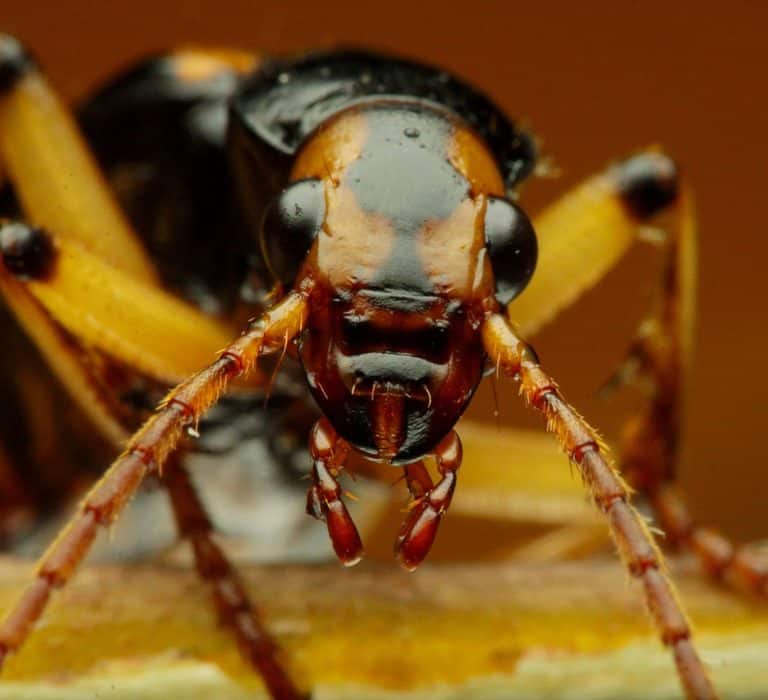
Bombardier beetles earned their name due to their aggressive defense system. These insects release a high-pressure, foul-smelling spray from the tips of their abdomens. It contains benzoquinones, which produce a smell that is described as acrid, sharp, bleach-like, and strongly chemical. Some people say it smells like highly concentrated formaldehyde.
The benzoquinones in a bombardier beetle’s high-pressure stink spray can easily stain human skin a dark brownish-yellow color for several days. Worse, it can cause skin to blister and severely irritate the eyes. Fortunately, if a bombardier beetle discharges its spray inside a building, the smell usually clears quickly with proper ventilation.
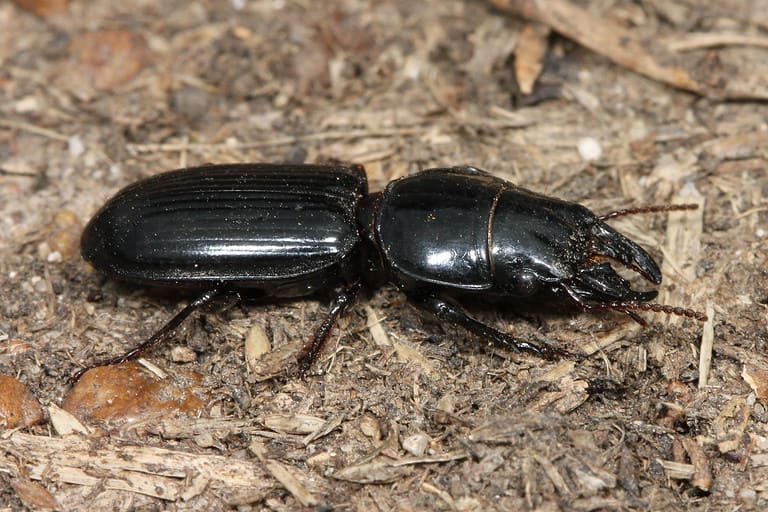
Darkling Beetle
Much like a certain type of Midwestern skunk, darkling beetles will stand on their heads and spray a foul-smelling fluid from their abdominal glands when threatened. This fluid consists of substituted benzoquinones dissolved in alkane solvents. Also known as pinacate bugs or clown beetles, darkling beetles produce a smell reminiscent of greasy iodine, varnish, or even burnt plastic.
If you happen to get sprayed by a darkling beetle, your skin will bear the mark of the encounter for days. Darkling beetle fluids are notoriously hard to wash off. These fluids leave a reddish-brown mark that can produce a mild irritation or redness. They also cause eyes to sting considerably. These odors can also cling to surfaces and flooring for hours.
Earwigs
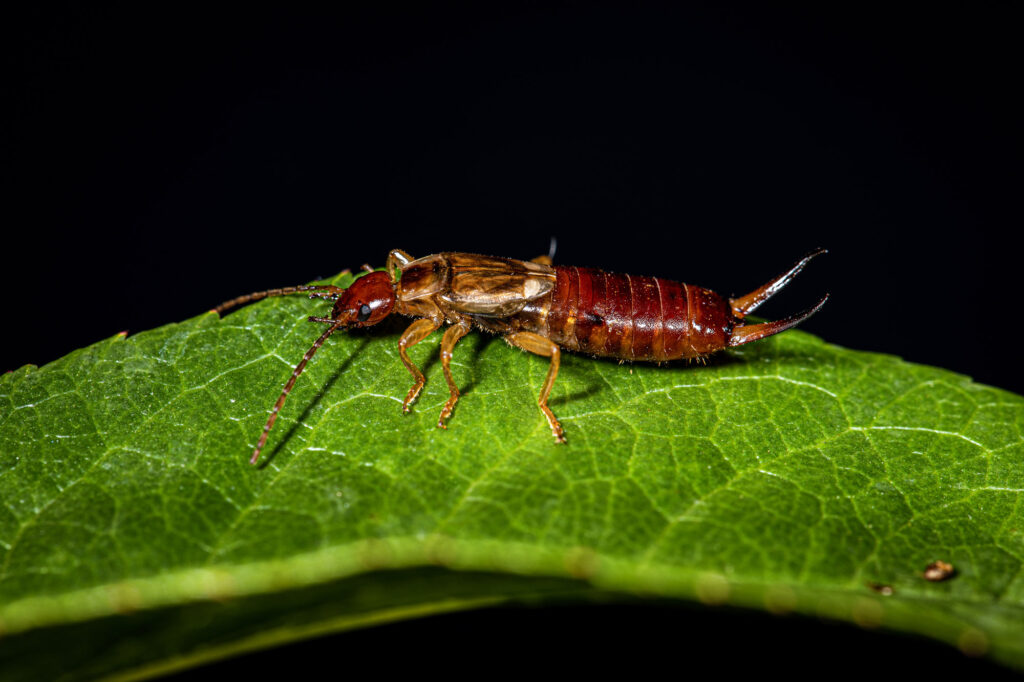
Earwigs produce a smell like cockroaches: oily, greasy, and similar to damp cardboard.
©iStock.com/Huseyin Selcuk KIRAY
The earwig is another insect that produces a foul smell. These nocturnal scavengers release a yellow liquid from their dorsal-side scent glands containing several types of benzoquinones. This produces a smell similar to cockroaches; people say it reminds them of damp cardboard or rancid grease. In practice, it is difficult to get sprayed by an earwig, as they prefer to stay hidden in dark crevices.
If you do happen to be sprayed by one, it doesn’t cause much irritation to the skin. In rare instances, when a large group of earwigs is crushed simultaneously, the resulting smell can linger for several hours.
Carrion Beetles
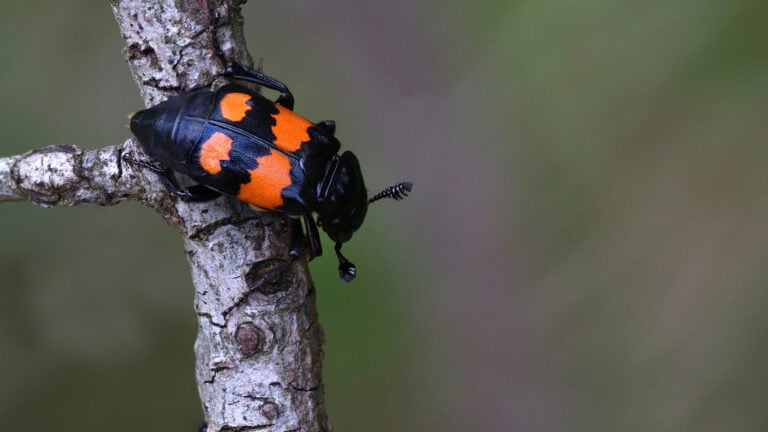
Live by the stink, die by the stink: In some ways, that is the motto of carrion beetles as they feed and reproduce around decaying matter. When threatened or disturbed, they produce a fluid that combines anal secretions and their diet of rotting matter. This fluid is composed of putrescine, cadaverine, and short-chain fatty acids, producing a smell similar to sewage or rotting meat. Carrion beetle secretions stain fabrics and skin equally effectively. The substance is also laden with bacteria, which can irritate open wounds. If a carrion beetle secretes indoors, the smell can linger for days and is often quite difficult to fully eliminate.
Swallowtail Larvae and Prominent Moths
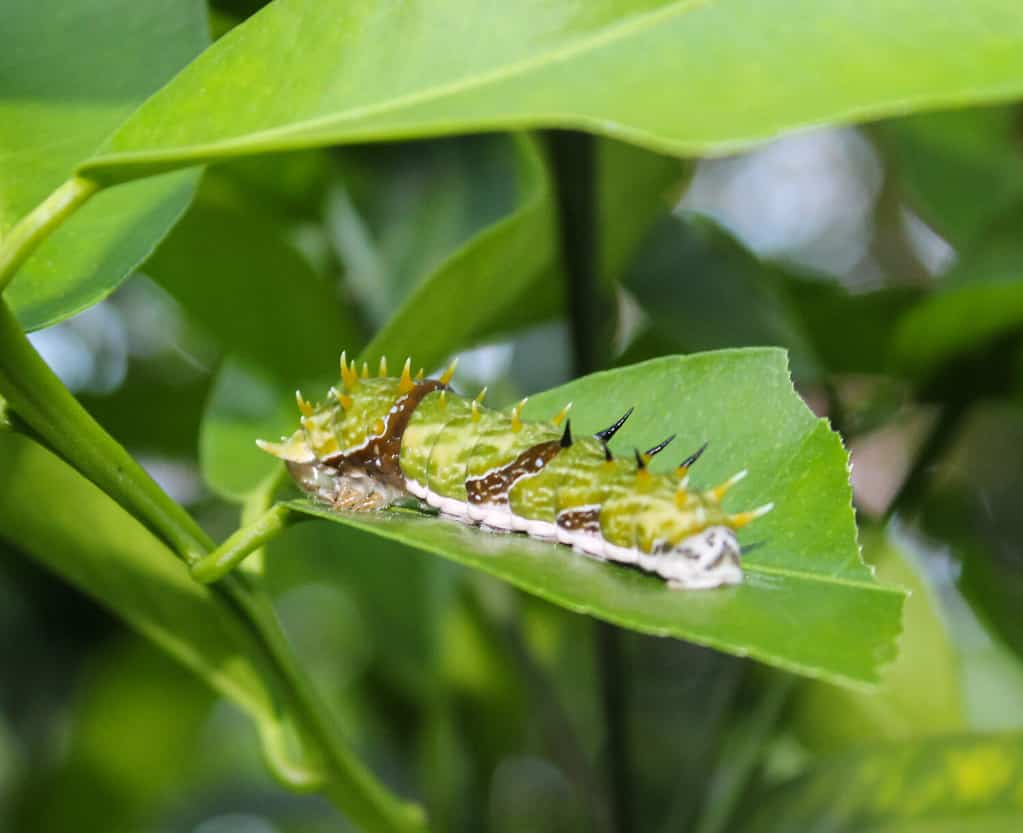
Swallowtail larvae produce a smell that has been compared to garbage, rancid butter, and blue cheese.
©Cassandra Madsen/Shutterstock.com
Several types of caterpillars deploy noxious scents to protect themselves while they feed. Swallowtail larvae produce a smell composed of isobutyric and 2-methylbutyric acids. This smell has been compared to garbage, rancid butter, or even blue cheese. It doesn’t stain skin, but it can linger in an unventilated room for several hours. Other caterpillars, such as those of Prominent moths, produce a spray composed of formic acid and acetate esters. This results in a distinctly vinegar-like smell. Since it contains formic acid, this spray can cause skin burning, redness, and considerable eye irritation.