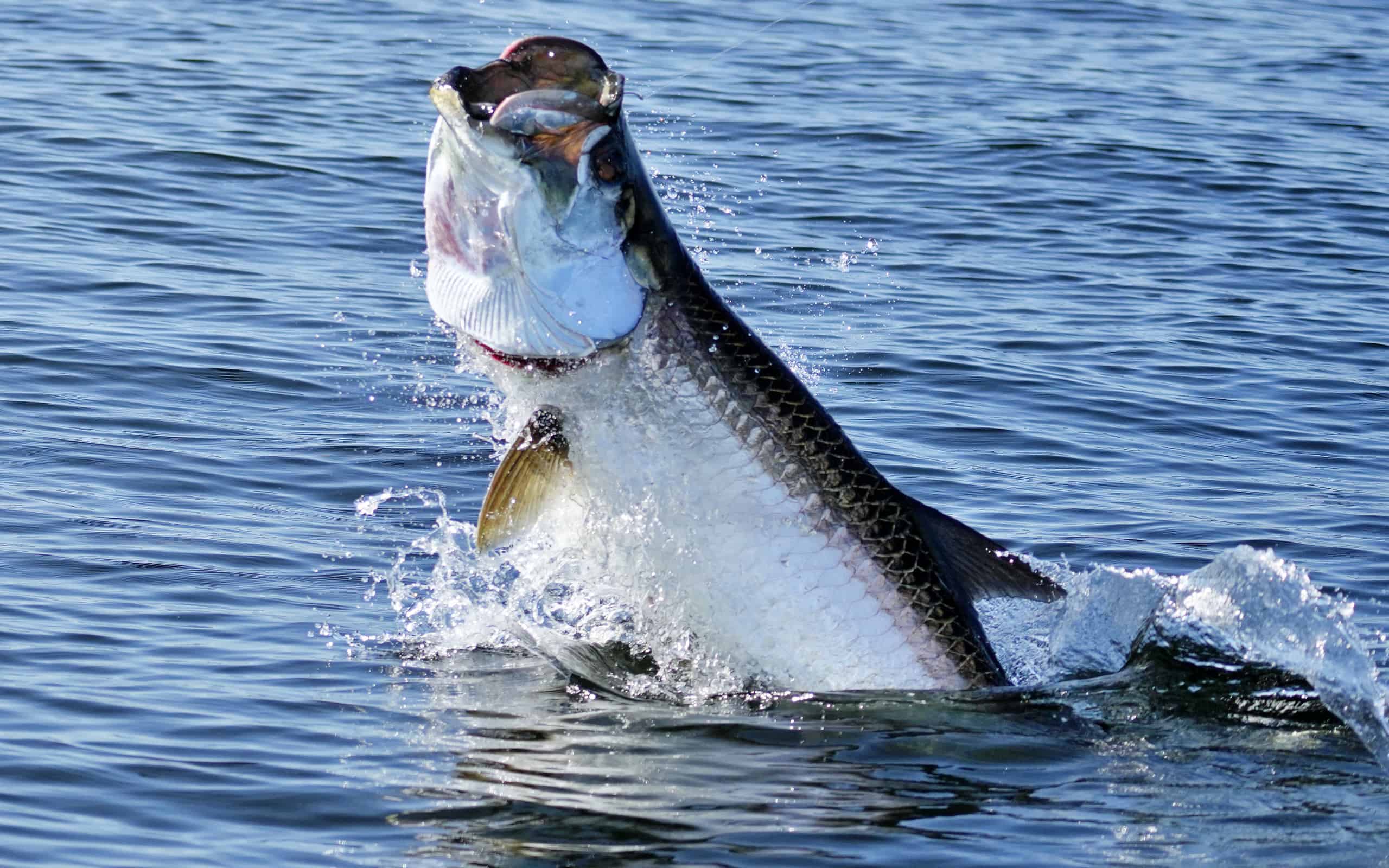

Unlike some fish that people target for food, catching or battling with a tarpon is all about the experience. These awe-inspiring fish can reach up to 8 feet in length and weigh over 250 lb.
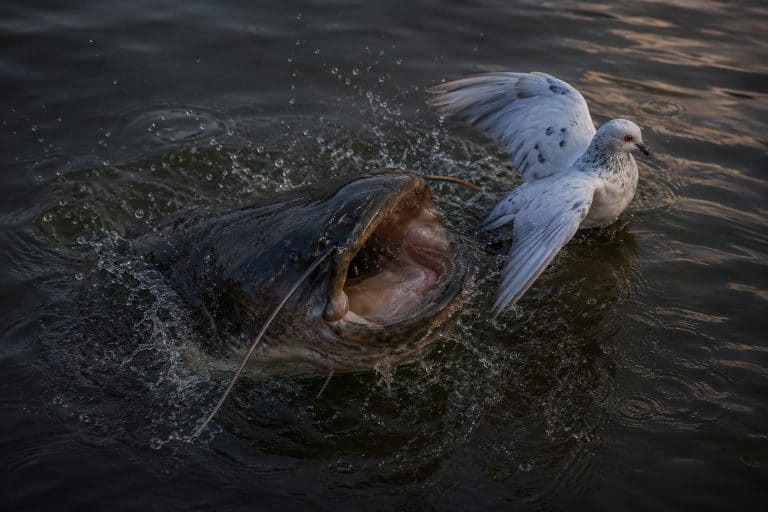
However, their size doesn’t seem to hinder their ability to make acrobatic leaps out of the water. A recent video showcased the tarpon’s powerful swimming and jumping abilities when a young girl was attempting to feed one off a dock. While some fish were visible under the water during the film, the tarpon became the star of the clip when it leaped several feet in the air and engulfed the child’s arm.
Even though the image of the fish clamping down on the girl’s arm seemed intense, there was little damage done to the kid. Encounters like this are becoming more and more common as people hand-feed these large fish. But that doesn’t necessarily mean the practice is safe or should be replicated.
In the following sections, we’ll explore how large tarpons can get and their interactions with humans.
How Big Can a Tarpon Get?
©Daniel Smith/ via Getty Images
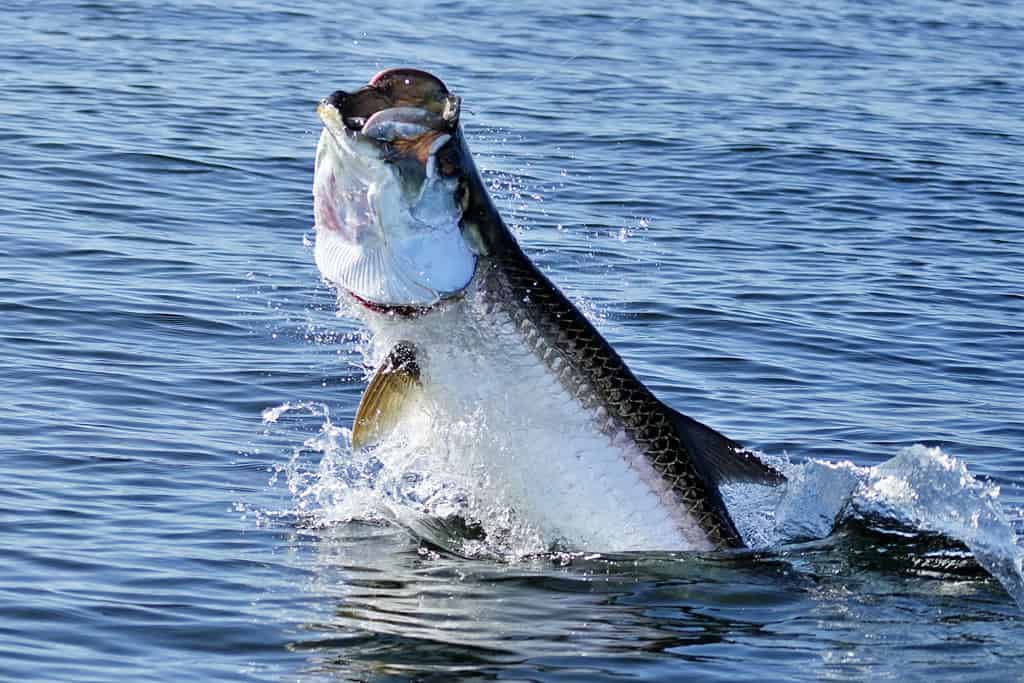
Tarpons are one of the largest fish in the world and have gained a reputation for being one of the hardest to catch by anglers. What makes these fish so hard to catch isn’t just their enormous size — it’s also their remarkable ability to perform acrobatics while being reeled in.
Size
While many tarpons hover around the 200-250 lbs mark, the largest ever caught was an astounding 286 lbs. It’s common to come across larger individuals in warm coastal waters where food is abundant.
Physical Features
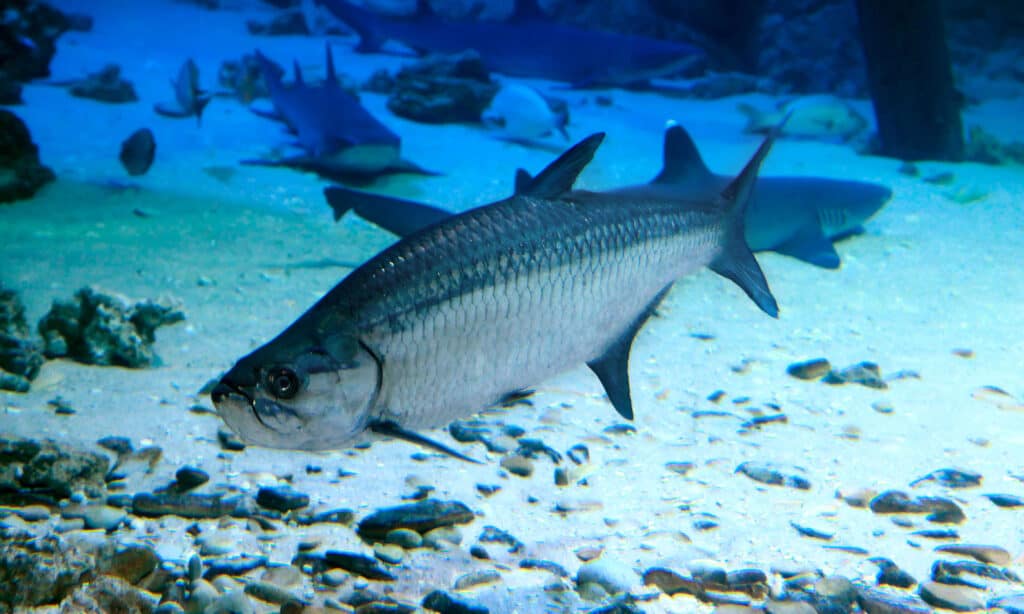
Tarpons have sleek, silver-colored bodies that are well-adapted for quick swimming. Thanks in large part to their elongated, muscular bodies, tarpons also commonly make powerful leaps out of the water when battling with a fisherman.
Lifespan
Although tarpons reach maturity around 10 years of age, they have a long lifespan, with many living up to 40 years. This is much longer than other popular sport fish, such as bass and trout, which have a shorter lifespan of only 5-10 years.
What Do Tarpons Eat?
Generally, tarpons will consume smaller fish, crustaceans, and invertebrates. However, they are considered opportunistic feeders and will feast on whatever is available to them in their environment.
Most tarpons focus their hunting efforts near the water’s surface, where they can quickly snap up smaller fish. But this close proximity also means they’re more likely to encounter humans.
Is it Safe to Hand-Feed Big Fish?
©iStock.com/TatianaMironenko
For many people, there is an adrenaline rush that comes with feeding large fish. However, it isn’t without risk.
Tarpons generally aren’t dangerous and won’t go out of their way to attack. But their size and feeding reflexes can make hand-feeding unpredictable and dangerous. There have been several instances of people being accidentally knocked into the water by a tarpon that’s making a jump.
How Tarpons Interact with Humans: Are These Big Fish Dangerous?
In most scenarios, tarpons are not considered dangerous to humans. While their large size and strength can certainly make them appear intimidating, their interactions with humans tend to be based on feeding opportunities rather than aggression.
How Often Do Tarpons Interact with Humans?
Tarpons don’t actively seek out human interaction, but certain situations bring them into contact with people. Often, the two main reasons for encounters include human-led feeding or sport fishing.
Sport Fishing
Sport fishing is the most common and controlled interaction between humans and tarpons. In fact, many fishermen located in the Florida Keys and parts of the Gulf of Mexico have the fish on their “ultimate catch bucket list.”
Since tarpons aren’t a popular food source, most battles end with the fish being released into the water with minimal handling.
Hand-Feeding
Although hand-feeding tarpons can be exciting, it’s one of the riskiest ways to interact with them. As we’ve seen in the video, it’s very easy for someone’s hand to be mistaken for food by one of these large fish.
Feeding from Docks
Since hand-feeding poses a higher risk, many people opt for feeding tarpons on a dock. By dangling baitfish or other small fish into the water, they’re able to attract these large fish. Even though this technique is slightly safer, it still poses risks that can lead to accidental bites.
Are Tarpons an Aggressive Fish?
Tarpons aren’t considered aggressive toward humans, and many experts label them as a “docile” species. Most interactions with these large fish are usually uneventful unless there is a food source involved.
The tarpon’s feeding behavior is based on its natural instincts, meaning they’ll grab whatever is available to them, whether it’s bait or a human hand.