
Quick Take
- These shrimp crossed an ocean to reach the Great Lakes. See how they arrived →
- Officials know the shrimp have established populations in all five lakes. Officials are monitoring the shrimp rather than attempting removal. Discover why they stay →
- Lake Superior held out longer than every other Great Lake, but one specific discovery was enough to end its resistance for good. See Lake Superior's discovery →
- Your boat could be the next vector spreading these shrimp to inland lakes, and most people have no idea it is happening. Learn about boater spread →
The Great Lakes are no strangers to invasive species. Of the 188 non-native species found in the lakes, 64 are considered to be invasive. This means 34% of the non-native species are invasive.
One invasive creature has officially established itself in all five Great Lakes. Researchers have not yet determined how harmful the bloody red shrimp will be to native species
Bloody Red Shrimp Have Invaded All Five Great Lakes
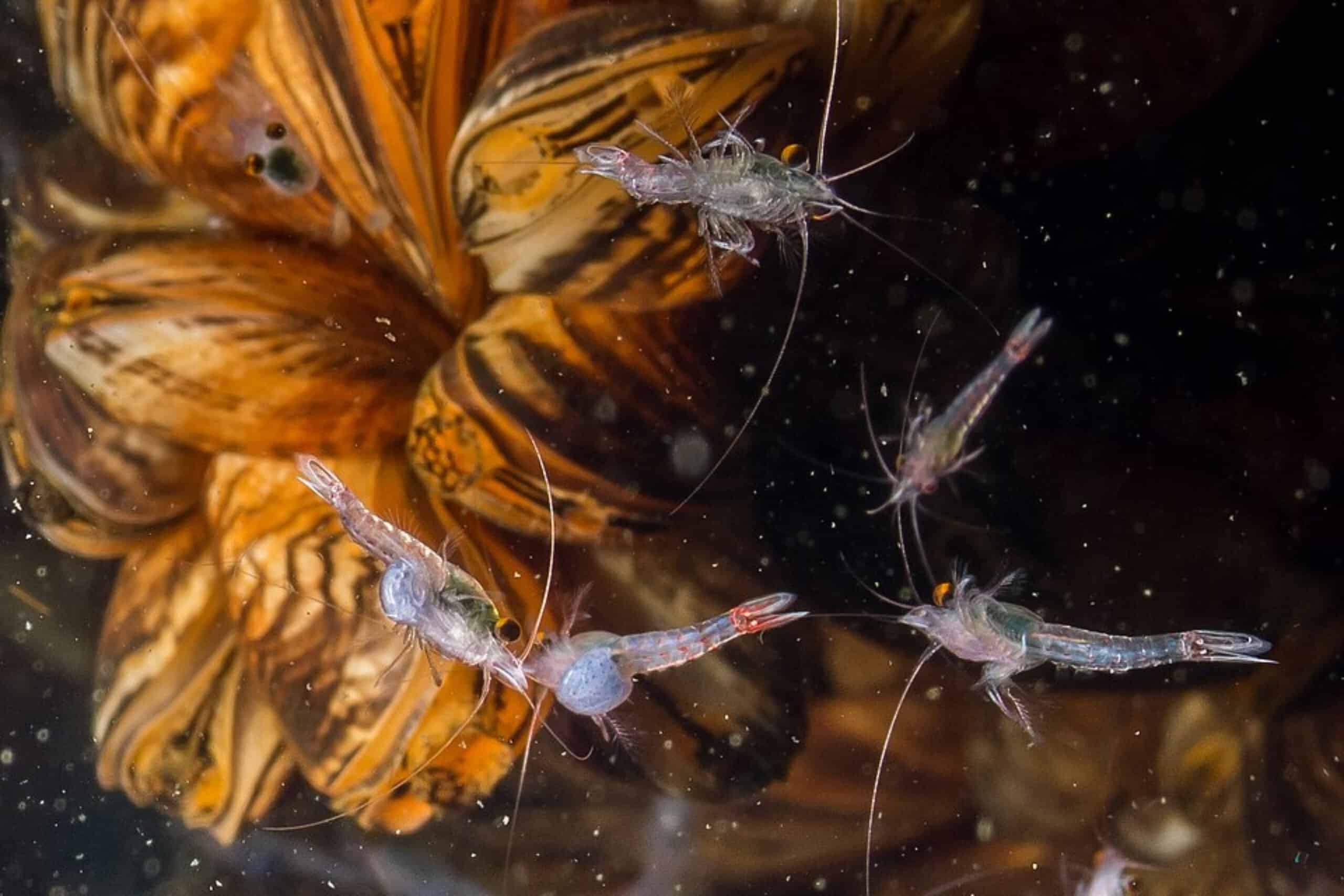
Bloody red shrimp are not native to the United States or Canada. Yet, over the past two decades, these small crustaceans, which measure between six and 13 mm in length, have been found in four of the Great Lakes. Lake Superior was the last of the Great Lakes to remain free of the shrimp, which are named for the red spots on their otherwise translucent yellow bodies.
According to a new study published in the Journal of Great Lakes Research, Lake Superior is no longer free of the crustaceans. Instead, Lake Superior now has an established population, just like the other Great Lakes.
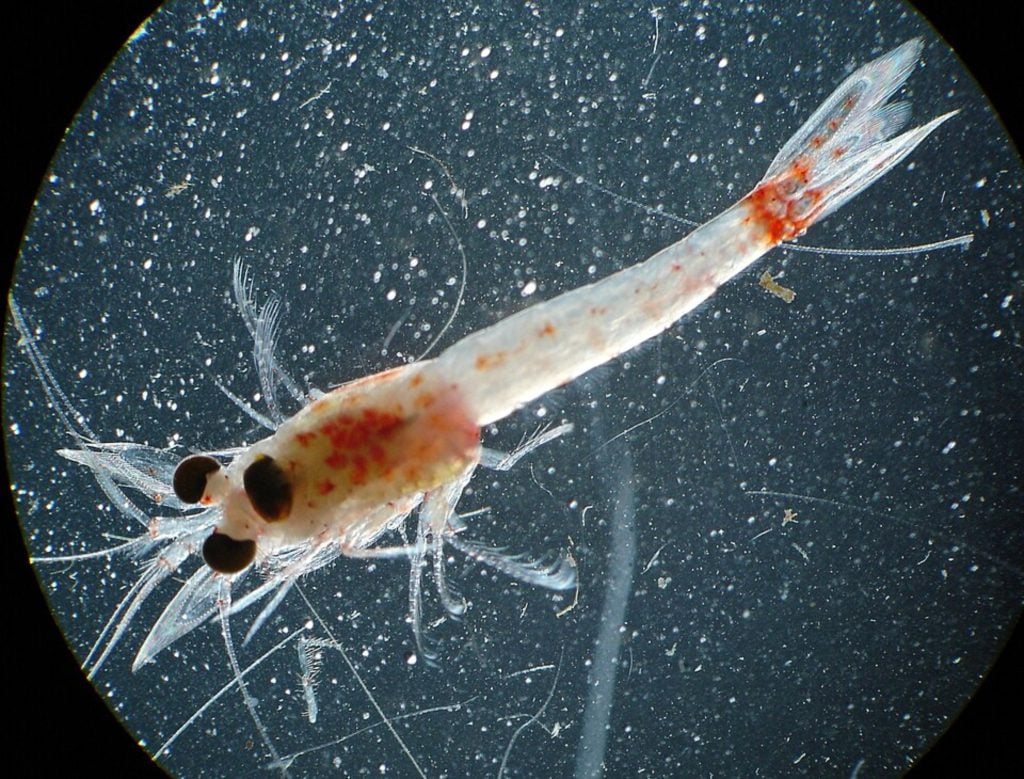
Bloody red shrimp are now found in all five Great Lakes.
©S. Pothoven, Great Lakes Environmental Research Laboratory, Public domain, via Wikimedia Commons – Original / License
Samples taken from the Duluth-Superior Harbor in 2016 and 2017 showed that a few individual bloody red shrimp had made their way into Lake Superior. At that time, there was not enough information to conclude that a population had been established. This changed in 2025, when live shrimp at different life stages were found at multiple locations within the harbor.
This discovery clearly indicates that the population is multiplying successfully and has the resources within the lake to sustain itself. Researchers state that more observation is necessary to determine how the presence of the bloody red shrimp will impact other aquatic life in the lakes.
How Did the Bloody Red Shrimp Reach the Great Lakes?
Bloody red shrimp are not native to the United States or Canada. They originate from the Black Sea and the Caspian Sea. How, then, did the shrimp manage to establish populations in the Great Lakes?
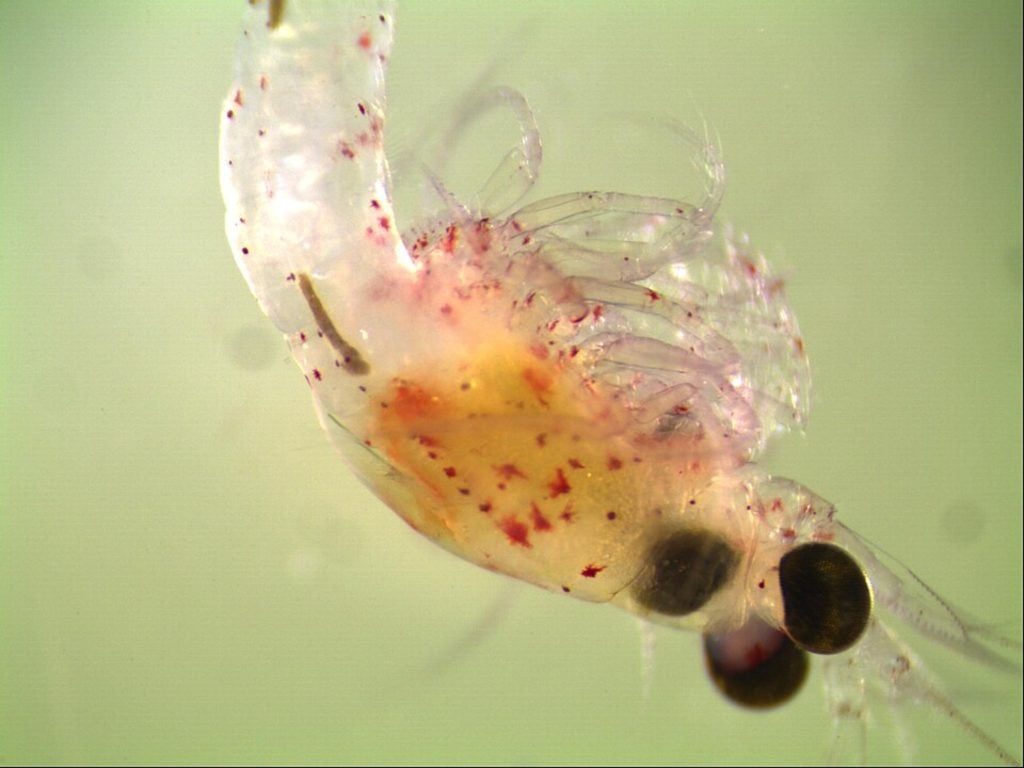
Bloody red shrimp originate in the Black and Caspian Seas.
©Matthieu Dautriourt, CC BY-SA 4.0 , via Wikimedia Commons – Original / License
The most plausible explanation, according to the study, is that the shrimp were introduced via ballast water discharged by transatlantic cargo ships. As bloody red shrimp were repeatedly picked up and relocated by ships, they eventually reached North America for the first time in 2006. At that time, the shrimp were located in Lake Ontario and Lake Michigan.
However, over the years, the shrimp spread. By 2008, established populations were found in four of the Great Lakes. As a result, it seemed inevitable that Lake Superior would eventually have a population as well, which it now does.
What Is Being Done to Eradicate Bloody Red Shrimp from the Great Lakes?
Despite bloody red shrimp having self-sustaining populations in all five Great Lakes, there are currently no plans to eradicate them. Instead, officials have chosen to continue to monitor the situation to see how it evolves.
The reason eradication is not possible, according to Rebecca D’Orazio of the Invasive Species Centre, is that removing an entire species from a waterway is extremely difficult.
“Once a species becomes established in a waterbody,” D’Orazio explained to CBC News, “it is very difficult and oftentimes impossible to eradicate it.”
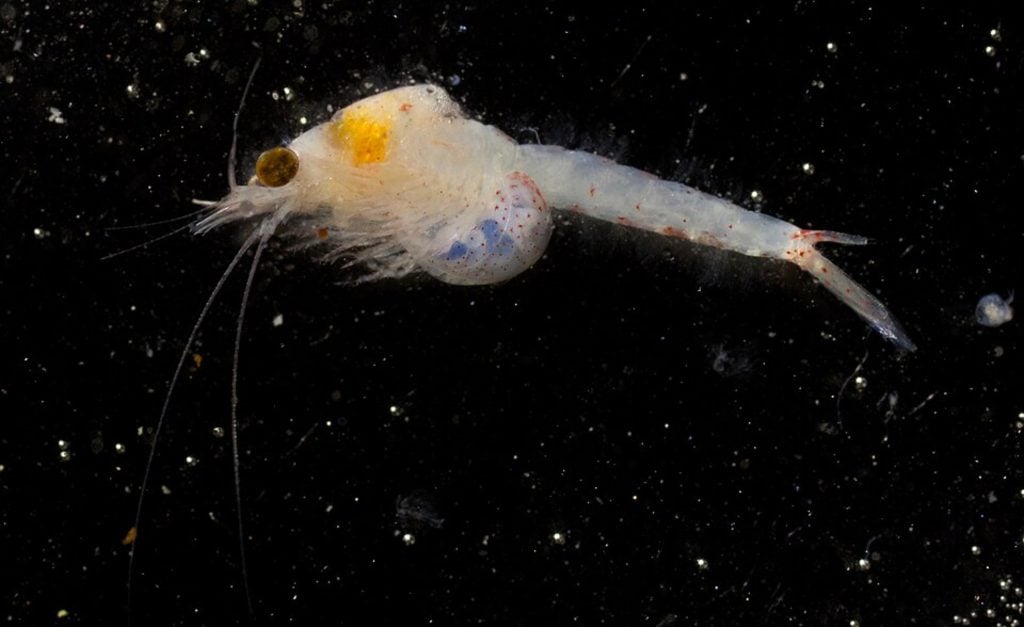
Bloody red shrimp are being monitored for now, rather than eradicated from the Great Lakes.
©User:Creosoph, CC BY-SA 4.0 , via Wikimedia Commons – Original / License
Instead of trying to eradicate them, Donn Branstrator, first author and biology professor at the University of Minnesota Duluth, says that those who boat in the Great Lakes are being encouraged to take steps to stop the spread of bloody red shrimp.
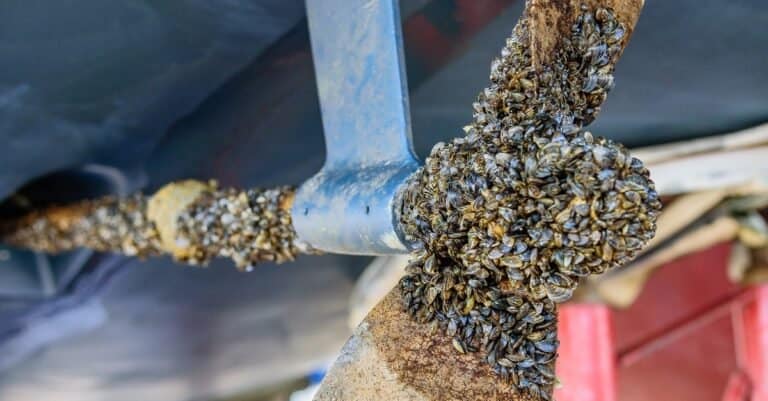
“People should be aware that the shrimp could hitchhike to inland lakes on their watercraft and other equipment,” Branstrator told KSTP. “Clean, drain, dry procedures will help prevent further spread of the bloody red shrimp to inland lakes in Minnesota and the Midwest.”
So far, the bloody red shrimp have not had a noticeable impact on the aquatic environment of the Great Lakes. Whether this will remain the case as the shrimp population increases remains to be seen.