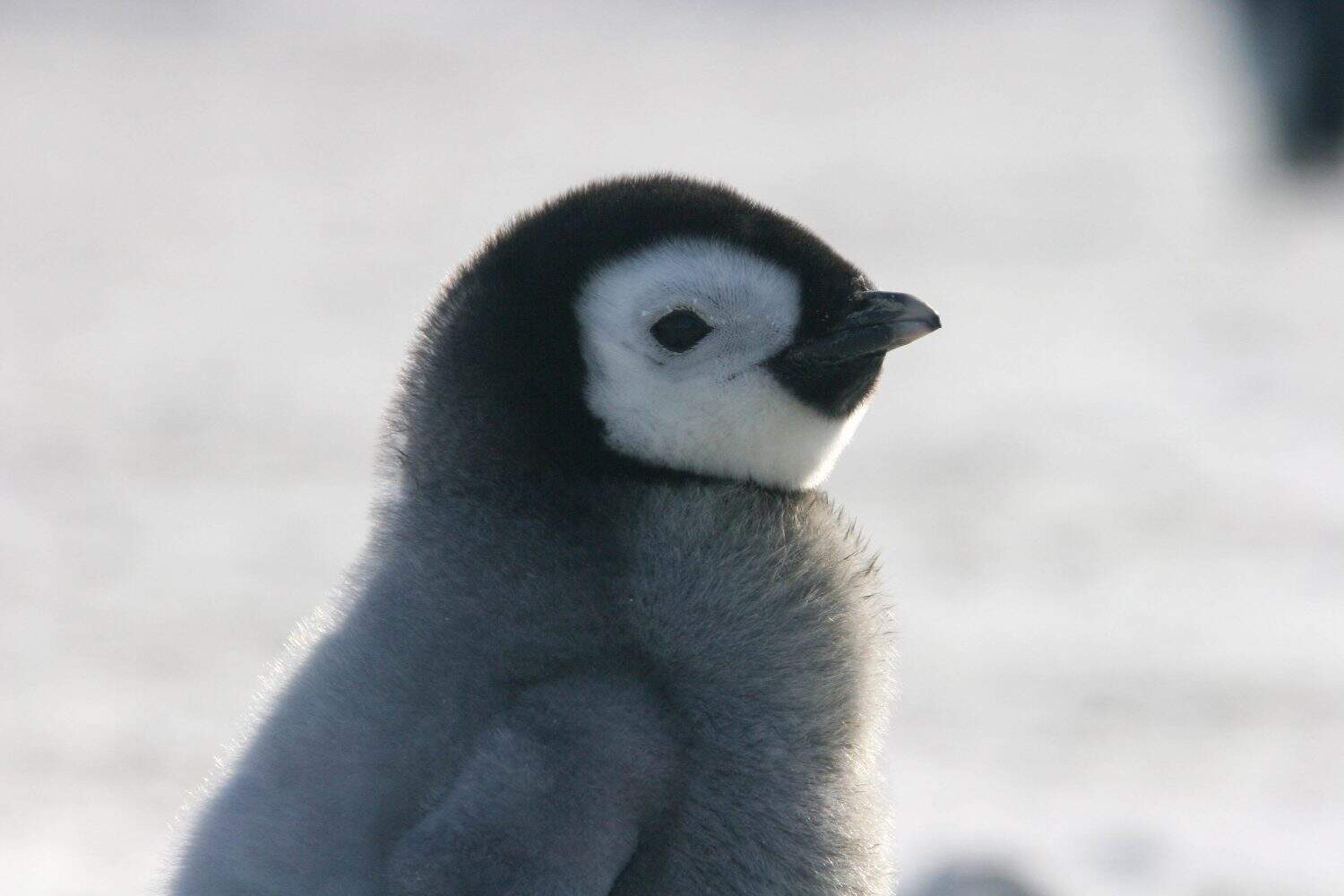

Quick Take
- Baby penguin chicks molt from down to juvenile feathers in a patchy phase that often creates a hat-like puff on their heads.
- The beret look is a temporary result of feather growth, not a real hat.
- Chicks start their first molt at 4 to 6 weeks and replace most down with juvenile feathers by 7 to 12 weeks.
Picture this: a tiny penguin wearing a beret! But here is the thing… you don’t have to imagine it, because you can check it out on Instagram. In the post, an adorable young penguin sports what looks like a little beret. Eeeek! However, there is more to this sight than meets the eye. This “beret” is a part of the penguin’s molting process. Find out more about this amazing phenomenon.
Is This Fashion or More?

That penguin would fit in just perfectly in Paris, well maybe minus the habitat and weather.
©Anele Nova/Shutterstock.com
If you fantasize of meeting a French baby penguin, stepping out of a tiny Parisian café, beret slightly askew, sipping an imaginary espresso, your dream may already have come true. Some penguin chicks, right in the midst of their first molt, grow the most fantastically ridiculous, hat-like puff of feathers atop their heads. This whimsical feature is both fashion and flair rolled into one.
However, as adorable as this feathered accessory may be, the molting process can lead to some rather awkward appearances. But what part of adolescence isn’t a little cringe-worthy? In the Instagram post, that so-called “beret” isn’t actually a chic hat; it’s a patch of baby down that hasn’t quite transitioned with the rest of the bird’s feathers.
While some chicks might lack a certain *je ne sais quoi* in their appearance, their awkward charm makes them all the more delightful. Each baby penguin embodies a unique personality that shines through, even in their most disheveled moments, reminding us that beauty and style can align with the quirks of growing up.
Why Do They Molt Like This?
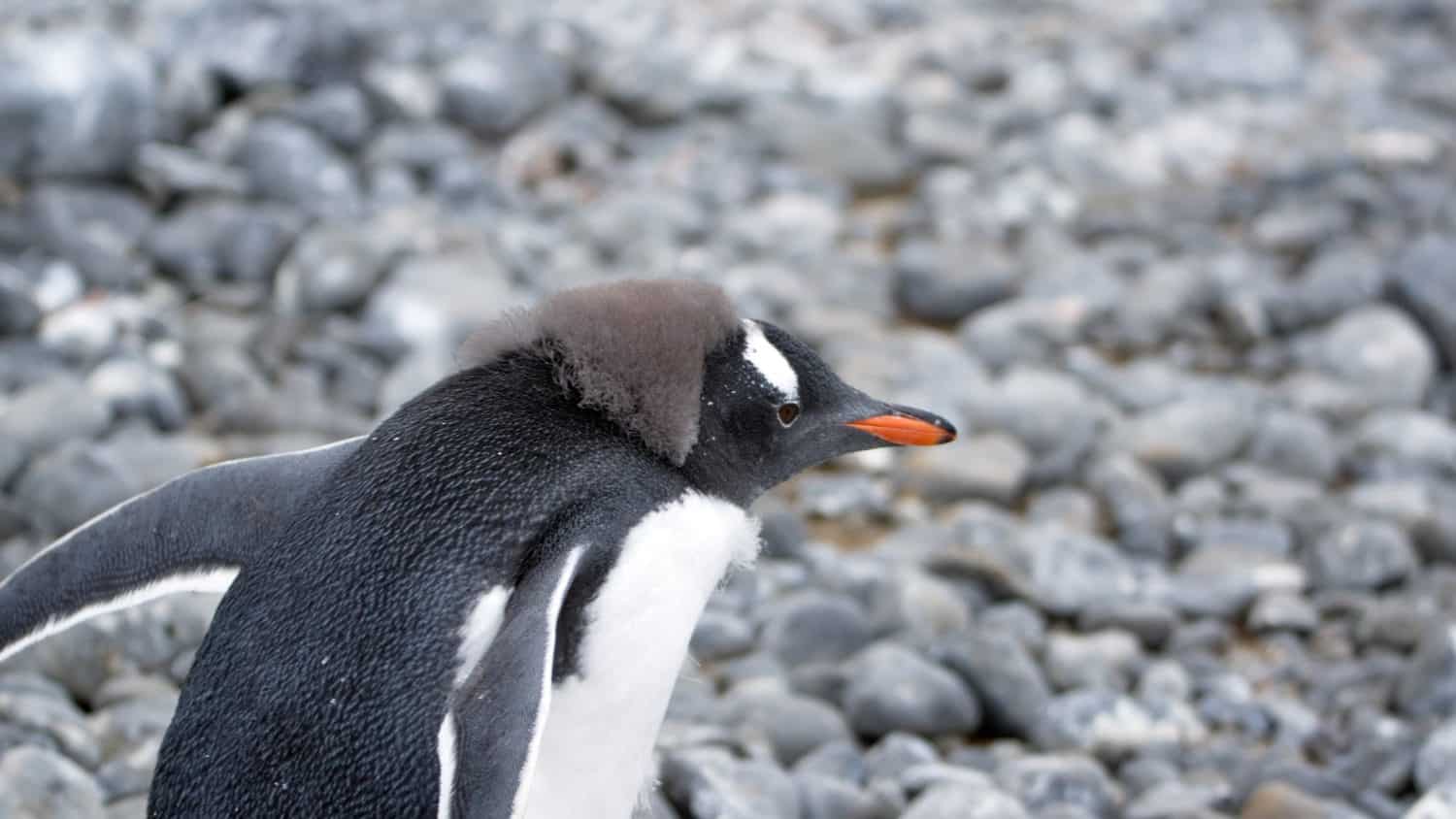
Oh, this molting can create all sorts of looks for these little penguins. Some better than others.
©Angela N Perryman/Shutterstock.com
Penguin babies hatch with soft down feathers that are undeniably adorable and incredibly photogenic, capturing the hearts of everyone they encounter. However, while these soft feathers are perfect for warmth and snuggly cuteness, they aren’t very practical for long-term survival in the wild.
As the weeks roll on, these little bundles of joy begin an exciting transformation, shedding their down and replacing it with their first set of juvenile feathers. This molting process typically occurs in a patchy manner, leading to some young chicks sporting wonderfully dramatic and hilarious hairstyles. Picture them with a stylish beret perched atop their heads, a quirky toupee slightly askew, or even a tragic mullet that would make any rock star proud.
During this period of growth, young penguins go through several stages of feather development, and sometimes the transition is not as graceful as one might hope. The visual result can be endearingly clumsy, reminiscent of a quirky fashion statement that only a baby penguin could pull off with such enviable confidence.
These uneven feathers not only make for humorous appearances but also reflect the unique physiology of each chick as they go through this transitional phase. Each patch of feather growth tells a story of development and adaptation, reminding us that change can be both awkward and delightful. Watching them strut around with their whimsical hairstyles reminders us of nature’s creativity. As they navigate the world with a charmingly disheveled look, they endear themselves to us.
When Do They Lose Their Baby Feathers?
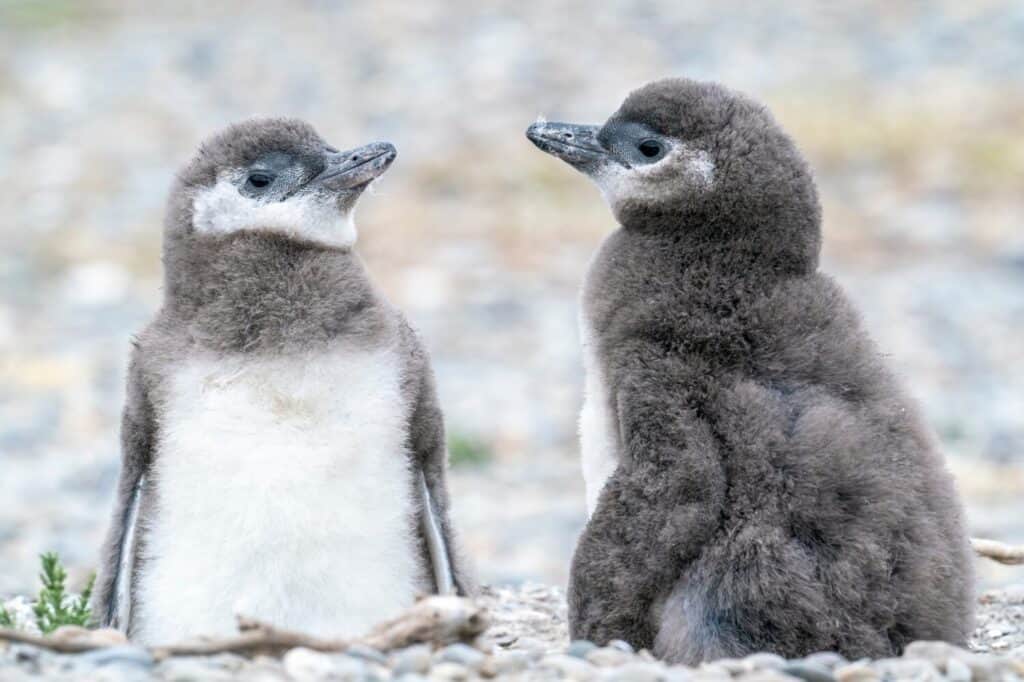
Baby penguins have lots of different development stages from egg to adulthood.
©Rob Jansen/Shutterstock.com
Penguin chicks typically start their first real molt between 4 and 6 weeks old. By around 7 to 12 weeks, most of the down has been replaced with juvenile feathers, marking a significant step in their growth. However, this transformation can be hilariously uneven. Some chicks approach the transition with the grace of a swan, while others resemble abstract art installations, with feathers sprouting in all directions, creating a comical patchwork of fluff.
That adorable beret-like poof? Totally normal. Totally temporary. Totally spectacular.
Final Thoughts
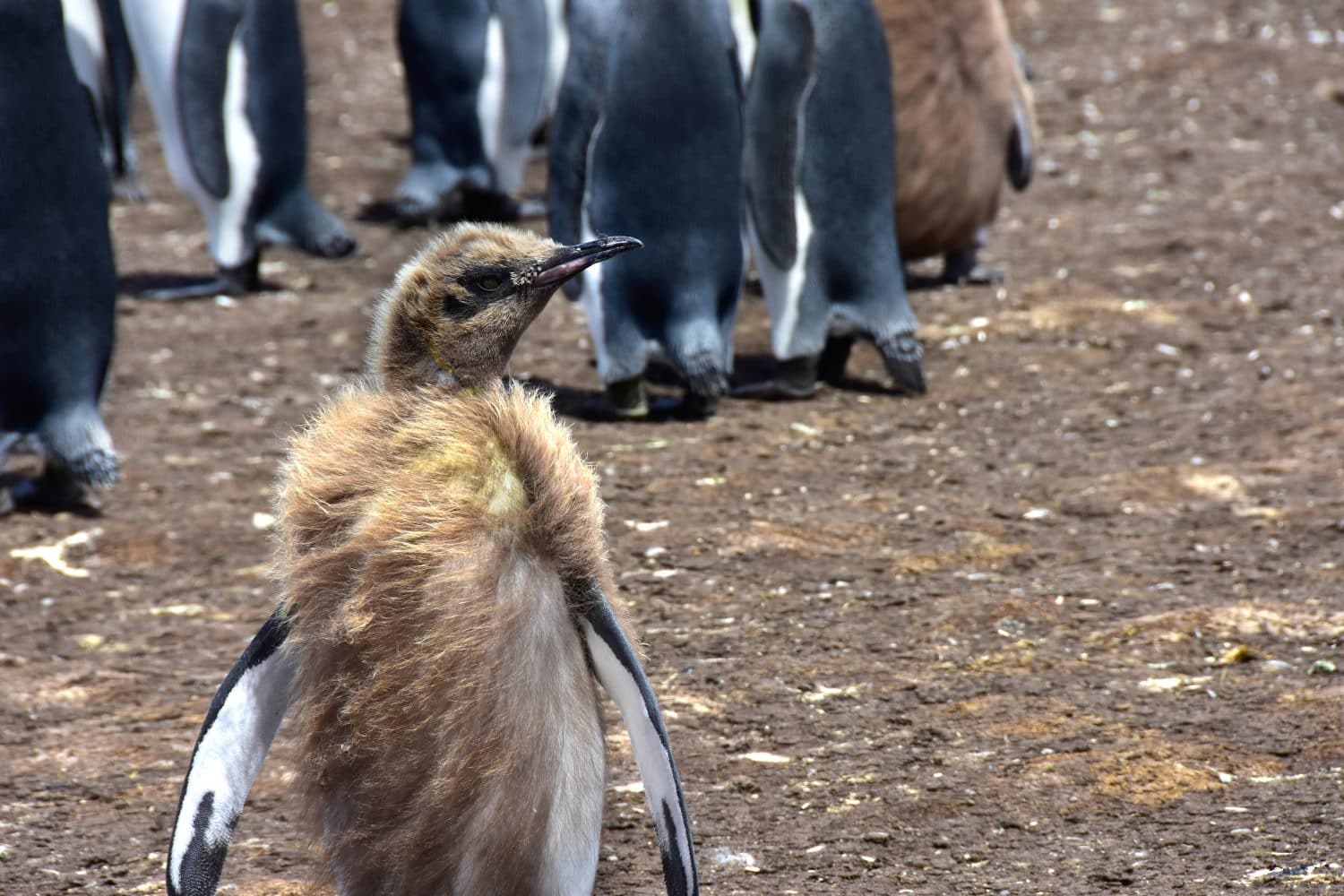
This molting pattern looks more like a fur vest. This penguin is ready for a 70s party!
©Bonnie Fink/Shutterstock.com
The fluffy phase is a delightful rite of passage; it is messy, charming, and irresistibly adorable. With their rounded bodies, soft down feathers, and curious expressions, these little creatures are pure joy to behold. As they grow, baby penguins eventually enter the molting phase, where they shed their downy fluff in exchange for sleek, waterproof feathers. This transformation is essential for their survival, allowing them to thrive in icy waters. The beret is optional.
During this time, as their appearance shifts from fuzzy cuteness to a more streamlined look, they are preparing for swimming and hunting. The best part? They have no clue just how funny and endearing they look as they stumble through their miniature adventures, occasionally losing a few feathers along the way. Throughout this molting phase, their quirky looks become a source of amusement for those lucky enough to observe them, and it’s delightful to see them in all their different life phases.