
Millions of stray animals enter shelters each year. Some will be reunited with their owners, while others, sadly, are abandoned. Whether or not they survive during that time boils down to whether they enter a kill versus a no-kill shelter. But what is the difference between these two facilities?
No-Kill Versus Kill Shelters
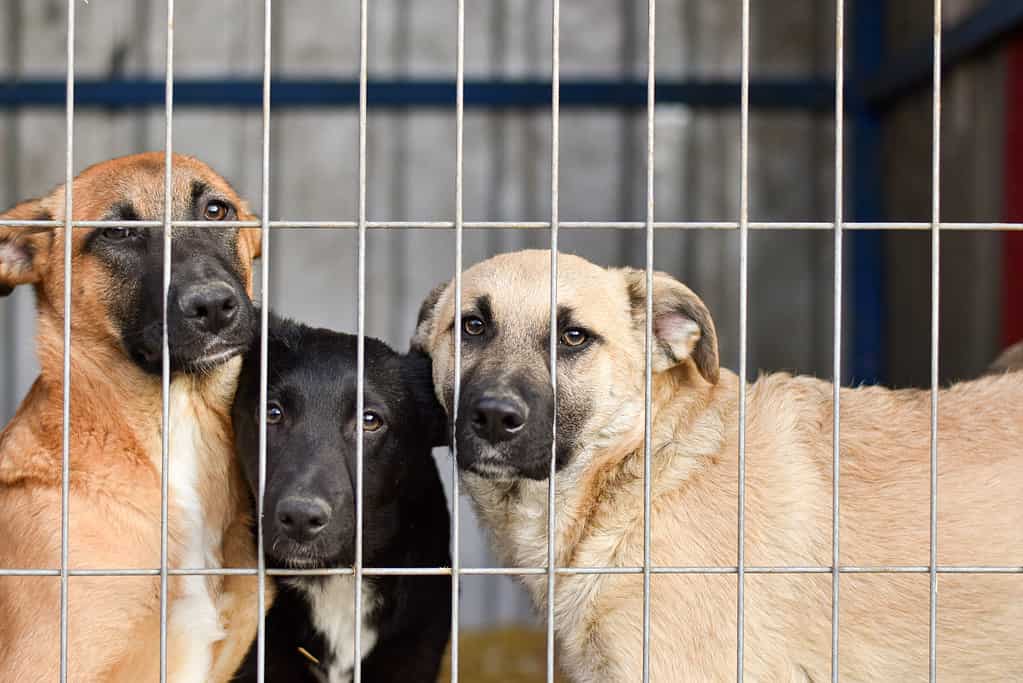
The most significant difference between a kill and a no-kill shelter is the number of animals that get homed in the course of a year.
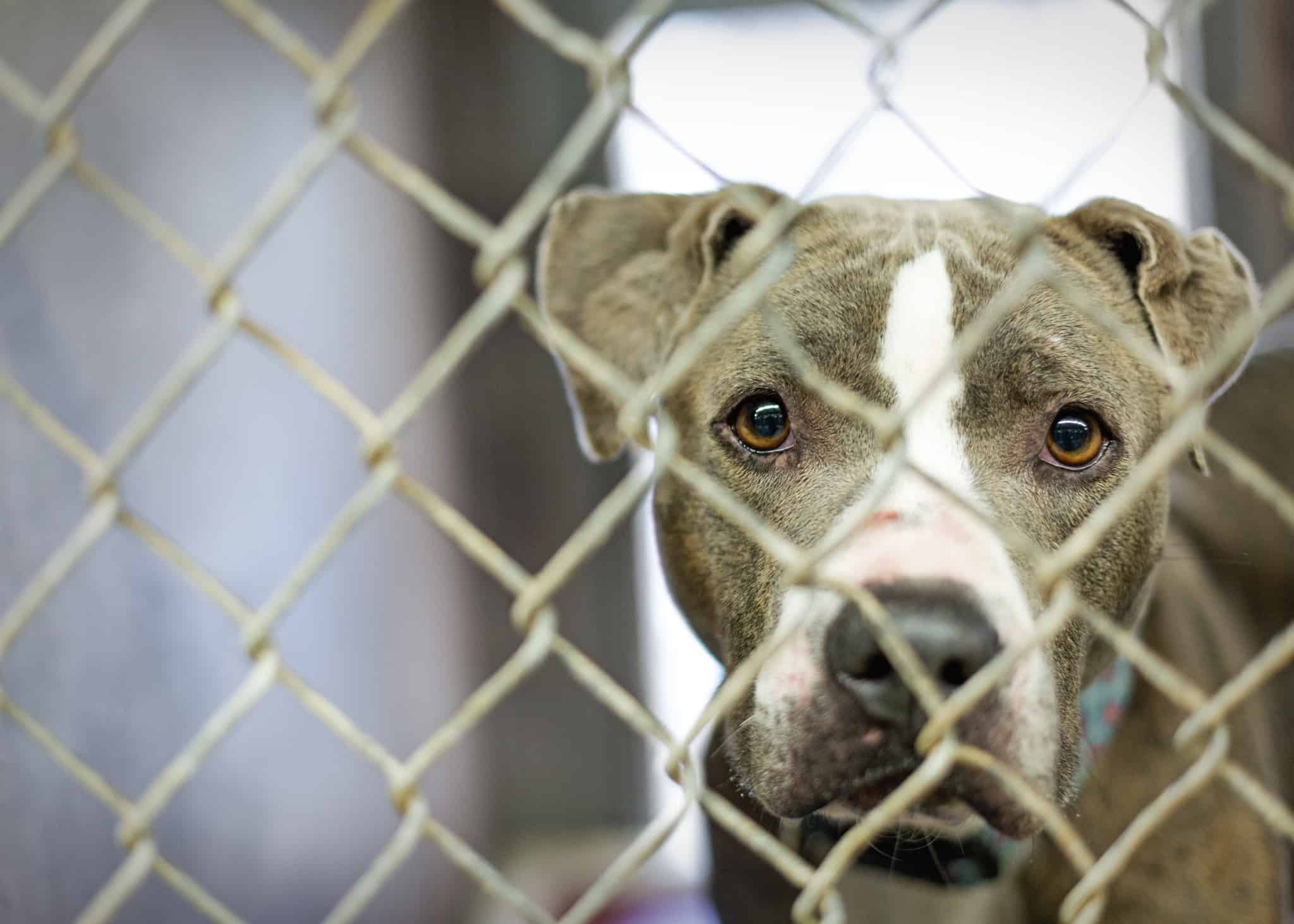
©iStock.com/Valeriy Volkonskiy
A kill shelter is one in which no animal is turned away. With this comes the grim reality that some completely healthy animals will be euthanized due to space or behavioral issues. In general, 10% of the animals entering these shelters are euthanized annually.
A no-kill shelter is one in which 90% of the animals that enter it find homes. It does not mean these shelters never euthanize. However, euthanasia only occurs when the animals are terminally ill or deemed unsafe for the public. With this lower level of euthanasia, many animals surrendered to these shelters are turned away due to a lack of space. No-kill shelters prioritize animals based on their chances of adoption, meaning not all animals will qualify to be housed there.
What Animal Shelters Originally Looked Like
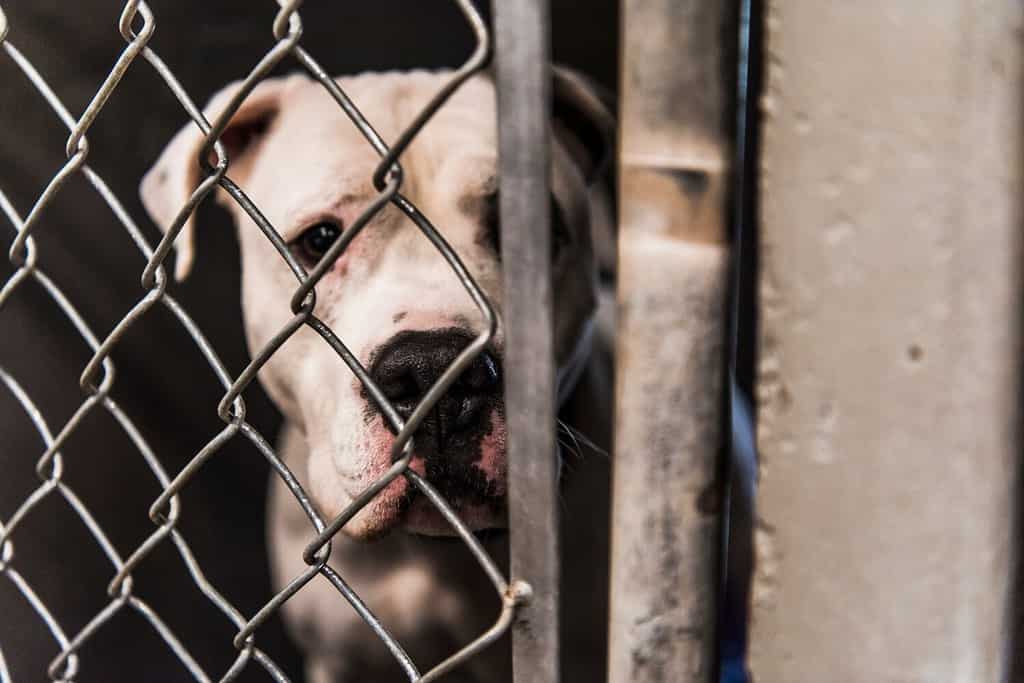
Animal shelters were created to use more humane methods to dispatch stray animals.
©Hannah Carl/Shutterstock.com
Before animal shelters were created in the late 1800s, the methods for controlling animal populations were brutal. Dogs and cats were drowned, clubbed to death, or shot. The deaths were not cruelty-free, and many animals suffered.
As the late 1800s approached, traditional shelters began to open. Today, these would be known as “high-kill” shelters. These shelters would round up stray animals and take them to their facilities. However, according to Dr. Gaurav Gupta, the purpose was not to give animals a chance to be adopted, but to continue to control the population of stray animals.
“Modern U.S. animal shelters trace to late 19th to early 20th century urbanization, public health, and animal control,” Dr. Gupta explains to A-Z Animals. “Municipal ‘impounds’ were created primarily to manage strays and rabies risk, not as adoption centers.”
Dr. Gupta, a veterinarian with over two decades of experience, currently helping animals in India, continues, “Humane societies gradually took over animal control functions from private contractors in many cities.”
Even as this happened, according to Dr. Gupta, “the core model was, ‘catch, hold, dispose.'”
“Dogs (and later cats) were held for a legally mandated stray-hold period to allow owners to reclaim (often 3–7 days; varies by state/city). Unclaimed animals were then ‘destroyed,’ which is how statutes often phrased it.”
Dr. Gupta concludes, saying, “Euthanasia was considered a municipal service to control overpopulation and disease; adoptions existed but were not the primary mandate until the mid‑20th century.”
Animal Welfare Movement Causes A Shift In How Shelters Are Run
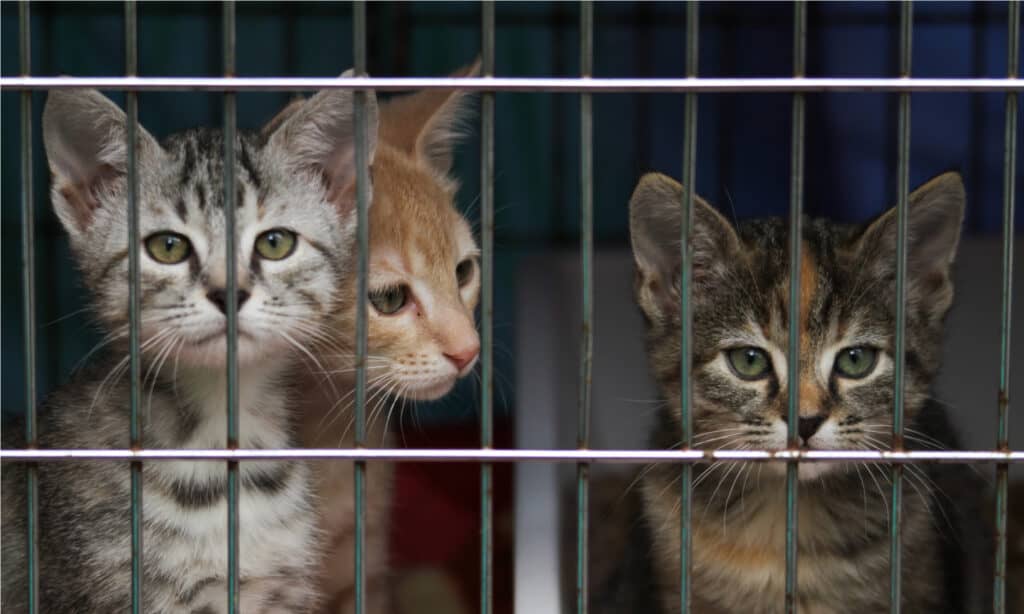
The 1970s brought with it animal rights and welfare movements, which created no-kill shelters.
©Giordano66/Shutterstock.com
Beginning in the 1970s, the way animal shelters were viewed changed. Instead of being a place to house animals for a short period before they were euthanized to make space for the next round of strays, advocates for animals began creating no-kill sanctuaries. However, it would be another two decades before the idea of “no-kill” began to gain any traction.
In the 1990s, animal advocacy groups became vocal about euthanasia as an unethical way to control the stray animal population. Instead, spay and neuter programs were created to allow healthy animals to live without the risk of procreation, and ultimately, get adopted.
The idea of a no-kill shelter was initially seen as unsustainable. According to critics, once a shelter got to capacity, it would have to euthanize. But, with the creation of organizations like Best Friends Animal Society and the San Francisco SPCA, according to Dr. Gupta, the “idea that ‘every healthy and treatable animal’ is savable” was born.
According to the Best Friends Animal Society website, the organization began as a grassroots movement led by a group of friends who wanted to save as many animals as possible from being euthanized for no reason other than overcrowding in the shelter. As the organization grew (becoming the “nation’s largest no-kill sanctuary for companion animals”), so did its goal. The goal was and is to save all the animals that come into shelters.
Thanks to Best Friends Animal Society, the SPCA, and rescues around the country, the number of animals killed in shelters has decreased dramatically. In 1984, when Best Friends Animal Society was formed, 17 million dogs and cats were euthanized in the U.S. each year. Four decades later, in 2024, that number decreased to 425,000.
Today, two out of three shelters are considered “no-kill.” While the goal was to make 100% of shelters no-kill by 2025, that goal has yet to be achieved. There is still a lot of work to be done for shelters to no longer euthanize for space.
Euthanasia was considered a municipal service to control overpopulation and disease; adoptions existed but were not the primary mandate until the mid‑20th century.
Dr. Gupta
The Goal Is Not Yet Attainable

Currently, there are only two states in the U.S. that only have no-kill shelters.
©andysavchenko/Shutterstock.com
As the latest statistics show, the goal of all animal shelters across the United States designated as no-kill is still farther off than animal advocates would like. However, the news is not all bad. Two states are now completely kill-shelter-free, and others are very close to attaining that status as well.
The states with the lowest kill-shelter rates include:
| State | Percentage Of Animals Killed Annually In Shelters |
| New Hampshire | 0.0% |
| Delaware | 0.0% |
| Rhode Island | 0.3% |
| North Dakota | 0.5% |
| Maine | 0.9% |
| Idaho | 1.0% |
| Colorado | 1.5% |
| Vermont | 1.5% |
| Oregon | 1.5% |
On the flip side, the states with the highest percentage of animals euthanized annually are quite a bit higher. Those states include:
| State | Percentage Of Animals Killed Annually In Shelters |
| Mississippi | 18.3% |
| North Carolina | 14.3% |
| Alabama | 14.2% |
| Arkansas | 12.6% |
| Louisiana | 12.6% |
| Hawaii | 12.0% |
| Maryland | 11.5% |
| Texas | 10.3% |
| Oklahoma | 10.0% |
Thousands of animals are still needlessly euthanized annually, according to animal advocate groups. The states with the highest number of animals euthanized in shelters annually include:
| State | Number Of Animals Killed In Shelters Annually |
| Texas | 61,245 |
| California | 37,021 |
| North Carolina | 28,790 |
| Florida | 22,616 |
| Alabama | 14,690 |
| Georgia | 14,118 |
| Louisiana | 12,401 |
| Mississippi | 11,983 |
| Oklahoma | 9,094 |
| Kentucky | 7,471 |
While we’ve seen progress over the years, there is so much more to do, according to animal advocacy groups. While 2025 will not be the year kill shelters are eradicated nationwide, the hope is that this goal will be achieved in the near future.
How No-Kill Shelters Operate When They Are Full
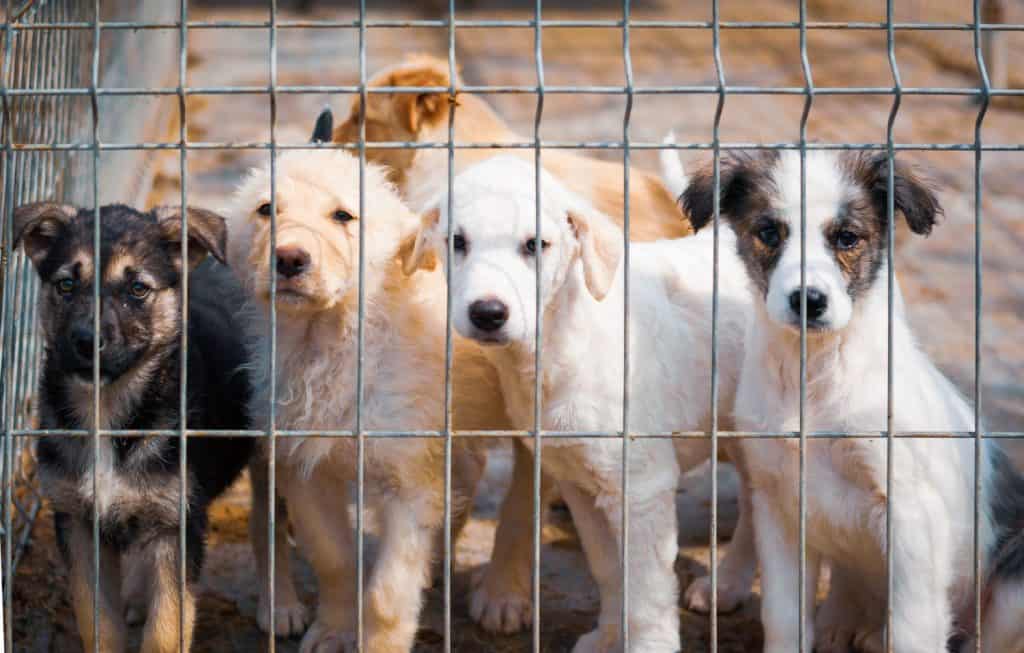
When no-kill shelters are full, they may only take animals they deem to be most adoptable, while working to get their long-term animals into foster or forever homes.
©bdavid32/Shutterstock.com
One of the most significant issues for shelters participating in the euthanasia of animals for space is what to do when the shelter is full. This is a fair question, as shelters frequently reach maximum capacity. According to Dr. Gupta, no-kill shelters engage in several strategies to ensure the animals they care for stay safe until they are adopted, while helping those in need of a home find one as well.
“Typically [no-kill shelters] use waitlists, appointments, diversion (helping guardians keep pets), finder‑to‑foster, and transfers,” Dr. Gupta explains to A-Z Animals. “They can decline intake if capacity is exceeded. They do not euthanize for space, but may pause intake or restrict to emergencies.”
Communities that have no-kill shelters also rely on sanctuaries and rescues to take in animals when space is limited. With so many animals abandoned post-COVID, shelters, sanctuaries, and rescues have capacities near all-time highs in some instances. Despite this, animal advocates agree we are still in a much better place than decades prior, when healthy animals were consistently euthanized solely for space.
Is It Humane for Animals to Live in Shelters for Years?

While a shelter environment is not an ideal long-term solution for any animal, some animals thrive in the care of no-kill shelters.
©Crystal Alba/Shutterstock.com
Stories of animals being brought to shelters through no fault of their own have become all too common. Sometimes, these animals are adopted quickly. Other times, the dog or cat that once had a home finds itself sitting at a shelter for years. This has raised the question of whether it is humane for animals to live in shelters for years, or if it would be kinder to euthanize them.
“Humane outcomes should weigh the animal’s quality of life, not just the time in the shelter,” Dr. Gupta says. “Long stays raise risks of chronic stress, kennel deterioration, behavioral decline, and medical problems. But some animals thrive in foster or sanctuary settings.”
Dr. Gupta continues, “Studies link length of stay and kennel stress to increased stereotypic behavior, disease, and reduced adoptability, especially for high‑arousal dogs. Cats often experience stress-induced illness. However, targeted enrichment, foster breaks, and behavior plans can maintain welfare for long-stay animals and improve placement odds.”
This means even animals with extended stays at shelters can have fulfilling lives. But it is not just up to shelters, rescues, and sanctuaries to help these animals. The public needs to do their part as well to help reduce the number of animals in shelters overall.
What Can the Public Do to Help Reduce Shelter Numbers?
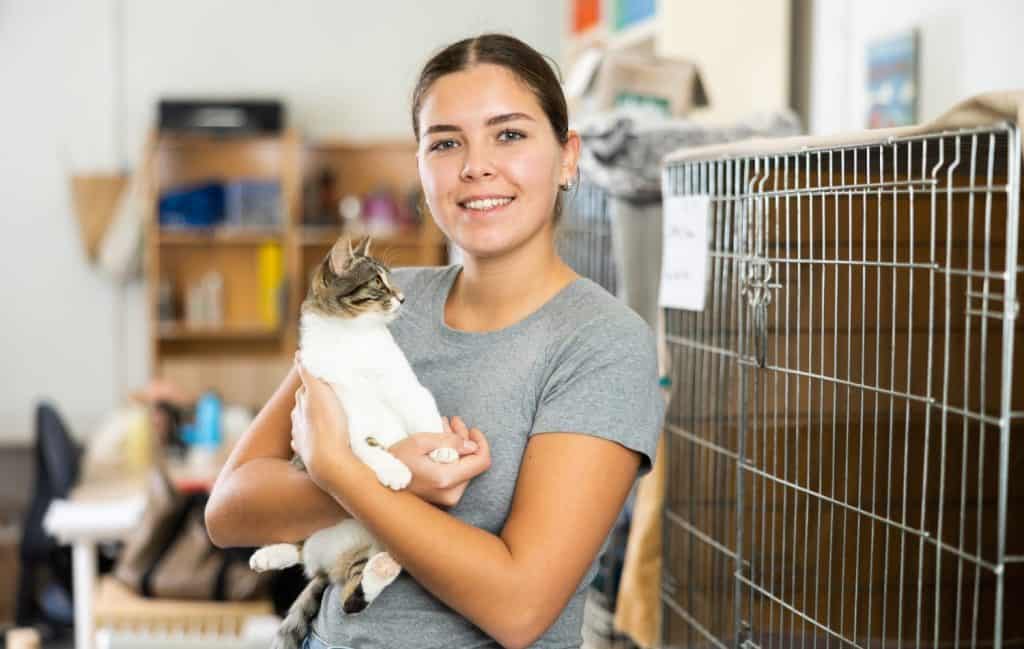
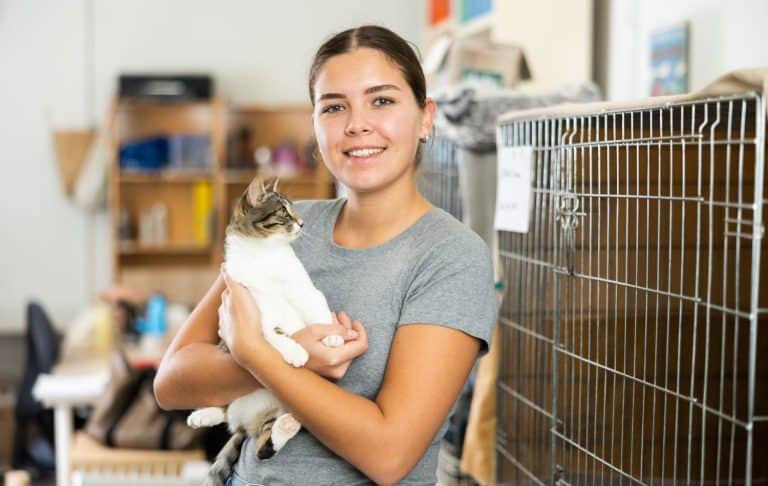
The public can help shelters become no-kill by spaying and neutering their pets, only adopting from shelters, or volunteering to foster to give the shelters more space.
©BearFotos/Shutterstock.com
Often, a lack of public involvement prevents shelters from becoming no-kill facilities. This is not only due to lack of interest in helping, but because people believe they don’t have the time or resources to help. However, there are plenty of things that can be done to help animal shelters, all of which contribute to the shelter becoming kill-free.
According to Dr. Gupta, some very easy steps the public can take to help animal shelters across the U.S. include:
- Prevent the intake of animals by spaying or neutering pets
- Support trap-neuter-return programs for cats
- Microchip pets so they can be reunited with their families
- Advocate for pet-inclusive housing
- Adopt from shelters versus shopping for pets
- Consider fostering pets, even for a weekend, to help “decompress kennels”
- Volunteer to transport animals from shelters to new homes
- Volunteer to write bios and take pictures of shelter animals to make them more attractive for adoption
With shelters and communities working together, it is possible to further reduce the number of animals euthanized annually in shelters. Advocates hope this happens sooner rather than later, so that these precious pets have the opportunity to find their forever homes.