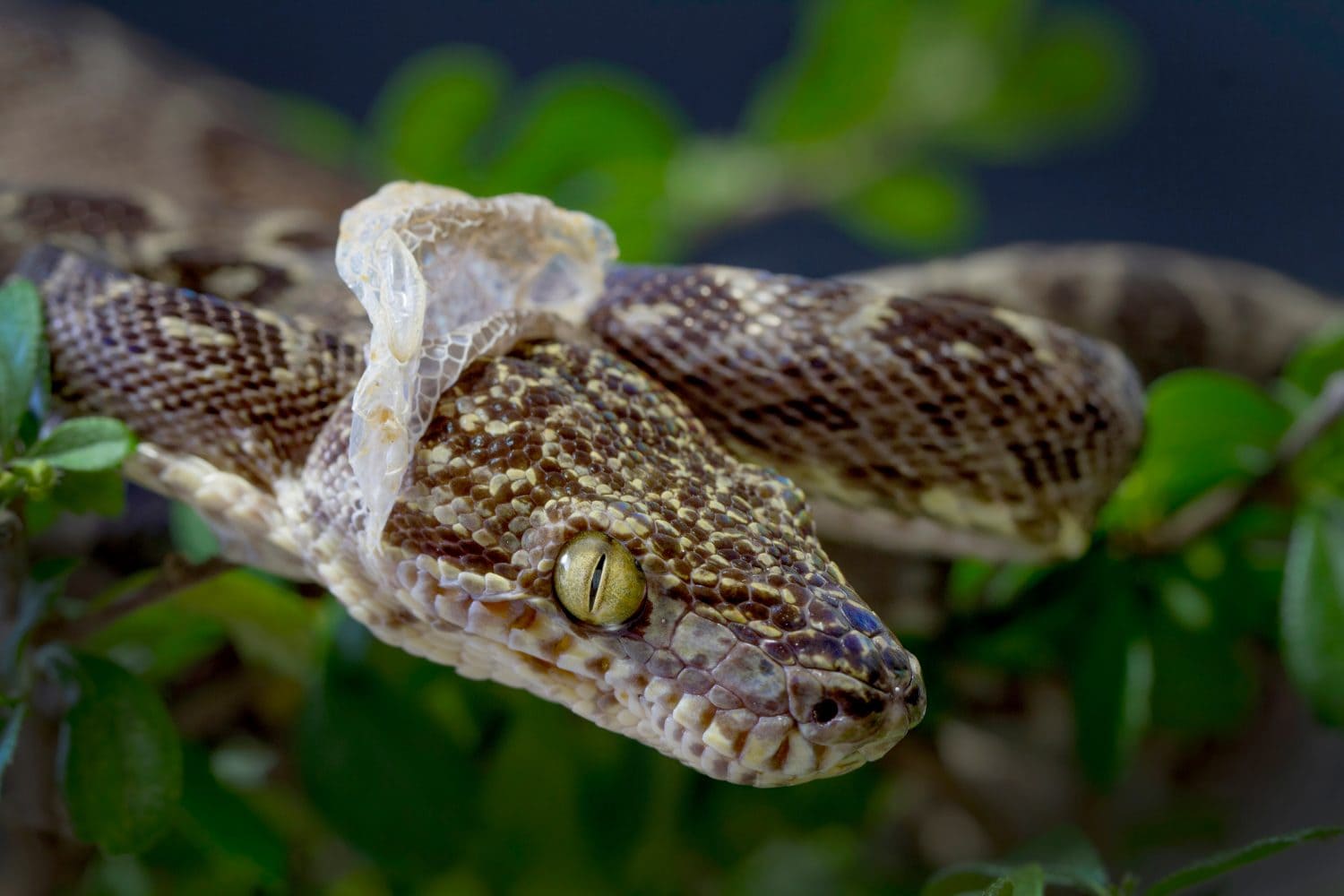

Quick Take
- A snake's eyes turn an eerie blue-grey before it sheds, a change that reveals something unexpected about how the whole process works. See why eyes turn blue →
- There's one thing well-meaning snake owners do during a stuck shed that vets say can cause permanent damage. Avoid this common mistake →
- Unlike every other reptile, a healthy snake pulls off its entire skin in one piece, using a strange method. Compare shedding styles →
- Shedding does far more than let a snake grow. It resets something about the animal that most people never think about. Discover the full benefits →
Have you ever suffered a terrible sunburn and noticed your skin peeling off in sheets? Now imagine peeling off all your skin in one big piece, starting with your nose. It sounds like a nightmare scenario, but it’s normal and healthy for snakes and some other reptiles. As strange as it looks, ecdysis—the scientific term for skin shedding—is a vital natural occurrence that keeps snakes free of parasites, able to grow, and ready for their next hunt. Veterinarian Dr. Heidi Hammel kindly served as an expert consultant in the writing of this article.
Why Snakes Need a Whole New Skin
Snakes’ outer skin is made of tough, keratinized scales that provide armor, reduce water loss, and streamline their bodies for slithering through tight spaces. Unlike our stretchy skin, a snake’s outer layer does not grow much once it hardens. As the snake’s body length and girth increase, that old suit becomes too tight. Building a new, slightly roomier layer underneath and then discarding the old one is the reptile version of changing into bigger clothes.
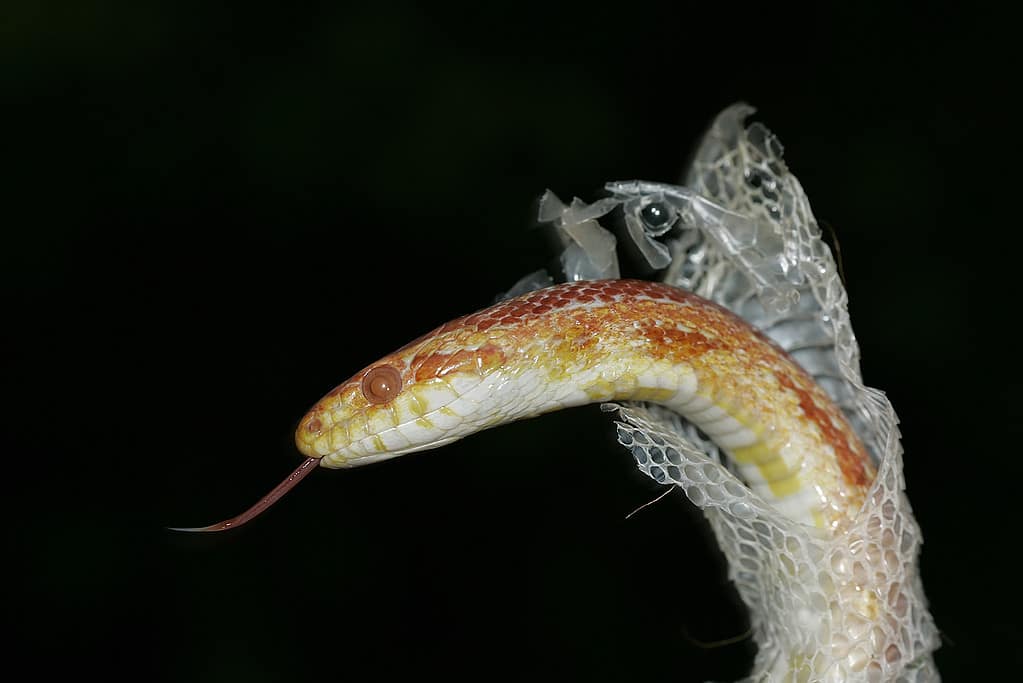
Shedding enables snakes to continue growing.
©Jose Bergadá/iStock via Getty Images
Shedding also helps control parasites and clean away small injuries. Ticks, mites, and bacteria that latch onto the old skin can be peeled away with it, offering the snake a cleaner surface and lower infection risk. Young snakes, which grow quickly, may shed as often as once or twice a month. Older adults typically shed between two and six times a year, depending on species and environmental conditions. Factors like species, temperature, diet, and overall health all influence how often the process happens. A strong appetite, steady growth, and regular complete sheds are usually signs that a snake’s environment and body are in good shape.
Snakes Versus Lizards: Different Shedding Styles
Lots of reptiles shed, but snakes are famous for turning the process into a full-body magic trick. Many lizards and geckos flake off skin in ragged patches, sometimes even eating the pieces. By contrast, a healthy snake usually sheds in one nearly continuous piece, forming a ghostly tube complete with eye caps and a perfect outline of every scale.
There are exceptions, of course. Poor humidity, illness, or old injuries can cause the old skin to stick. This results in patches of retained shed that cling around the eyes, tail tip, or along the body. In the wild, a snake with stuck skin might be more prone to infection or have trouble moving normally. In captivity, keepers may soak the animal or offer damp hides so the next shedding happens more completely. The contrast between messy, patchy shedding and a smooth inside-out tube shows just how important water balance and general health are to the process.
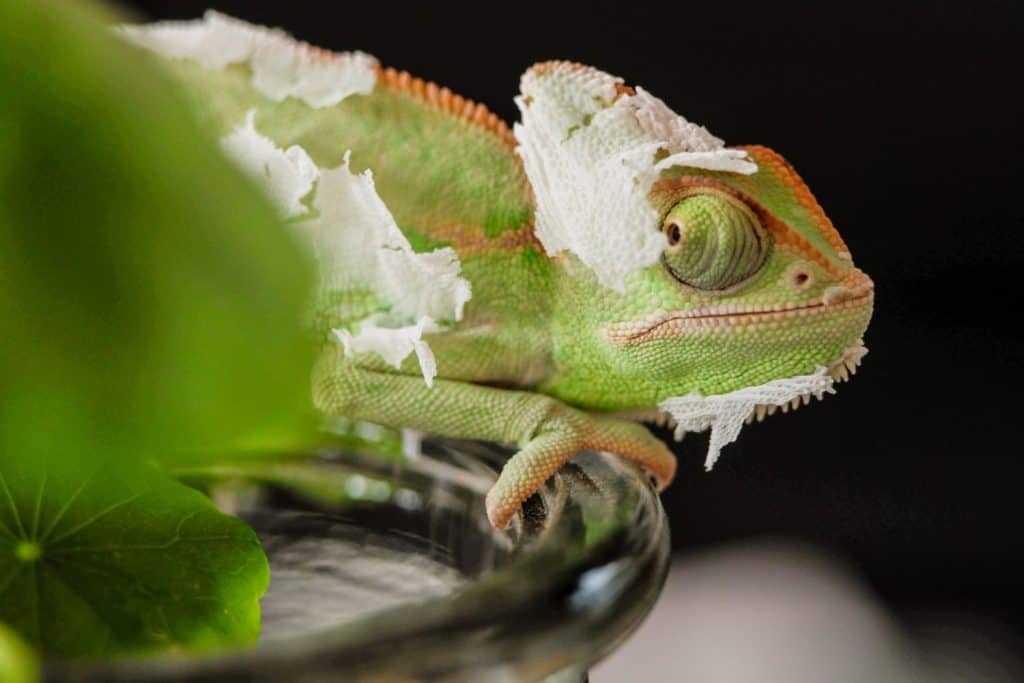
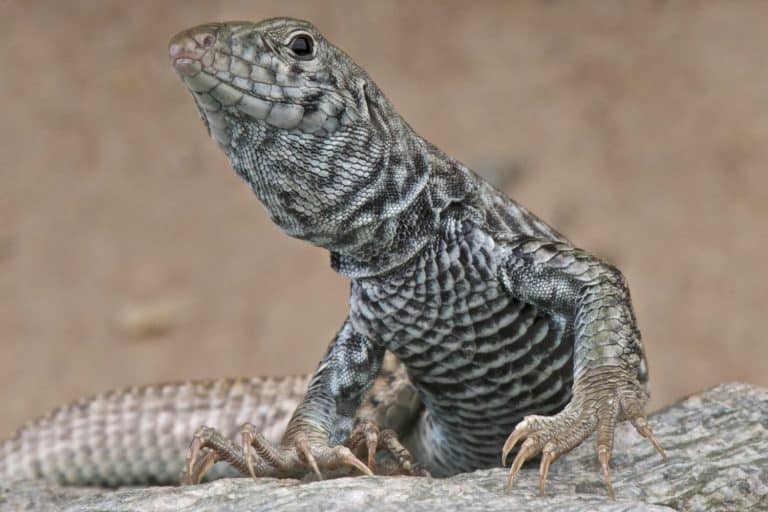
Other reptiles, like this chameleon, also shed, but often in a more patchy way.
©Ropikanaslim/Shutterstock.com
The Blue-Eyed Warning Light
Dr. Hammel describes some of the tell-tale signs that a snake is about to shed. Snake owners should pay attention to these signals so they can provide proper care to their pet during a time that is stressful for them.
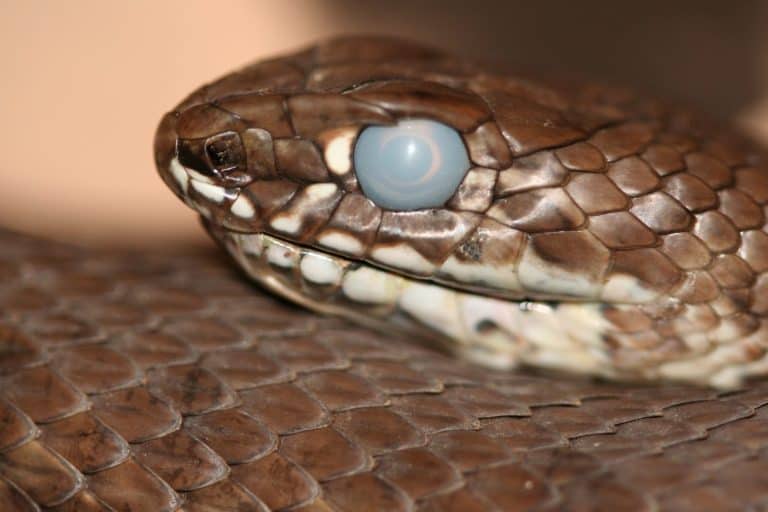
“Before shedding, most snakes go through a very predictable set of changes: dull, faded skin that may look faded or loose; decreased appetite; more reclusive or defensive behavior; and the eyes become cloudy or opaque, often a blue-grey color. We say that the snake is ‘in blue’ at that time,” Hammel explains. “A few days later, the eyes will clear up again. This is normal and means shedding is imminent (usually within 24-72 hours).”
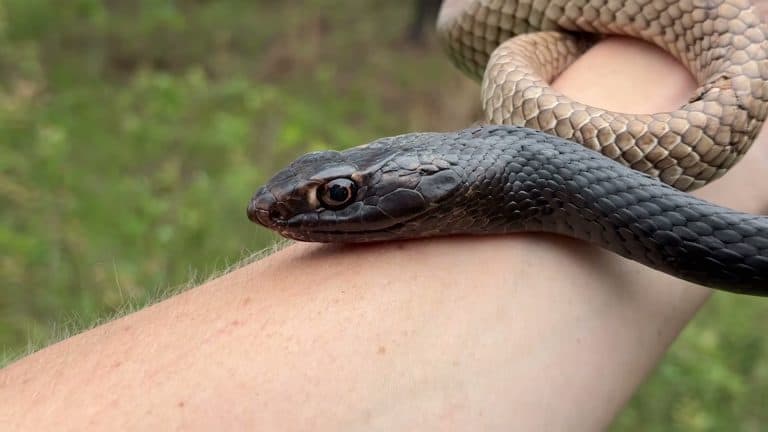
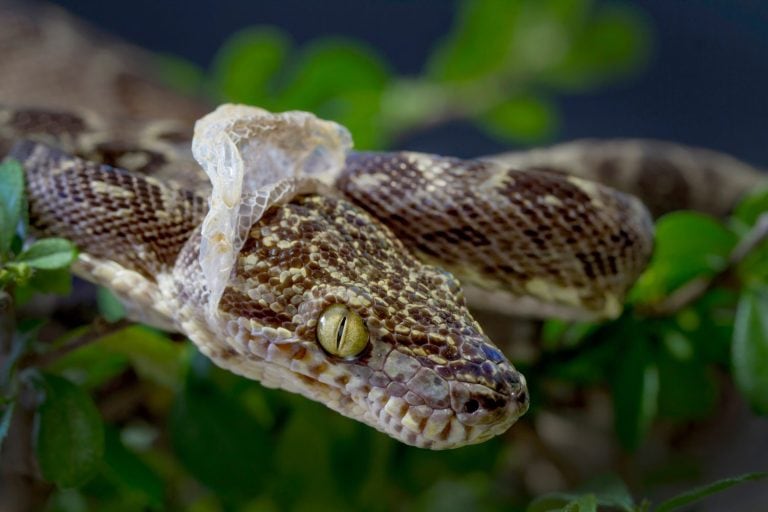
The reason for the eye color change is because the snake’s body releases fluid between the old and new skin. As the skin over the eyes separates, the fluid and the separation from the eye scatters light and makes the brille—the clear eye scale—look cloudy until the snake reabsorbs the fluid a few days before the shed. This interferes with the snake’s vision, which partially accounts for the animal growing more defensive during shedding.
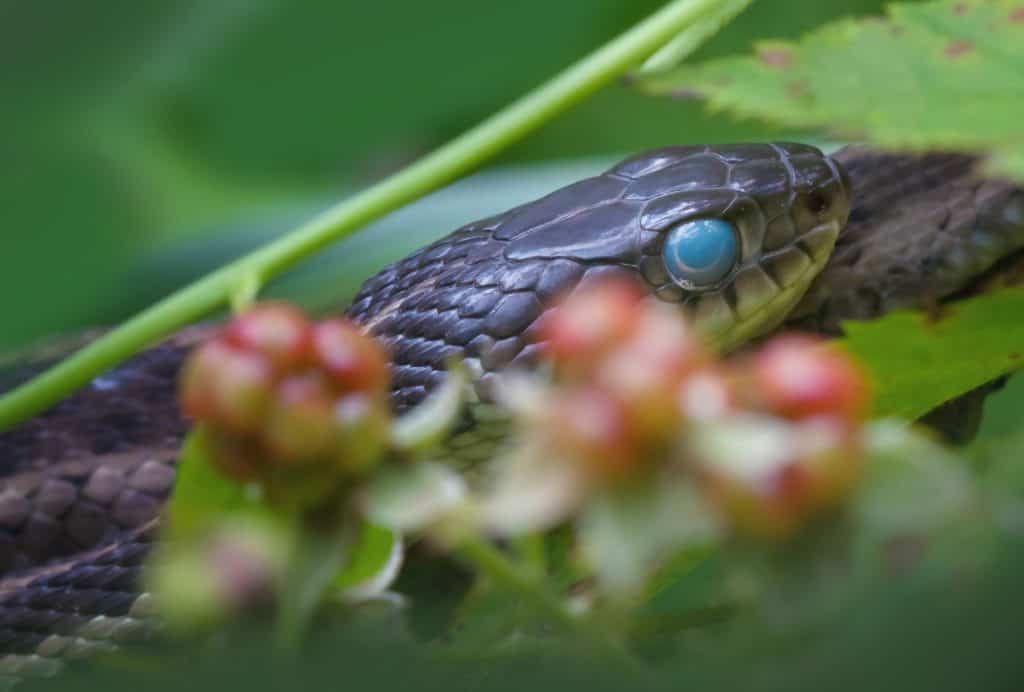
The cloudy eyes of this eastern garter snake show that it is about to shed its skin.
©dlamb302/Shutterstock.com
Before shedding, most snakes go through a very predictable set of changes: dull, faded skin that may look faded or loose; decreased appetite; more reclusive or defensive behavior; and the eyes become cloudy or opaque, often a blue-grey color.
Heidi Hammel, Veterinarian
How Shedding Happens
When the snake is finally ready, shedding starts at the head. The snake uses the edges of rocks, bark, or other rough surfaces to scratch at its snout. It rubs until the old skin splits, usually just behind the mouth or around the nose. Once the first tear appears, the snake pushes forward, wedging its head into tight gaps or curling around objects so the loose skin catches and peels backward. The old layer rolls inside out as it slides down the neck and along the body, just like a wet sock peeled from a foot.
With each muscular wave, more of the old skin bunches near the tail until, at last, the snake pulls completely free. It leaves behind a nearly perfect, hollow version of itself on the ground. The shed skin is often longer than the snake because it stretches as it comes off. For a moment, the animal may look extra bright and shiny, its new scales clean and reflective. Not long after, the snake’s behavior returns to normal, and its appetite often roars back to life.
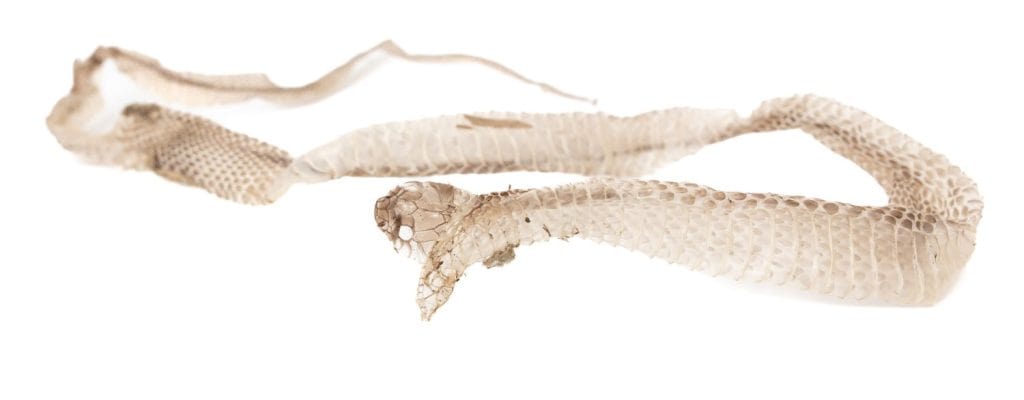
The shed skin of a snake stretches during the process, so it may appear longer than the animal itself.
©schankz/Shutterstock.com
How Snake Owners Can Facilitate Shedding
“When a snake is about to shed, owners should keep handling to a minimum,” Hammel advises. “The skin is fragile and vision is impaired, so the snake may be more reactive. Avoid DIY removal of stuck shed—especially eye caps. Improper handling can cause corneal damage or infection.”
Instead, Hammel says owners can help in these ways: “Increase the humidity in the enclosure or provide a soaking or a humid microhabitat. You can do this by putting the snake in a plastic bin with wet paper towels or moist sphagnum moss during the shed period. And provide plenty of fresh water, large enough for soaking if the snake chooses.”
Shedding Problems: When to See a Vet
We asked Dr. Hammel to describe some things that can go wrong in a shed. She said, “A snake should shed in one piece and all at once. Sometimes, though, the snake will have an incomplete shed, with patches of retained skin or retained eye caps, interfering with vision. Retained shed on the tail tip can constrict and compromise circulation. These kinds of problems are usually tied to low humidity or underlying health issues.”
So, when should you take your pet to the vet? “If sheds are consistently incomplete, despite proper humidity, multiple retained eye caps are present, or there is retained skin around the tail tip, have a vet look the snake over,” says Hammel. Shedding issues can be part of a more serious condition. She urges snake owners particularly to “notice whether the snake is lethargic, losing weight, or not eating long-term, or shows signs of infection such as redness, swelling, or a discharge.” Finally, “see a vet if you have any reason to suspect underlying health conditions such as parasites, dehydration, or systemic illness.”
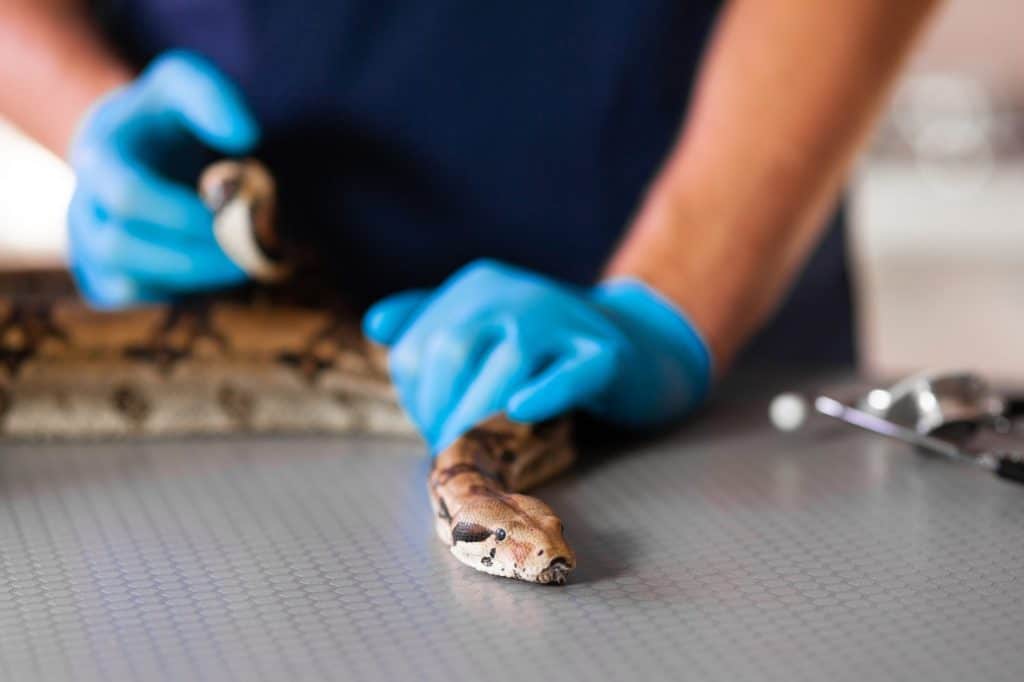
If your pet snake is not shedding regularly, it’s a good idea to visit the vet.
©Andrii Zastrozhnov/Shutterstock.com
What Snakes “Accomplish” by Shedding
When a snake leaves a complete, unbroken skin behind, it has accomplished more than a simple change in wardrobe. The new scales provide a better barrier against dehydration and infection, helping the animal stay hydrated and protected as it moves through rough terrain. Any small scrapes or surface damage that were only in the old outer layer are now gone, replaced by smooth, glossy scales. Parasites clinging to the outer surface have been stripped away as well, reducing the load of disease-carrying hitchhikers.
Shedding also resets the snake’s appearance. Colors often look brighter and patterns appear sharper immediately after a shed, which may offer better camouflage, mate recognition, or warning patterns depending on the species. For newly hatched or newborn snakes, the first shed can be especially important, helping them switch from their delicate birth skin to a tougher, more water-resistant layer better suited to life outside the egg or womb. Each shed is a small rebirth, preparing the animal for its next chapter of growth, hunting, and survival.