
Quick Take
- A cat ear has 32 muscles, which they can use to rotate each ear up to 180 degrees independently.
- Cats rotate their ears to pinpoint sounds and home in on prey and threats.
- Cats will pin their ears flat against their head as a sign of aggression or to protect their ears during a fight.
- Using ear position, along with the rest of the cat’s body language and external factors, is a great way to judge a cat’s emotional state, according to a cat behavior expert.
If you’ve ever spent any time observing a cat, you likely noticed that they move their ears a lot. Even when in a deep sleep, their ears begin twitching as soon as they hear the treat jar opening in another room (or even another floor) of your house.
That’s not surprising. Cats have incredibly sensitive hearing, much better than humans and even better than some dogs.
A cat’s ability to move its ears plays a role in their exceptional hearing. But their enhanced senses are not the only reason they move their ears. We talked to a certified cat specialist to find out what’s going on when a cat moves its ears around like tiny radar dishes.
The Anatomy of a Cat’s Ear
A cat’s ear consists of the inner, middle, and outer ear. Each part has its own unique functionality that helps a cat hear.
Outer Ear
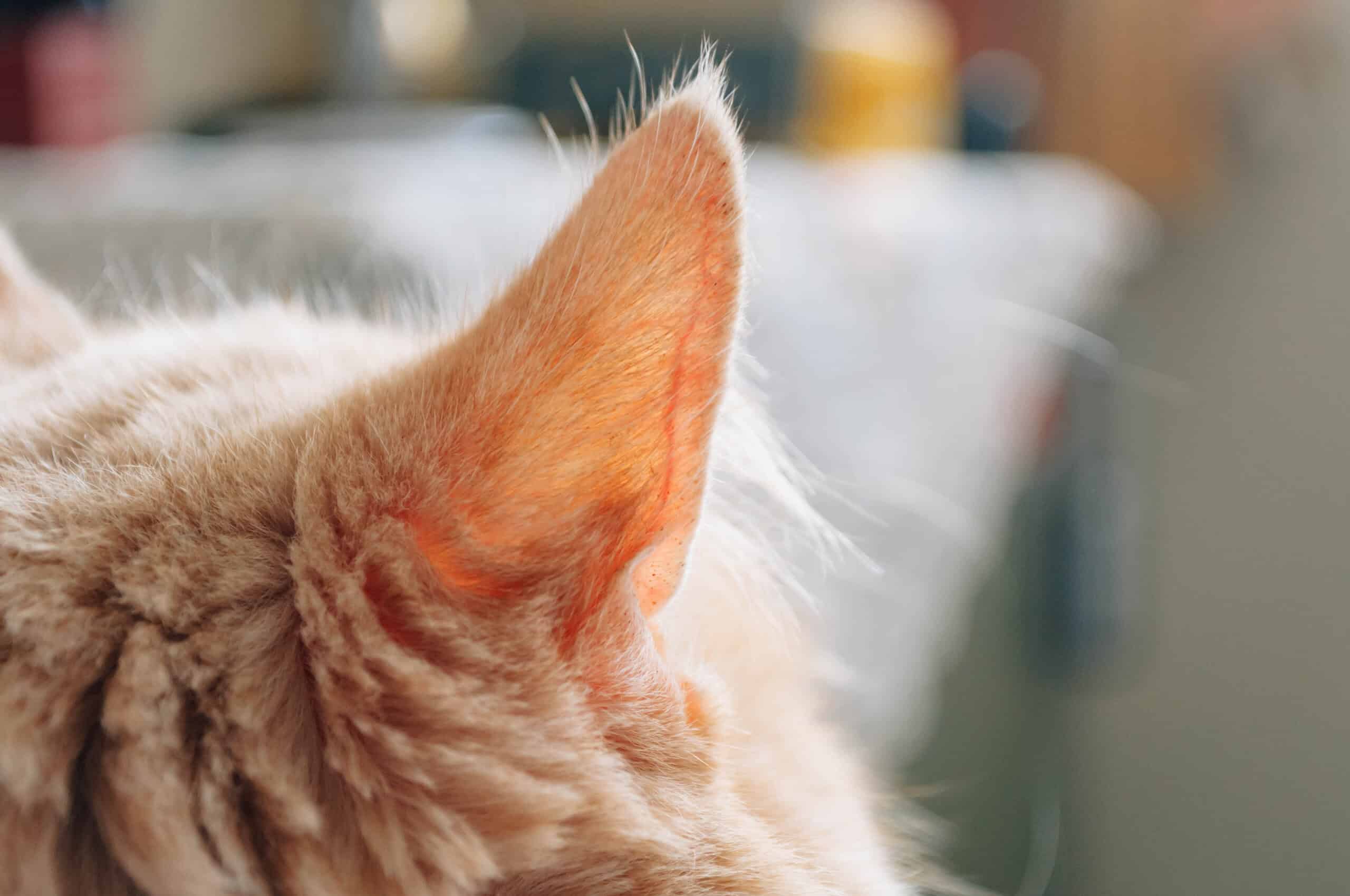
This part is made up of two components, the pinna and the ear canal. The pinna is the triangle-shaped external portion, and it consists of 32 muscles that allow the cat to move its ears in a multitude of directions and angles. Compare that number to a human’s meager six muscles in our outer ears!

Cat ears have 32 muscles each, allowing the cat to rotate each ear 180 degrees.
©Daniel Thompson/Shutterstock.com
These muscles make the pinna an exceptionally mobile part of the cat’s anatomy. Not only can a cat fully pin their ears flat against their head, but they can also independently rotate each ear a full 180 degrees.
The pinna collects and funnels sounds to that second component of the outer ear, the ear canal. A feline’s ear canal is much deeper than a human’s. It effectively funnels sounds to the ear drum.
Middle Ear
This consists of three parts: the bulla, the ear drum, and three small bones. The bulla is an air-filled chamber separated from the outer ear by the eardrum, which is basically a thin membrane between the outer and middle ear. Within the bulla you’ll find the small bones that transmit vibrations to the inner ear.
Inner Ear
This is where the information collected by the outer and middle ear is transmitted to the cat’s brain. It’s also home to the vestibular system, which is responsible for a cat’s incredible balance.
How a Cat’s Ears Help It Survive in the Wild
In the wild, hunting and avoiding predators are top priorities for every feline. The cat’s ears are an essential part of that survival plan. According to Dr. Mikel (Maria) Delgado, a Cat Behavior Expert with Rover and author of the book Play With Your Cat, cats have a broad range of hearing that allows them to detect sound at both high and low-frequency ranges. This exceptional range gives cats a leg up when it comes to finding their next meal.
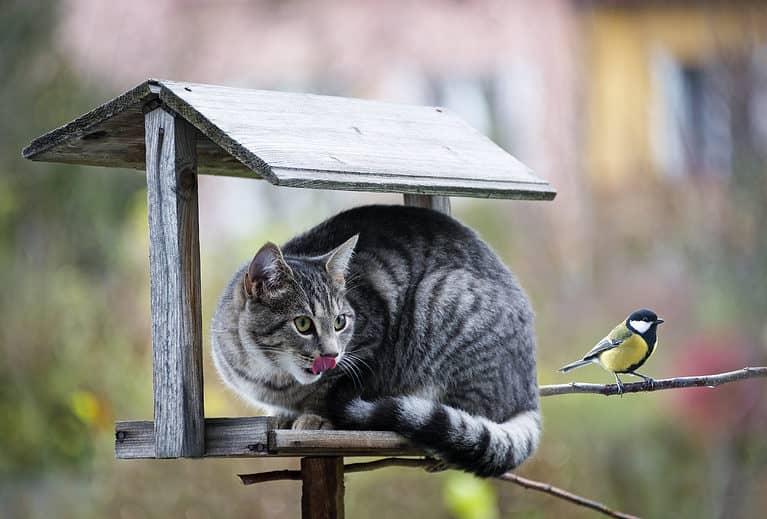
According to Dr. Delgado, “the high-frequency range likely allows cats to ‘eavesdrop’ on rodent chatter, which may help them when hunting.” She also points out that the cat’s ability to move each ear independently allows them to localize sounds and pinpoint precisely where prey might be. The same is true for avoiding predators or other threats.

Cats move their ears to pinpoint sounds, which helps identify threats and find prey.
©Viktor Sergeevich/Shutterstock.com
While your beloved house cat might never need to use either of these skills on a day-to-day basis, centuries of evolution give them these same abilities. Whether a can of cat food opening on a different floor of your home or a jingling dog’s collar announcing an impending arrival, your cat quickly picks up on these sounds and uses its ears to pinpoint the source of the noise and adjust its behavior accordingly.
The high-frequency range likely allows cats to ‘eavesdrop’ on rodent chatter, which may help them when hunting.
Dr. Mikel (Maria) Delgado, a Cat Behavior Expert with Rover
Can You Judge a Cat’s Emotions from Its Ears?
Anyone who lives with a cat knows that ear movement and position can be excellent signals of how the cat is feeling. When a cat pins its ears back flat against its head, that is a sure sign to back off and leave kitty alone. Most new cat owners learn this lesson the painful way.
Dr. Delgado agrees that a cat’s ears can, at least in part, indicate a cat’s current emotional state. She notes, “The more threatened a cat feels, generally the flatter they will position their ears. They’ll also pin their ears down to protect them during a fight.”

Cats often pin their ears back as a sign of irritation.
©Tao Jiang/Shutterstock.com
She also points out smaller, less obvious signs of kitty frustration. She says when a cat rotates its ears sideways, it can be a sign that the cat is slightly irritated. But she’s careful to caution that you shouldn’t rely solely on a cat’s ears to determine their current emotional state.
“I would never rely on just the ears to communicate a cat’s intent, since the ears can also move in response to loud or unpleasant sounds,” she says. She suggests a better approach is to use the cat’s ear position as a starting point. “Look at the cat’s entire body and also what is happening in the environment to best understand how they’re feeling.”