
Quick Take
- Domestic cats are predatory killers that should be kept indoors to protect wildlife.
- Cats have contributed to over 60 global extinctions.
- While you might find it’s safe to let your domestic cat roam around outdoors, they pose a massive risk to their prey.
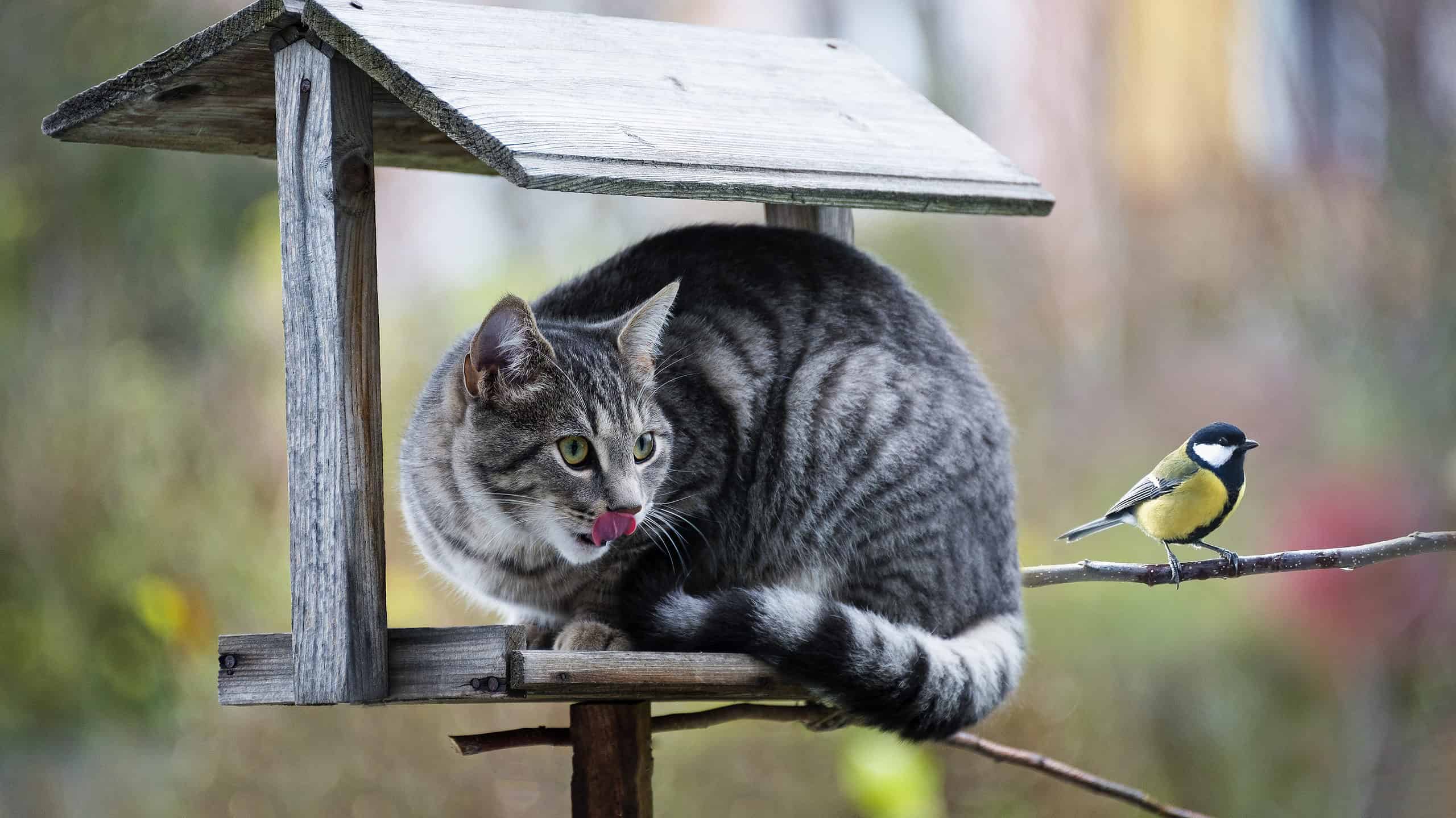
While we see them as fluffy companions, domestic cats are one of the world’s most efficient killers, linked to over 60 global extinctions. This has widely contributed to “cat wars”—the tension between pet owners and conservationists—and staggering biodiversity loss occurring in our own backyards.
Now, as a cat lover and owner myself, I hate to think of my little black cat, Poe, as anything other than a sweetheart. However, cats are natural predators with high kill rates. If you let your cat venture freely outdoors, you’re putting other wildlife at risk—as well as your cat. While they might enjoy roaming around in the sunshine, domestic cats are meant to stay safely inside.
We spoke with Dr. Julie Hunt, a veterinarian at Embrace Pet Insurance, about the ever-present yet often ignored issue. Keep reading to learn more about cat wars and the threat of domestic cats.
Why Are Cats Such Effective Killers?
Domestic cats are instinctive killers with a predatory drive to hunt small prey. If given the opportunity, they will strike.
“Some people say that cats are the perfect predator,” says Dr. Hunt. “Their pounce-based hunting strategy relies on their ability to remain still, observe their prey, and then, when the time is right, to use their lightning-fast movement to pounce on the prey and capture it in their strong front paws, equipped with sharp claws, and to sink their long canine teeth into the prey.”
What’s more? “Approximately one in three pounces will result in a kill if the cat is reasonably skilled,” she says.
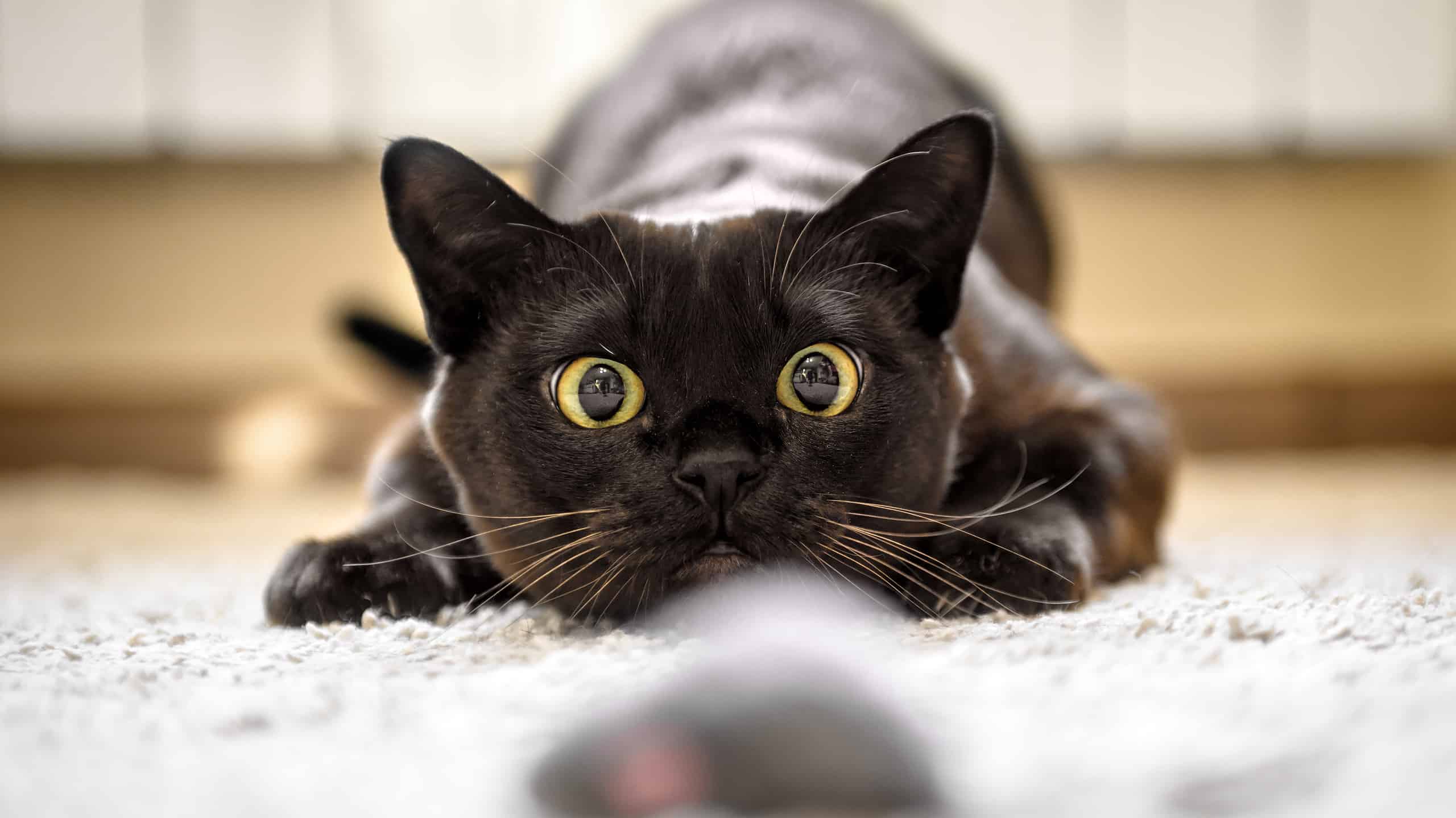
Cats are natural hunters with an instinct to stalk and kill prey.
©scaliger/iStock via Getty Images
Of course, this shouldn’t be an issue for domestic cats who are kept indoors and fed a healthy diet. However, those indoor-outdoor species contribute to far more deaths.
“Cats that are not being fed cat food and are relying entirely on their hunting to sustain them must have multiple kills in a day to meet their caloric needs,” Hunt explains. “A mouse only has about 70 calories in it, while an adult cat requires approximately 200-300 calories per day. So, a cat would need to consume 3-4 mice per day in order to sustain itself.”
“This constant predation can impact other species, especially those that are already present only in reduced numbers,” she adds.
Even so, just because a cat is well-fed at home doesn’t mean it won’t still be on the hunt. As mentioned earlier, felines are natural predators with an instinctual desire to stalk, hunt, and kill.
“It’s important to know that cats that are fed cat food and do not have any caloric needs often still hunt and kill prey,” Hunt explains.
Approximately one in three pounces will result in a kill if the cat is reasonably skilled.
Dr. Julie Hunt, a veterinarian at Embrace Pet Insurance
Domestic Cats as a Biodiversity Issue
Due to their high kill rates and predatory nature, domestic cats are known to be a major driver of biodiversity loss.
“As mentioned above, the number of small prey necessary to meet a cat’s caloric needs (if it is not being fed by humans) and the cat’s tendency to kill as sport even when it does not require the calories tends to put a significant burden on prey that are already vulnerable in number,” Hunt explains.
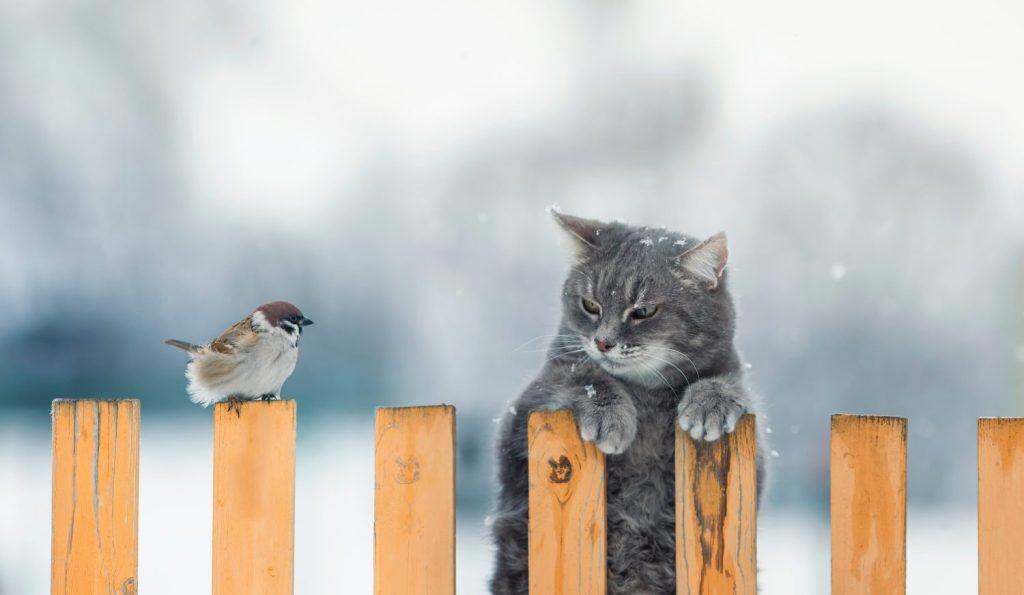
Cats are responsible for over 2 billion bird deaths each year, per the American Bird Conservancy.
©Bachkova Natalia/Shutterstock.com
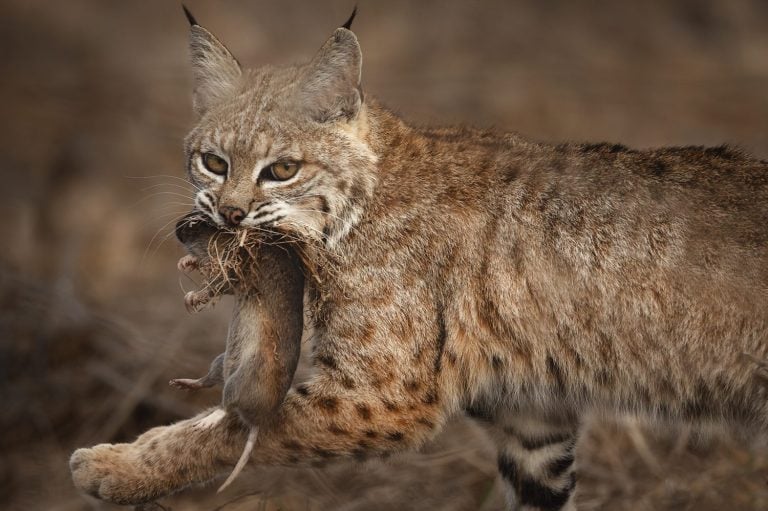
“Cats tend to kill birds, mice, the occasional smaller rat, snakes, lizards, and sometimes insects,” she continues. “The species more vulnerable to the impact of predation may include some songbird species, reptiles, and amphibians.”
Each of these species contributes to biodiversity. When threatened by domestic cats, they can face massive population decline and even extinction. As stated earlier, domestic cats have already been linked to over 60 global extinctions.
How Cat Owners Can Help
According to Hunt, the best way to help as a cat owner is by keeping your beloved furry friend indoors.
“That also will protect the cat from predators, trauma, and infections that can limit its lifespan,” she explains.
Unfortunately, this might come as bad news for indoor-outdoor cats. Many domestic cats like to venture outdoors or spend time in the sunlight. If that sounds like your sweet pet, you can still allow them the luxury without putting them (or other wildlife) in danger.
“For cats that like to go outdoors, owners can offer them access to a catio,” says Hunt. “If a cat is allowed outdoors unfettered, owners can fit the cat with a bright colored collar and multiple bells to alert prey of its presence.”
However, she notes, this isn’t always effective. Some cats learn how to move without activating the bells, rendering the collar futile. Felines are incredibly intelligent creatures, and it’s best to keep them safe indoors.