
Quick Take
- The ocean is home to many of the planet’s oddest-looking creatures.
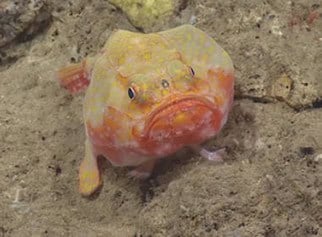
- Coffinfish, also known as sea-toads, have a boxy, gelatinous body with lumpy textured skin.
- These fish are uniquely adapted to conserve energy.
- Instead of swimming like other fish, these marine animals actually walk across the ocean floor.
- Their pelvic and pectoral fins have evolved to enable this odd form of locomotion.
The ocean is home to some of the strangest-looking creatures in the world. It seems that the deeper you go, the stranger the sea life becomes. The coffinfish is one example. Also known as the sea toad, the coffinfish is featured in an Instagram post by @explainingoceans, which shows a video of this fish walking instead of swimming. Read here to learn more about these strange fish.
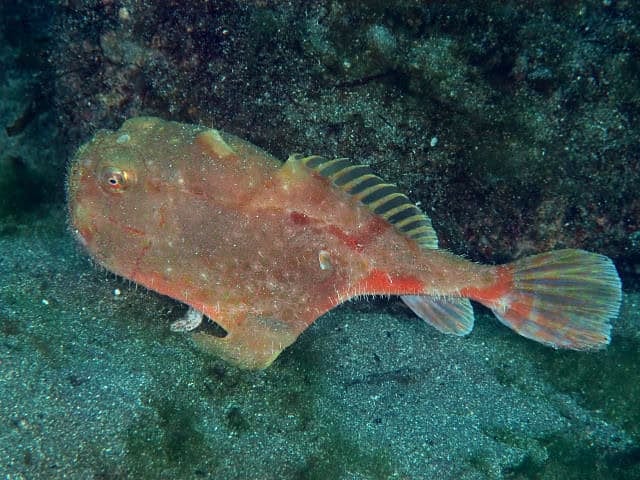
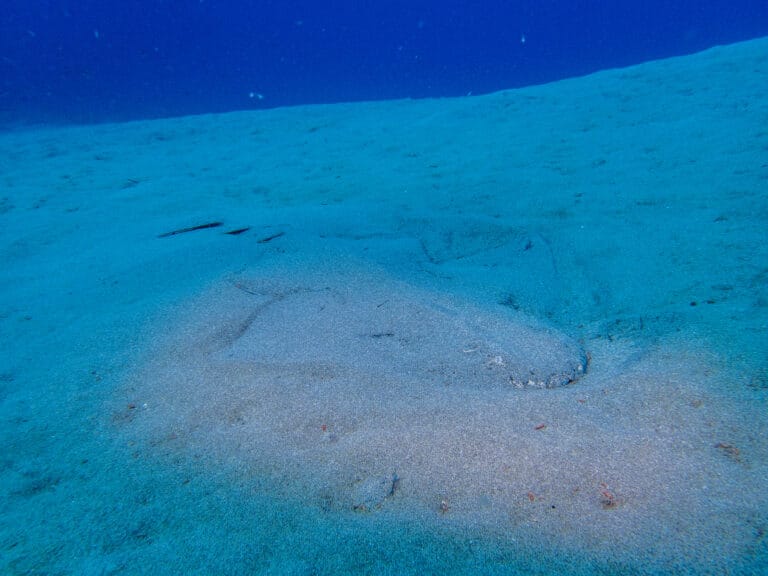
The coffinfish is rarely seen due to the depths that they live.
©Izuzuki / Izuzuki, CC BY-SA 3.0 , via Wikimedia Commons – Original / License
About the Sea Toad
The sea toad, more commonly known as the coffinfish, is a boxy and lumpy fish. They live on the ocean floor at depths between 600 and 6,000 feet. Coffinfish are small, roughly a foot long, and are ambush predators. They feed on small fish, crustaceans, and any other creatures that end up in their mouths. As seen in the video, they hunt with a built-in fishing rod which extends from their head. This dorsal spine is called an illicium, which is also found in other anglerfish. They use a fleshy lure called an esca, which they wiggle to attract prey.
Coffinfish sit motionless until curious prey comes too close. With a quick strike, they swallow their meal. Given the food-scarce environment of the deep ocean, it is important to use their energy wisely. So, rather than chasing prey, waiting for it to come to them is a great way to save energy.
These fish have an unconventional appearance, with an inflated look, asymmetrical shape, and gelatinous body. The lumpy texture on their skin helps them blend in with the seafloor, offering a perfect camouflage from predators. Coffinfish are perhaps most notable for their form of locomotion. Rather than swimming like most fish, these ocean dwellers actually walk! Unique pectoral and pelvic fins allow them to walk or hop across the seafloor. While slower than swimming, this form of movement helps them conserve necessary energy.