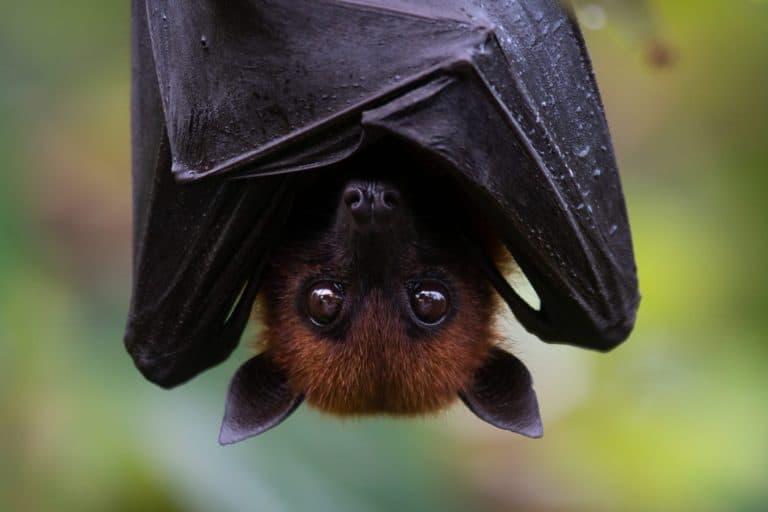
In the dark forests of Panama, a bat no larger than your thumb is rewriting the rules of hunting. The fringe-lipped bat (Trachops cirrhosus), long known for its peculiar taste for frogs, has just earned a new distinction: it hunts like a lion, and with far greater success.
A study recently published in Current Biology, led by Dr. Leonie Baier of Aarhus University and the Smithsonian Tropical Research Institute, has uncovered a remarkable strategy among these tiny carnivores. Using miniature biologging “backpacks,” researchers tracked how fringe-lipped bats hunt in the wild. What they found upended assumptions about how size, metabolism, and predatory tactics align in the animal kingdom.
“Fringe-lipped bats are tiny, yet they hunt like giants,” Dr. Baier tells A-Z Animals. “Most small predators must chase endless streams of tiny prey just to survive, while lions and polar bears can stalk large prey for hours, enduring repeated failure. Our bats flip the rules: they spend only a fraction of the night on the wing, hunting in ‘battery-saver mode’—that is, hanging quietly, listening for prey, then ambushing with swift, precise swoops that succeed about half the time. Tiny predators foraging like apex hunters, only better. It’s a feat that no one expected, and it works brilliantly.”
The Size Paradox

Bats can hang upside down because they do not weigh enough for gravity to impact their blood flow.
The study began with Baier and her team tackling what they called a “biological paradox.” Typically, large animals can afford to target large, energy-rich prey because their low metabolism and vast energy reserves allow them to tolerate repeated failures. A lion, for instance, might spend hours stalking a zebra only to miss again and again. Smaller creatures, on the other hand, must feed constantly on easy-to-catch prey to sustain their high metabolic rates.
But fringe-lipped bats don’t follow those rules. Baier and her team fitted 20 of these tropical bats with tiny sensors that recorded both movement and ambient sound. Each “backpack,” as Baier describes, was an engineering marvel: “Each tiny backpack recorded both a bat’s movements and the sounds around them. Motion sensors such as the ones in our smartphones showed how they flew and oriented themselves, while a small microphone picked up both the sounds they heard and they emitted themselves.”
The result was an extraordinary window into the nightly lives of these elusive hunters. Each bat’s flight path, wingbeat rhythm, and acoustic environment were captured for half the night, enough to extrapolate a full cycle of activity. Occasionally, some backpacks went missing before the team could retrieve them (“you are looking for the famous needle in the haystack,” Baier jokes), but the data that did come back was “a wonderfully detailed window into the bats’ behavior in the wild.”
That behavior looked strikingly familiar. Like big cats, fringe-lipped bats spend most of their time still. The bats were stationary nearly 90% of the night, hanging silently from branches near ponds where frogs call. When they moved, they did so with explosive precision: the median hunting flight lasted only 8 seconds.
In those brief bursts, they struck at a success rate of around 50%, far outperforming lions (14%) and polar bears (as low as 2%). As Baier put it, “A fair comparison would be with big ambush hunters. Lions or leopards, for example, only succeed about 10 to 20% of the time, and polar bears as little as 2%. By that standard, our fringe-lipped bats are incredibly efficient hunters.”
We were able to reconstruct entire hunting sequences in the wild.
Laura Stidsholt, assistant professor at Aarhus University
Listening in the Dark
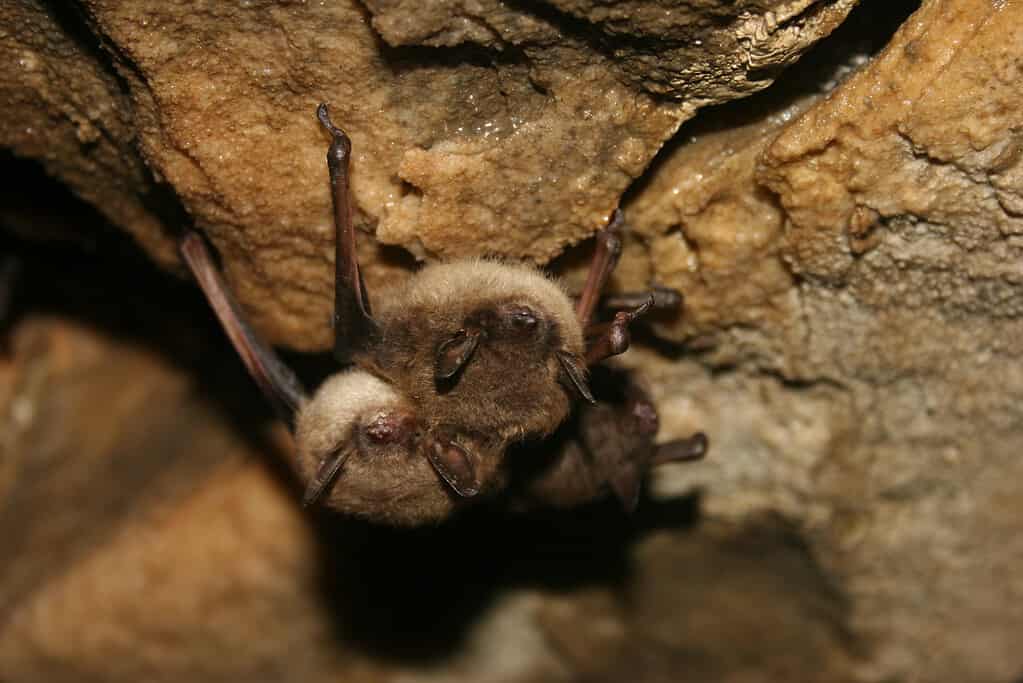
Bats have a complex hearing system that lets them detect even the slightest noises.
©U.S. Fish and Wildlife Service Headquarters / Public domain – Original / License
One of the reasons for this incredible success rate is the bat’s sensory system. Fringe-lipped bats have evolved exceptionally acute hearing, allowing them to detect the faintest sounds, from the croak of a túngara frog to the rustle of a small reptile in the leaves. They’re also known to “eavesdrop” on the mating calls of frogs, exploiting the love songs meant for potential mates as beacons for dinner.
This “hang-and-wait” approach combines hearing, echolocation, and vision into a seamless hunting toolkit. The bats don’t simply chase random noises; they analyze, remember, and decide when to strike. Their auditory world, captured through the biologging microphones, revealed patterns that matched specific hunting behaviors.
“We could recognize prey attacks by patterns in the movement data, such as bursts of acceleration reflecting the bats’ wingbeats and quick changes in body orientation, and then confirm them acoustically through the sounds of echolocation calls, wingbeats, and finally the bat making contact with vegetation or prey,” Baier explains. “Successful versus failed attacks were easy to tell apart, because after a successful strike we’d hear distinct chewing sounds; these bats eat very crunchy prey, so it’s unmistakable.”
Those crunches, it turns out, weren’t just satisfying; they were informative. By pairing chewing sounds with feeding trials in captivity, the team developed a model linking chewing duration to prey size and energy value. Some meals lasted an astonishing 84 minutes. In the wild, that’s the equivalent of a 155-pound (70-kilogram) human sitting down to devour an 11-pound (five-kilogram) feast.
The Older, the Bolder
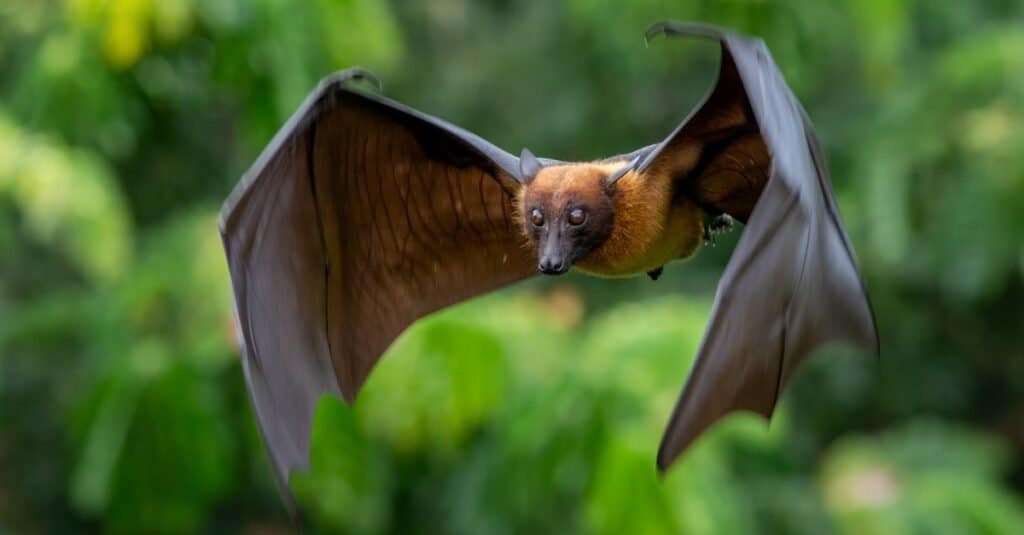
Older bats tend to be bolder hunters because they have had more time to learn specific techniques.
©Independent birds/Shutterstock.com
Not all fringe-lipped bats are equally bold or skilled. Across the 20 individuals studied, Baier and her colleagues found that older bats tended to tackle larger prey. “Only individuals about three years or older managed to take on those really large meals, suggesting that experience plays an important role in tackling such challenging prey,” Baier says. “These bats can live well over ten years, so it seems the veterans of the colony have developed quite the skill, almost a hunting craft of their own.”
That finding agrees with previous research showing these bats’ impressive learning abilities. They can remember the calls of specific frog species for years and even learn new hunting cues by observing others, a social sophistication rarely associated with such small mammals.
Laura Stidsholt, an assistant professor at Aarhus University and the paper’s senior author, noted that the biologging data offered something akin to “bat vision” for scientists. “We were able to reconstruct entire hunting sequences in the wild,” she said in a statement. “In this way, we experienced the forest through the bats’ ears—revealing a hidden world of patience, precision, and survival in the dark.”
Energy Efficiency: Small Body, Apex Strategy
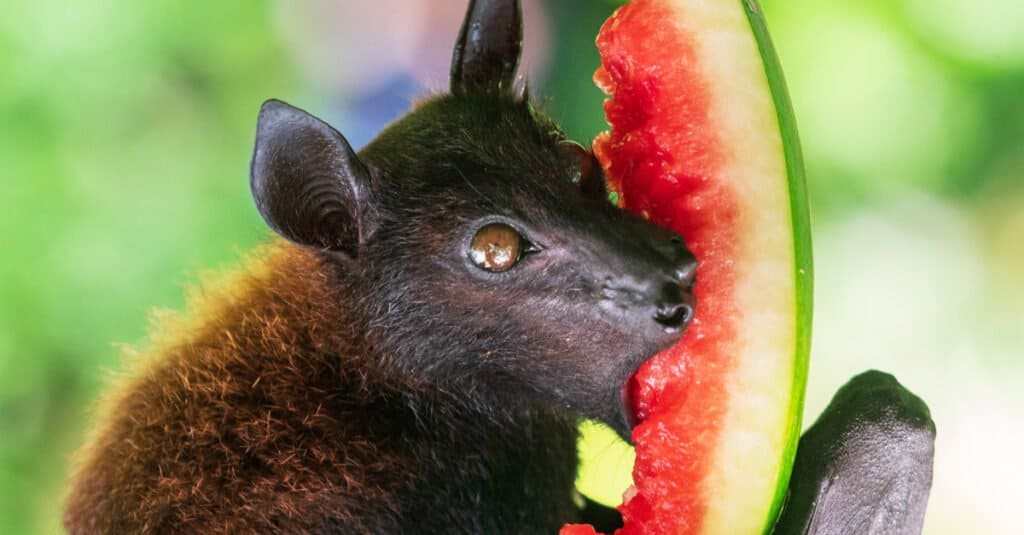
Bats have a pretty high energy efficiency.
©Anton Watman/Shutterstock.com
Perhaps the most surprising revelation of the study was just how energy-efficient the bats’ strategy turned out to be. Despite their small size and high metabolism, the bats often consumed prey weighing up to seven percent of their own body weight, and occasionally nearly matching it. Each successful hunt could sustain them for hours, meaning they needed to fly—and expend energy—only a fraction as often as insect-eating bats.
Baier’s team estimated nightly energy intake by translating chewing time into prey mass, then applying caloric values from different prey types. “We ran a captive feeding experiment where bats were filmed eating prey of known sizes and types… From those trials, we built a statistical model that described how chewing duration relates to prey mass, taking into account how much of the prey was actually eaten,” Baier explains While the model isn’t perfect—”a scaly lizard may take longer to chew than a soft frog of the same size”—it provided a robust estimate that allowed researchers to gauge the bats’ energetic payoff.
When the math was done, the results were staggering: fringe-lipped bats achieve the kind of efficiency that even lions might envy. They expend little, risk little, and gain a lot.
Echoes of Conservation
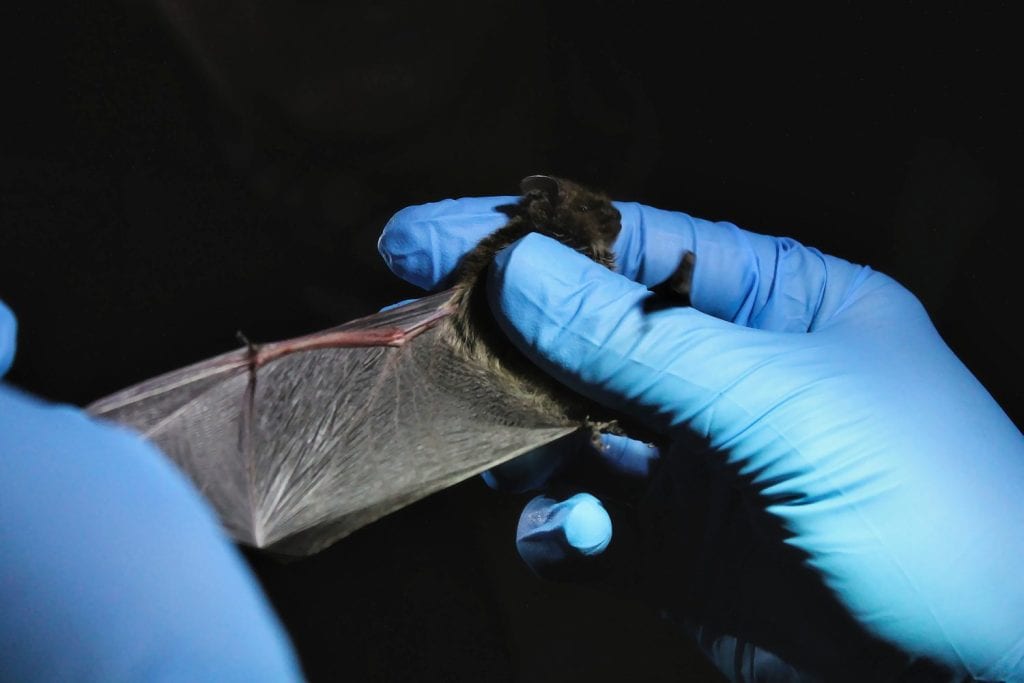
Because of their dependence on noise detection and echolocation, bats can be victims of human urbanization, such as noise pollution.
©Kaylee Richter/Shutterstock.com
From a conservation perspective, the bats’ dependence on sound cues and intact forest habitats makes them highly sensitive to human disturbance.
“Using sound is how these bats hunt…That also makes them vulnerable to noise pollution, which can mask the cues they rely on to find their food,” Baier warns. “But an even greater threat, we believe, is habitat fragmentation. These bats thrive in intact forests full of calling frogs and other prey. Their ‘hang-and-wait’ strategy works beautifully when prey is abundant, but in degraded habitats they inevitably struggle.”
As tropical forests shrink and acoustic environments fill with human noise, these subtle predators may find their ancient strategy compromised. “Our study highlights how evolution finds ingenious solutions: even a tiny animal can function like an apex predator when equipped with the right tools. But it also underscores how that success depends on a rich, living forest,” Baier says. “These bats are both a symbol of adaptation and a warning of what’s at stake when we lose biodiversity.”
What Comes Next
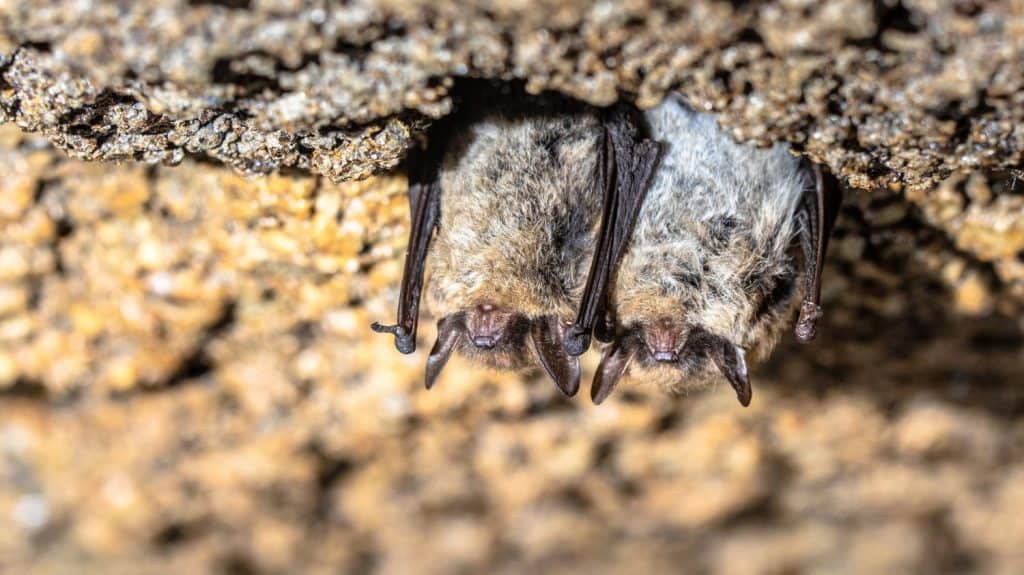
What other interesting surprises do bats hold?
©Rudmer Zwerver/Shutterstock.com
For Baier and her team, the discoveries are only the beginning. The researchers are developing more advanced biologging sensors to probe the sensory world of fringe-lipped bats and related species even further. “We’re building even better sensors, planning a PhD. project to study a similar bat species in Europe and running controlled experiments in flight tents to dive deeper into the fringe-lipped bats’ sensory world,” she said. “The insights we’ve already gained from these glimpses of sound and motion remind us that nature often surpasses our wildest speculations. So, we can’t wait to see what new surprises are around the corner!”