
Cats are some of the most beloved animals in the world. Recent estimates suggest there are between 600 million and over 1 billion cats worldwide, including both pets and strays. They are known for being cunning, fantastic hunters, and for having fast reflexes, incredible eyesight, and sharp claws. However, even though cats make fantastic pets and family members, they can sometimes develop behavioral problems that frustrate their owners.
Everyone loves cats until they rip up the furniture, soil the house instead of their litter box, or meow excessively. The good thing is that most of these behaviors can be corrected, so you can have a harmonious relationship with your pet once again. Whether they stem from an underlying medical issue or are simply behaviors in need of training, there are plenty of things you can do to help. A-Z Animals chatted with cat behavioral experts to get more information on the most common behavioral challenges and how cat owners can help fix them.
Soiling the House
©Alexandra Morosanu/Shutterstock.com
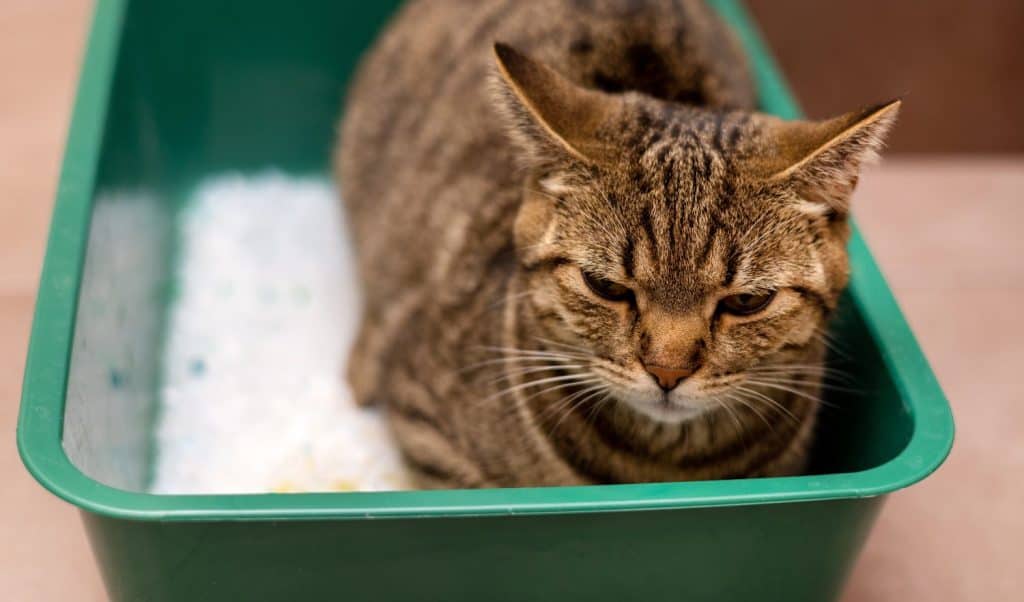
Veterinarian Nell Ostermeier, DVM, CVA, FAAVA, tells A-Z Animals that one of the most common cat behavioral issues is inappropriate urination or defecation. In other words, not doing their business in the litter box.
“These problems may be caused by an underlying medical condition or triggered by stress, anxiety, or changes in the environment,” Dr. Ostermeier says. “Identifying the root cause can be challenging, and the longer the behavior persists, the more difficult it may become to correct.”
Ashley Hejik, a holistic cat care educator and founder of SoyKitty, suggests that they don’t like the litter box itself or the litter inside it; the litter might be too dirty; there might not be enough litter (or there might be too much); the scented litter could be overpowering; the texture could hurt their paws; the box might be too small; the sides might be too high; the box might be in the wrong location; they have a negative association with the litter box; or there aren’t multiple litter boxes in the house.
“Just like us, cats have their own preferences when it comes to their bathroom habits,” Hejik shares. “The type of litter used in the litter box can impact a cat’s willingness to use it. Some cats have preferences for certain types of litter, such as pellets or sand, clumping or non-clumping, scented or unscented. Slowly experiment with different litter types to determine which one your cat prefers.”
Excessive Vocalization

A cute gray cat sits in a paper bag from the supermarket.
©iStock.com/Ivan Zhaborovskiy
Meowing loudly or excessively is a problem. Heather Alvey, certified cat behavior consultant and owner of Felidae Behavior Consulting, encounters it a lot. If a cat is meowing a lot, it could be because they are bored and not getting enough attention or exercise. So, what might seem like a behavioral problem could actually be a sign that your cat needs more mentally stimulating toys, more exercise, and increased playtime with you to feel happy and fulfilled (and, therefore, not need to meow as much).
However, excessive vocalization could also indicate a health issue, such as hyperthyroidism, dental problems, osteoarthritis, high blood pressure, or urinary tract infections. It’s best to first eliminate any medical condition as the source of the excessive vocalization before addressing behavioral issues.
Scratching Furniture
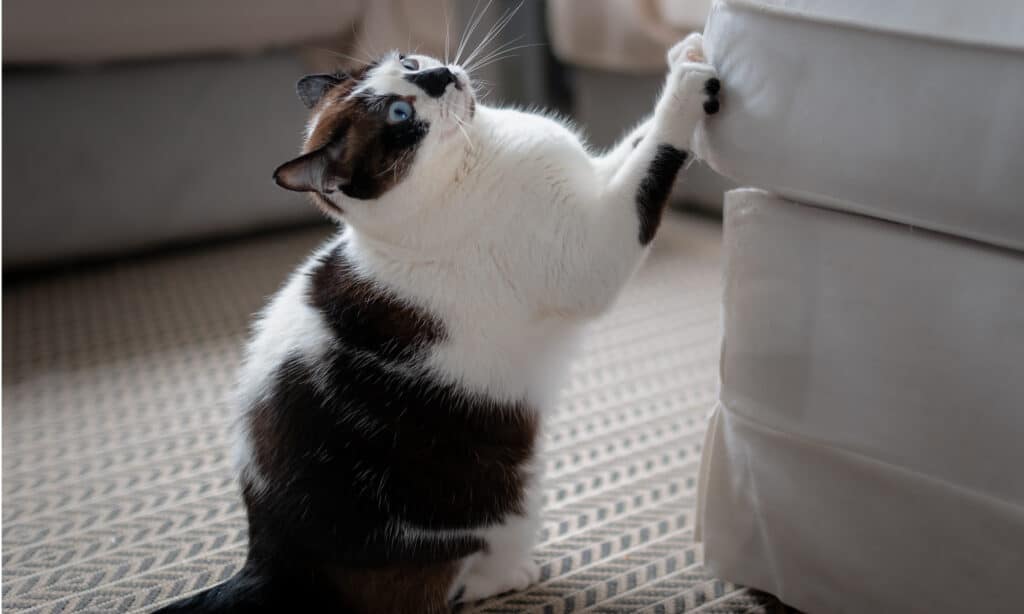
Scratching is instinctual in cats.
©iStock.com/Magui-rfajardo
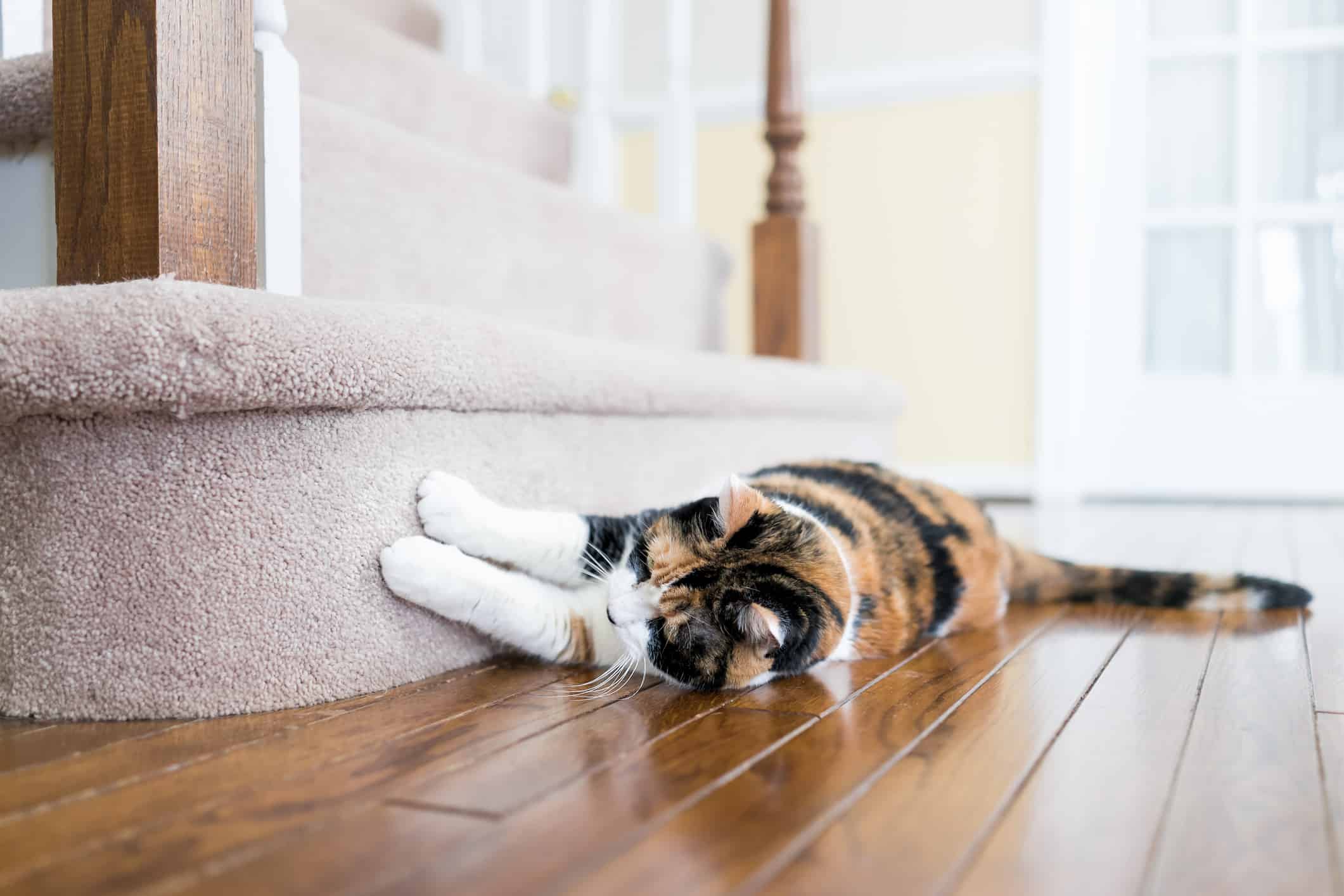
Almost every cat owner has a story about their kitten destroying a piece of furniture, but if this behavior is new or continues into adulthood, it can become problematic.
“Scratching is instinctual. It’s used to mark their territory, sharpen their claws, and stretch,” Hejik says. “Scratching helps release built-up tension and also marks their scent visually and chemically. They’re basically saying ‘this space is mine.’ Scratching also helps shed old claw sheaths and keep nails sharp.”
It’s not necessarily a bad thing that your cat scratches, but you can work to change where it scratches. Hejik recommends having multiple scratchers on hand, preferably with different textures and a stable base. You can also rub the scratcher with catnip or silvervine and reward them when they use it.
“DO NOT declaw or punish,” Hejik says. “Scratching is instinctual, necessary, and deeply tied to their sense of safety. Cats respond better when they are redirected from the unwanted behavior and praised when they exhibit ‘good’ behavior. They respond better to positive reinforcement. Punishing or yelling just breaks your bond with them.”
Aggressive or Destructive Actions

Cats fighting with other cats or humans is a cause for concern.
©Bachkova Natalia/Shutterstock.com
Many cats are grumpy, but if they are aggressive, destructive, or cause harm to themselves or other cats or humans, then this could be a sign of a deeper problem.
“These behaviors can stem from a variety of underlying causes, including medical issues such as pain, or psychological factors like stress, anxiety, or depression,” Dr. Ostermeier explains.
Eating Non-Food Items

If your cat eats things that aren’t food, it could lead to health problems down the road.
©JulieAlexK/iStock via Getty Images
Did you know cats can get pica, too? This condition causes them to eat things that aren’t food, such as plastic bags, wool, houseplants, rubber bands, or paper, which is another behavior Alvey says she sees frequently. This behavior is problematic not only because it can damage your belongings, but also because it poses health risks to your cat.
Just like us, cats have their own preferences when it comes to their bathroom habits.
Ashley Hejik, holistic cat care educator and founder of SoyKitty
What Can a Veterinarian Do?
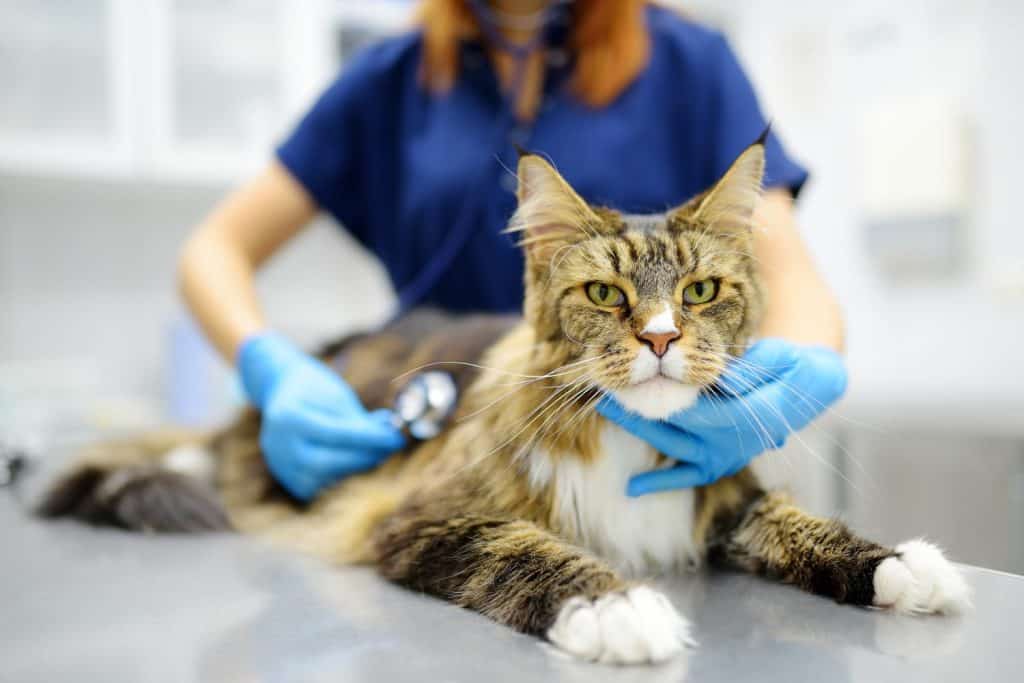
You should always call your vet about new and/or concerning symptoms in your cat.
©Maria Sbytova/Shutterstock.com
There are many things you can do if your cat is exhibiting any of these behavioral issues, but the most important first step is talking to your veterinarian about it.
“It’s important to consult your veterinarian to determine whether your cat’s behavior is linked to a medical condition or a behavioral/mental health issue,” Dr. Ostermeier says. “Early assessment can help ensure your cat receives the appropriate care and support.”
For example, with improper elimination, the cause could be a preference issue or a medical problem. “It might be a simple fix like adding an additional litter box or changing the litter for a behavior like inappropriate urination,” Dr. Ostermeier says. “But inappropriate urination could also be a sign of a bladder infection or diabetes. Medical treatment is the only solution for these concerns, and delaying treatment will only make your cat worse.”
Aggression, on the other hand, can be more difficult to address, according to Dr. Ostermeier.
“Behaviors such as self-trauma, destructive actions, or aggression are often more complex and challenging to manage,” she says. “Aggression, in particular, can pose safety risks to both the cat and the pet parent. These types of issues rarely have a quick fix. Your veterinarian is the best resource for developing a long-term management plan tailored to your cat’s specific needs.”
What Can a Behavioral Expert Do?
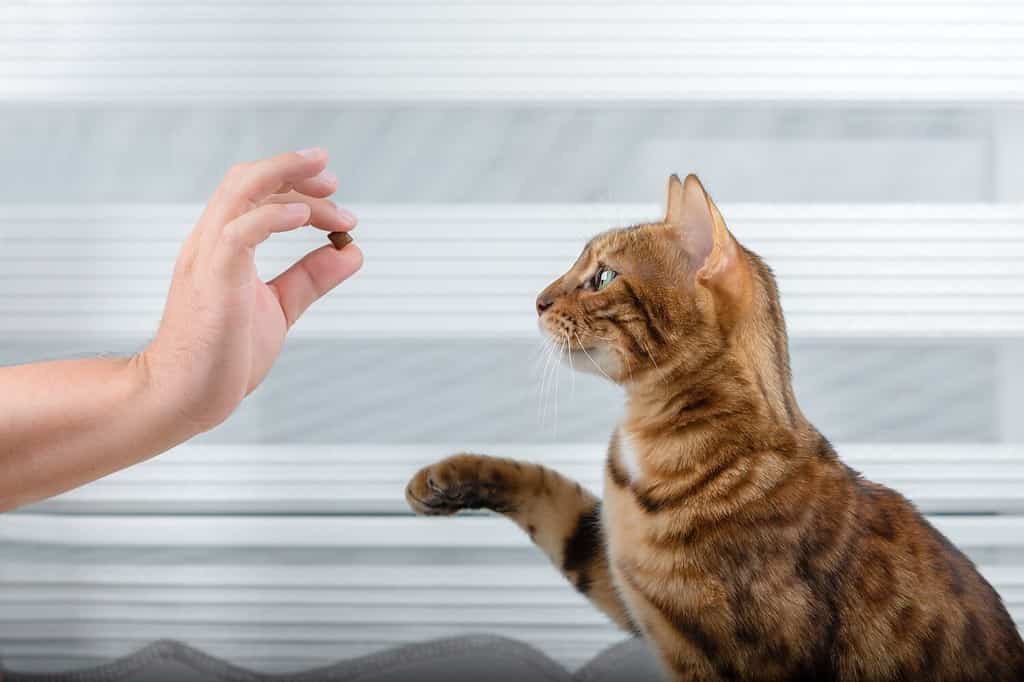
Cat behavioral experts can help train your cat not to do those behaviors anymore.
©Svetlana Rey/Shutterstock.com
If your vet has determined that your cat’s issue is behavioral rather than medical, you can consult a cat behavioral expert for help. They will examine your cat and work with you to find a solution.
“If your cat is healthy, the next step is to talk to a certified cat behavior consultant,” Alvey explains. “They’ll be able to identify what is going on with your cat and how you can best work with them.”
“Each case is unique and there are often multiple reasons for the problematic behaviors,” Alvey adds, “but there is always an underlying component of stress that needs to be addressed before we can do any behavior modification.”
What Can a Cat Parent Do?

Don’t underestimate the impact of playtime!
©Evrymmnt/iStock via Getty Images
Sometimes, it’s best to go back to the basics.
“It might sound too simplistic, but if you can’t do anything else, playing with your cat more is a good start,” Alvey explains. “I always tell my clients, ‘A busy, tired cat is a well-behaved cat.’”
If possible, start training your cat early. “If you’re thinking about getting a kitten, kitten kindergarten is a wonderful way to give your cat a good start in life,” Alvey recommends. “Studies have shown that kittens that go through kitten kindergarten are more resilient, more confident, and have fewer behavioral challenges as adults.”
Should You Rehome Your Cat?
Rehoming might be the answer if you aren’t willing to put in the work to help them.
©iStock.com/Angela Kotsell
The short answer is: it depends. If you can, start by doing everything possible to avoid rehoming your cat.
“Rehoming a cat is rarely an effective solution, as it often passes the problem to a new pet parent without addressing the underlying issue,” Dr. Ostermeier says. “Instead, the best course of action is to consult your veterinarian as soon as unwanted behaviors arise.”
“With proper guidance and support, many behavioral challenges can be managed or resolved,” she adds.
However, if you do need to rehome your cat — especially if you have small children or other animals at home who are suffering due to the cat’s behavioral issues — then don’t feel bad.
“If you’re not able or willing to put in the time or work to address the problem behavior, it might be best to rehome the cat,” Alvey says. “I tell my clients that there is no shame in rehoming a cat if you know you are unable to give your cat what it needs in order for it to have the best quality of life.”
At the end of the day, the most important thing to remember is your cat isn’t trying to be bad — its behavior is simply its way of communicating with you. “Be a safe place for them,” Hejik recommends. “Offer choices, not punishment. And when things feel frustrating, pause and ask yourself, ‘What might my cat be trying to tell me that I’m not seeing yet?’”
That might make a world of difference and change your relationship with your cat for the better. After all, cats are worthy of attention and respect, too!