
Quick Take
- A long-forgotten disease scare is the most likely reason wild parakeets roam London's streets today, and the real culprits behind it aren't who you'd expect. Discover the real origin story →
- London's parakeet population has grown at a rate that alarms ecologists, and the birds have already pushed far beyond the city limits. See the population growth data →
- DNA testing cracked the mystery of where these birds actually came from, with the answer turning out to be far more precise than anyone guessed. Explore the DNA findings →
- These vibrant birds may look harmless, but they could be quietly pushing some of Britain's most beloved native species toward the edge. See the ecological impact →
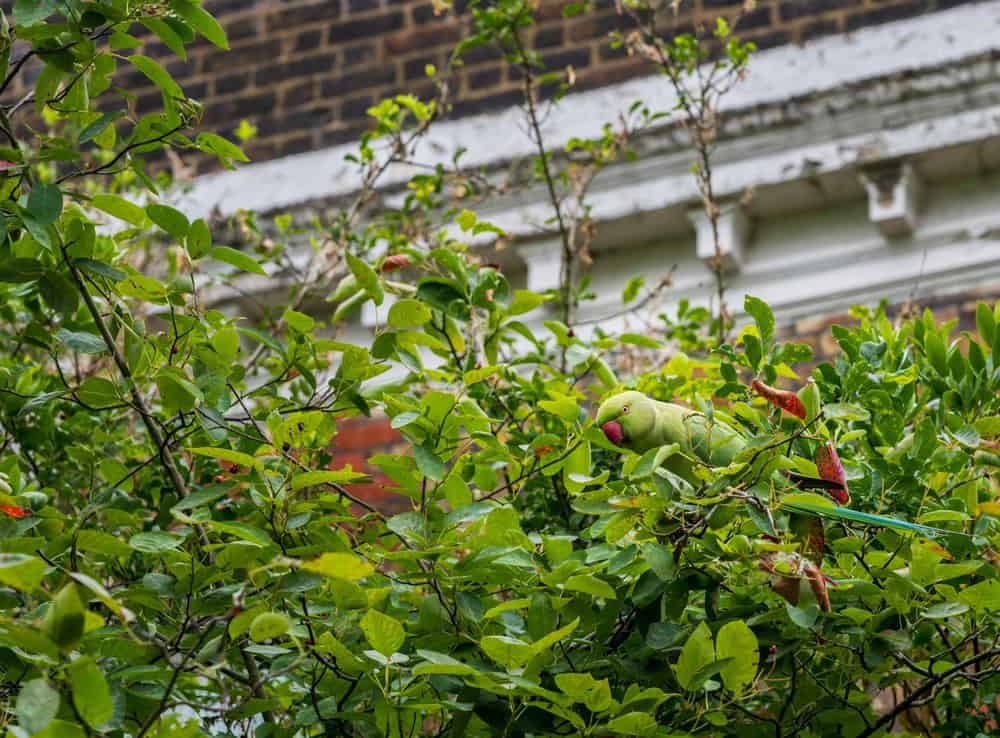
If you glance up as you walk around the streets of London, you may spot shimmering, vibrant green leaves in some of the trees. But if you listen, those leaves will be making a distinctly avian noise! These are the famous ring-necked parakeets of London. We looked into how they arrived and whether their presence is causing any issues.
Parakeets in London
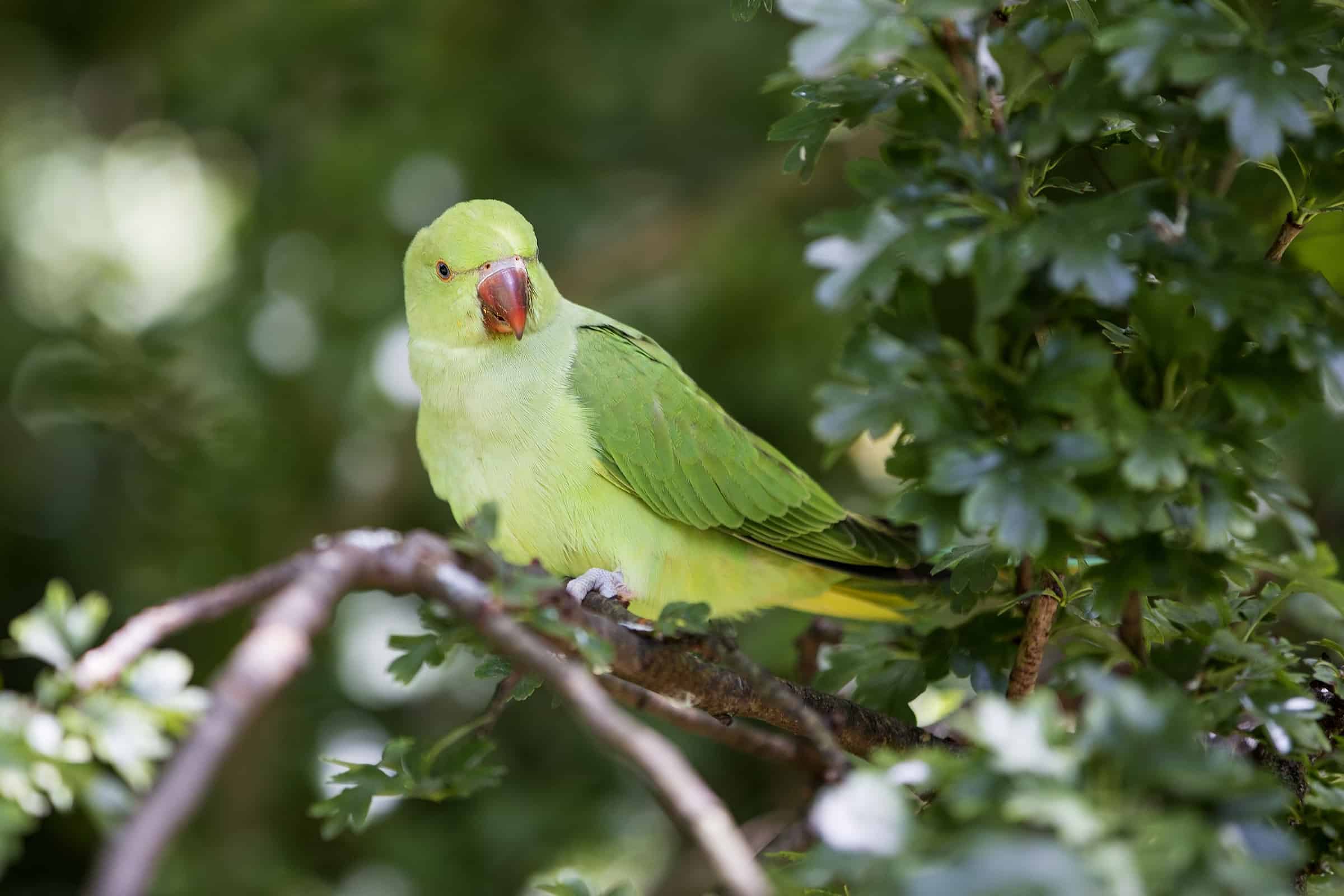
The ring-necked parakeet (Psittacula krameri) is also called the rose-ringed parakeet due to the band around the male birds‘ necks. It is native to Asia and sub-Saharan Africa. Thanks to some clever DNA testing, we know that the majority of parakeets living in the UK today can trace their ancestors to Pakistan and northern areas of India.
Parakeets were once popular pets in London.
©Steve Heap/Shutterstock.com
There have been recorded sightings in the UK since the mid-nineteenth century. However, it was only in the late 1990s that they began appearing in significant numbers in London. Their population increased 25-fold between 1994 and 2023. Today, it is estimated that tens of thousands live in the area. You are most likely to spot them in Hyde Park and St James’s Park. That said, they are not even limited to London! They have been seen in Essex, Surrey, Hertfordshire, and even as far north as Scotland!
How Did Ring-Necked Parakeets Get to London?
Most experts believe that this significant breeding population is the result of repeated releases and introductions. In the early 1900s, the parakeets were popular pets. However, in the early 1930s and again in the 1950s, a disease called ‘parrot fever’ (psittacosis), a respiratory illness transmissible from birds to humans, made headlines. The importation of birds was banned for 20 years, and it is likely that many parakeets were released by fearful owners and unscrupulous traders seeking to dispose of unwanted birds.
Are They Causing Damage?
These vibrant green birds may look attractive, but there are concerns that they are affecting native bird populations, including starlings, lesser spotted woodpeckers, and song thrushes. There is also concern about their impact on some bat species.
Recent evidence from Europe suggests that ring-necked parakeets may be impacting native wildlife in the UK. Studies indicate declines in nuthatch and noctule bat populations due to competition for nesting sites. Authorities are assessing the risk, as control methods remain costly, challenging, and controversial.