
Quick Take
- A 1970s pet trend accidentally created Austin's famous parakeet population. How they went feral →
- Most birds flee city noise and traffic, but monk parakeets did the opposite and it gave them a serious survival edge. See their urban edge →
- Their communal nests can house up to 200 birds, yet what Austin's nests look like tells a stranger story. Explore Austin's nests →
Birds are fascinating creatures capable of adapting to new environments. The monk parakeet, also known as the Quaker parrot, is native to regions in South America. And while it thrives in the tropical rainforests of Argentina, Brazil, Paraguay, Uruguay, and Bolivia, it can also be found somewhere else: Austin, Texas.
This city isn’t exactly conducive to supporting monk parakeets. But in the 1980s, an own-and-release movement resulted in the city’s very own non-native population. Today, Austin locals are familiar with these colorful birds nesting in parks, on top of phone poles, and anywhere they can fit a communal nest. They’ve become an unofficial Austin bird and can often be seen in the center of the bustling city.
How Monk Parakeets Went Wild in Austin, Texas
Texas isn’t the only state with a population of monk parakeets. They’re also found in New York, Florida, Illinois, Connecticut, Oregon, and Louisiana. Similar to the Austin population, most of these birds are concentrated in major cities. To learn why they inhabit–and even thrive–in Austin, specifically, it’s crucial to know how they got to Texas in the first place.
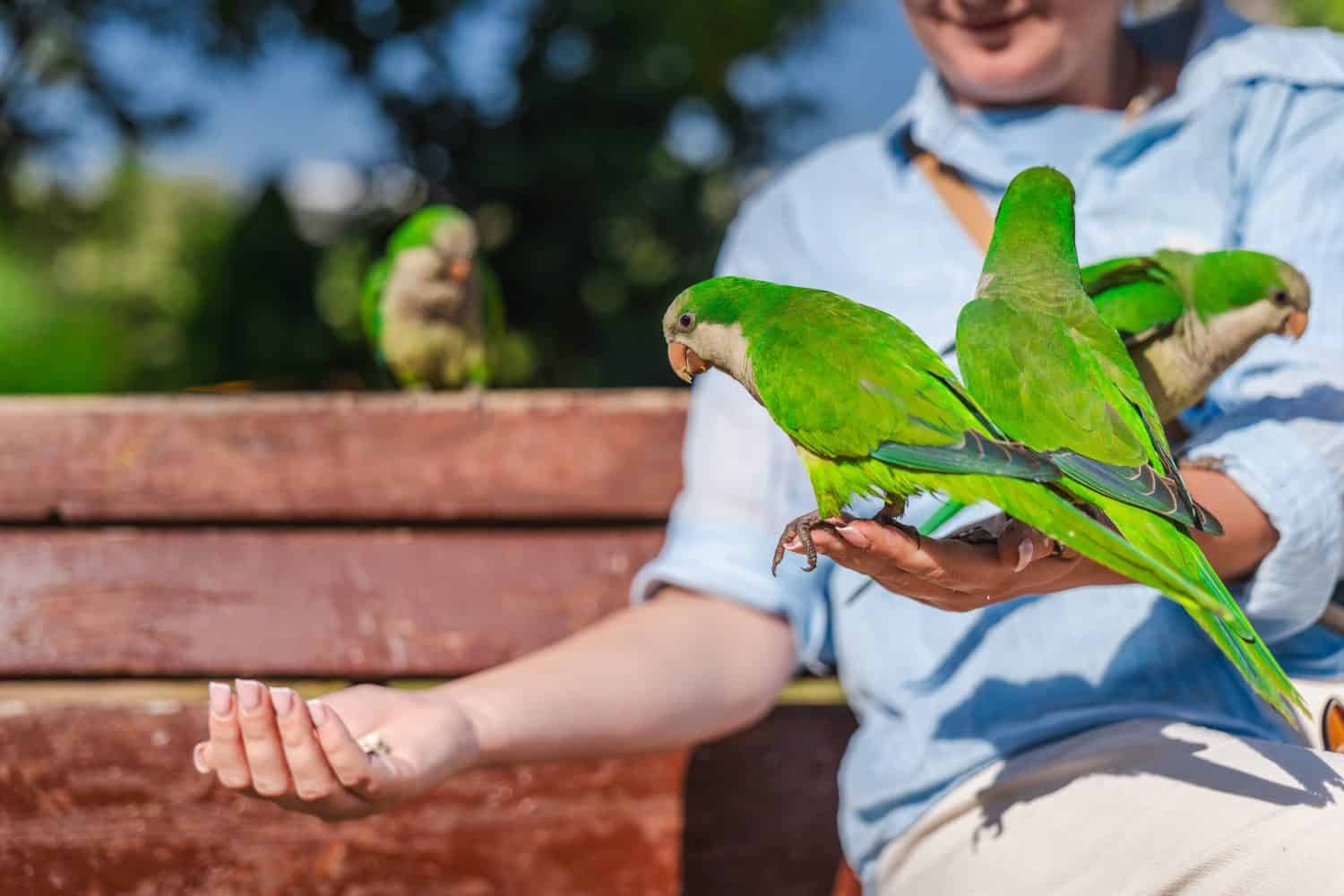
During the 1970s, parrot ownership was all the rage. It was trendy to own an exotic bird, especially one so intelligent. Monk parakeets are smaller than most parrot species, making them easier to keep indoors. And while they still require considerable care and know-how, many people were keen to add them to their households. Unfortunately, many families were ill-prepared to take care of such a high-maintenance pet.
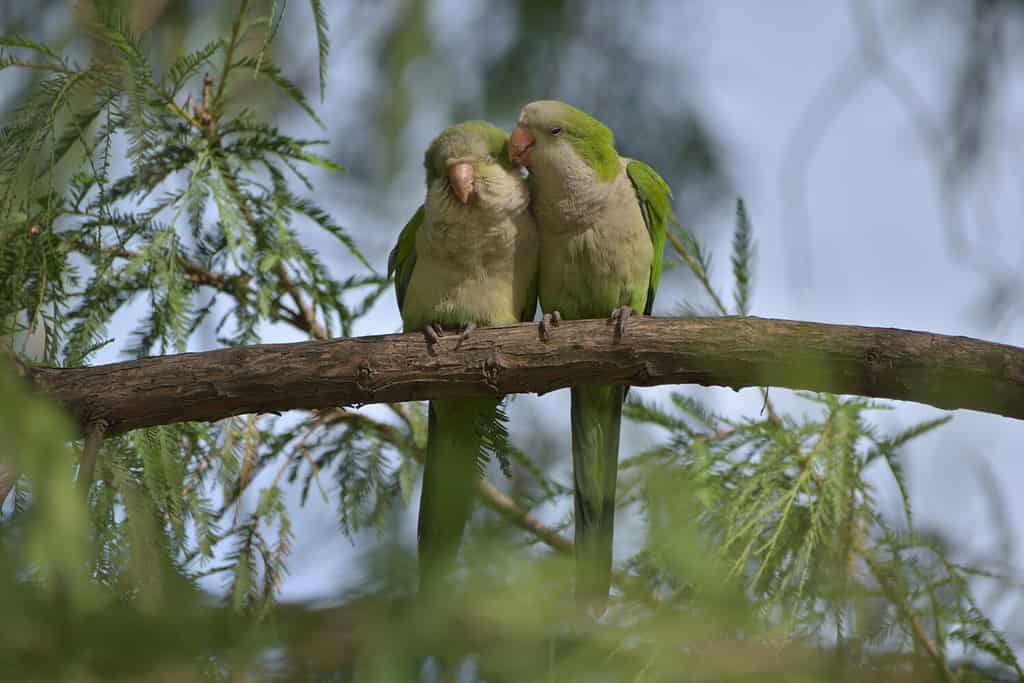
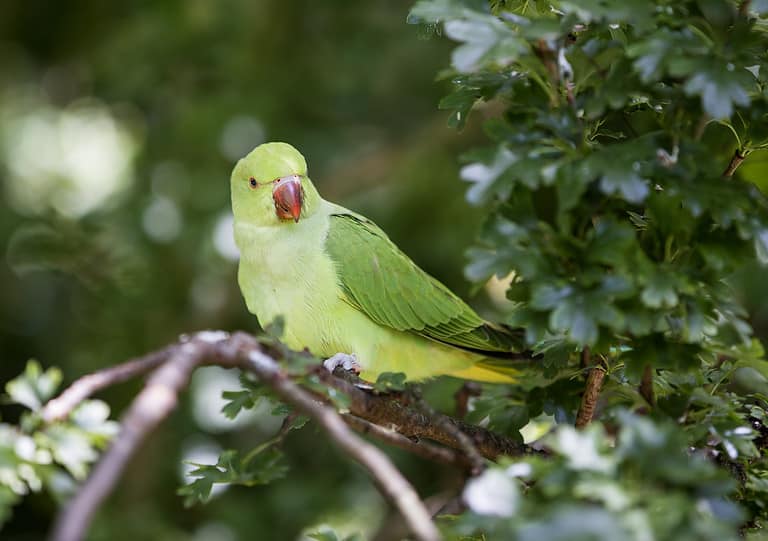
Monk parakeets are highly social birds, which helps them create large communal nests in Austin.
©Christian Peters/Shutterstock.com
Similar to any bird, monk parakeets need daily care, stimulation, and interaction. They’re also extremely active and need large spaces to fly around in, which many houses weren’t equipped to accommodate. If they do not receive adequate stimulation, they can become destructive, destroying their cages before plucking their own feathers out.
Owners realized that having a monk parakeet wasn’t as fun as it first seemed. With too many birds and not enough wildlife rescues to take them all in, many owners began releasing the birds into the wild. Today, we know this is how many species become non-native. But back in the 1970s, little was known about conservation, especially regarding monk parakeets. And as it turns out, this species thrived when it wasn’t domesticated.
Austin’s Monk Parakeets Built Communal Nests
In a bizarre twist of fate, the monk parakeets of Austin didn’t go far. Instead, they remained in the city and used it to their advantage. Rather than being deterred by the constant noise and traffic, they embraced it. The species adapted so well to Austin that they began building communal nests.

Without daily stimulation, monk parakeets become destructive and attention-seeking.
©Veera/Shutterstock.com
In the wild, monk parakeets are known for these towering structures. Made of dried grass, twigs, and underbrush, each nest can hold up to 20 separate nest chambers. In their native habitats, a nest can hold up to 200 birds when shelter is scarce. However, Austin’s communal nests are typically far smaller.
After being released, monk parakeets quickly took over utility poles and communication towers. After the 1980s, their nests became a normal part of Austin’s landscape. While typically found in the city’s parks, it’s not unusual to spot monk parakeets high up on telephone poles along the road. Their vibrant green feathers make them an unmistakable, albeit unusual, part of Austin’s wildlife.
How Did Monk Parakeets Adapt to City Life?
Austin may be best known for another famous flying resident: the Mexican free-tailed bat. But monk parakeets have become something of an unofficial bird mascot for the city. And given their exceptional survival skills, these parakeets are worthy of the title. The key to their adaptation, ironically, was man-made towers. Being so high up gives them an advantage and a line of defense against predators. It also provides them with a safe place to nest, raise hatchlings, and feed their young.
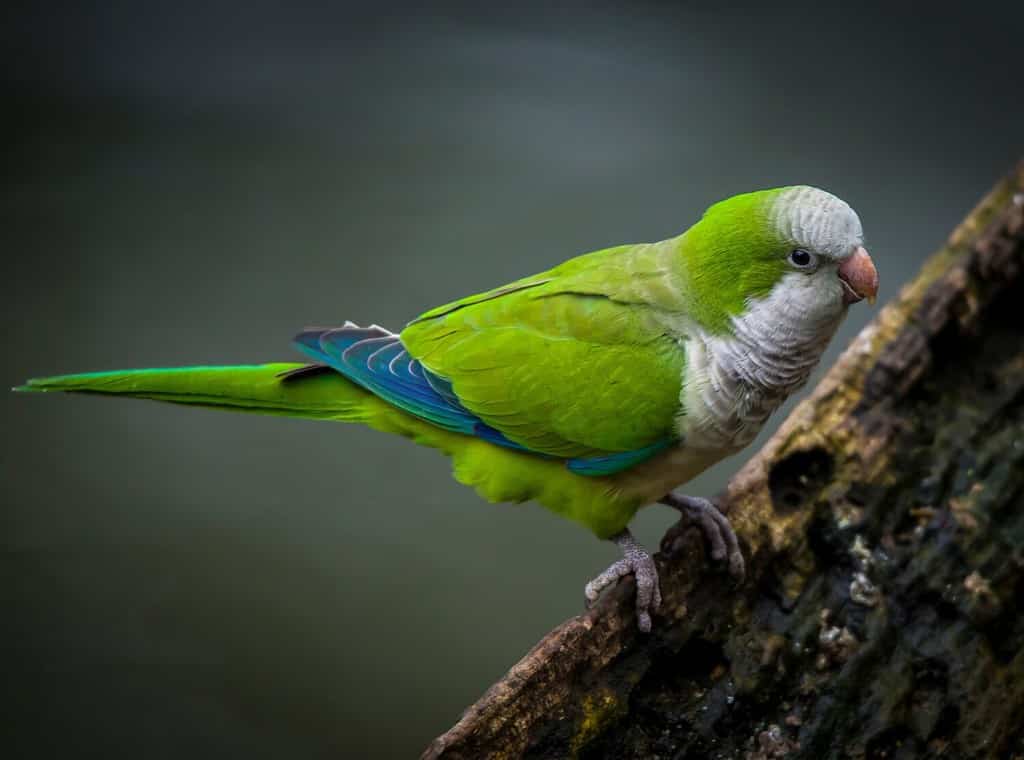
Locals often observe monk parakeets high up on utility poles throughout Austin.
©Roel van Moorsel/Shutterstock.com
While the first communal nests were spotted outside a YMCA and near Zilker Park, they’ve grown to encompass most of the city. Since they hail from the lowlands of South America, they’re well-suited to adapt to moderate winter temperatures. And thanks to Austin’s steady supply of fruits, nuts, and grains, these birds rarely run out of sustenance.
The monk parakeets of Austin have done a remarkable job of adapting to urban life, bringing color to a city that has become an unintentional Audubon haven.