Quick Take
- Researchers rubbed the calf in mud and dung before the drop-off. The reason is smarter than it sounds.
- Finding one baby among 40 families took a daily-monitoring trick and one missing mother.
- The reunion looked perfect, until the next morning, when the calf lay motionless in a riverbed.
- A happy ending was only the start. What came after the greeting changed everything for the calf.
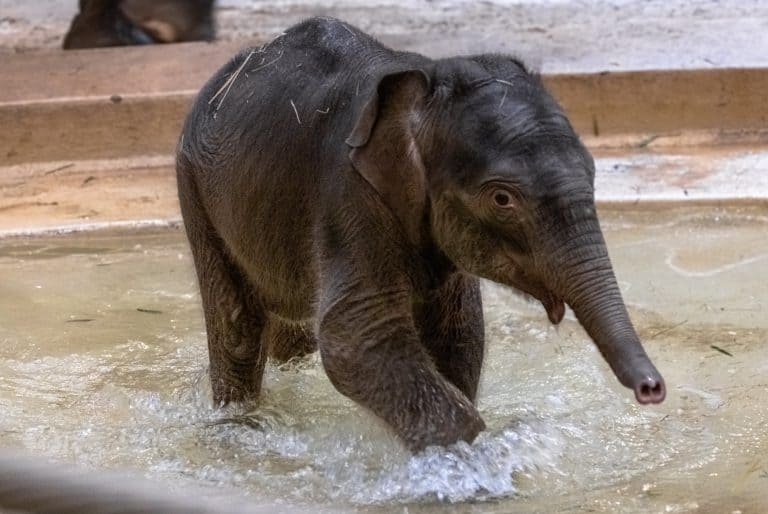
On the morning of Feb. 11, 2026, staff at Elephant Bedroom Camp in Samburu National Reserve in northern Kenya found a 4-month-old female elephant walking between the tents alone, Save the Elephants reported. They tied her to a tree and called a research team, Colorado State University said in a release published May 19.
The call reached George Wittemyer, a CSU professor and Save the Elephants’ chief scientist who, according to the university, has studied the region’s elephants for nearly 30 years. In his account for Save the Elephants, he and research assistant David Lolchuragi gave the calf water, shade and a cooling mud bath, then went looking for a family with a missing baby.
By midday they had a match. They loaded the calf into their research vehicle, covered her in fresh mud and elephant dung to mask the human scent, and drove to GirGir Plains. They lowered her to the ground about 130 feet from two females they believed were her aunts.
Disoriented from the bumpy ride, the calf did not move toward the other elephants at first, CSU said. Then one aunt, Adelaide, came to investigate and called, and the calf called back. The entire family rumbled, trumpeted and converged on her in what Wittemyer described as the greeting ceremony elephants perform after extended separation.
Watch Save the Elephants’ video of the reunion on YouTube
How did they know which family was hers?
Samburu holds roughly 40 elephant families, according to a photo caption on EurekAlert. Wittemyer wrote that Save the Elephants monitors its study families daily, so the team started by checking which calves were accounted for.
East of camp they found part of a family called the Royals, with all six calves under a year old present. Two other Royals sub-families had crossed the river, including the one led by a female named Sylvia.
Sylvia was shot in the jaw more than a decade ago. The break healed but left complications: in harsh dry seasons she often develops health problems, and she had left the family before when unwell, rejoining weeks later. She had left again about two weeks earlier with her 4-month-old daughter. After searching thick bush in the Ngare Mara swamp without finding either, the team concluded the camp calf was almost certainly hers.
Why did an aunt nurse her sister’s calf?
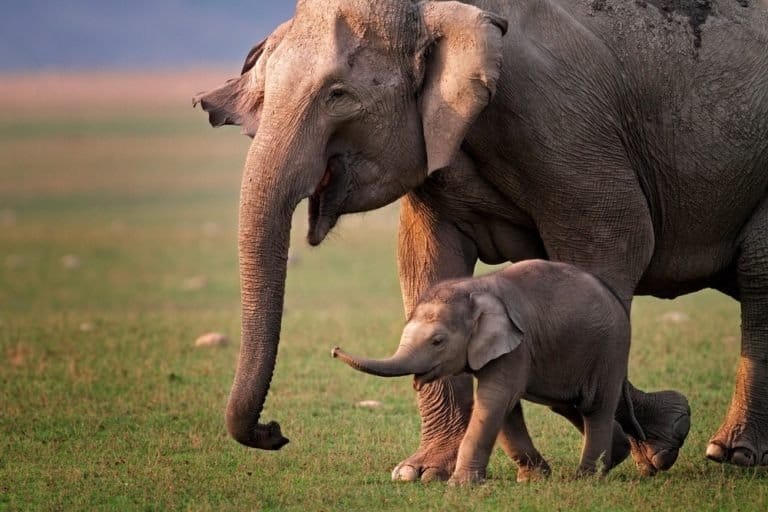
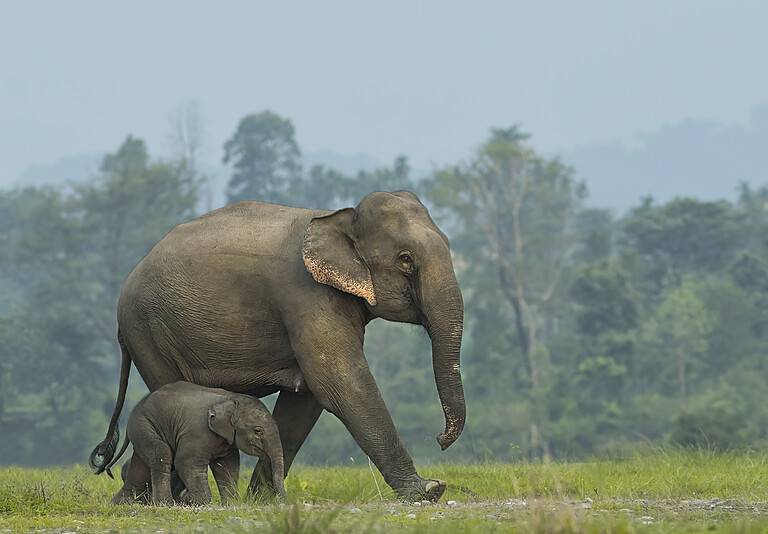
Adelaide and Markle are Sylvia’s younger sisters. Elephants live in female-led herds, and alongside the mother, other elephants, usually aunts, help rear and protect calves, University of Oxford researchers working with Save the Elephants reported in 2022. Wittemyer’s account calls that care allomothering, and Markle had been giving it to Sylvia’s baby the week before.
After the greeting, the calf tried repeatedly to suckle from Adelaide, who had her own 4-month-old to feed. Markle, who lost her calf in 2025, let the orphan nurse.
“Elephants are highly social, forming powerful bonds between each other that last a lifetime,” Wittemyer said.
At 4 months she was years from weaning: calves nurse frequently, gain 2 to 3 pounds a day in their first year and stop needing milk between ages 2 and 3, according to San Diego Zoo Wildlife Alliance.
Did the reunion hold?
The Royals moved off together at sunset with the calf among them, Wittemyer wrote. The next morning the ground team found the family in the river and the calf lying motionless in a shallow depression in the riverbed. The researchers feared she had died overnight, CSU said.
About an hour later she woke and called, according to CSU. The family heard her and came back down into the river with Adelaide leading, then surrounded her and guided her up the embankment. Low elephant calls can reach another elephant up to 5 miles away, by the zoo alliance’s figures.
Over the following days she stayed mostly with Markle, looked tired and sometimes lagged behind, Save the Elephants reported. The team worried Markle was not producing milk, and Adelaide rarely let her suckle.
What happened to her mother, and where is the calf now?
The team later found Sylvia’s body, Save the Elephants said in an update, and the condition of the carcass indicated she had died a few weeks earlier. CSU said she presumably died of natural causes.
Her calf repeatedly wandered away from the Royals before rejoining them, the organization wrote. She may have struggled to keep up or been searching for her mother, EarthSky reported. After tourists spotted her alone in an area known for lions, Reteti Elephant Sanctuary took her into its care on the night of Feb. 14.