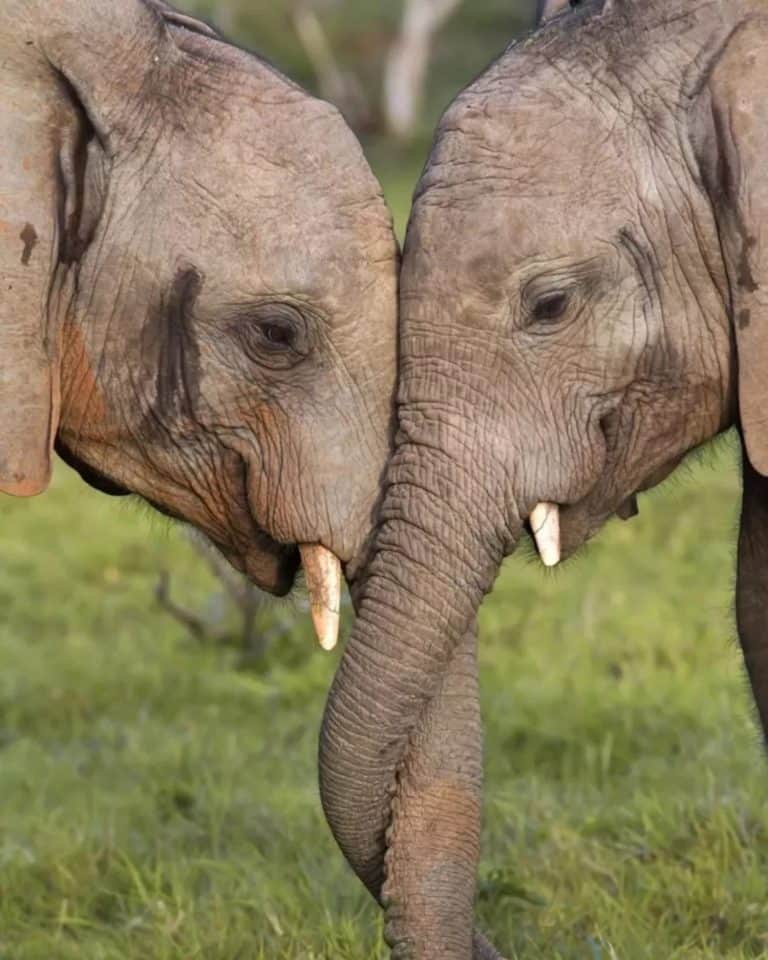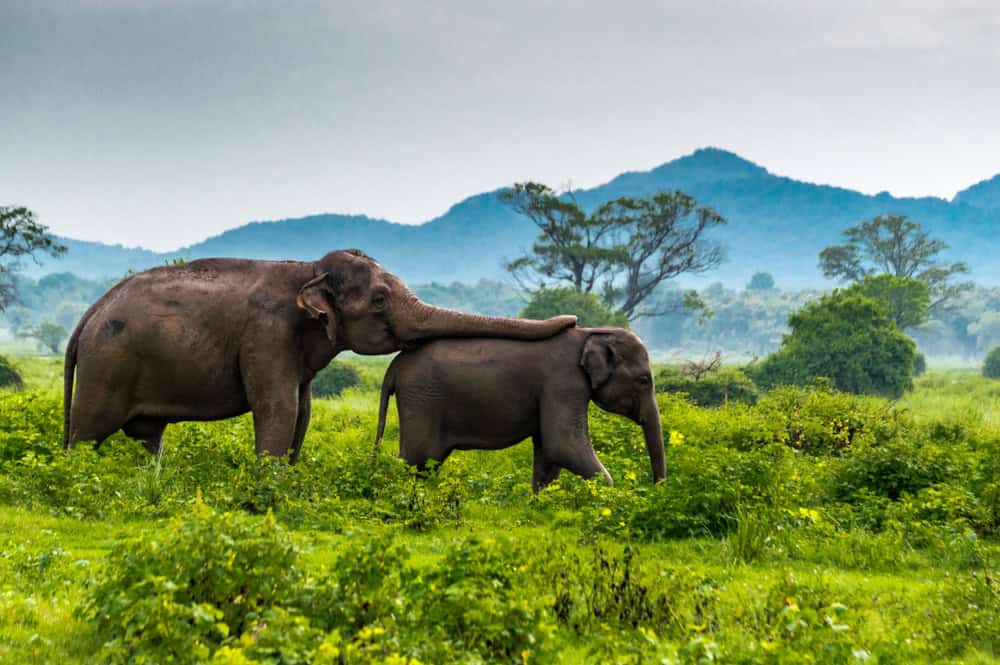

Despite their huge size and occasional attitude, elephants are just big softies when it comes to their own kids. Blackpool Zoo in the UK has recently proved that by releasing an adorable clip of a Mom elephant spooning with her one-month-old calf during the night. Let’s find out more about this gorgeous pair.
Blackpool Zoo Elephants
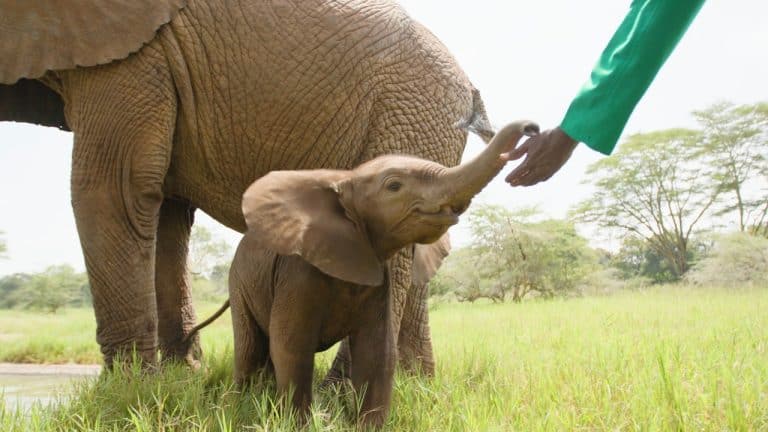
Blackpool Zoo excitedly announced recently that one of their female Asian elephants had given birth to a female calf on 2nd September. The mom was called Tara, and her calf was named Zaiya, which means ‘strength’ in Burmese. To give Mom and her baby privacy, the elephant enclosure was closed to the public. This allowed Tara to bond with her new baby. However, with the CCTV rolling, we still get to glimpse what is going on.
Little Zaiya had a shaky start in life. Her birth was difficult, and Tara was a first-time Mom and inexperienced. The calf did not begin suckling on her own and needed some extra help. She received round-the-clock supervision and nutritional support from a dedicated team. Zaiya gets a bottle of specially formulated elephant milk every two hours.
An update from the zoo on October 23rd, 2025, stated that she is now gaining weight and is very inquisitive. Her Mom and aunts in the herd are teaching her all there is to know about being an elephant! In the zoo’s latest blog post, Adam Kenyon, Section Manager at Blackpool Zoo, says, “Complex social structures within elephant herds mean that all females communally care for the young, which is vital for both the development of the calves and that of younger or less experienced females.”
Asian Elephants as Mothers
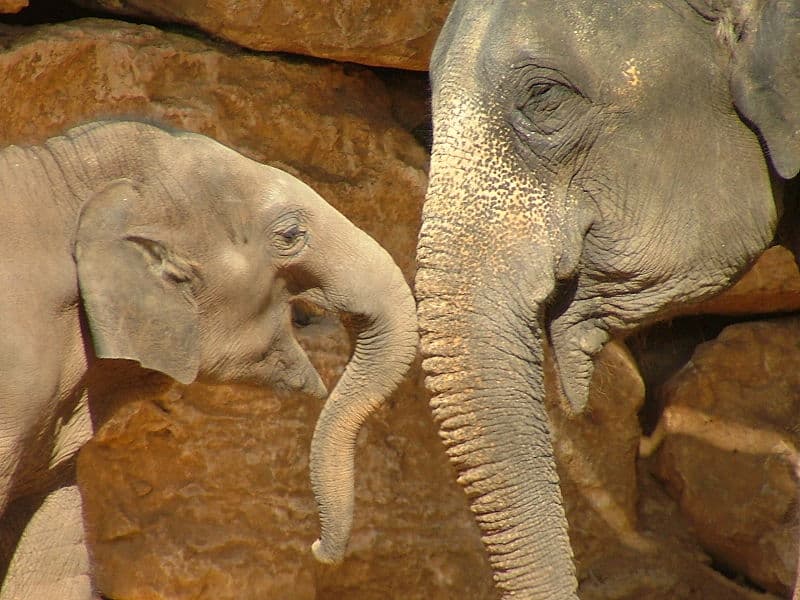
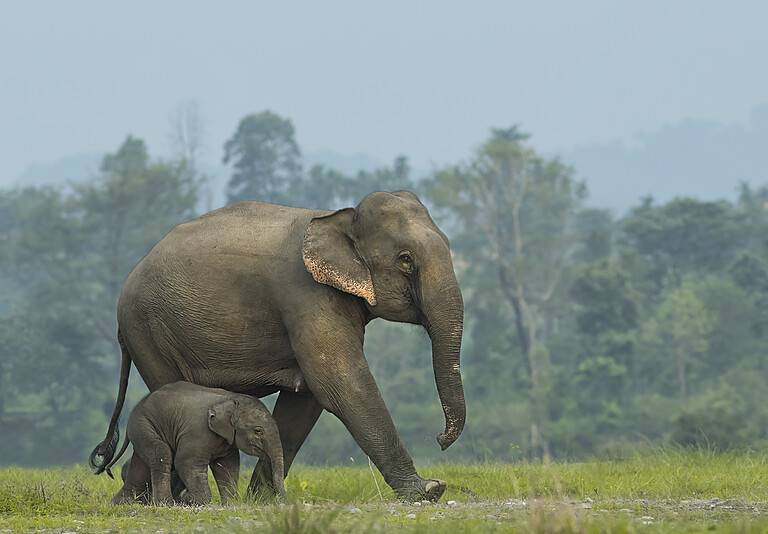
Asian elephants generally have one calf at a time.
©SuperJew, CC BY-SA 3.0, via Wikimedia Commons – Original / License
Asian elephants (Elephas maximus)are a native species of the Indian subcontinent, continental Southeast Asia, and islands in Asia. In the wild, they live in a wide range of habitats but are common in lowland areas near shade and sources of water. They are also found in zoos and wildlife parks all over the world.
Elephant mothers are pregnant for 20 to 23 months, which is among the longest gestations of any mammal. Despite such a long pregnancy, it’s actually very hard to tell that a female is pregnant by just looking at her, until the very end of her pregnancy. Under favorable conditions, Asian elephants give birth every three to six years or so. One calf is born at a time, but they can rarely have twins. Labor can be short but can last several hours, and the female often consumes some or all of the afterbirth.
These elephants show a behavior called ‘allomothering’ where the whole herd is attracted to young calves and helps to look after them. The ‘allomothers’ will care for the calf while the Mom has a chance to feed and rest. This care continues until the calf reaches sexual maturity at about 10 to 15 years of age.
Elephant Milk
Baby Zaiya is getting her nutrition from a bottle because she is failing to feed normally. This is a big task for the zookeepers! Elephant calves drink between 12 and 16 pints of milk a day. Calves need to suckle from their mother while she is standing. They must learn how to approach from the side and how to suckle using the side of their mouth. The composition of the mother’s milk changes as the calf grows. For calves between one and three years of age, it is higher in fat. Protein levels increase for older calves. Most calves are weaned by the time they are four years of age.
Elephant Sleep
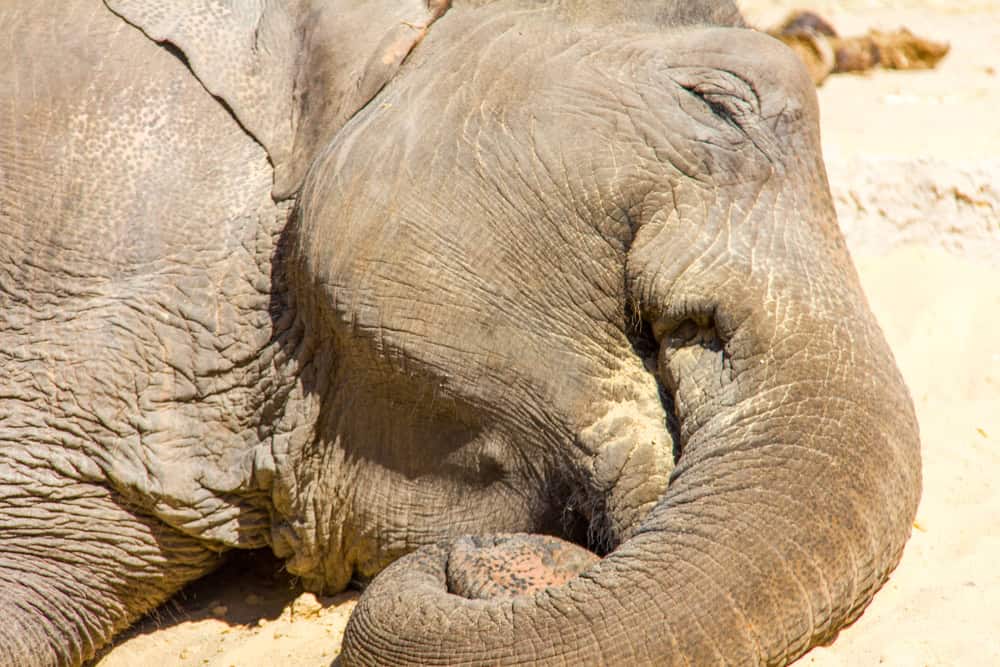
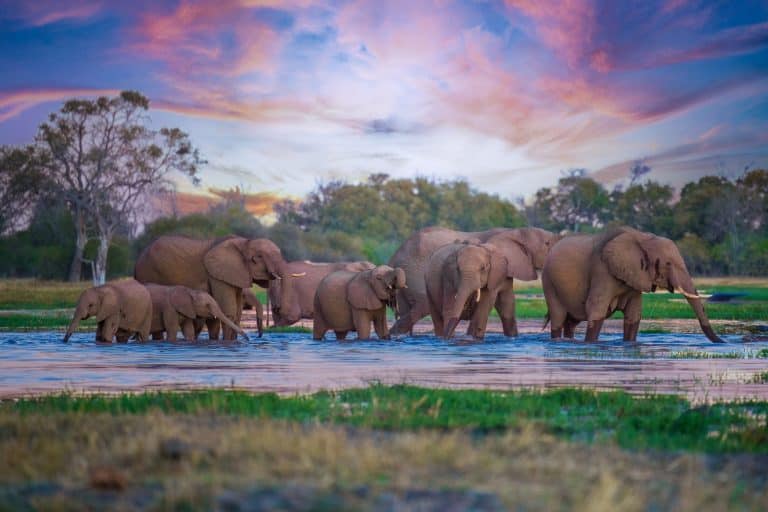
Elephants need little sleep.
©MiniMoon Photo/Shutterstock.com
Asian elephants are devoted mothers, just like Tara. They nurse and protect their calves, guarding them with their bodies. This is what Tara is doing as she spoons with Zaiya at night. This sort of scene is not unusual and has been recorded on CCTV in elephant enclosures before. Aerial footage has also captured elephants sleeping close to each other in the wild. Elephants are tactile creatures and communicate by touch. Also, sleeping close together offers the herd more protection. Asian elephants live in small but fluid groups with their calves. It is common for group members to use touch while standing and while resting. Also, calves frequently lean up against their mothers.
Studies have shown that Asian elephants sleep for an average of only 4 hours and 16 minutes per night, and that calves sleep more than adults. Experts suspect that because elephants are so large, they do not have to worry about predators as much as smaller animals do. Therefore, they sleep more deeply and do not need the ‘drowsy’ state that many other ruminants experience.