
Quick Take
- An Australian wing surfer survived being dragged underwater by a humpback whale and caught the incredible moment on video.
- “I thought I was going to die,” Jason Breen said.
- Recent research suggests humpback whales have limited vision, which may contribute to accidental collisions or entanglements with humans and human-made objects.
Not many people live to tell the tale after an underwater encounter with a sea creature, but one man did — and he even got a video of the scary experience. Jason Breen, a Sydney, Australia-based wing surfer, was hit by a breaching humpback whale in New South Wales in 2023, and a video from his GoPro shows the incredible moment up close.
TikToker @arkbykomi shared Breen’s video, which starts like any wing surfing excursion. Until, suddenly, a huge humpback whale jumps out of the water and lands on Breen, dragging him under the sea. The video footage shows just a blurry mass of water and bubbles until Breen finally surfaces, seemingly completely unharmed.
Luck Was on His Side
In an interview with Today at the time, the then-55-year-old shared that the humpback whale landed on him and dragged him about 30 feet underwater. “When it came down on top of me it got caught in my leg rope so as it dived down, I was getting dragged down,” he told the outlet. A lucky break allowed him to escape. Breen described it like this: “Luckily, I felt the leash break and from there I got released from under the whale’s body and was able to come to surface and thank my lucky stars that something that’s not supposed to break broke and ringed the webbing out.”
Another stroke of luck was that he was pulled under by a baby whale rather than an adult. “Usually the mothers have barnacles and if it had barnacles rubbing against my face under the water, I would have been ripped apart,” he told the outlet, adding, “The whole thing was unusual, one in a million.”
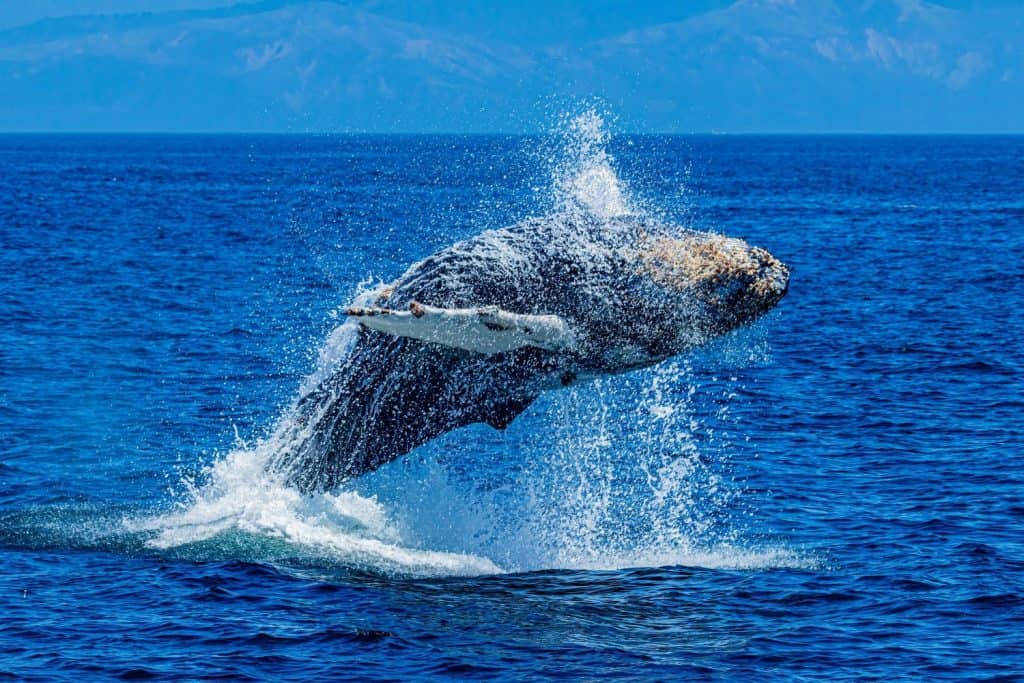
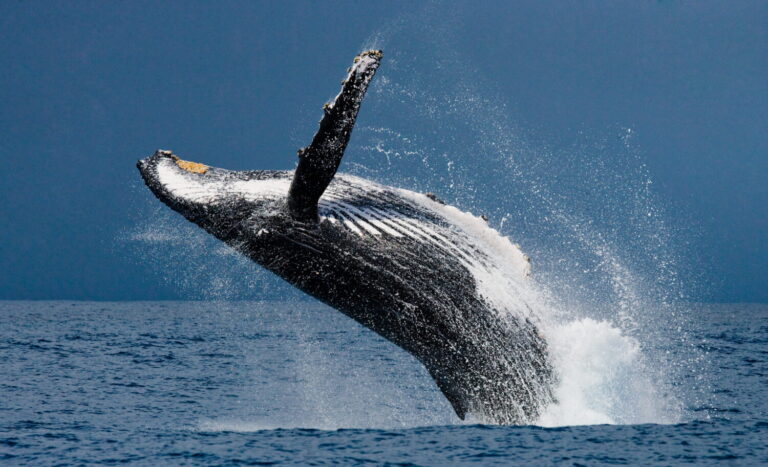
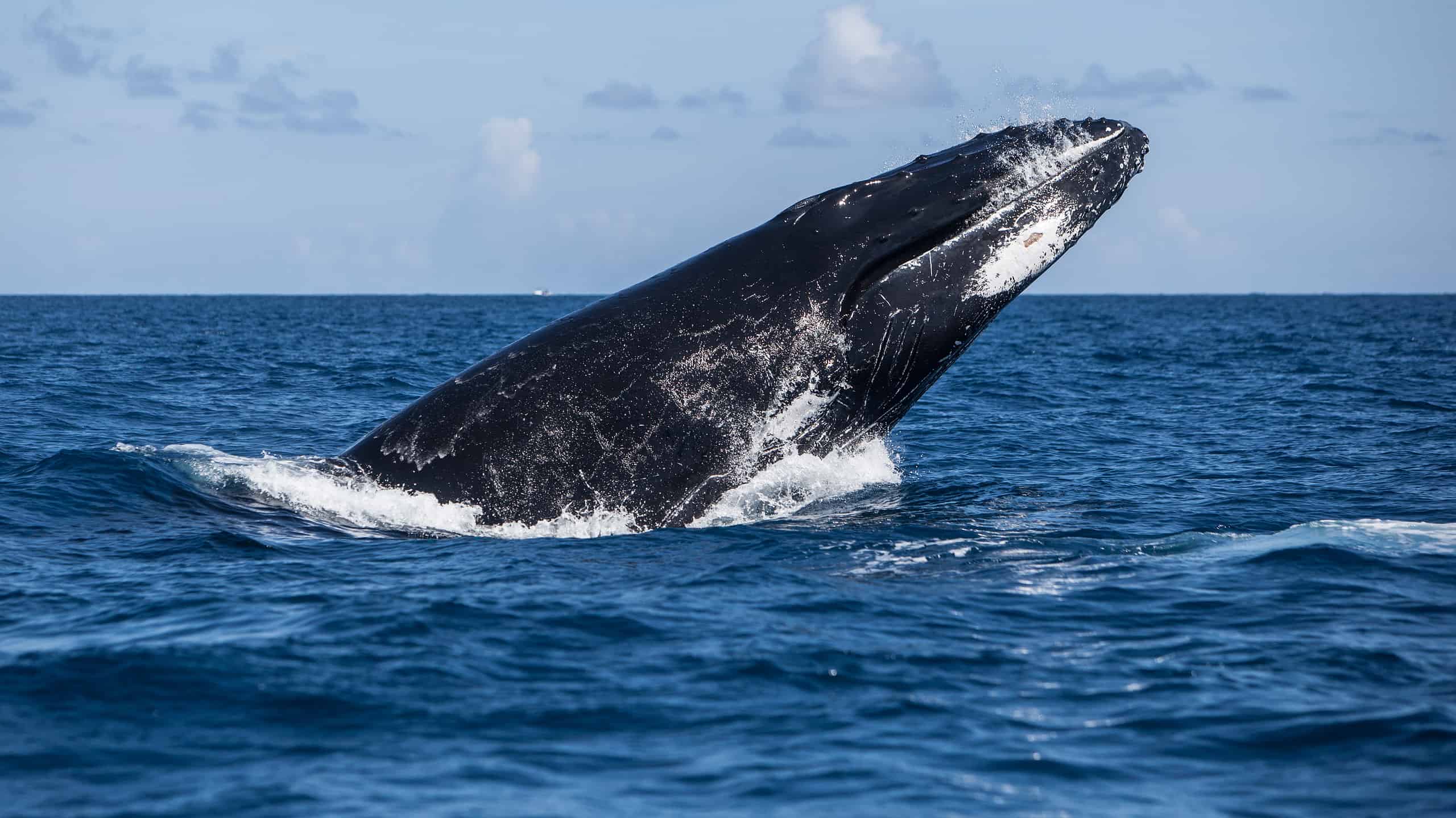
Humpback whales are known for breaching the water, then diving back in.
©Dmitry Demkin/Shutterstock.com
Breen shared more details about the extraordinary incident in a 2024 essay for The Guardian. “I was far out into the water, my mates a long distance away,” he recalled about that fateful day. “I was getting ready to make a turn when I saw this dark shape come up in the water. I knew it wasn’t a shark or a turtle. It was just too big. As soon as I saw it, I thought: ‘That’s a whale.’ My mind went completely blank. I felt sheer panic. There was no way out.”
The humpback whale breached the water, twisted in the air, then hit Breen’s shoulder, chest, and head. “This all happened in about three seconds,” he recalled. “I was winded. It was just an incredible mass of weight and power. The closest thing I can compare it to is being hit by a bus. There’s just nothing your human body can do.”
He was dragged down for about 15 seconds, during which time, he said, “I thought I was going to die.” The leash snapped, and he was freed, so he swam back up to the surface and immediately returned to shore. He escaped what could have been a deadly encounter with only a sore shoulder and arm — and a newfound fear of sea creatures.
All About Wing Surfing
Wing surfing (or winging) is different from wind surfing. This watersport involves holding onto an inflatable wing while on a surfboard to skim across the water. Windsurfing, on the other hand, uses a large sail attached to the board, which the windsurfer steers. Elite wing surfers have reached speeds approaching 38-40 miles per hour, but most experienced wing surfers typically travel at 20-25 miles per hour.
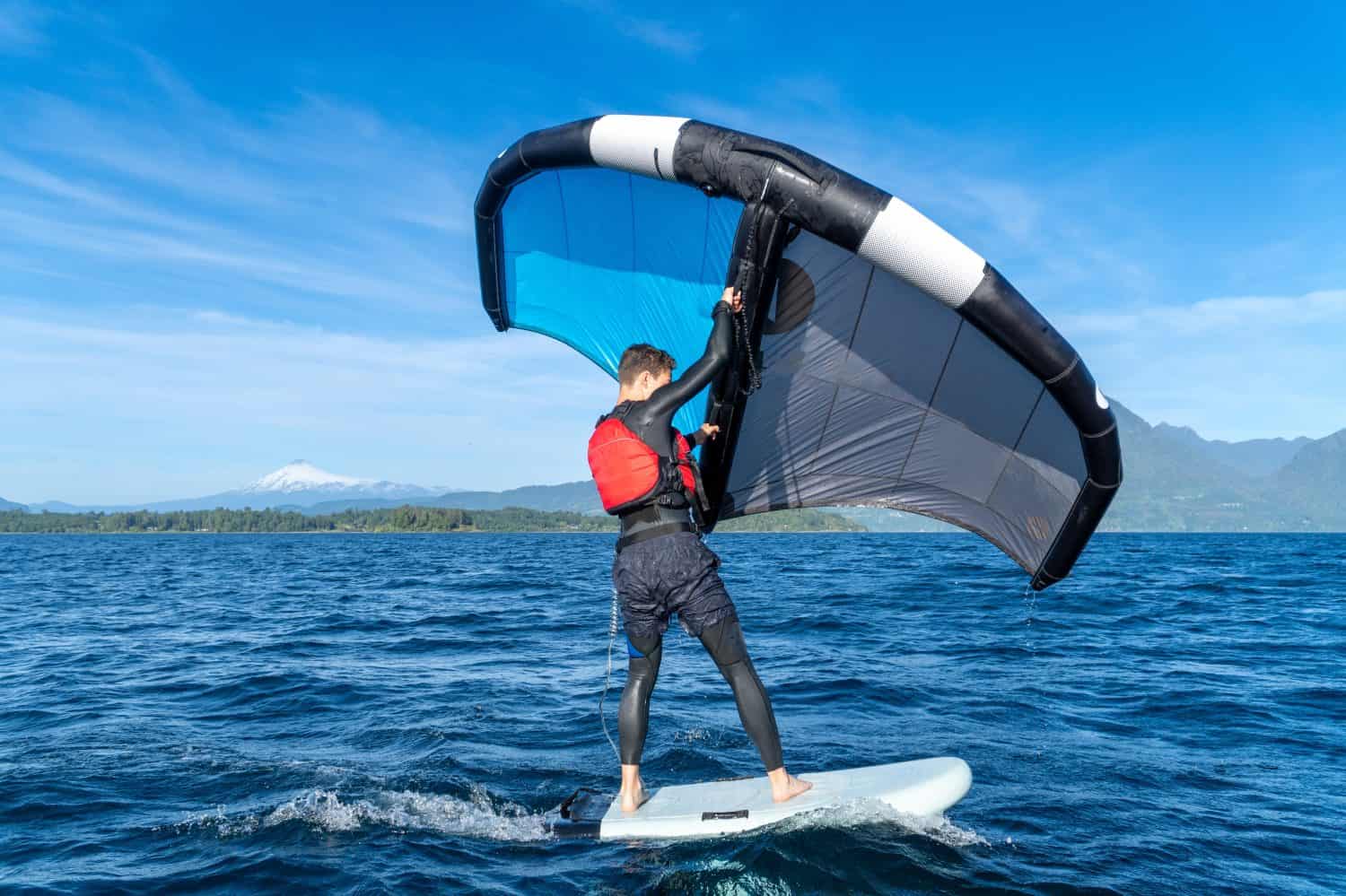
Some elite wing surfers have reached speeds close to 40 miles per hour, though most travel at lower speeds.
©Capturas E/Shutterstock.com
Why Do Humpback Whales Breach?
Humpback whales (Megaptera novaeangliae) can weigh up to 33.1 tons and measure as long as 47 feet, 7 inches as adults. (In other words, not someone you’d want to go up against in the ocean!)
According to the Ocean Conservancy, adult humpback whales surface every 7-15 minutes, while calves go every 3-5 minutes to get air. However, they don’t have to breach (which involves most or all of the whale’s body jumping out of the water) in order to breathe. Instead, they do it to communicate with other whales. When they appear at the surface, they slap their fins and flukes on the water to send messages in a language only they can understand.
How Common Are Whale Collisions?
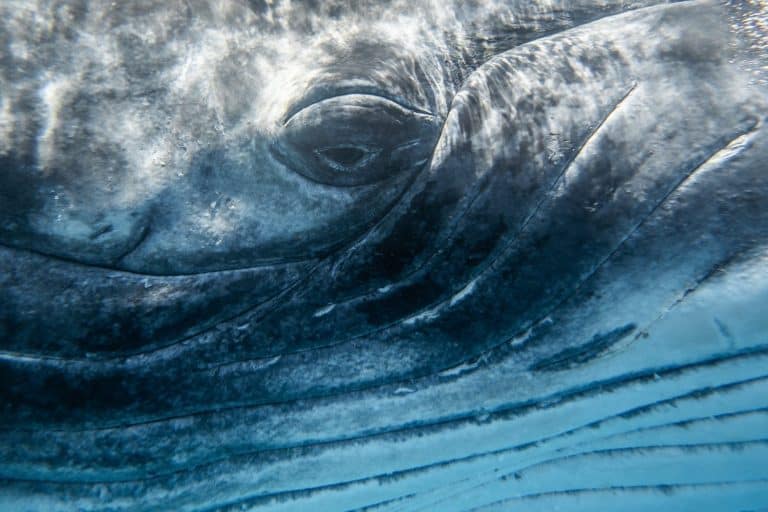
Unfortunately for whales, collisions with ships and entanglements caused by human activity are among the leading causes of death for humpback whales, according to the New York Times. May 2025 research by the University of North Carolina Wilmington and Duke, published in Proceedings of the Royal Society B Biological Sciences, found that humpback whales have poor vision. While they can see large objects and shadowy outlines, they can’t see detailed things like fishing nets unless they are up close. This suggests that the whale likely didn’t see Breen until it was already very close to him. Luckily for both Breen and the whale, they both seemed to make it out of the encounter unscathed.