Dolphins and whales are known for their antics in the ocean. From whales wearing salmon hats or using kelp to massage one another to dolphins wearing sea snail casings or even throwing seagrass blades out of the water, these animals find unique ways of playing.
However, it turns out that dolphins and whales love to play with each other as well. While dolphins may have their attempts at play dismissed by whales from time to time, when whales want to interact, they do so with gusto. Therefore, with similar personalities and a willingness to engage with one another, it seems odd that play between the species has not been better documented over time.
Why Whales And Dolphins Play Together
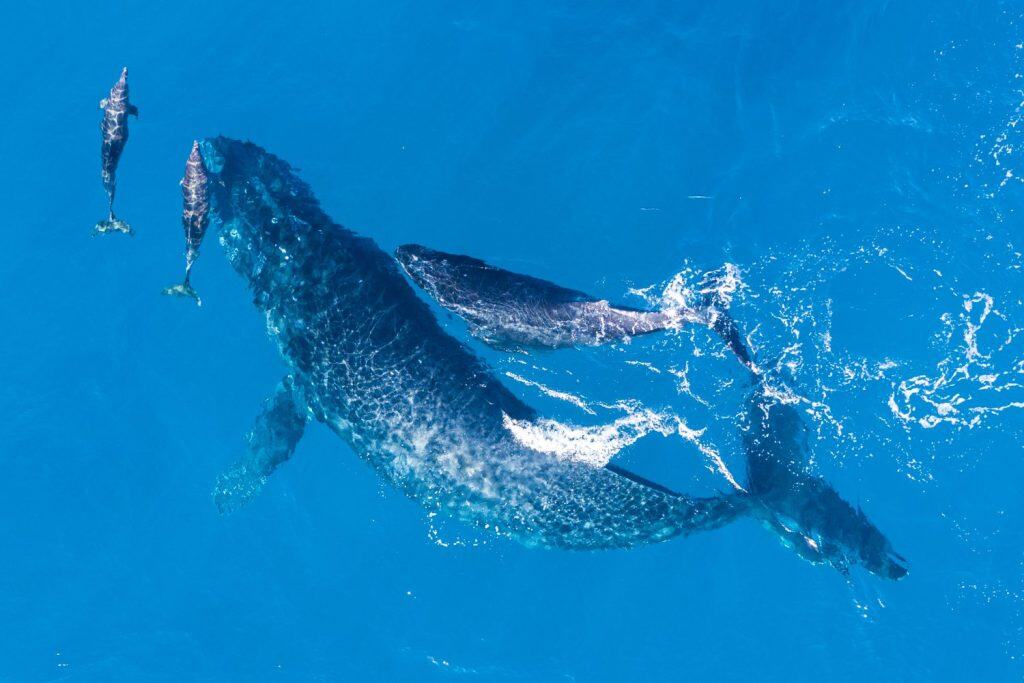
Whales and dolphins enjoy playing with one another regularly.
©Justin Berken/Shutterstock.com
There is no good answer as to why whales and dolphins play together. It could be that whales and dolphins play together simply because they can. Because all dolphins are classified as toothed whales, maybe the different-sized species share a similar sense of play and enjoy being in each other’s company. But, truly, at the end of the day, it remains a mystery why dolphins and whales play within their own species, as well as why they engage in interspecific play.
According to a new study published in Discover Animals, the best hypothesis as to why whales and dolphins play together, explains lead author Olaf Meynecke, is that the creatures simply need some downtime to relax. If the whales and the dolphins happen to be in the same area, they take advantage of the opportunity to play.
“These are highly intelligent animals, and just like humans, they need creative times, they need times when their brain is in a relaxed mode,” Meynecke tells the Australian Broadcasting Corporation. “Play behavior in the events described in our study may facilitate an individual’s ability to cultivate relationships, offer sensory stimulation, and contribute to the overall well-being.”
Therefore, it may just be that when feeling like having a little fun, whales and dolphins can play off of one another, and in the process, build relationships outside of their species that may work to their benefit in the future.
How Dolphins And Whales Play Together
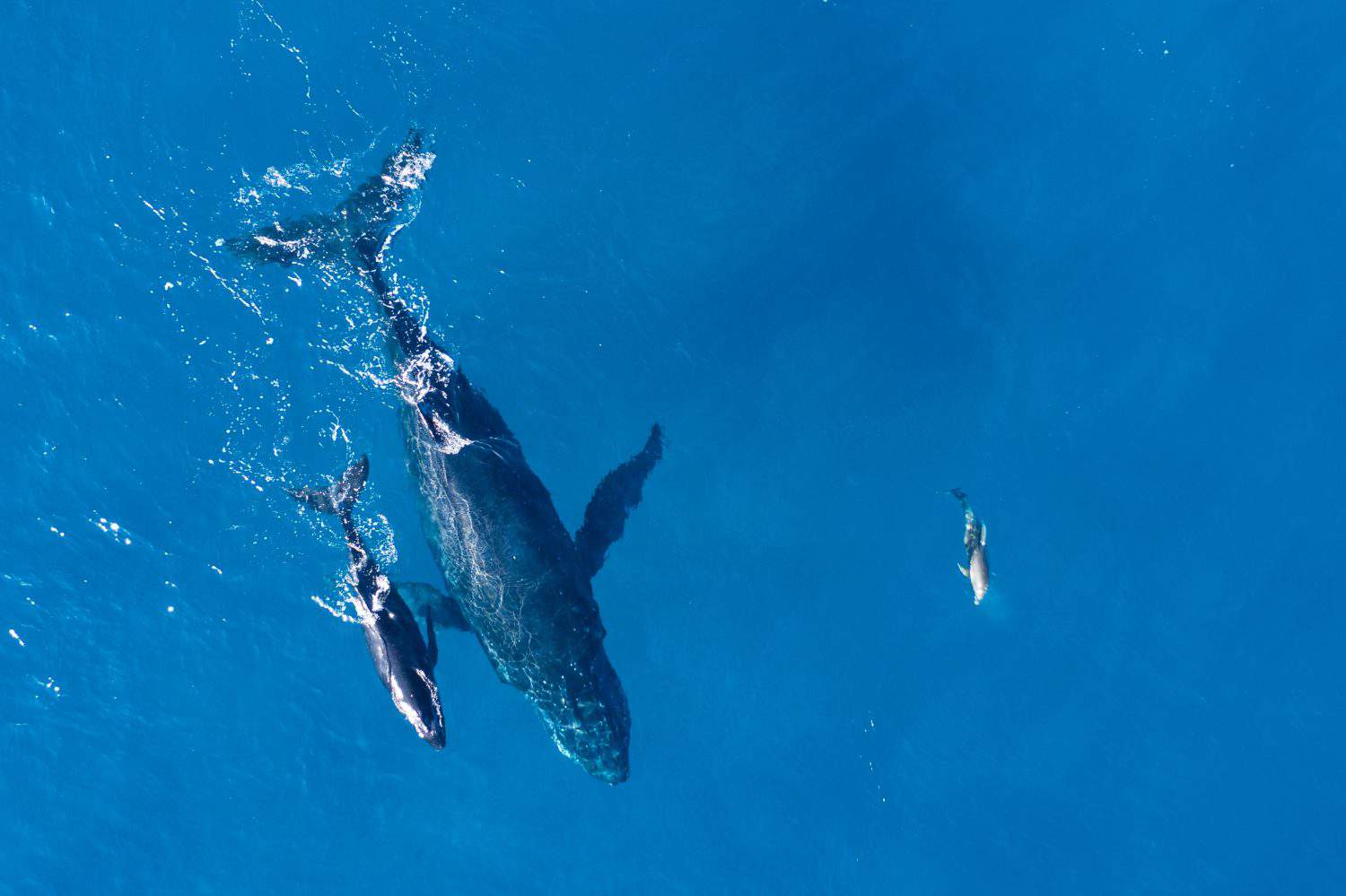
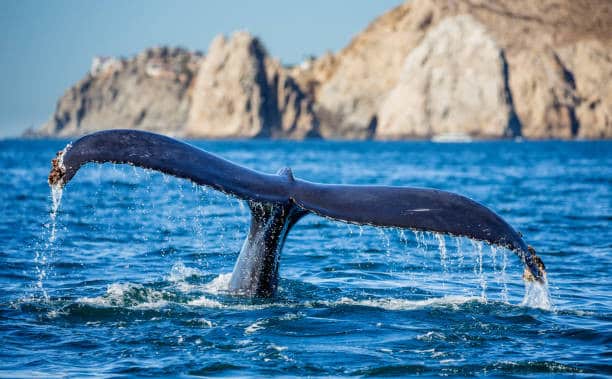
Different species of dolphins and whales interact differently with one another when it comes to play.
©Justin Berken/Shutterstock.com
Dolphins and whales are known for having playful behaviors when they interact within their species. But, as the baleen whales and dolphins have shown, they are capable of mutual play when interacting with each other as well. There were 23 different categories that the study identified as playful behavior for the whales and dolphins. They included:
| Animal Participating in Categorical Behavior | Type of Behavior Exhibited |
| Baleen whale | 1. Rolling 2. Pectoral movement 3. Tail and head movements |
| Dolphin | 1. Breach 2. Bow riding 3. Meandering 4. Touring 5. Rush 6. Rubbing 7. Tail slap 8. Belly roll |
In total, the baleen whales’ movements were differentiated into 12 categories, whereas the dolphins’ movements were made up of 11 categories. Each of these movements indicated mutual interest in interacting with one another, accounting for about a quarter of the observed interactions. However, there were other interactions where the “play” was not always mutual and was instead seen as harassment.
Not All Play Was Mutual
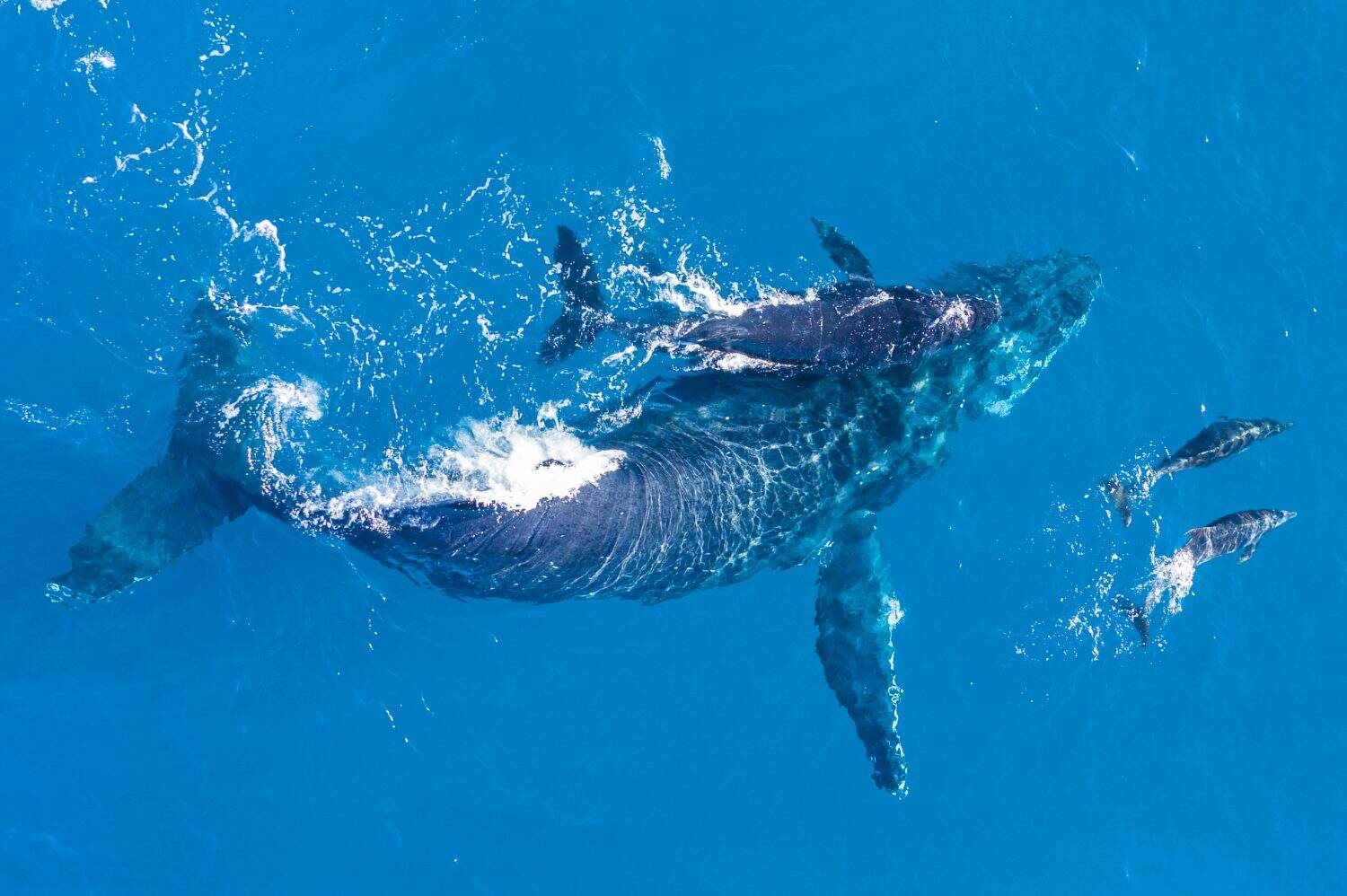
The study noted times when dolphins wanted to play and whales did not, causing stress between the marine mammals.
©Justin Berken/Shutterstock.com
As the interactions between the baleen whales and dolphins were studied, there were times when the two species were not on the same page. In most instances, it was the dolphins that were harassing the whales, who had no interest in being bothered. The study suggests that when whales are busy foraging for food, they do not want to be bothered by dolphins. They are already in competition with other whales for the food in the region and do not want dolphins coming into the territory, adding as an extra stressor.
While most interactions between whales and dolphins did not involve foraging, there were a few instances when dolphins attempted to participate in “bow wave surfing,” which the whales did not welcome. This is when the dolphins position themselves near the head of the whale and ride the wave the whale is producing with its forward momentum. In some cases, as dolphins tried to position themselves, humpback whales moved in a “zig-zag pattern” to prevent the dolphins from bow wave surfing. But, by and large, the whales did not seem to mind dolphins being in their vicinity.
When the whales were displaying competitive behavior toward one another, dolphins were not involved. Instead, the whales ignored the dolphins, even if the dolphins were attempting to initiate play. What is interesting about the study is how the information was collected. While traditional observational methods were used, less conventional ones were utilized as well.
How Researchers Collected Information
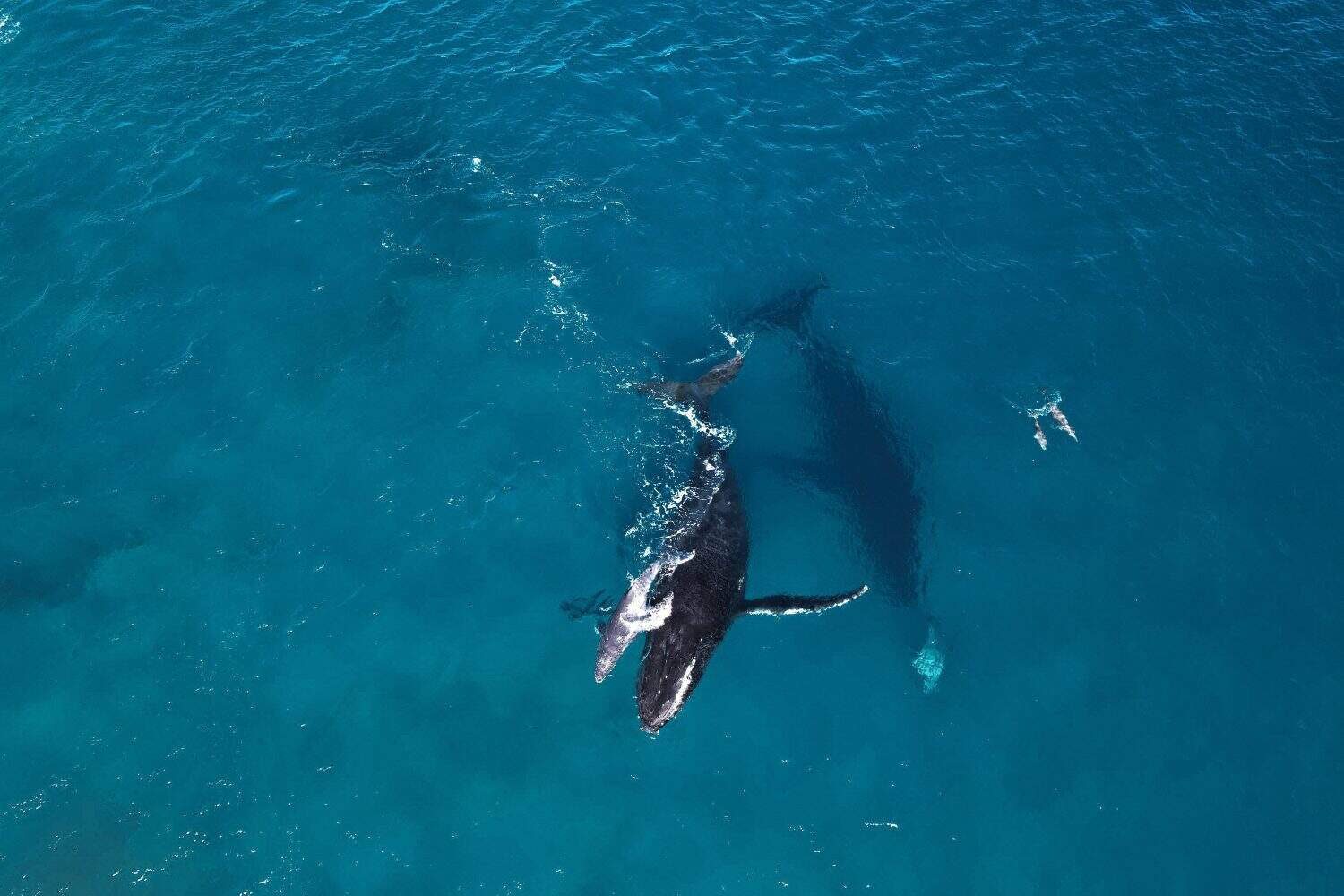
Most of the interactions between the whales and dolphins in the study were observed via reels and photos on social media.
©Elsalass/Shutterstock.com
Many studies involving marine mammals are done by pure field observation alone. While this type of observation was key to understanding how and why dolphins and whales play together, an unexpected source—social media—helped scientists gain further insight into their playful interactions. That source was social media. Scientists took to social media platforms to see what videos were available that showed interactions between baleen whales and dolphins. The different social media platforms used included Facebook, Instagram, Flickr, TikTok, X, and YouTube.
Before these videos and images could be used in the study, it had to be determined that they were, in fact, actual interactions between the two species and not AI-generated images instead. Once that was confirmed, those videos and images were used in conjunction with camera tags on the whales. The camera tags gave a close-up, underwater view of the interaction between the baleen whales and the dolphins.
In total, nearly 200 images and videos were used to identify whether the behavior between a total of 19 different species of baleen whales and dolphins was interactive play or harassment. While this interspecific play is far less common than other types of play these species engage in, the fact that so many interactions were positive and reciprocal shows there is much more to learn about how baleen whales and dolphins interact in the wild.
Interspecific Play Is Uncommon
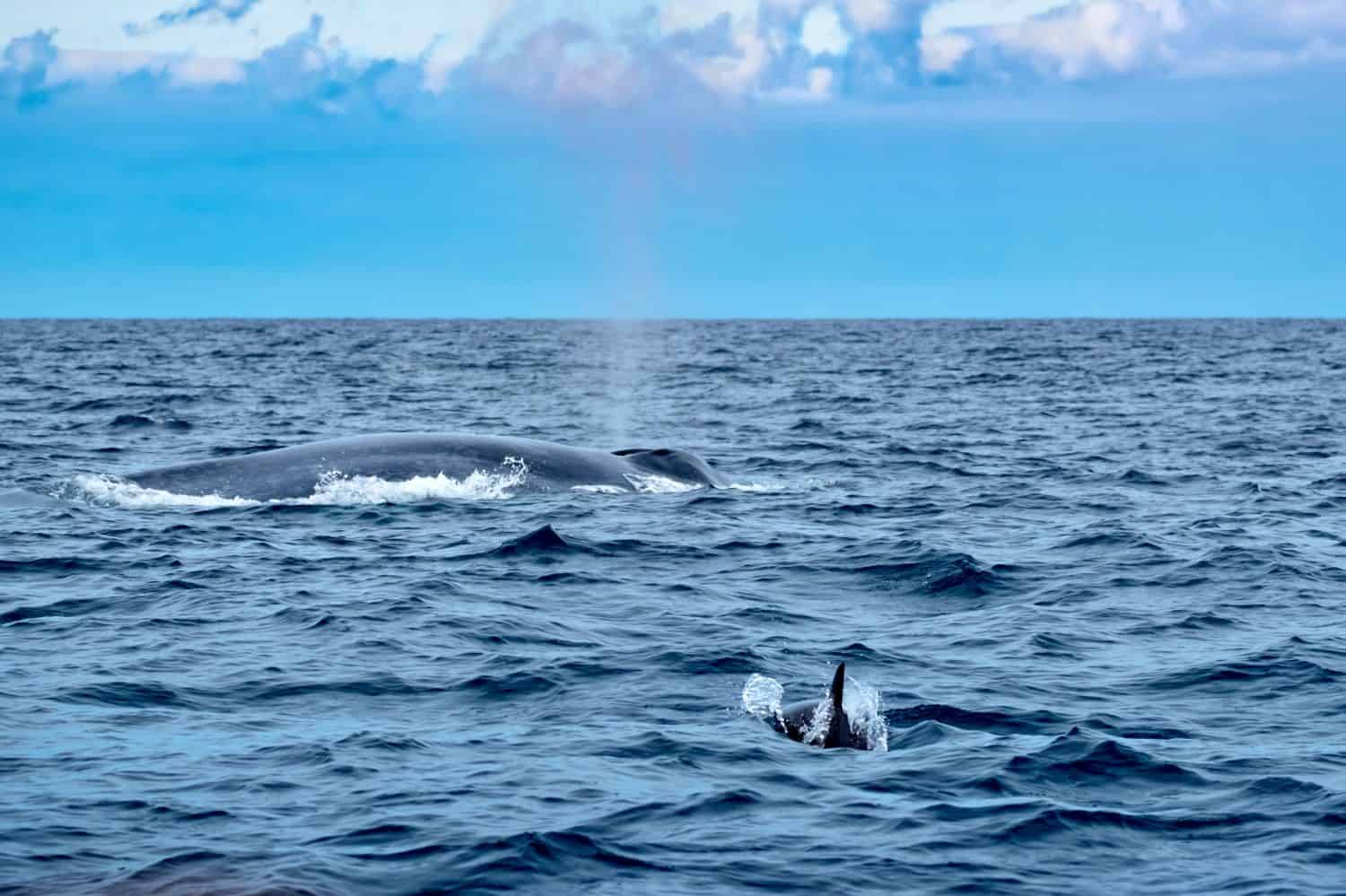
Dolphins and whales are far more likely to play within their species than they are with one another.
©Wild_and_free_naturephoto/Shutterstock.com
Why baleen whales and dolphins engage in interspecific play is an area of research that still needs much exploration. While it does exist, it is by far the least common type of play that both whales and dolphins engage in with any frequency.
As the study points out, there are many different determinations as to what constitutes play in marine mammals. This is why it is such a fascinating area to explore, and one which scientists believe requires more research to better understand. Scientists have been able to identify three main areas of play that whales and dolphins participate in, within their own species. Those areas of play include:
- Object play
- Locomotive play
- Social play
Interspecific play is a sub-category of social play, where two species interact and play with one another. However, according to the study, there are times when this social play is not received well by both parties. Most often, it is seen when dolphins harass another species that does not necessarily want to interact.
“While social play is often cooperative and reciprocal, it can occasionally be one-sided,” the study states, “with only one participant perceiving the interaction as playful, as seen in cases of teasing or harassment by dolphins.”
While there was interspecific play between baleen whales and dolphins, not all whales seemed to want to interact with dolphins in playtime, instead choosing to sleep or ignore them.
| Type of Baleen Whale Near Dolphins | Interactions Between the Baleen Whale and Dolphins |
| Humpback whale | Pectoral fin used to invite dolphins to play, in conjunction with belly showing and rolling upside down in the water |
| Grey whale | Rolled to play with dolphins |
| Southern right whale | Used pectoral fin to slap the water when playing with dolphins |
| Fin whale | Sleeping or no interaction with dolphins |
| Blue whale | Sleeping or no interaction with dolphins |
| Northern right whale | Sleeping or no interaction with dolphins |
It is unclear whether fin, blue, or northern right whales ever choose to interact with dolphins. However, when whales and dolphins were in close proximity to each other on 21 separate occasions, they chose not to interact.
It may be more common to see whales and dolphins playing within their species, but it is clear that there is some mutual enjoyment that comes from the species interacting with one another. This is why more research is needed to determine the exact conditions that make interactions between baleen whales and dolphins positive and playful versus more aggressive, highlighting how little is known about marine mammals and their lives beneath the waves.