
Quick Take
- Rainbow belly pipefish and seahorses are related.
- Female rainbow belly pipefish are more vibrant and intricately decorated than males of the species.
- Rainbow belly pipefish are freshwater pipefish found in India and Bangladesh.
Rainbow belly pipefish are captivating creatures. With their vibrant bodies, beautifully decorated sails, and graceful swimming, it’s no wonder they were once highly sought after for aquariums. Now, these slender and sleek fish are fighting to survive.
Threats continue to plague wild rainbow belly pipefish (Microphis deocata), which are currently classified as Near Threatened by the IUCN due to habitat loss and other pressures. While conservation efforts are in place to protect these docile fish, rainbow belly pipefish are not thriving as they once did. This is why conservationists argue that more must be done to preserve the rainbow belly pipefish for future generations of fish enthusiasts.
What Is a Rainbow Belly Pipefish?
At first glance, the rainbow belly pipefish looks like a long, lean seahorse. However, this bony fish is its own species and quite an interesting one at that.
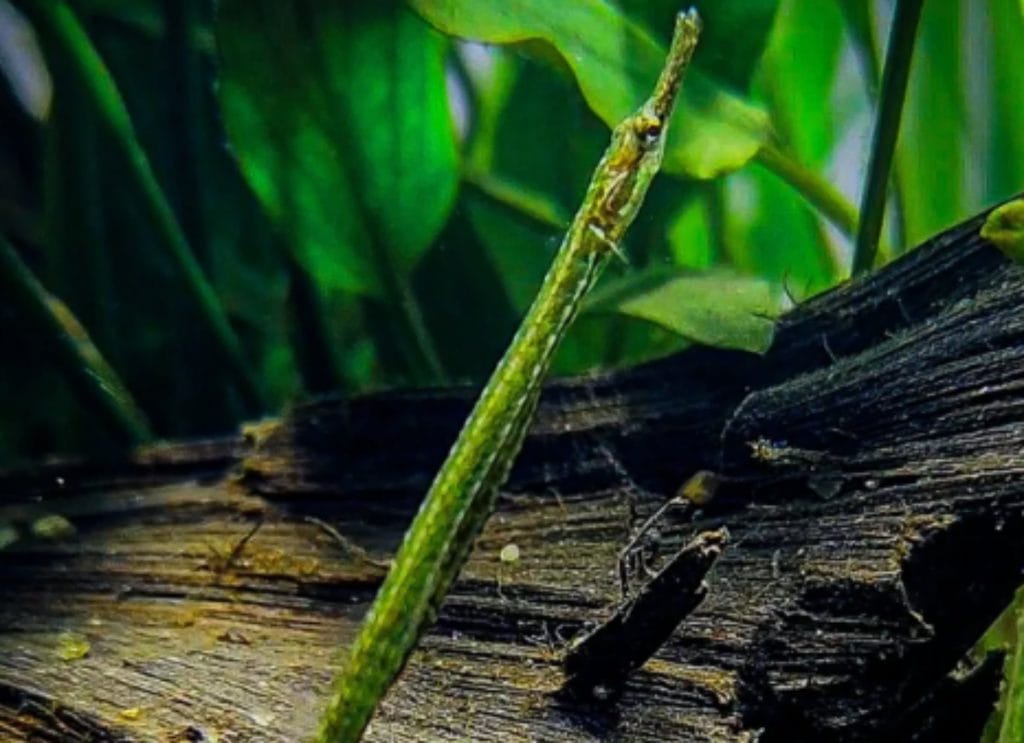
Rainbow belly pipefish are long, slender fish with heads that resemble seahorses.
© – Original
Rainbow belly pipefish are slender fish with a glittering green body. Their heads resemble those of a horse, and their tails do not curl. Males always have this appearance, but females undergo a transformation when they are ready to mate. This transformation makes them look even more similar to seahorses, thanks to the expanding sail on their bellies.
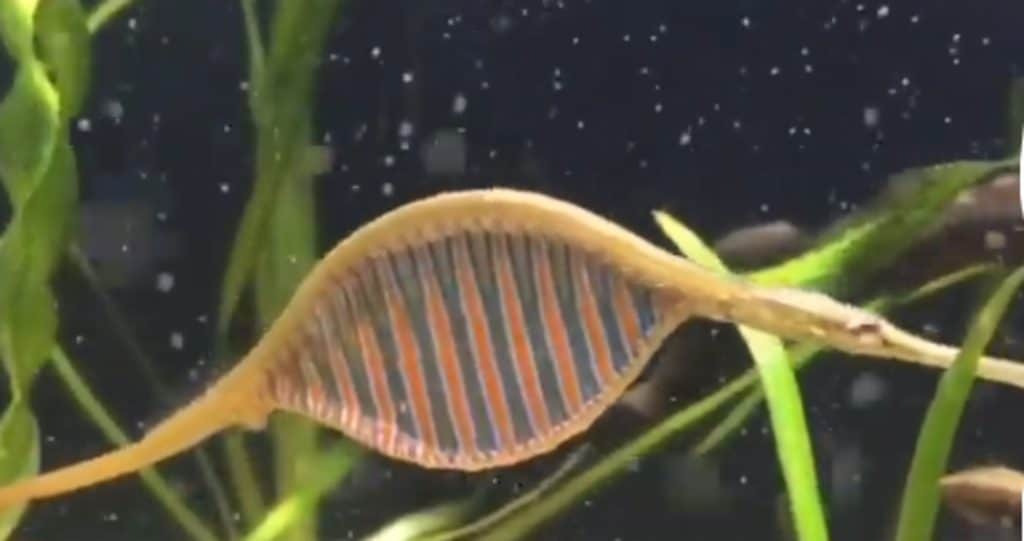
Female rainbow belly pipefish extend a sail from their midsections, giving their bodies the appearance of a stouter seahorse. The sail is a combination of deep red, green, and yellow stripes. However, it is not always on display. Females only display this look for specific male rainbow belly pipefish during courtship.
Why Rainbow Belly Pipefish Have Colorful Bellies
Unlike many species, where the male is intricately and brightly colored, the rainbow belly pipefish does the opposite. It is the females who show off their incredibly colored sails when they are ready to mate.

A female rainbow belly pipefish expands her sail to attract mates.
© – Original
The mating process of the rainbow belly pipefish goes through three phases. Those phases include:
- Courtship
- Spawning
- Swaying
It is during the courtship phase that the colorful sail of the female rainbow belly pipefish is on full display. Once a mate is chosen, the female will “quiver,” while both individuals “head point” and ultimately entangle their tails.
From there, the female transfers the eggs to the male for incubation. Once this is completed, the final stage occurs: the male contracts his body into a wave. He then finds a quiet place to rest for several weeks until the eggs hatch.
Where Are Rainbow Belly Pipefish Found?
Rainbow belly pipefish are native to India and Bangladesh. These fish are freshwater species found in the Ganges and Brahmaputra rivers, where water temperatures range from the low 70s to the low 80s Fahrenheit.
Rainbow belly pipefish are a freshwater species native to India and Bangladesh.
© – Original
Although once more common in these regions, the rainbow belly pipefish is now classified as Near Threatened by the IUCN. Several factors have contributed to the population decline. The reasons rainbow belly pipefish populations have declined include:
- Habitat loss
- Bycatch
- Aquarium trade
- Pollution
There are currently no precise population estimates available for rainbow belly pipefish in the wild. Because of these threats, their population is decreasing. Rainbow belly pipefish are now rarely available for purchase—a change many in the aquarium trade support.
Are Rainbow Belly Pipefish Related to Seahorses?
Take one look at a rainbow belly pipefish, and you’ll notice a striking resemblance to seahorses. This makes sense, given that both are part of the Syngnathidae family and are therefore related.
Seahorses are known for their stout bodies, characteristic curled tails, and horse-shaped heads. They tend to be docile creatures. Unlike other species, male seahorses are responsible for carrying the eggs to term.
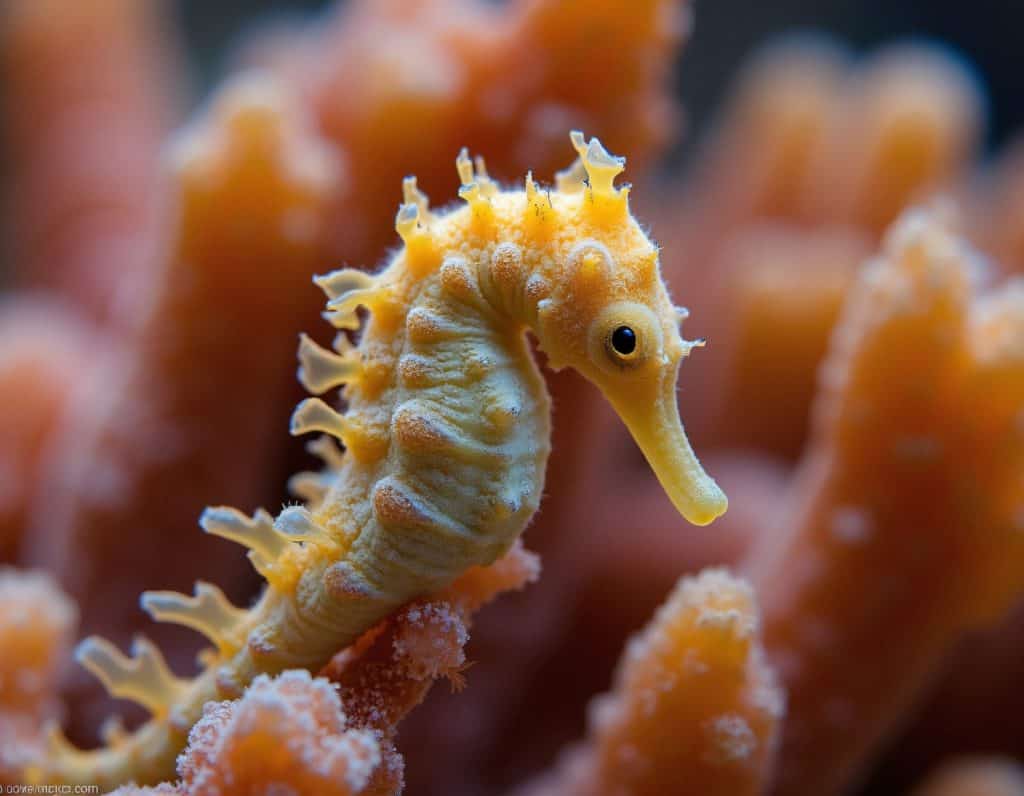
Rainbow belly pipefish and seahorses are from the same family, Syngnathidae.
©mc_pongsatorn/Shutterstock.com
Much like seahorses, the rainbow belly pipefish also has a horse-shaped head and a long tail. However, their tails do not curl. Instead, it is simply an extension of their long, slender bodies. Just like male seahorses, male rainbow belly pipefish also carry the eggs to term.
Both species are not only unique in appearance but also in behavior, making them very popular bony fish to observe in the wild and in captivity.
Typical Diet of Rainbow Belly Pipefish
Rainbow belly pipefish are carnivorous fish. As a result, they enjoy a varied diet of live creatures. This is another reason why rainbow belly pipefish are difficult to keep and thrive in aquariums. The different types of creatures rainbow belly pipefish are drawn to consume include:
- Small shrimp
- Copepods
- Amphipods
- Worms
- Insects
Interestingly, rainbow belly pipefish and other pipefish in general are not good at competing for food with other fish. If there are other fish in the environment going after the same prey, the pipefish will likely lose out.
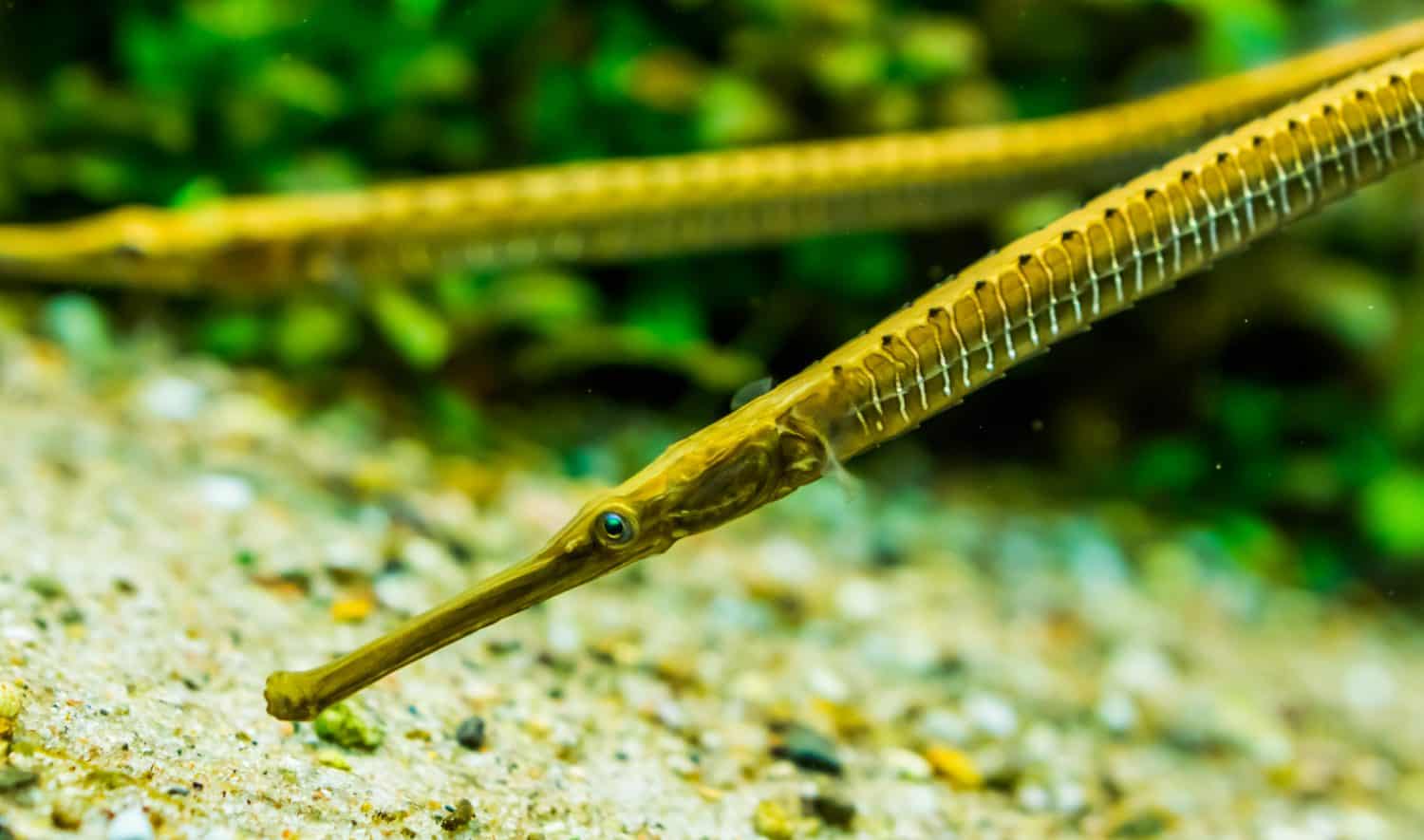
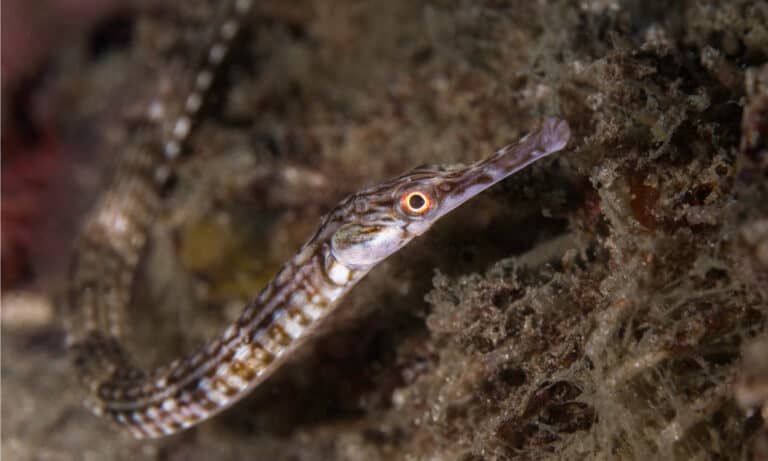
Rainbow belly pipefish share a diet similar to this pipefish, consisting of worms, insects, small shrimp, and more.
©Charlotte Bleijenberg/Shutterstock.com
Rainbow belly pipefish will eat more than once per day. This has to do with their short digestive tract. If they do not eat multiple times a day, they will quickly run out of energy. Fortunately, their long snouts allow them to reach into underwater nooks and crannies, providing ample places to search for a meal.
Rainbow belly pipefish are an incredible species. Given their seahorse-like appearance and many similarities to seahorses, it is no wonder rainbow belly pipefish are just as beloved. This is why there are ongoing conservation efforts to save pipefishes, seahorses, and sea dragons.
Not only are they indicator species, but they are also quirky and fun to observe in the wild. However, if rainbow belly pipefish and other members of their family continue to be victims of bycatch, these amazing fish may not be around for much longer—a tragedy indeed.