
Quick Take
- Caracals are also called the desert lynx.
- They detect prey using their huge ears.
- Thanks to 20 muscles, they can move their ears in many different directions and can move and tilt them independently.
- The long, black tufts are likely used for communication.
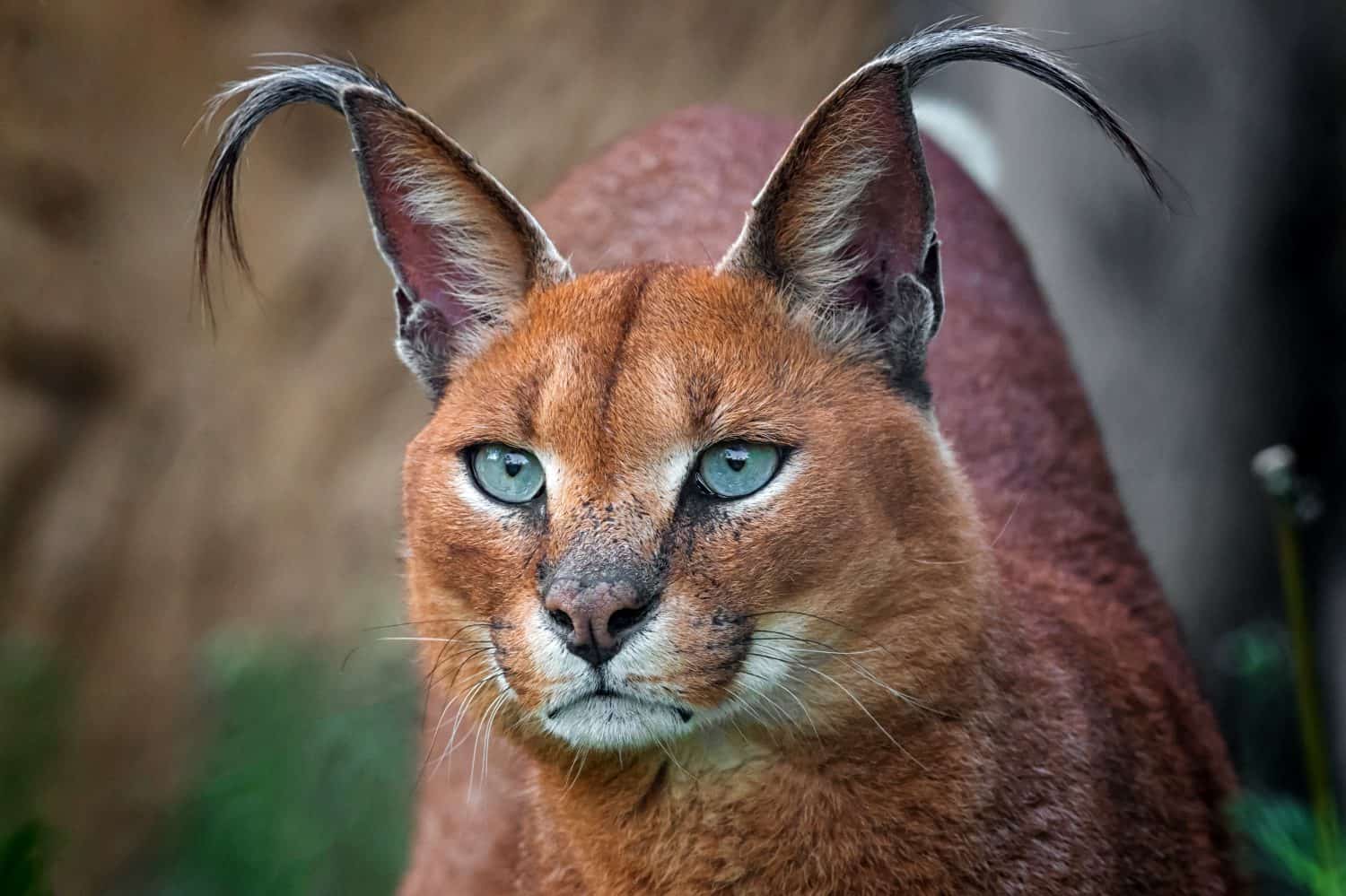
The animal in this Instagram clip has the coolest ears on the planet! It looks very much like a lynx, and is sometimes called the desert lynx, but is actually a caracal. Their face may be very lynx-like, but their ears are distinctive. Take a look at the fascinating clip, then read on to discover what those amazing ears are for.
About Caracals
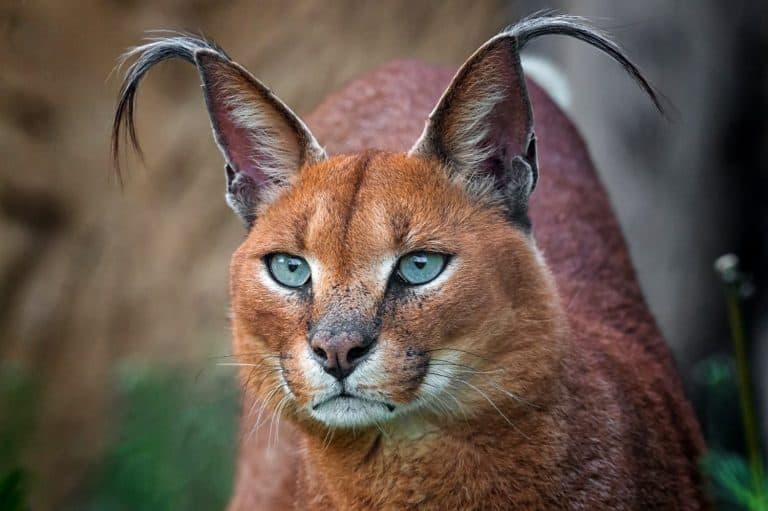
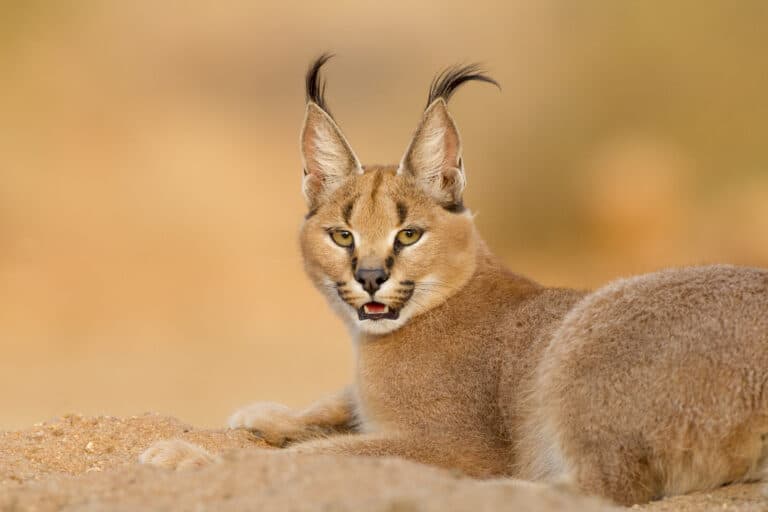
Caracals (Caracal caracal) are found in most of Africa, Central Asia, and southwestern Asia. Typically, they live in woodlands, thickets, and scrub forests, but are also seen on plains and rocky hills. These felines are adept at dealing with warm and dry conditions. Caracals have a brown-red color with a white underside. Their face has black markings, but it’s their elongated and tufted ears that make them so memorable.

Caracals can hunt prey twice their size.
©AnastasiaPe4enya/Shutterstock.com
They are primarily solitary animals, except during breeding season, and are mostly active at night. Each caracal maintains a home range, within which it hunts prey such as hyraxes, rodents, and small birds. They will also tackle larger prey such as antelopes and mountain gazelles. In fact, they have been seen taking down prey twice their size using a suffocating throat bite.
Why Do Caracals Have Mobile Ears?
As you can see in the clip, their ears are spectacularly mobile! They can bend and swivel them at the same time. Caracals use their acute hearing to detect prey from a distance, then rely on their eyesight to pinpoint the exact location. Caracals can move their ears so well because they have 20 muscles controlling them. Humans have just six. They can independently move and tilt their ears in many different directions. But what about those amazing, long, black tufts? No one is entirely sure of their purpose, but there are a lot of theories. They may help to keep flies away from their face or camouflage them in tall grass. The most likely purpose, however, is for communication with other caracals.