
Quick Take
- Adult herring gulls are surprisingly brutal toward each other, yet juveniles get a very different reception. Their feathers are the reason why. See why drab feathers protect juveniles →
- Scientists ran an experiment with painted decoys near active nests, and the results forced a rethink of why seabird plumage takes years to mature. Explore the decoy experiment →
- Juvenile herring gulls stick around their birthplace long after their parents stop feeding them, but the real reason has nothing to do with food. Discover why juveniles linger →
- Even expert birders routinely misidentify juvenile herring gulls, though the adult gulls around them never make that mistake. See how plumage changes over time →
Seabirds come in a variety of colors. Adult seagulls are known for their stark white and gray coloration, while juvenile gulls often blend into their surroundings. But this may be just how juveniles like it, as young seagulls may sport drab feathers to avoid neighborhood bullies.
Young Herring Gulls’ Drab Feathers Explained
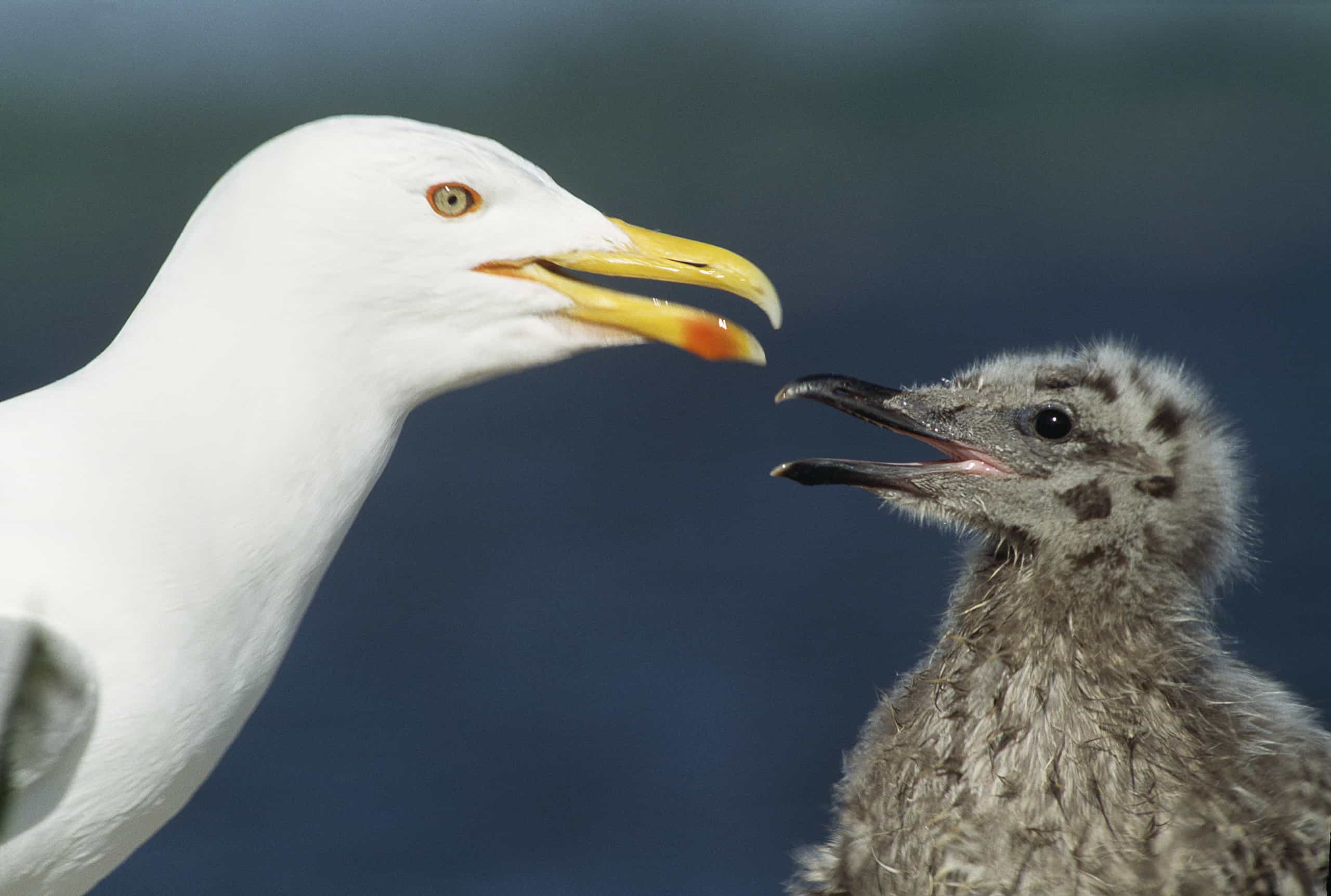
Adult herring gulls are most easily identified by the white plumage on their heads, gray plumage on their bodies, and their yellow beaks with the red mark. Juvenile herring gulls, on the other hand, have a variety of feather colorations that they keep for several years. Researchers have long questioned why this is the case. Now, there appears to be an answer.
According to a new study published in Animal Behavior, researchers have found that juvenile seagulls retain their drab plumage to stay safe.
Researchers from Yale University observed juvenile herring gulls at a breeding site on Kent Island in New Brunswick, Canada. The adult gulls were consistently fighting and being aggressive toward one another. However, juvenile gulls that lacked the bright white and gray feathers were treated with far more patience, suggesting that these feathers may signal to adults that juveniles are still learning the ropes.
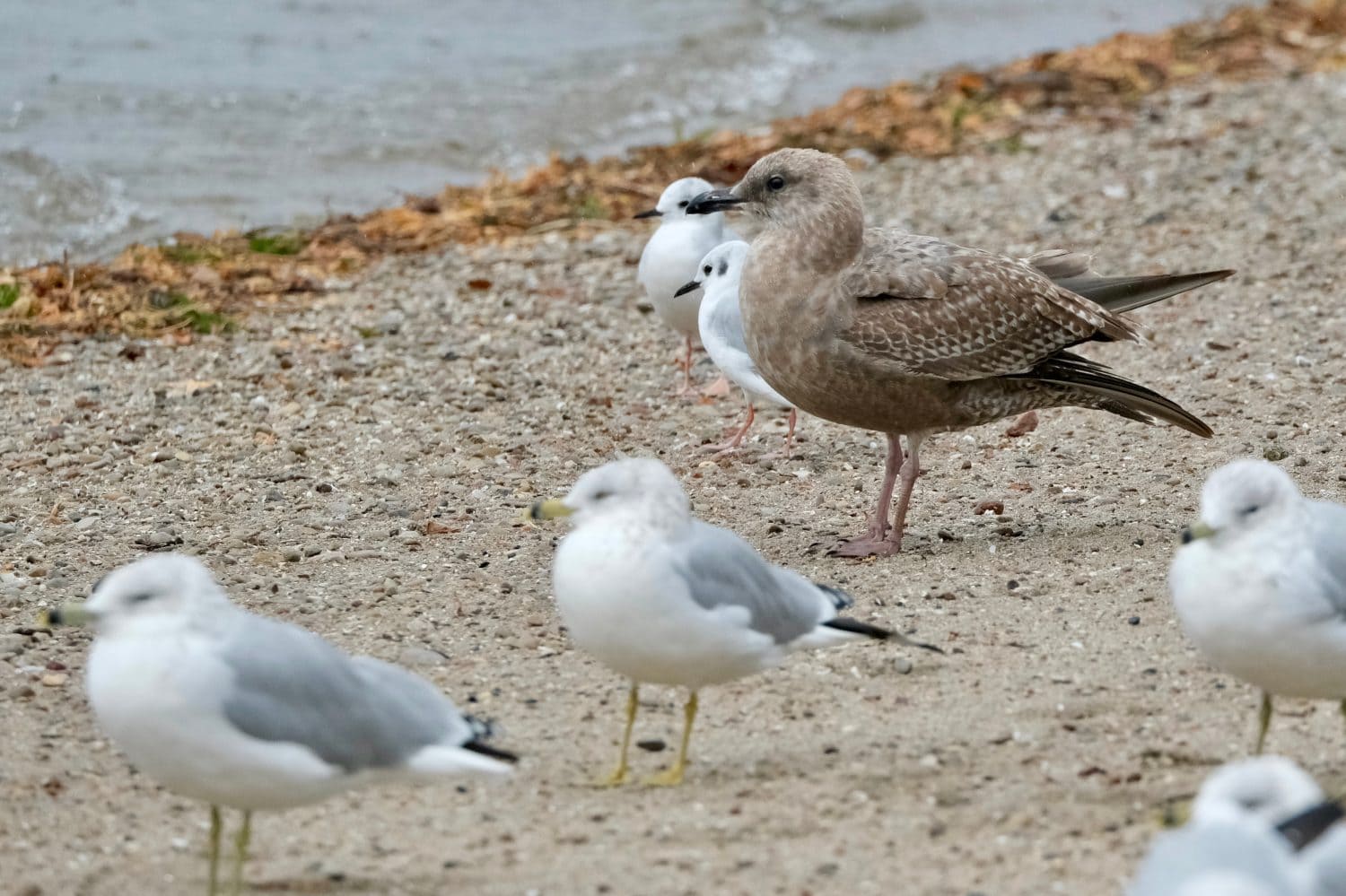
Juvenile herring gulls have significantly darker feathers than adults, signifying that they have to learn social norms, keeping them from being harmed.
©Chris Dale/Shutterstock.com
To test this theory, decoy herring gulls were placed near active nests. Some of the decoys had coloration akin to juveniles, while others were painted to resemble adults. Researchers found that adult gulls were aggressively reactive to juvenile decoys only 30% of the time. This was 1.5 times less frequent than with the adult-looking decoy.
According to Molly Hill, the study’s first author and an undergraduate at Yale University, this research could explain “plumage maturation” in other seabirds as well.
“I think this opens the door to a lot of research in other seabirds,” Hill explained in a press release. “There are many species of seabirds that have very similar extended delayed plumage maturation, even in completely unrelated lineages, like albatross and gannets.”
Future research could determine if the delay in feather color change is the same across the board for seabirds that take years for feathers to mature or if there are other reasons that vary by species.
How Long Does It Take Juvenile Herring Gull Feathers to Change?
The transition from juvenile herring gull feathers to adult feathers is not an overnight process. Instead, it is gradual, taking multiple years to happen.
In total, a herring gull will undergo four molting cycles before it has its adult feathers. The molting cycles are as follows:
- Zero to one year: Tan and brown coloration with checkerboard spotting along the body, including the head. The bill is dark.
- One to two years: Checkerboard and streaking begin to disappear, with light gray feathers sporadically appearing. The head is beginning to show white feathers. The bill is dark.
- Two to three years: The back is partially covered with light gray feathers, while some tan feathers appear on the neck. The head has fewer dark feathers mixed among white feathers. The bill is yellow.
- Three to four years: The back is completely gray, and tan feathers on the neck are nearly gone. Head feathers have minimal streaking. The bill is yellow.
- Four years and older: Back feathers are gray, and head and neck feathers are completely white. The bill is yellow with a red spot.
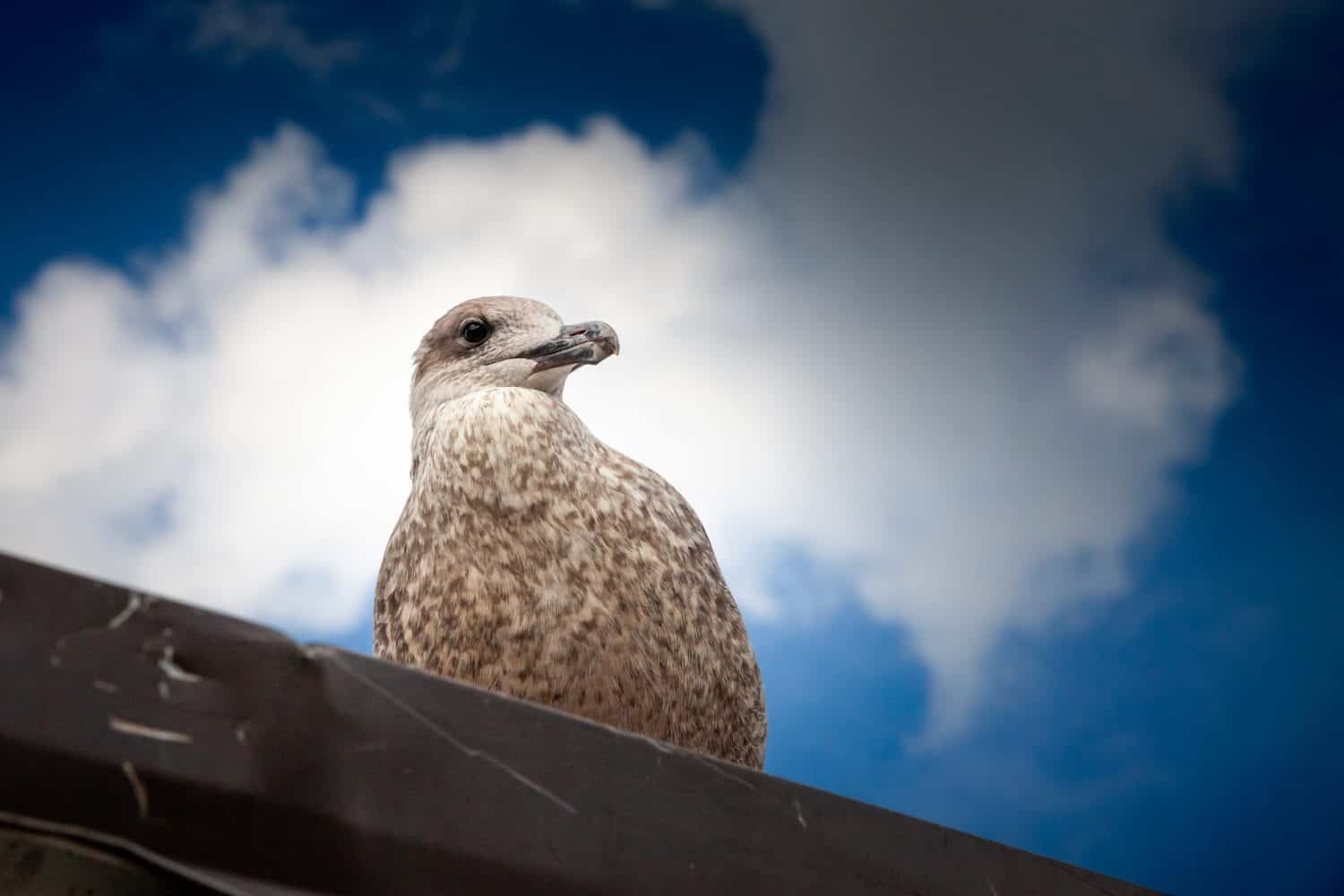
Herring gulls go through four molting cycles before they have their adult feathers.
©BalkansCat/Shutterstock.com
It may sound relatively straightforward to identify and accurately age a herring gull. But even bird experts agree that it is not. Often, because of their coloration, the birds are not only assigned an incorrect age but also misidentified as another species. However, gulls can clearly tell the age of their own species, which is fortunate for juveniles.
How Long Do Parents Take Care of Juvenile Herring Gulls?
The study noted juvenile gulls in the colony. Considering they were no longer being fed by their parents and were not part of a breeding pair, it was puzzling why the gulls remained at the breeding ground.
After hatching, young gulls will be fed by their parents for approximately 12 weeks. However, some gulls have been observed being fed by either their mom or dad for up to six months. This explains why herring gulls this age would stick around the colony.
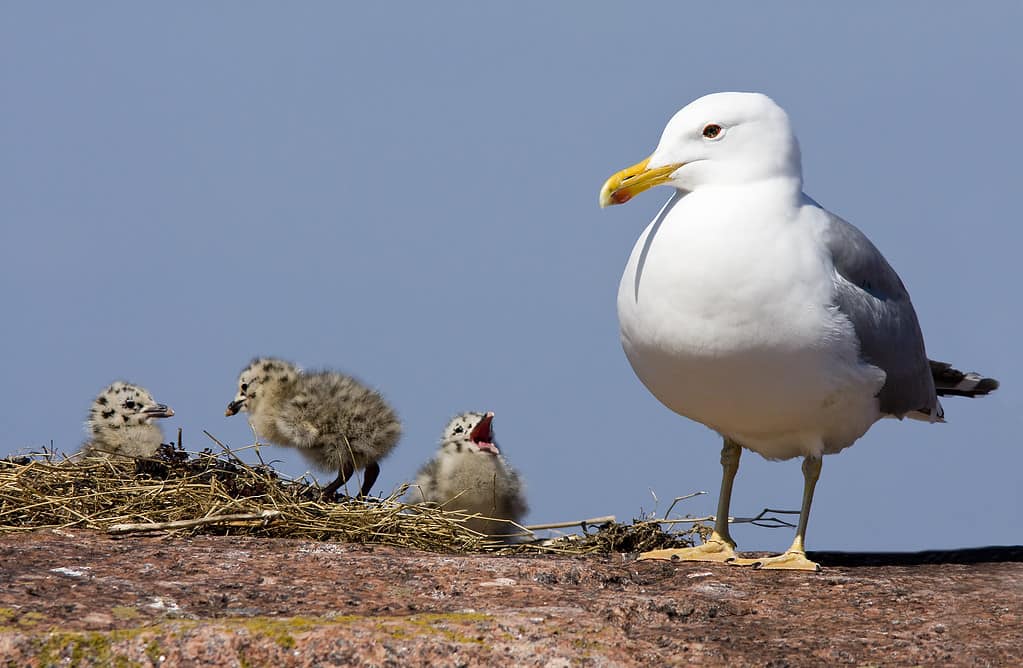
Herring gulls will feed their offspring for 12 weeks, and in some instances, up to six months.
©aseppa/ via Getty Images
The gulls in the study were older than six months old. This was clear, as there were breeding pairs with new chicks at the breeding grounds. According to researchers, juveniles may remain where they were born to learn the colony’s rules. By having plumage that is distinctly different from adult herring gulls, the juveniles appear to be cut some slack when rules are broken. This may give juvenile gulls the time they need to learn the adult hierarchy and social structure.
Once this is learned, juvenile gulls can seek out mates at their original colony or at a different location altogether.
Juvenile Herring Gulls Are More Migratory Than Adults
As the study pointed out, there were quite a few gull arguments occurring at the breeding grounds. This had a lot to do with territorial battles. The squabbles were between the adult gulls, the majority of the time. This has to do not only with there being more adult herring gulls at the nesting grounds, but also with juveniles tending to be more migratory.
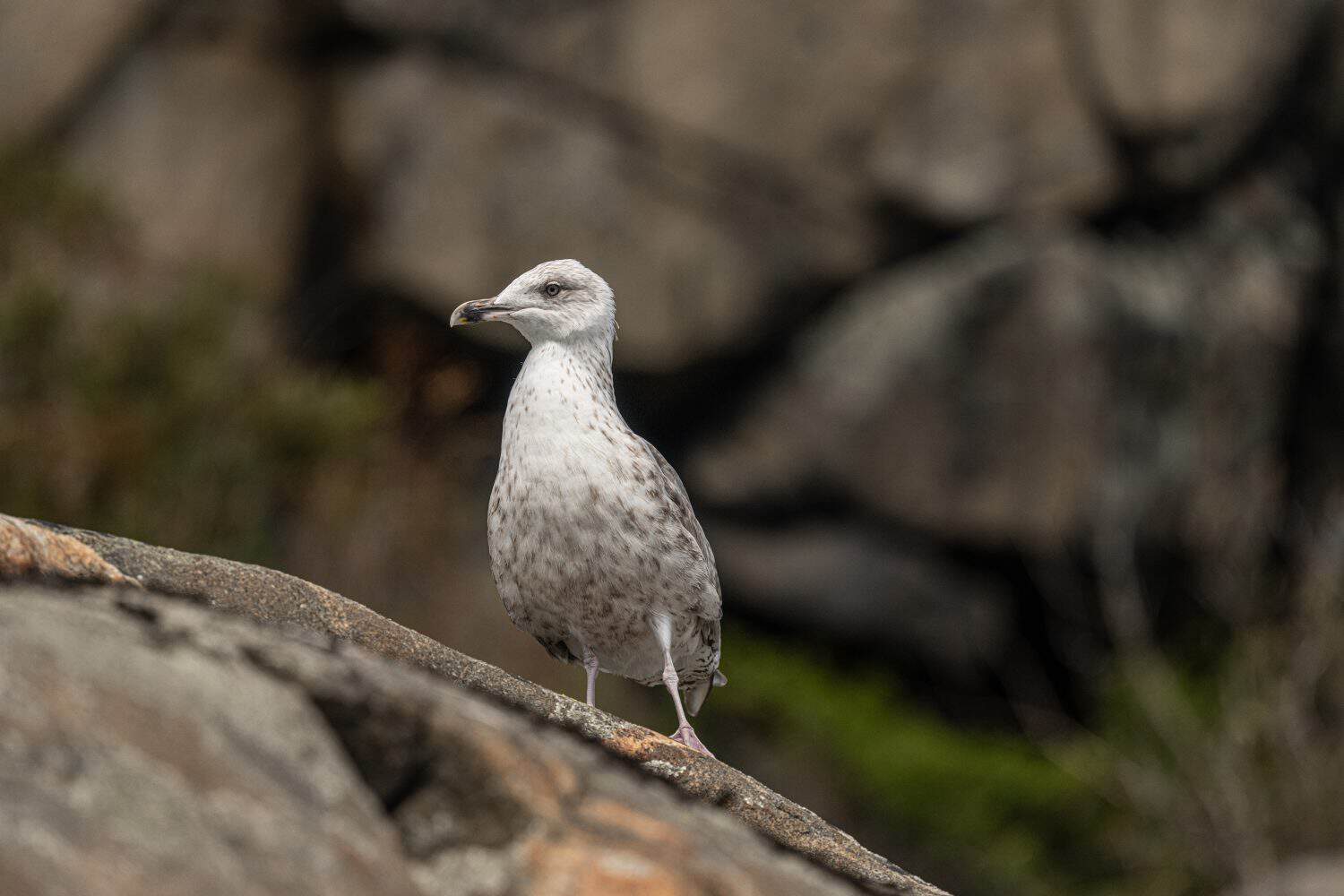
Juvenile herring gulls are more migratory than adults due to limited breeding grounds, food availability, and a lack of suitable partners.
©Trygve Finkelsen/Shutterstock.com
Juvenile herring gulls will be less frequently observed at the breeding grounds where they were hatched because they tend to be migratory. This occurs for a multitude of reasons. Those reasons include:
- Lack of available breeding grounds
- Food availability
- Lack of suitable partners available
Because adult herring gulls tend to stay near their breeding grounds and reunite with partners from previous years, it is often not in the best interest of juvenile gulls to remain at or return to their natal breeding grounds. Juveniles establish their own breeding grounds only after they become adults and find partners, continuing the cycle as generations before them have done.