
Quick Take
- Flatworms are invasive species in many countries including Europe.
- Because they can reproduce asexually and are voracious predators, they can disrupt local ecosystems.
- They arrive in countries via exotic plants but spread is slow because they cannot move quickly.
- New research indicates that one species, Caenoplana variegata, has especially sticky mucus and spreads by adhering to the coats of domestic pets.
Invasive species are a threat to biodiversity, causing damage to local ecosystems and, potentially, economic loss. Once a non-native species has arrived in a new habitat, the conditions have to be right for it to survive, or it will simply die off. It also needs to be able to move from where it originally landed! New research from France has indicated that an invasive flatworm is spreading faster than expected because it is hitching a ride on pets. We reveal the mechanism behind how this parasite travels and how scientists discovered its secret.
What Exactly Are Flatworms?
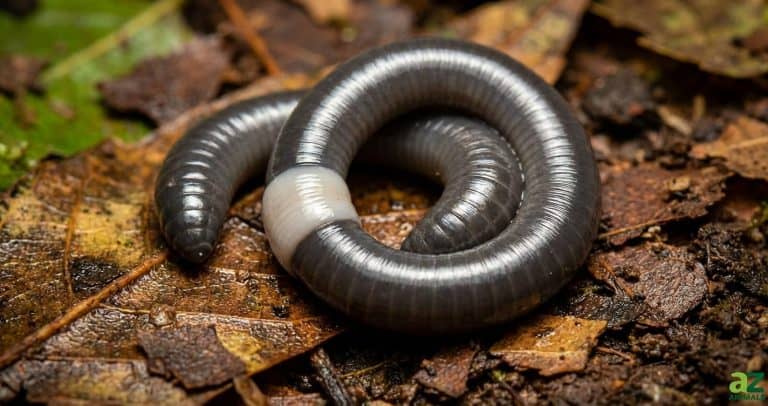
Flatworms are a diverse group of worms in the phylum Platyhelminthes, and most of them live in water. Some, especially those in the Geoplanidae family, are terrestrial, which means they can live on land. However, they still need moist habitats, and desiccation is always a risk.
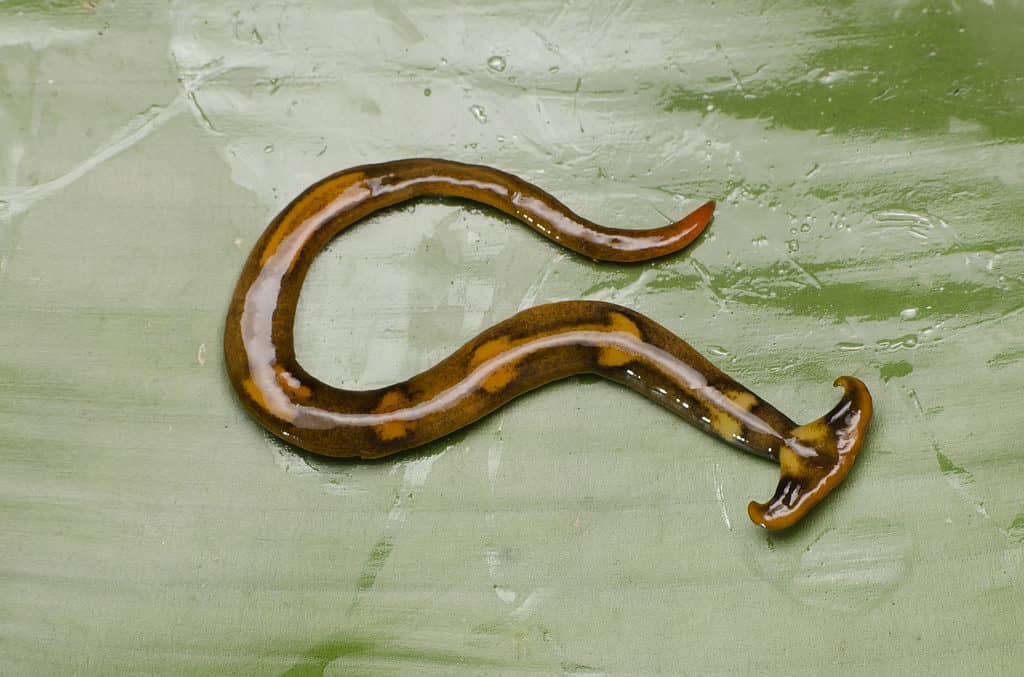
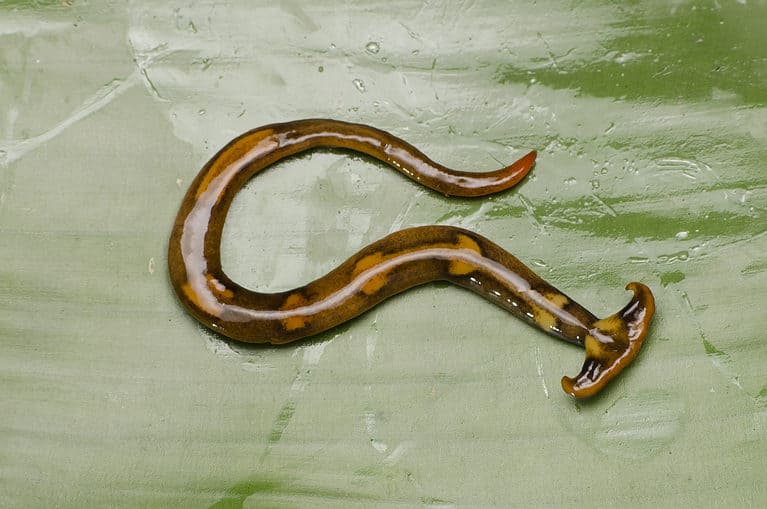
Hammerhead flatworms are invasive in the US.
©zaidi razak/Shutterstock.com
Terrestrial flatworms are mainly resident in countries with tropical climates, such as SE Asia, Australia, Africa, and South America. There are hundreds of different species with varying body shapes, but they are all legless, flat, and covered in slime, which helps them move around and keeps them from drying out. It also makes them look shiny. Some are fractions of an inch long, but others grow to 12 inches or more. The invasive hammerhead worm in the U.S. is a flatworm.
Why Are Flatworms a Problem?
On the face of it, flatworms do not appear to be particularly threatening animals, but do not be fooled. These are top-level predators with voracious appetites. Their exact diet depends on the species, but they are generalist carnivores. Their prey can include earthworms, snails, slugs, insect larvae, and several arthropods.
They catch their prey by deploying a range of hunting methods, including physical force, digestive secretions, and adhesive mucus.
Flatworms Invading Europe
In 2025, three terrestrial flatworm species were amongst the animals added to the list of invasive alien species of Union concern. Yet, little is known about the true extent of their spread, and it can be hard to tell one species from another.
The route for flatworms into Europe (and the U.S.) is the trade in exotic plants from their native countries. The worms can survive for several weeks without eating, stuck to pots containing plants. Their first stop is usually garden centers, where they are sprayed with mist and kept warm – ideal conditions for the worms. Here, they proliferate. Many reports of alien flatworms are from horticultural centers.

Flatworms are imported with exotic plants.
©Darina Saukh/Shutterstock.com
From the centers, they are carried back to people’s gardens, which facilitate rapid dispersal. But once in the garden, they should find it hard to spread further with any significant speed. After all, they cannot fly and do not even have legs! Scientists estimate that these worms can travel around 1.5 feet in 8 hours.
Rapid Proliferation
Flatworms are hermaphrodites. Each individual has both male and female reproductive organs. They can reproduce by mating, but that means that they need to find another flatworm of the opposite sex. So, they can also use asexual reproduction where their body divides into two and each section becomes a new worm. This allows them to become very abundant in horticultural centers once they have arrived.
Spreading Via Household Pets
Several citizen scientist projects have been set up in the UK and Europe to monitor the spread of invasive flatworms. Researchers in France were notified by citizen scientists that flatworms were becoming attached to the coats of pets. A total of 15 observations were made, 13 were on cats, and two were on dogs. One worm was also observed adhering to the hem of a pair of trousers. Interestingly, only one species of flatworm was observed doing this – Caenoplana variegata.
Why Is This Finding Important?
Dog and cat owners know that it is not exactly unusual to find something sticking to their pet’s coat when they have been exploring the garden. So, why are scientists getting so excited about these observations?
The important finding here is that every observation involved Caenoplana variegata. This is not the only invasive flatworm in France by any means. Another flatworm species, Obama nungara, is more widespread and is found in higher numbers, yet none of them were spotted on animal coats.
What Is So Special About Caenoplana Variegate?
Caenoplana variegate is a native species of Australia but is now found in many European countries. Thanks to a yellow-orange band running along its back, it is easier to identify than many other flatworms. All European specimens of Caenoplana variegate reproduce asexually, which is an advantage whey arrive in a new territory. They feed on woodlice, insects, myriapods, and spiders. These worms can even overcome prey with tough outer coats and spines. This is down to their particularly sticky mucus, and it is also likely what makes them adhere to pets.

Pets can get flatworms stuck to their coats.
©Jacintne Udvarlaki/Shutterstock.com
Dogs and outdoor cats frequently travel widely around their neighborhoods. The researchers calculated that the dogs in France cover a collective distance of over 6 billion miles a year. The collective distance for cats is around 5 billion. This presents a lot of opportunity for the spread of flatworms!