
Quick Take
- Achieving a 79 percent reduction in native recruitment is the primary metric for a successful lionfish takeover.
- The 30 times stomach expansion capacity creates a permanent ecological deficit within vulnerable coral reef systems.
- Local sharks refuse to recognize the Pterois genus as prey despite their slow movement.
- Officials convened the Barbados symposium to verify if gourmet harvesting could halt the Atlantic biodiversity crisis.
Head under the waves of the Atlantic Ocean, and you will find one of the most beautiful killers in the sea. Meet the lionfish, an extravagant-looking fish featuring flowing spines and vivid zebra stripes. It may look like a haute couture outfit fresh off the runway, but the lionfish is actually an ecological wrecking ball. Though native to the Indo-Pacific region, these fish started showing up off the coast of Florida in the mid-1980s. Whether their presence there was the result of accidental or intentional aquarium releases does not matter now. It is undeniable that lionfish have exploded across the region in subsequent years.
Now, lionfish are one of the most destructive invasive species in the region. The destruction they bring to native species rivals even that of other invasive aquatic creatures, including zebra mussels and Asian carp. The problem is that they lack local predators. Even creatures capable of eating them, like sharks and groupers, simply do not recognize lionfish as prey.
This allows them to roam free. To make matters worse, lionfish function as living vacuums. Their stomachs can expand up to 30 times their normal size, allowing them to consume massive quantities of native fish. Desperate for a solution, NOAA Fisheries is turning to restaurants to encourage the harvest and presentation of lionfish as gourmet food. Let’s learn more about this invasive species and how officials hope to reduce their destructive impact.
Bold Background
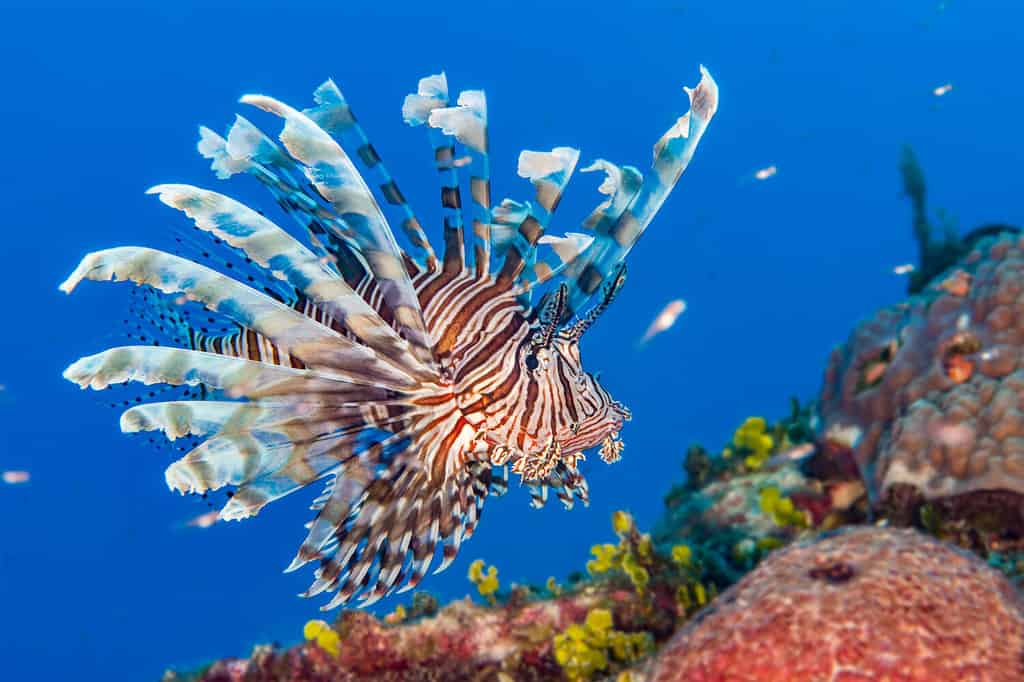
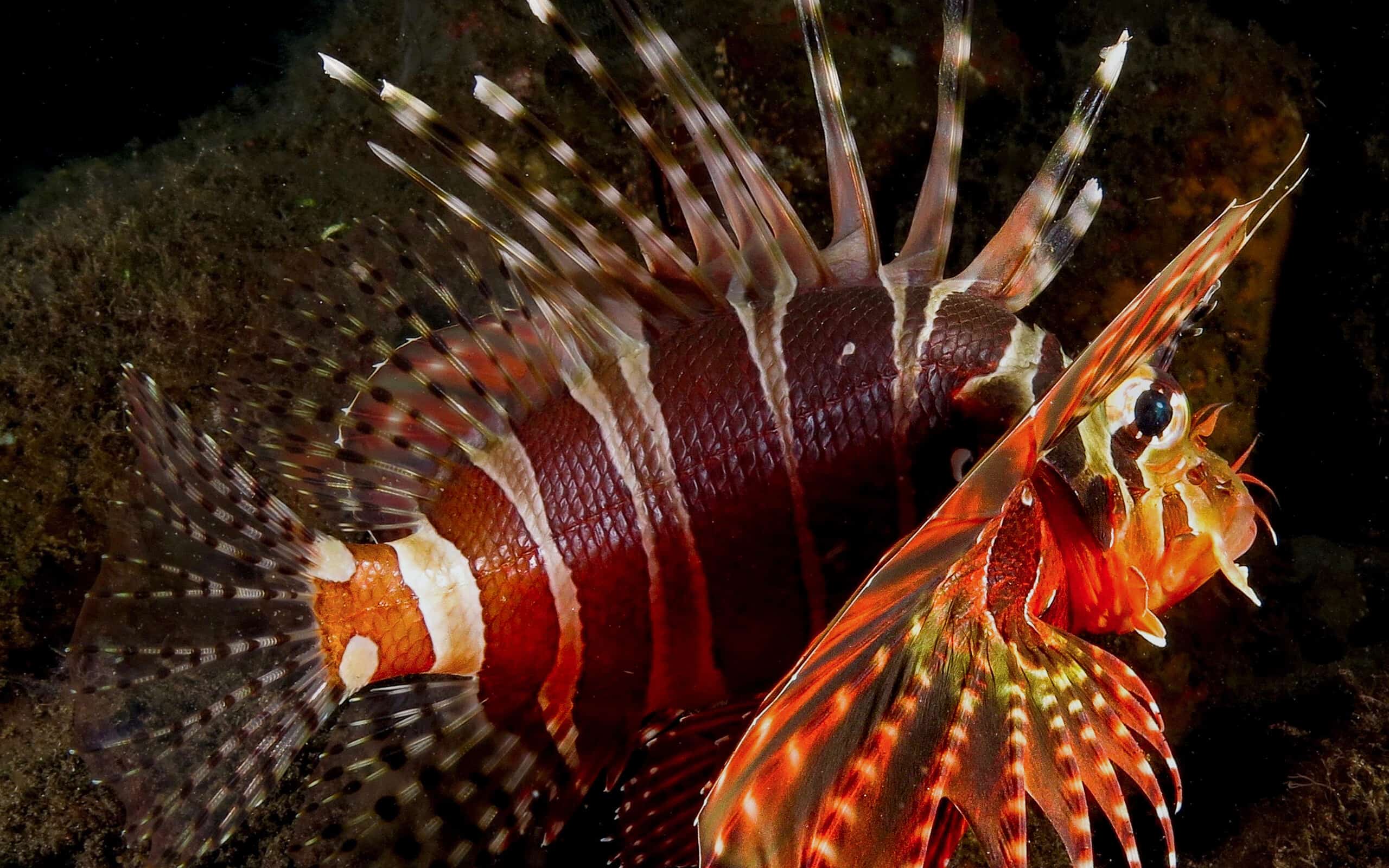
Lionfish have 18 needle-like spines filled with venom that they use to corner and kill prey.
©bearacreative/Shutterstock.com
The lionfish is arguably one of the most striking-looking fish on earth. The name refers to several species in the Pterois genus. They are native to the Indo-Pacific Ocean. Lionfish, such as Pterois volitans, have vivid red, white, and brown vertical stripes, and 18 venomous, needle-like spines that extend away from their bodies.
People know lionfish for their lack of fear. They move slowly but strike aggressively. They are also considered “gape-limited” ambush predators, meaning they can only eat prey that fits in their mouths, but their stomachs can expand up to 30 times their normal size.
Typically, lionfish use their pectoral fins to corner prey before consuming it in a single gulp. They also mate year-round; a single female lionfish is capable of releasing at least two million eggs each year. A long-time favorite of aquarium owners, lionfish are widespread in tanks across the world.
A Growing Threat
No one is quite sure how or why lionfish started showing up in waters near North America. Whatever the reason, their population in the Caribbean, the Gulf of Mexico, and the Western North Atlantic has grown dramatically in the past two decades. Presumably, they found their way into these waters via aquarium releases, either on purpose or by accident. Now, lionfish inhabit reefs, shipwrecks, and other structures in the warm waters of the greater Atlantic Ocean.
This would be less of a problem if other creatures ate them. However, lionfish are not only venomous and aggressive, but also go unnoticed by larger aquatic predators like sharks. That, coupled with their endless appetites and prolific breeding capabilities, has made the lionfish one of the most destructive invasive species in North America.
Even worse, biologists believe that lionfish populations have not yet peaked in places like the Gulf of Mexico. Without a way to combat their spread, lionfish will continue to multiply and consume native species in the process. In fact, researchers have found that a single lionfish on a coral reef “can reduce recruitment of native reef fish by 79 percent.“
A Tasty Solution
Lionfish quickly devastate local aquatic ecosystems. They eat herbivores, which allows algal growth to go unchecked and harms already vulnerable coral reefs. To combat this cascading destruction, scientists at the NOAA have come up with a novel idea. Why not eat the lionfish that are eating all the other fish?
In 2014, NOAA researcher and lionfish expert Dr. James Morris contributed to a symposium at the meeting of the Gulf and Caribbean Fisheries Institute in Barbados. This followed another workshop focused on the harvesting of lionfish. These showcases presented some economically attractive facts. For one, promoting an invasive lionfish food market is practical and feasible. Even if not every restaurant is interested in serving them as a meal, lionfish can still be diverted back into the curio and aquarium trade.
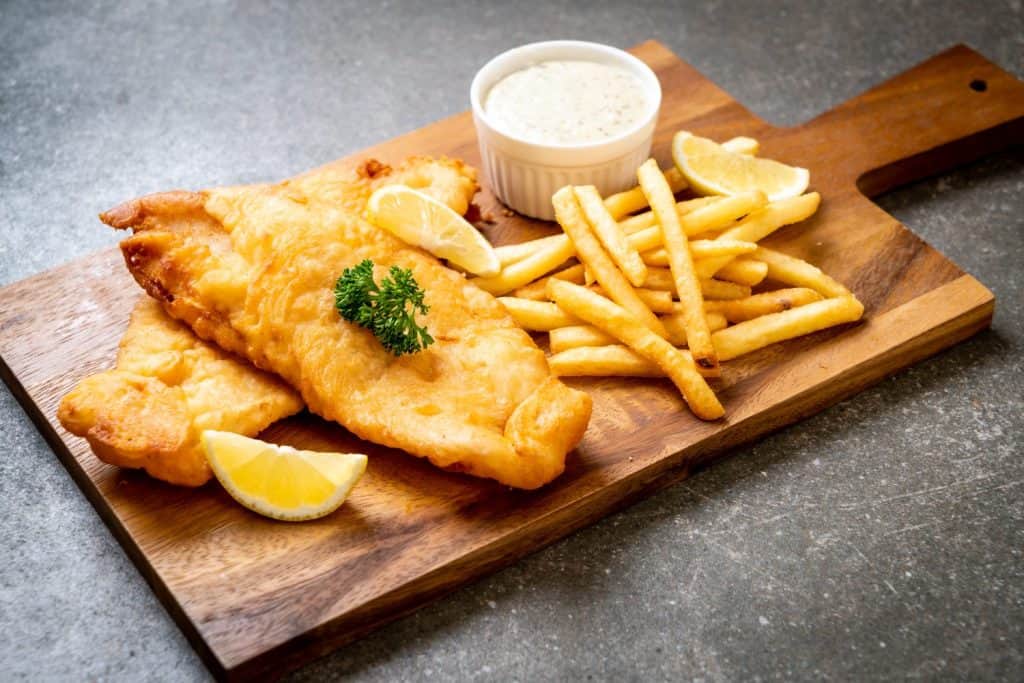
If lionfish can be proven to be a safe and cost-effective food, local fishermen could benefit financially while helping to curb the invasion.
©gowithstock/Shutterstock.com
Nevertheless, fears persist regarding the risk of ciguatera poisoning from toxins found in these fish. As of 2026, there have been no confirmed cases of ciguatera poisoning from eating lionfish. Even so, he recommended that a general caution statement be displayed in establishments that sell lionfish, as is done with other tropical fish.
Recent evidence and ongoing initiatives support the viability of lionfish as a safe and cost-effective food product, though some barriers remain. Increasing evidence points in that direction.
Experts believe that if lionfish can be definitively proven to be a safe, cost-effective food product, small-scale fishermen in the greater Atlantic can benefit financially while helping to control the lionfish invasion. Without an effective strategy to curb their spread, lionfish could severely damage the biodiversity of North American coastal waters.