
Quick Take
- Brushtail possums are found in Australasia.
- Brushtail possums have heterodont teeth, including incisors, canines, premolars, and molars
- Brushtail possums have two sets of teeth: deciduous (baby) teeth and permanent teeth.
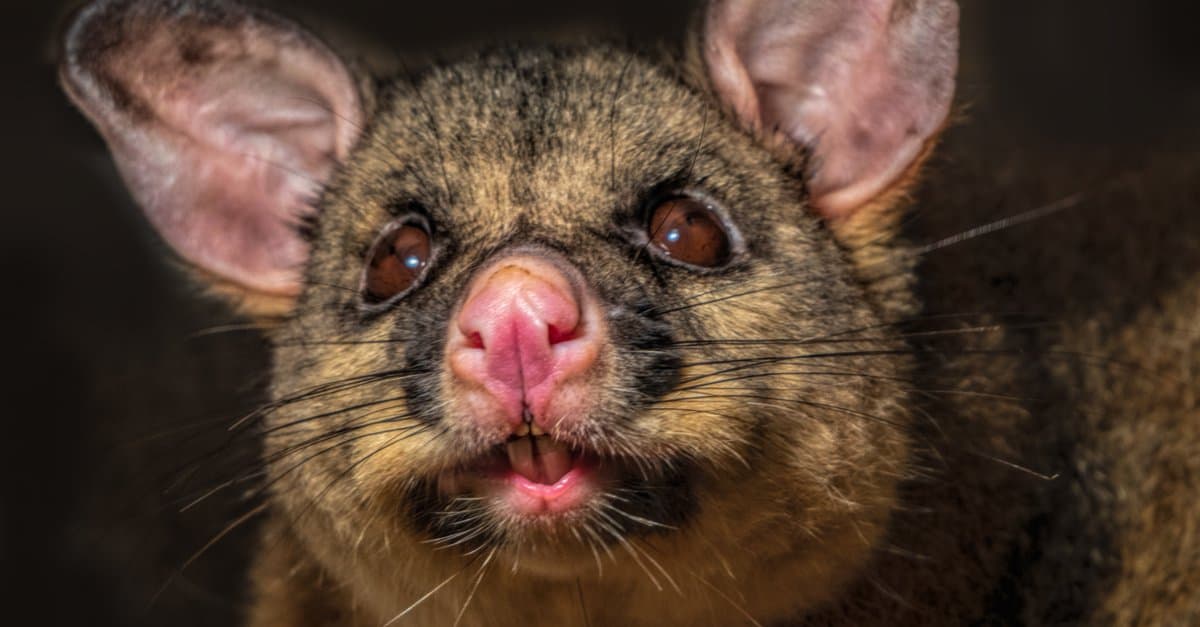
Brushtail possums (Trichosurus) are marsupials inhabiting the bushlands and rainforests of Australia. As marsupials, they carry their young inside pouches called marsupia (marsupium, singular). These mammals belong to the order Diprotodontia, which also contains kangaroos, wallabies, wombats, and koalas. These arboreal (tree-dwelling) possums are found across Australia in diverse habitats, from eucalyptus forests and woodlands to urban parks and backyard gardens. Brushtail possums are opportunistic omnivores that primarily eat eucalyptus leaves, flowers, fruits, and shoots, which they supplement with insects and invertebrates, such as moths, snails, and grubs. This varied diet is supported by a specialized set of heterodont teeth that allow the brushtail possum to process both tough plant fibers and softer animal matter. Continue reading to discover everything you need to know about brushtail possum teeth.
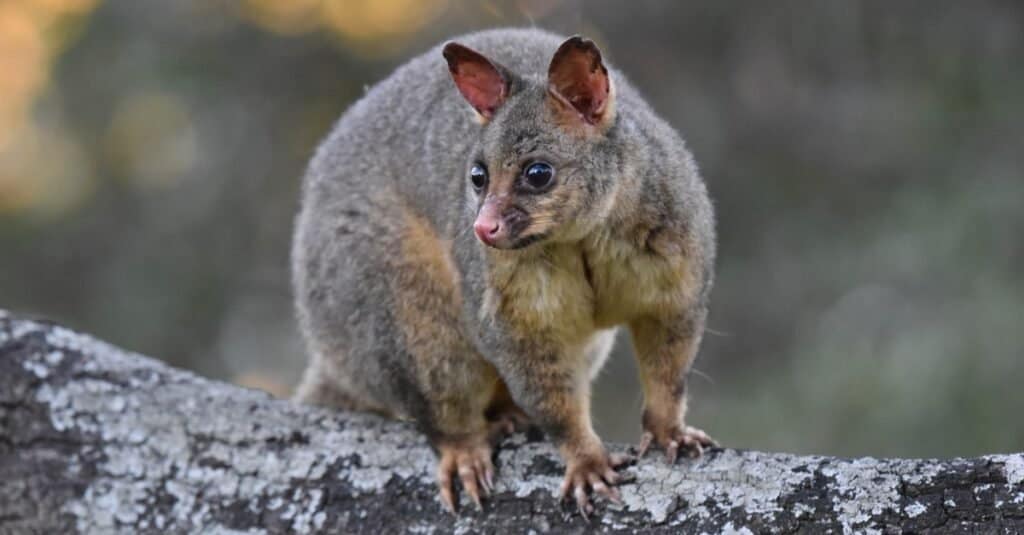
Though their names are similar, Australasian possums are distinctly different from opossums (Didelphis), which are native to North America.
©Timothy Christianto/Shutterstock.com
How Many Teeth Do Possums Have?
There are three widely recognized species of brushtail possums: the common brushtail possum (Trichosurus vulpecula), the Northern brushtail possum (T. arnhemensis), and the short-eared brushtail possum (T. caninus), with some authorities treating the mountain brushtail possum (T. cunninghami) and coppery brushtail possum (T. johnstonii) as subspecies or regional variants of T. caninus. All species share the same dentation and have a complete set of heterodont teeth, including incisors, canines, premolars, and molars.
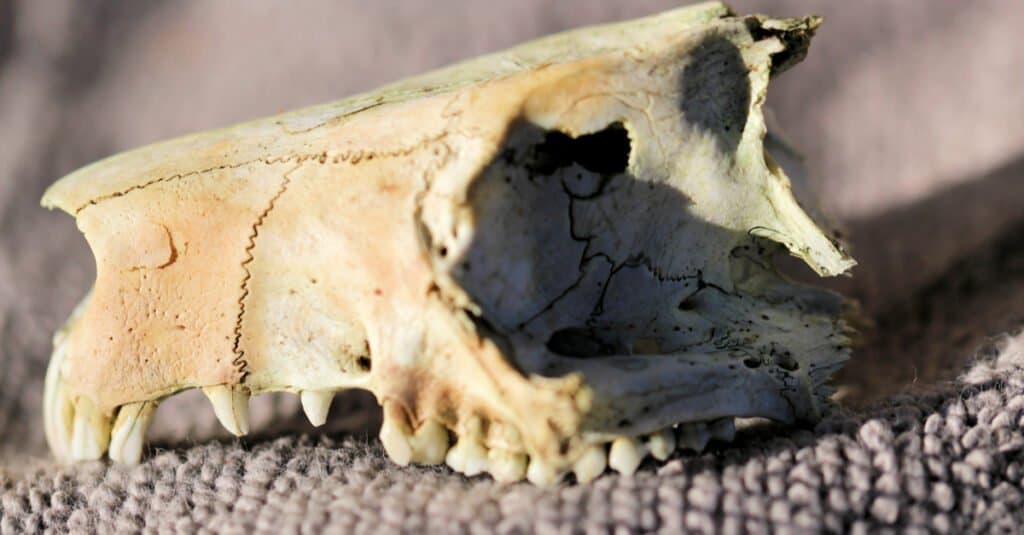
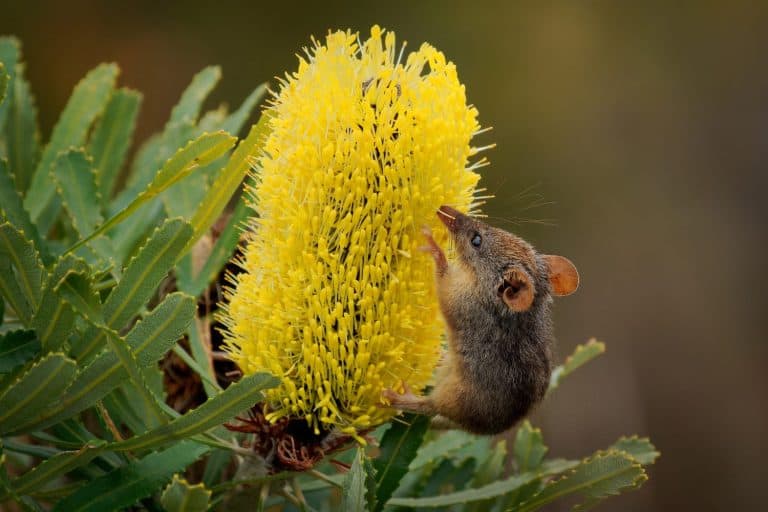
Possums have heterodont teeth.
©Wattlebird/Shutterstock.com
Brushtail possums have a total of 34 teeth, with a general dental formula of Incisors 3/2, Canines 1/0, Premolars 2/1, Molars 4/4 = 34. Each number in the dentition formula represents the number of teeth in each quadrant of the jaw: left and right, upper and lower.
What Kinds of Teeth Do Possums Have?
In the front of their mouths, brushtail possums have large incisors that are prominent and specifically adapted for gnawing leaves and stripping plant fibers. They have three upper incisors and two lower incisors. The first upper incisor is notably the largest and most prominent of their incisors, standing out significantly from the smaller adjacent incisors.
The brushtail possum’s canines are sharp and pointed, but they are not as prominent as the incisors. They have two canine teeth, one on each side of the upper jaw, directly following the incisors. Canine teeth are absent in the lower jaw.
The possum’s canine teeth are separated from the premolars and molars by a gap called the diastema, which facilitates the processing of food.
While the general dental formula for the brushtail possum is typically listed as having two upper and one lower premolar in each quadrant (for a total of six), this number can vary. Some specimens may have three premolars on each side of the upper jaw, resulting in a total of eight premolars. Brushtail possum premolars are cusped, featuring sharp, blade-like edges that are used for shearing food.
Brushtail possums have a total of 16 molars, eight upper and eight lower, located in the back of their mouths. Their broad, flat molars are specifically adapted for grinding and crushing fibrous plant matter.
Brushtail possums may sometimes use their sharp canines and incisors for self-defense, along with their extremely sharp claws.
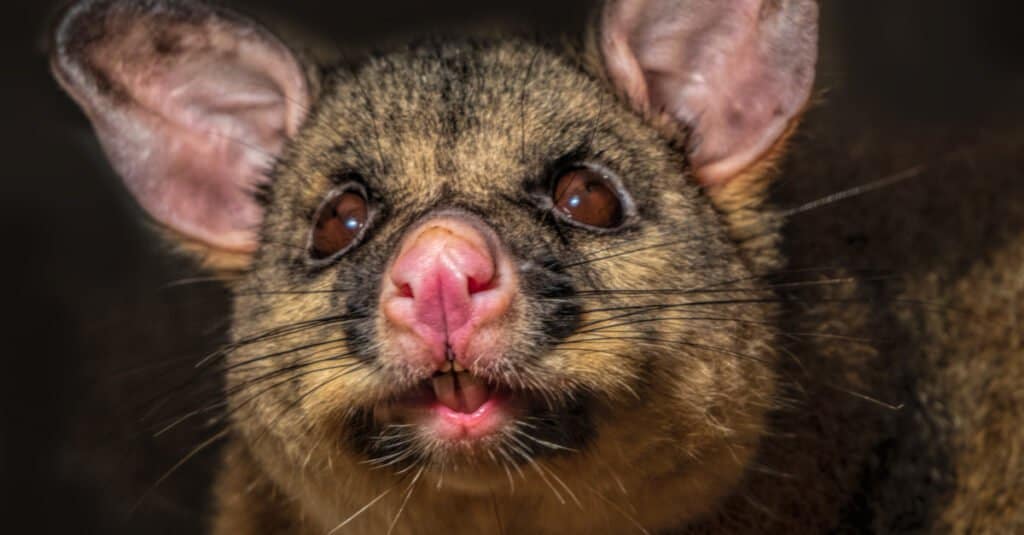
Some brushtail possums have eight premolars, although most have six.
©Carolyn Smith1/Shutterstock.com
Do Possums Have Baby Teeth?
Brushtail possums are diphyodont, which means they grow two sets of teeth in their lifetime: their deciduous (baby) teeth and the permanent or adult set of teeth. The timing of tooth eruption in brushtail possums is not precisely documented, but permanent molars are generally fully erupted by around 7 months of age.
Do Possums Bite?
Though their names are similar, Australasian possums are distinctly different from opossums (Didelphis), which are native to North America.
©Timothy Christianto/Shutterstock.com
Brushtail possums are not aggressive and will try to avoid encounters with humans. However, they are naturally territorial and will bare their teeth if they feel their territory is threatened. When trapped or cornered, brushtail possums will defend themselves. Attacks on humans are infrequent, as brushtail possums typically flee or play dead to avoid confrontations.