Quick Take
- The fisher is a carnivorous mustelid, not a cat, native to North America.
- They depend on large, continuous forests with dense canopies and den sites, and avoid open terrain.
- Conservation relies on protecting habitat, creating corridors, and continuing population monitoring and research.
I grew up in rural Maine. When my sister and I were little, we were very concerned at the end of each day; we had to make sure our two pet cats, Gizmo and Stripe, made it inside for the night. This is because one of the neighborhood kids, a mean older girl named Hillary, had put a terrifying idea into our heads: lurking in the woods was a vicious, pet-eating monster called a fisher cat. Many a sleepless night was spent worrying about poor Gizmo or Stripe on the relatively frequent nights when they chose the Maine wilderness around our house over the comfort and safety of my or my sister’s bed.
Well, Gizmo and Stripe never got eaten by a fisher cat. In fact, we never even saw a fisher cat—and I wouldn’t have known what one actually looked like even if I had. As I got older, I forgot this forest-lurking monster existed. It was entirely possible it never existed at all and that Hillary just made it up to scare us.
Well, as it turns out, the animal does exist, but Hillary got a lot of the details wrong. It’s not a monster, it will not eat your pets, and it’s not even really called a fisher cat. So what is it? It’s a fisher, a medium-sized member of the weasel family and a master of forest life in North America. In this article, we’ll explore what fishers actually are, where they live, why they’re often confused with cats, and what modern science is revealing about their decline and conservation.
What Is a Fisher?
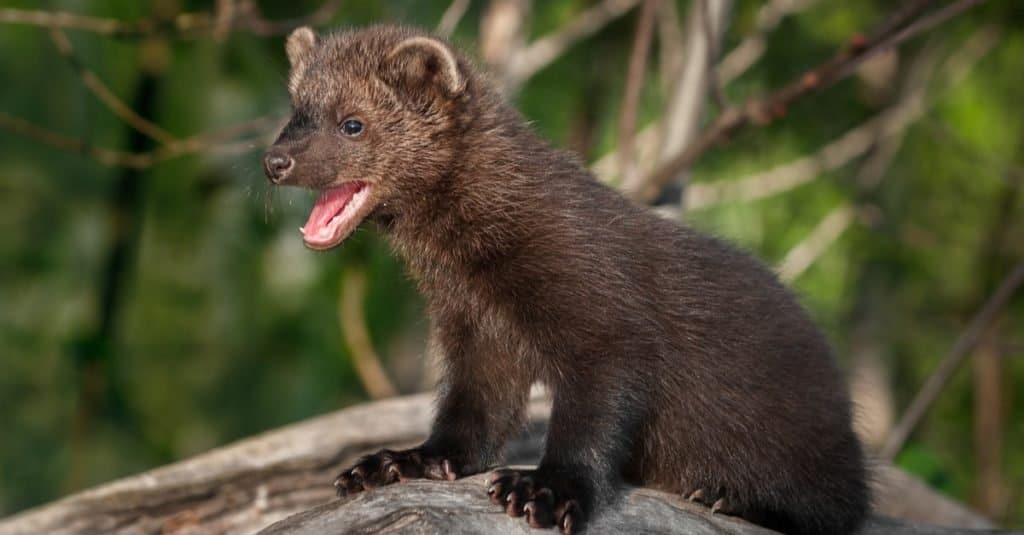
The “fisher cat” is not a cat; it’s more closely related to a weasel.
©Holly Kuchera/Shutterstock.com
Despite the common nickname of “fisher cat,” the fisher isn’t a feline at all. Although their fur and size may superficially resemble a cat’s, fishers have a very different lineage and behavior. It’s a carnivorous mammal in the mustelid family, which includes weasels, martens, otters, and ferrets. Fishers are medium-sized mammals about 3 to 3½ feet long from nose to the tip of the tail, with males often larger than females. Adults typically weigh between 6 and 13 pounds, though size can vary across regions. They have dark brown fur, a bushy tail, and a broad head with a pointed snout. Physical features like semi-retractable claws and agile limbs make them excellent climbers, although they also spend much time on the ground.
Where Are Fishers Found?
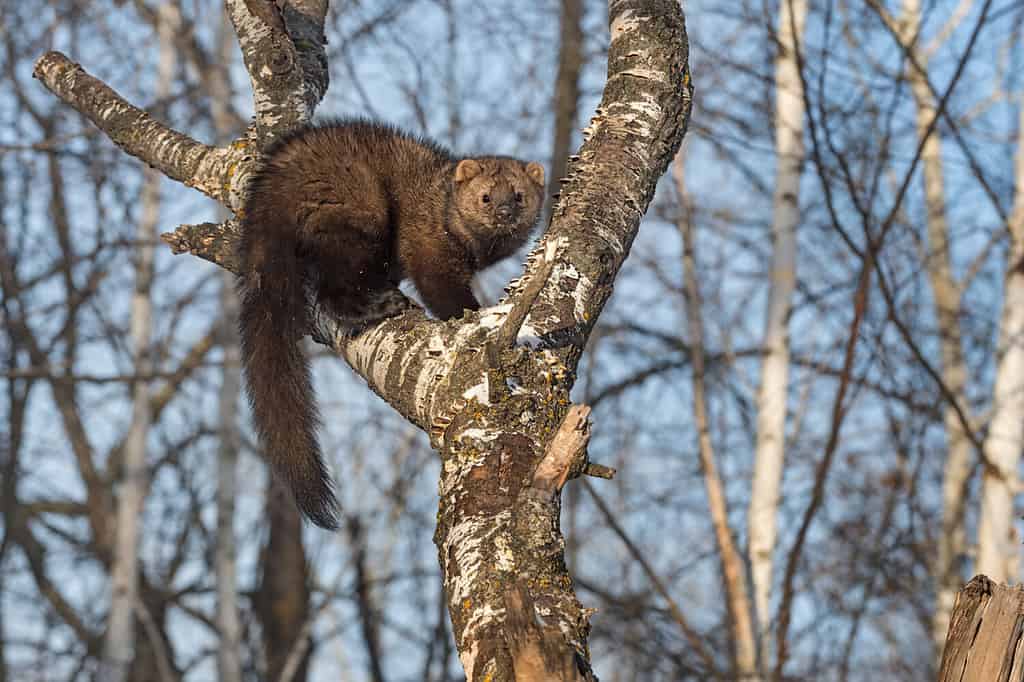
Fishers prefer densely covered forests and stay away from open areas like fields.
©Geoffrey Kuchera/Shutterstock.com
Fishers are native to North America, historically ranging widely across the northern United States and southern Canada, from the Pacific Northwest across the Great Lakes to the Appalachian region in the east. They require large tracts of mature forest with dense canopy cover and plenty of hollow trees or logs for denning and resting. They avoid open areas like fields and grasslands and are rarely found far from continuous forest cover.
Today, their distribution is patchy. In New England, fishers are present in Connecticut and surrounding states, though numbers have fluctuated. In the Pacific states, particularly California, isolated populations persist in forested mountain ranges. The southern Sierra Nevada population is listed as endangered at the federal level due to its small size and unique genetics. In states like Washington, fishers were extirpated by the mid-1900s and have been the subject of reintroduction efforts to restore them to native forests.
Fisher Behavior

Fishers do eat small mammals, but it is extremely unlikely that one will eat your domestic pet.
©Mircea Costina/Shutterstock.com
Fishers are solitary animals, spending most of their lives alone except while mating or when mothers are raising kits. They hunt both on the forest floor and in trees, feeding on a variety of prey, including rodents, squirrels, rabbits, birds, and even porcupines—a rare predator capable of taking on these spiny mammals. And while they do have a reputation for eating domestic pets, it’s unwarranted. They do not. Or, if they do, it is extremely rare. They also don’t fish, which is another misconception, based on their name.
Fishers are territorial, employing scent marking to communicate and maintain spacing between neighbors. Males typically have larger home ranges than females, and individuals avoid one another outside the breeding season. Reproduction includes a fascinating adaptation known as delayed implantation: females may mate in the spring but delay the embryo’s development, giving birth the following spring. Their litters usually contain three to four kits.
Less Common Than They Once Were
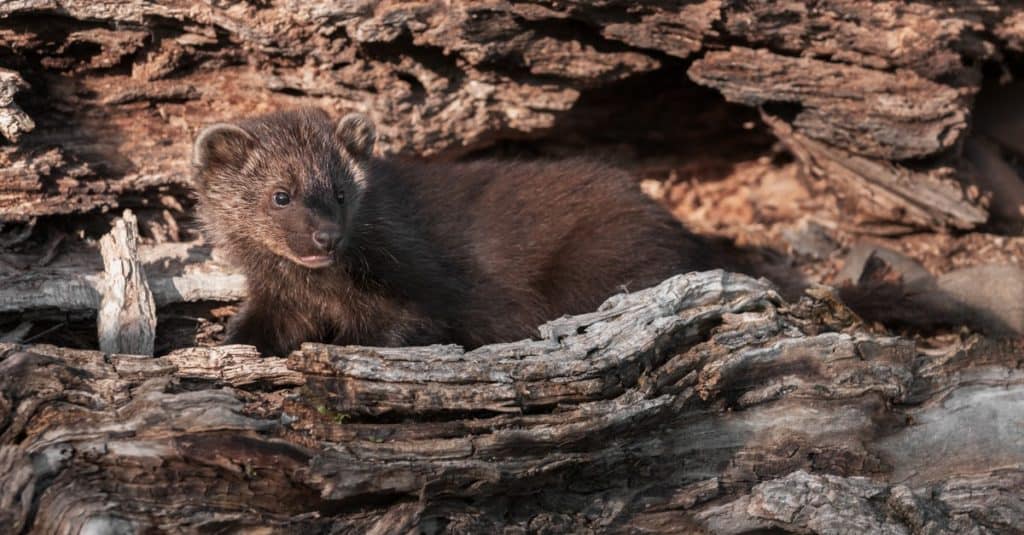
Fisher populations have been dwindling since the 1800s.
©Holly Kuchera/Shutterstock.com
Centuries of habitat change and human impact have reduced fisher populations across much of their historic range. Several key factors contribute to their decline:
Historical Trapping and Fur Trade. In the 1800s and early 1900s, fishers were heavily hunted for their luxurious fur. In many states, unregulated trapping nearly wiped them out. For example, by 1900, fishers were absent from Connecticut after deforestation and trapping greatly reduced their numbers.
Habitat Loss and Fragmentation. Fishers rely on large, continuous forests. Logging, agriculture, and development broke up these habitats into smaller, fragmented patches, making it harder for fishers to find food, mates, and safe den sites. Even relatively small open areas can act as barriers because fishers are reluctant to cross open or exposed habitats.
Modern Threats. Today, fishers face additional pressures:
- Severe wildfires—exacerbated by climate change—destroy mature forests that fishers depend on.
- Rodenticides can poison fishers when they scavenge contaminated prey.
- Vehicles pose a danger when fisher home ranges include roads, increasing the likelihood of fatal collisions.
Some populations, like those in California’s southern Sierra Nevada, are so isolated and small that they are listed as endangered due to vulnerability from genetic isolation and ongoing threats.
New Insights From Tracking and Research
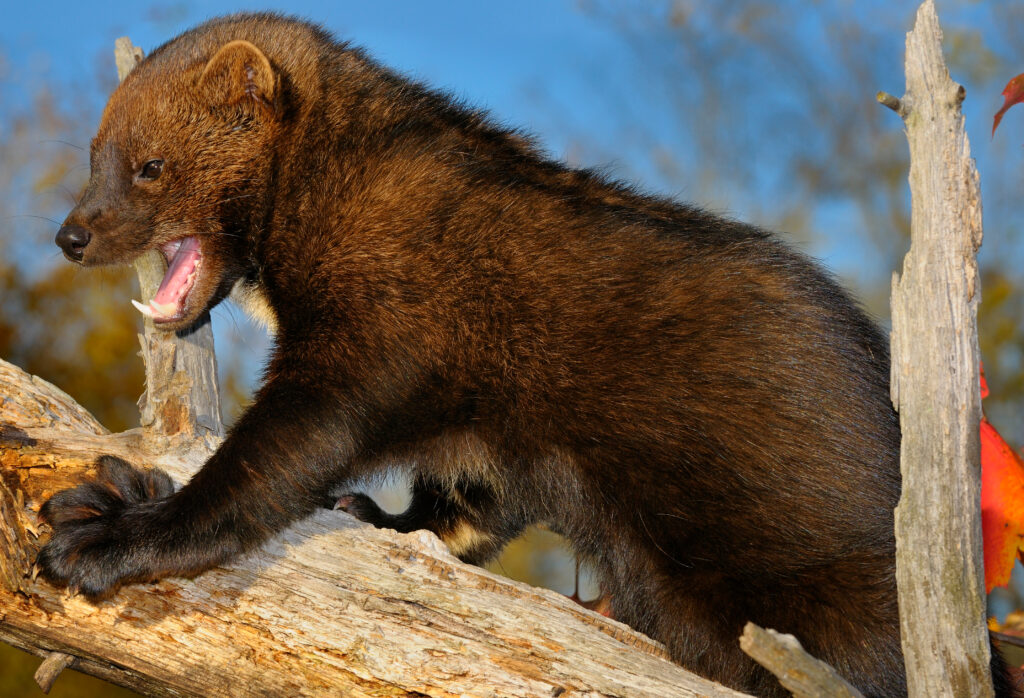
Studies are ongoing to learn more about fisher behavior in order to help protect this vulnerable species.
©Reimar/Shutterstock.com
A University of Connecticut study reflects a growing effort to fill gaps in our knowledge about fishers, especially in regions like southern New England, where they remain hard to study. Using GPS and radio collars, scientists are tracking individual fishers to learn more about how they use forests, where they den, and what factors contribute to mortality.
For example, tracking data can help identify habitat corridors that fishers use to move safely between forest patches, denning sites that need protection (especially for reproducing females), and locations where conflict with roads or predators like coyotes and bobcats is most likely. This data can inform forest management plans, help shape protected areas, and guide decisions about where to restore or connect habitat.
What Can Be Done to Help Fishers?
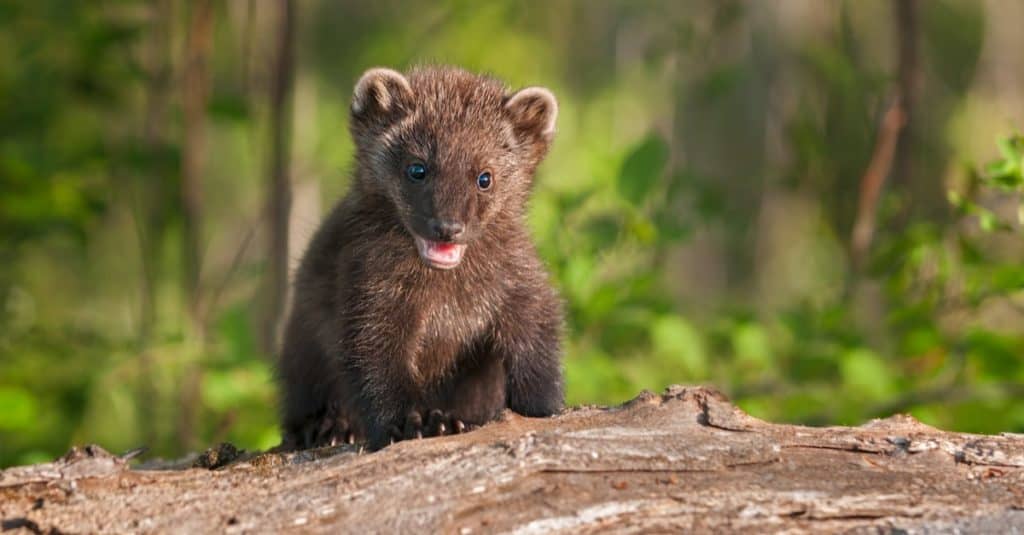
Conservation efforts aimed at slowing or reversing fisher decline focus on several strategies.
©Holly Kuchera/Shutterstock.com
Protect and Restore Forest Habitat
Because fishers need large contiguous forests, protecting mature woodlands from clear-cutting and fragmentation is crucial. Reforestation and sustainable logging practices can help restore habitat over the long term.
Create Habitat Connectivity
Connecting small forest patches with “corridors” allows fishers to safely move, find mates, and expand their range. Wildlife crossings over roads can reduce vehicle mortality.
Reduce Hazardous Chemicals
Limiting the use of toxic rodenticides and cleaning up contaminated areas can reduce poisoning risk for predators at the top of food chains.
Support Scientific Monitoring
Ongoing tracking and population monitoring, like the UConn project, are key to understanding fisher ecology and how conditions are changing. Local citizen wildlife reporting can also help fill in sighting data through state wildlife agencies or conservation groups.
Reintroduction and Management Programs
Where fishers have been extirpated locally, reintroduction efforts have helped restore populations. These programs are often paired with habitat conservation plans.
Not a Monster

Fishers play a vital role in forest ecosystems.
©Holly Kuchera/Shutterstock.com
The fisher that haunted my childhood imagination never existed—not as a pet-eating monster, at least. The real animal is quieter, stranger, and far more interesting: a solitary forest hunter, perfectly adapted to life beneath the canopy. Today, thanks to modern tracking studies and long-term research, we’re beginning to understand fishers not as myths or menaces, but as vital parts of healthy forest ecosystems—and as a species that reflects the pressures we place on the landscapes we share with them. Protecting fishers ultimately means protecting large, connected forests, reducing harmful human impacts, and paying closer attention to the wildlife that still lives just beyond the edges of our towns and childhood fears. The monster in the woods was never real—but the animal is, and it could use our help to ensure its species survives.