
Rats often divide public opinion. People who keep pet rats usually describe them as intelligent, social, and even affectionate animals that can recognize their owners and form close bonds. Wild rats, however, tend to have a very different reputation. When they leave sewers, alleys, or garbage areas and make their way into homes, they can spread disease, contaminate food, chew through walls, and shred electrical cables. For many people, rats are more likely to inspire fear or disgust than admiration.
There is one rat, however, whose story challenges almost everything people think they know about these animals. His name was Magawa, and he was not an ordinary rat. Trained to detect landmines, Magawa helped make dangerous areas safer for local communities. Using his extraordinary sense of smell, he could locate explosives far more quickly than a human with a metal detector in some situations. His work saved lives by helping clear land that had been unsafe for years.
Magawa’s achievements were so remarkable that he was awarded a gold medal for bravery and devotion to duty. Let’s take a closer look at this incredible rat and the life-saving work that made him famous.
Magawa – The Landmine Detection Rat
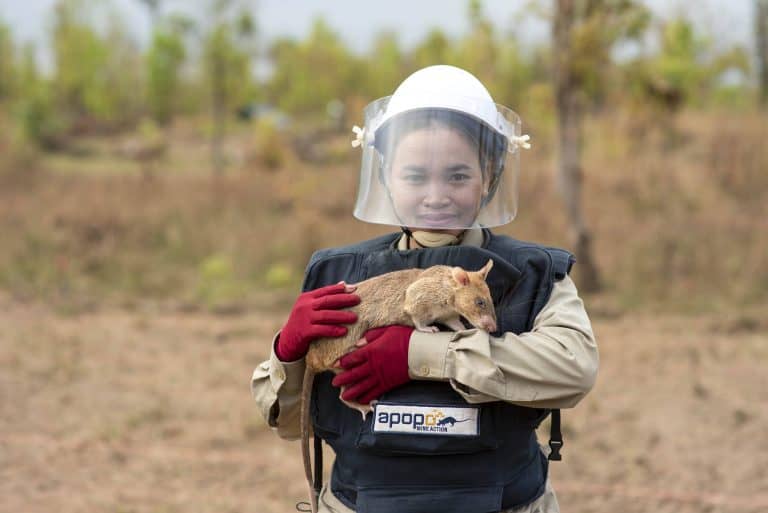
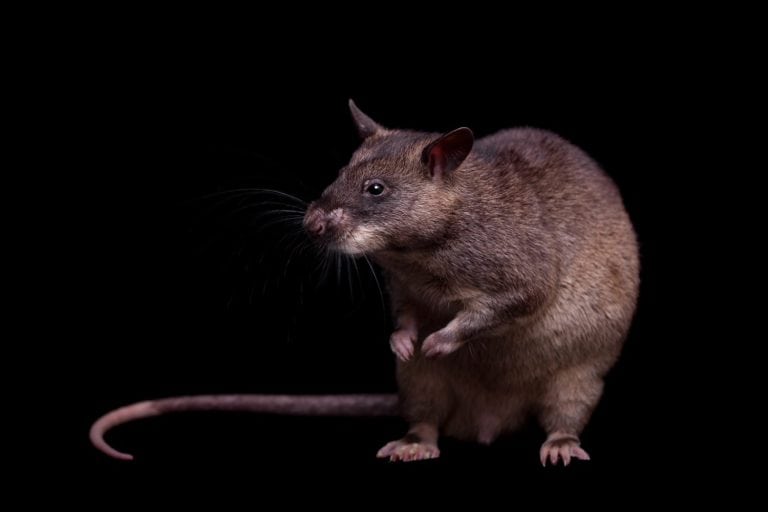
Magawa was a specially trained African giant pouched rat who became famous for his extraordinary landmine detection work in Cambodia. For five years, he helped search dangerous areas for hidden explosives, using his powerful sense of smell to identify landmines and unexploded ordnance buried beneath the ground. He retired in 2021 after a remarkable career and sadly died of natural causes in 2022 at the age of eight.
Magawa’s achievements were so impressive that, in 2020, he received the People’s Dispensary for Sick Animals Gold Medal, often described as the animal equivalent of the George Cross. It was the first time a rat had received the award, and it recognized his bravery, dedication, and life-saving service.
During his working life, Magawa detected 71 landmines and 38 items of unexploded ordnance. His work helped clear more than 2,421,880 square feet of land, making it safer for local communities to farm, travel, and rebuild. This work was especially important in Cambodia, where millions of landmines were laid during decades of conflict and many remain undiscovered. Cambodia also has one of the highest numbers of mine amputees per capita in the world. By finding hidden explosives before people encountered them, Magawa helped save lives and prevent devastating injuries.
How Do Rats Detect Landmines?
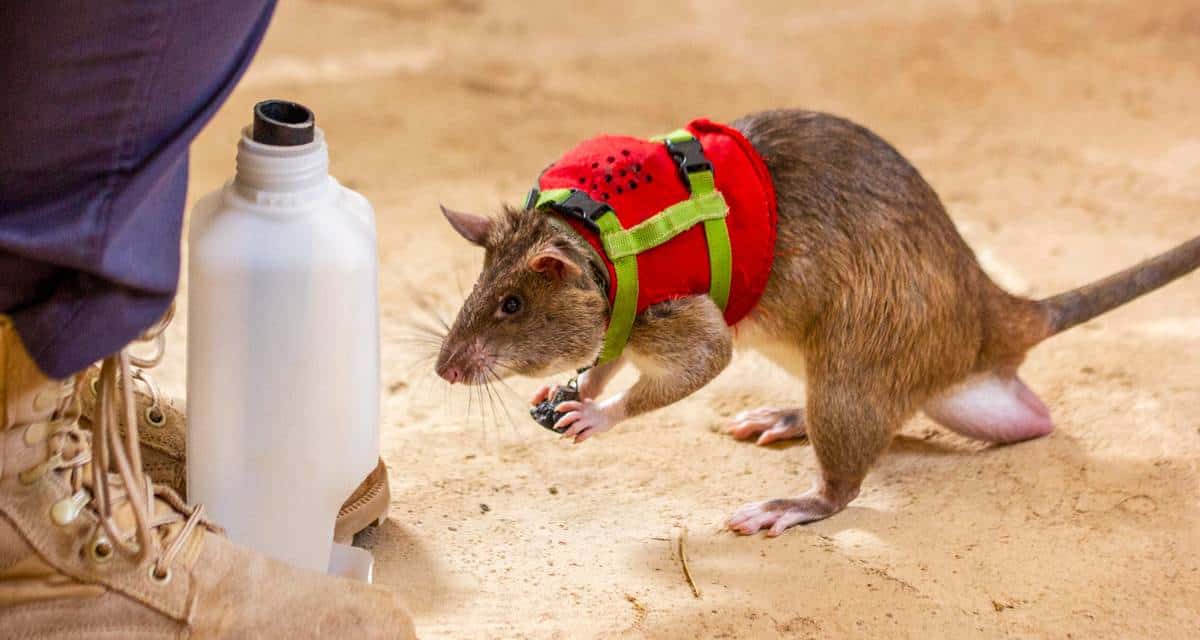
Magawa was trained by and worked for a charity called APOPO (Anti-Personnel Landmines Removal Product Development). Rats are intelligent animals and therefore take just nine months to learn how to do this task. The rats are trained with a clicker and tasty treats, much like in dog. The training is based on their excellent sense of smell.
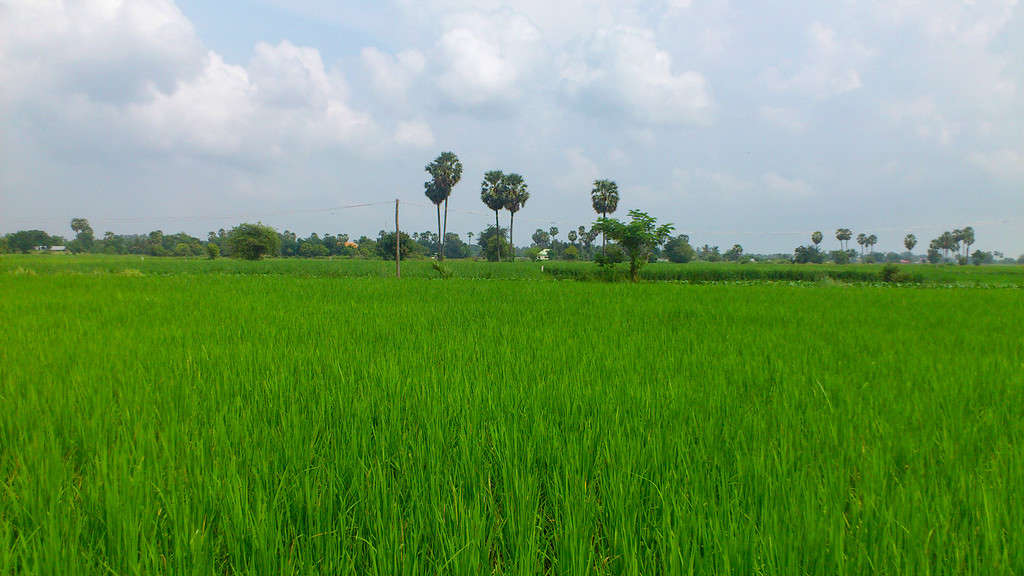
There are still hundreds of thousands of landmines in Cambodia.
©Sengly Hong/iStock via Getty Images
When the rat approaches the scent of explosive chemicals, it signals to its handler. They have been taught to ignore scrap metal and work very fast. It takes about thirty minutes to search an area the size of a tennis court. When the rats retire, they live in a ‘home cage’ where they relax and play for the rest of their lives.
About African Giant Pouched Rats
Several different rat species are described using the term African giant pouched rat. They all belong to the genus Cricetomys, and they all live in the sub-Saharan region of Africa. The four species are: the Ansorgei pouched rat (Cricetomys ansorgei), Emin’s pouched rat (Cricetomys emini), Gambian pouched rat (Cricetomys gambianus) and Kivu pouched rat (Cricetomys kivuensis). Magawa was a Gambian pouched rat.
These rats are found in central Africa, in regions south of the Sahara Desert as far south as Zululand. They are happy to live in a range of habitats but always need some sort of shelter. Some of them move into urban areas where they are considered a pest. Conversely, some people keep them as pets!
Gambian rats are larger than the rats we are used to in the US (Norway rats). They can reach 3.24 pounds in weight and 35 inches in length. These rats have coarse, brown fur and a dark ring around the eyes. Their heads are narrow, and they have small eyes. Therefore, it’s no surprise that their eyesight is poor and they rely on their hearing and, of course, their excellent sense of smell.
Can Rats Do Other Jobs?
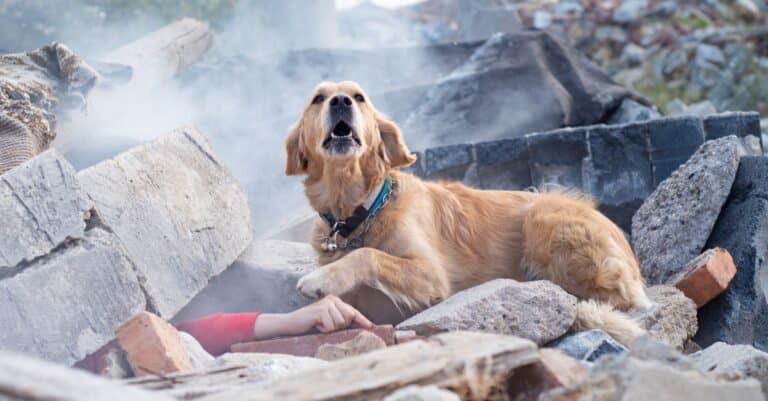
APOPO is also training rats to perform other tasks! They are teaching the rodents to look for survivors in disaster zones. The rats will wear specially designed backpacks fitted with two-way microphones, a camera, and location trackers. Their keen sense of smell and natural curiosity make them ideal for this task. They will be able to navigate debris better than humans and rescue dogs. The rats have been moved to Turkey to test and refine their skills and the technology.
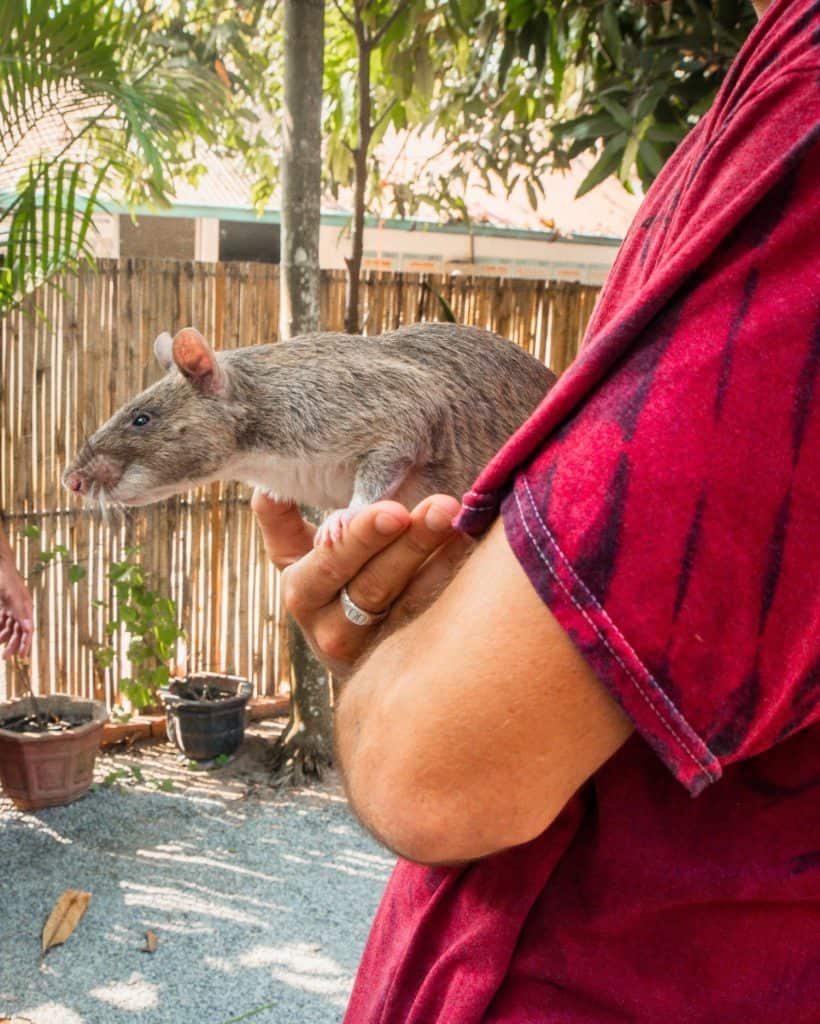
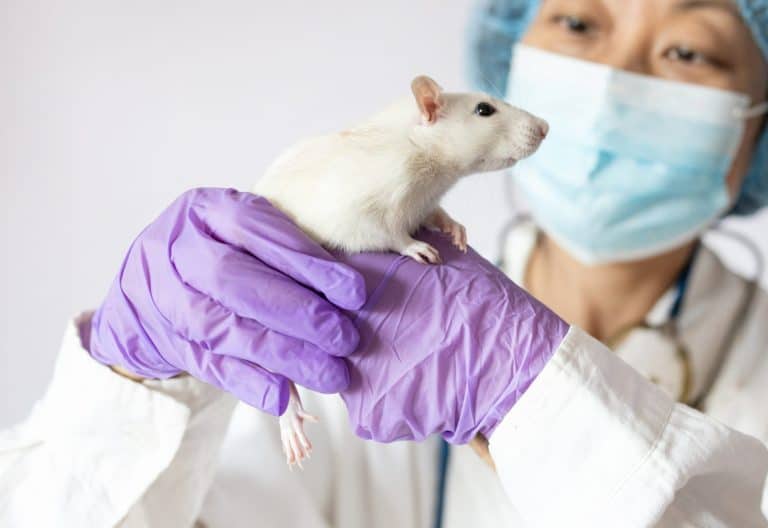
African giant rats can detect TB in samples.
©EvaL Miko/Shutterstock.com
In 2007, Tanzania became the first country to use rats for screening Tuberculosis (TB), a devastating bacterial infection of the lungs that can also spread to other parts of the body and is fatal if not treated. Rats can detect the bacterium in samples of sputum or mucus from the lungs and airways. The screening program currently operates in Tanzania and Ethiopia. If samples are assessed as negative using smears or molecular tests, they are sent to an APOPA laboratory for screening. Research has shown that 52 percent of initially negative tests are reassessed as positive by the rats. This accurate detection allows life-saving treatment to be started. Bearing in mind that one infected person can go on to infect another 10-15 people, the rats have also prevented hundreds of thousands of people from becoming infected.