
Quick Take
- Chirodectes maculatus is a rare type of box jellyfish.
- There have only been two sightings but one of those may have been another new species!
- Jellyfish classification is not easy!
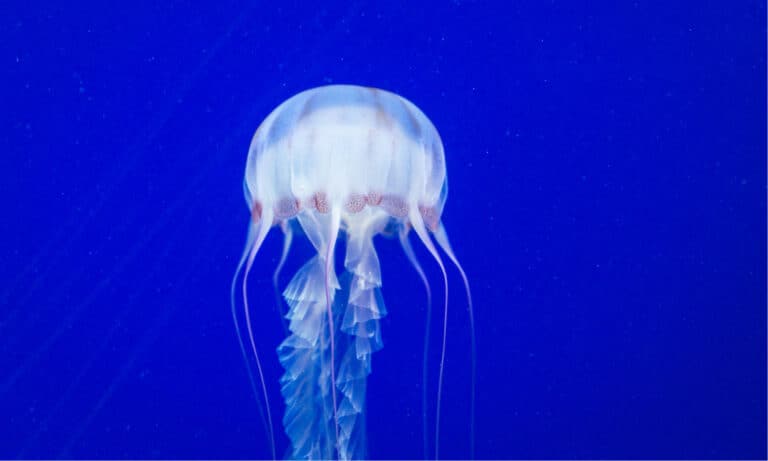
When it comes to certain creatures on Earth, the list of what we don’t know about them is often longer than what we do. One such animal is Chirodectes maculatus, a very rare type of box jellyfish. To call this marine animal elusive is an understatement. Take a look at the super-rare footage of the box jellyfish in this Instagram post. Keep reading to learn why this rarely-seen jellyfish is causing taxonomy confusion.
A Genus to Itself
Chirodectes is a genus of jellyfish in the Chirodropidae family. There is only one species so far in the genus, and that is Chirodectes maculatus. The relatively new genus was created in 2006 for this species, which was originally in the genus Chiropsalmus. There has been considerable confusion regarding this animal, described as “widespread messiness in identification and classification of this and related species” in a scientific paper from 2006. This shows how difficult it can be to identify jellyfish, especially when scientists are working with immature and damaged specimens.
What Are Box Jellyfish?
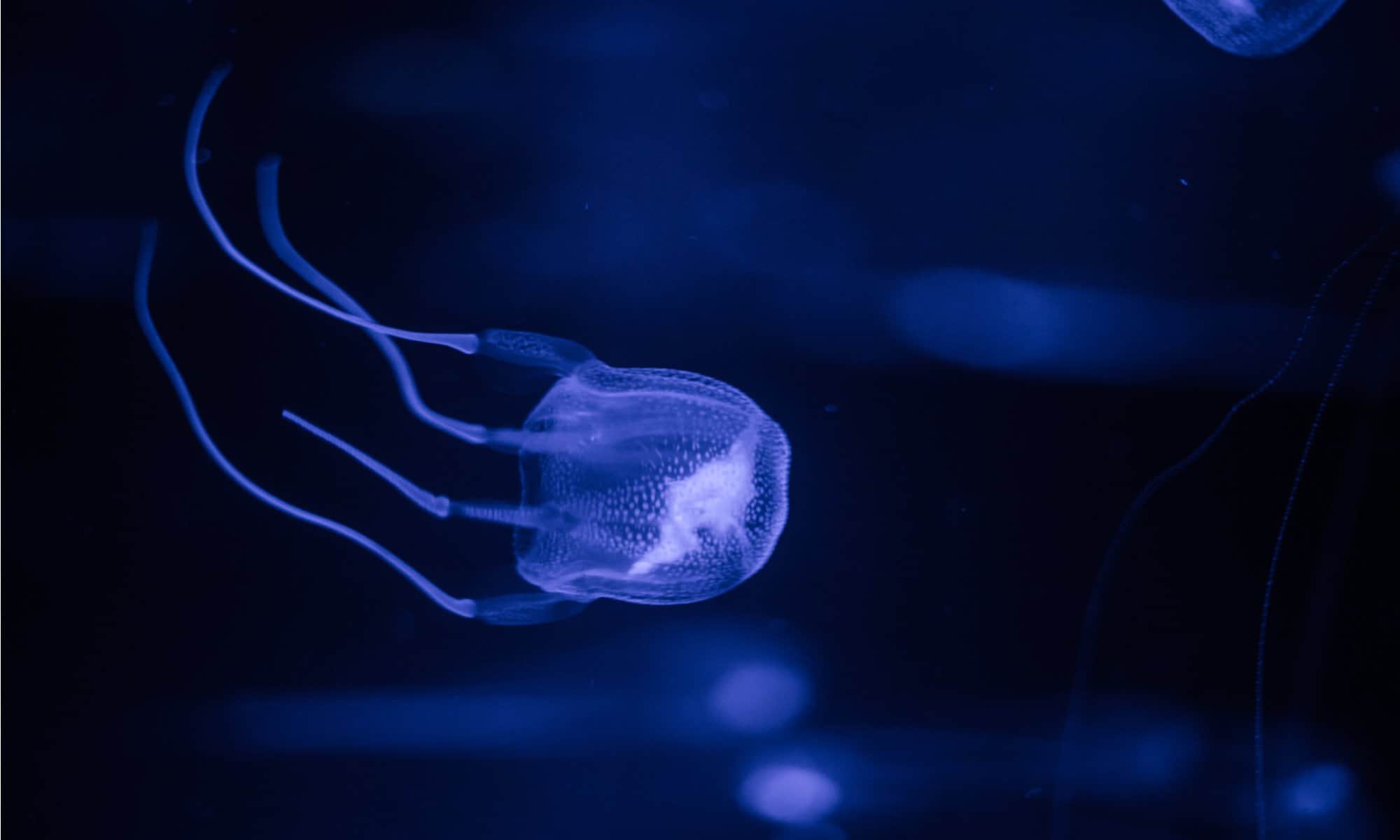
Box jellyfish are in the Class Cubozoa. As their name suggests, they have a box-like or cube-like body. Some produce a potent venom that they deliver through their tentacles. Some stings are even fatal. There are at least 50 different species.
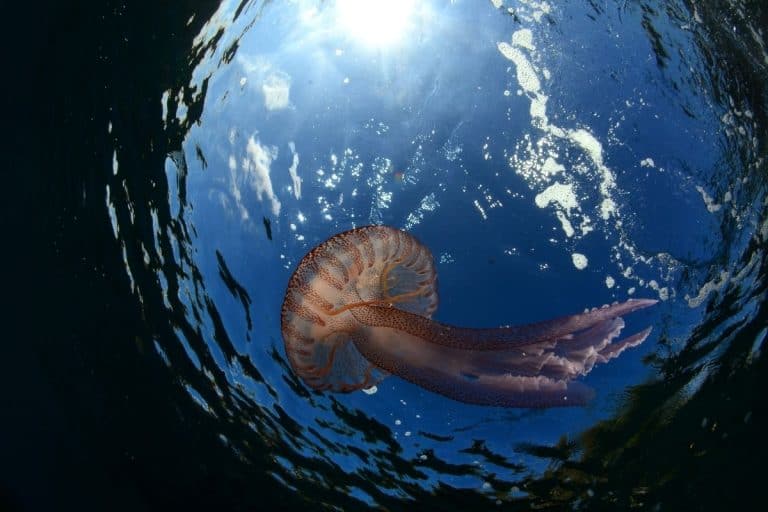
Box jellyfish often have long and dangerous tentacles that deliver venom.
©IMC11/Shutterstock.com
These jellyfish are found in tropical and subtropical oceans, including the Atlantic Ocean and the eastern Pacific Ocean. They are strong swimmers and actively hunt their prey by entangling it in their tentacles and directing it to their oral opening (mouth). There is no conclusive evidence as to whether Chirodectes maculatus is venomous or not.
How Many Times Has Chirodectes Maculatus Been Seen?
There are only two camera recordings of Chirodectes maculatus sightings. The first was spotted and captured in the Great Barrier Reef in 1997. However, it was so delicate that it was only studied for a few hours. It was not until 2022 that another video was taken off the coast of Papua New Guinea by diver Dorian Borcherds. But was it the same jellyfish?
Expert Dr Lisa-ann Gershwin from the Australian Marine Stinger Advisory Services told the Guardian newspaper in this article that she thought it was a new species. She consulted with Peter Davie, a now-retired curator from the Queensland Museum, where the original jellyfish specimen was kept. They thought that this 2022 specimen was likely a new species and not the same creature found in 1997, but there is still debate among experts and no formal description has been published as of 2026. Speaking in the same article, Prof Kylie Pitt, a marine ecologist who specializes in jellyfish from Griffith University, said that it could be a new species, but he didn’t think it would be possible to know for sure based only on a video.
Perhaps it will take another sighting in a few decades’ time to resolve the debate!