
Quick Take
- White bison are extremely rare and hold deep spiritual and cultural significance for Native American communities.
- Yellowstone welcomed a leucistic white bison calf on June 4, 2024, a rare event signaling ecocultural recovery.
- The NBA warns that some white bison sightings are produced by crossbreeding with white Charolais cattle.
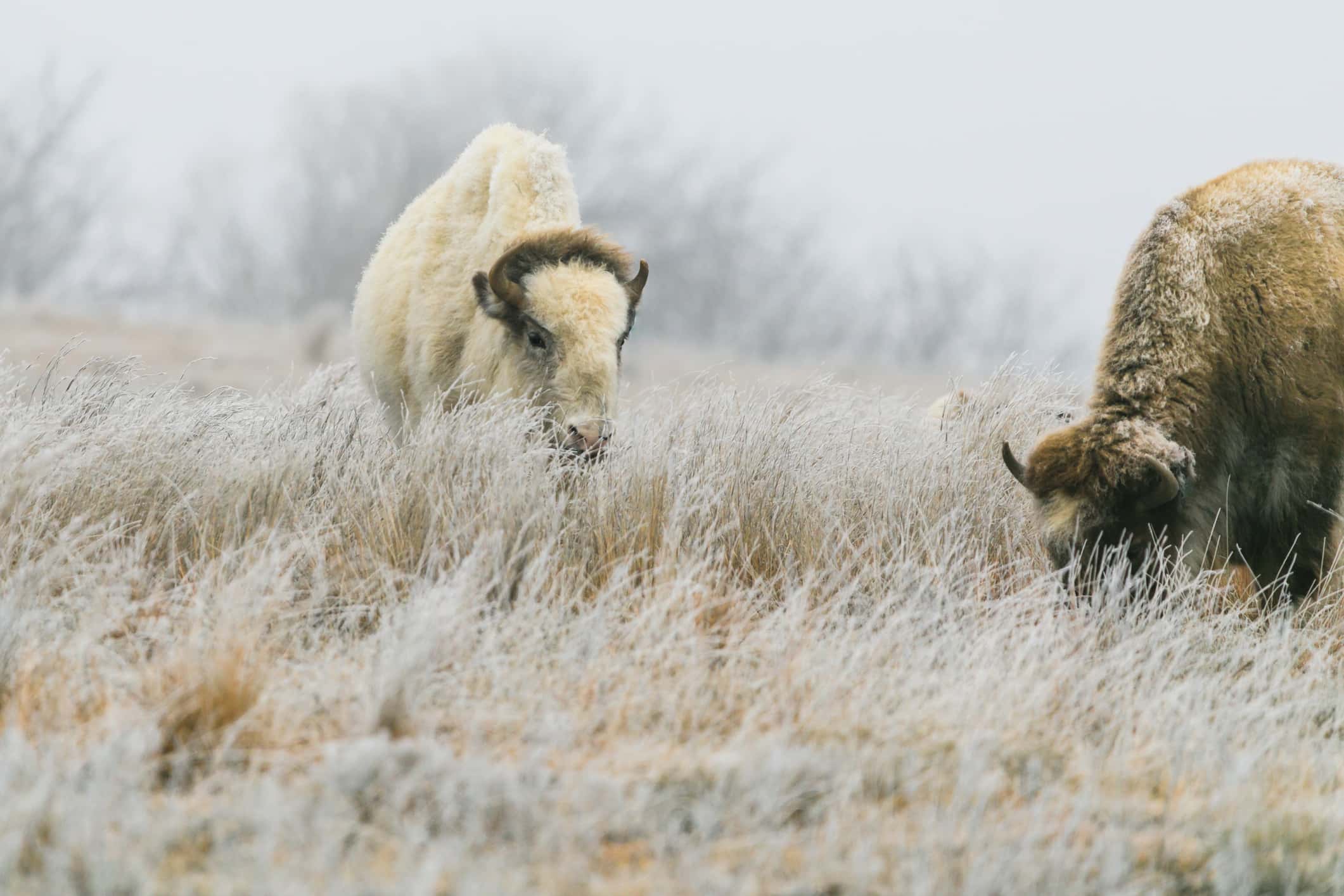
A winter landscape became even more special with the appearance of a white bison. This magical scene was shared in an Instagram post. White bison are extremely rare. They also have deep spiritual and cultural significance for Native American people. However, some recent reports of white bison have been controversial; there are claims that not all of them are what they seem. Join us for a journey into white bison territory.
How Rare Are White Bison?
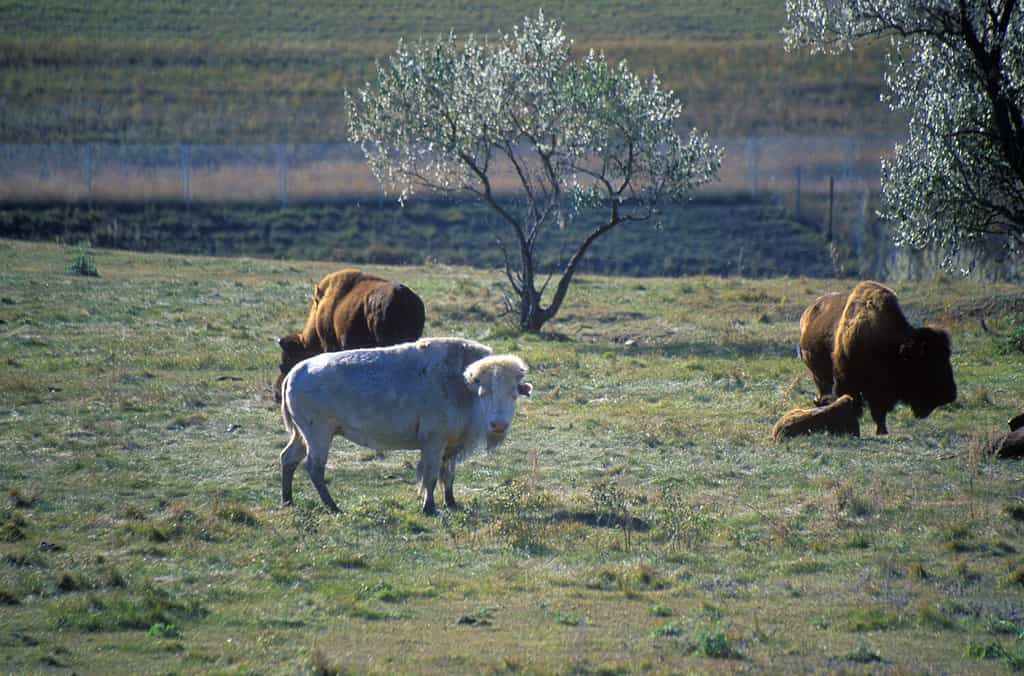
White bison are very rare.
©Joseph Sohm/Shutterstock.com
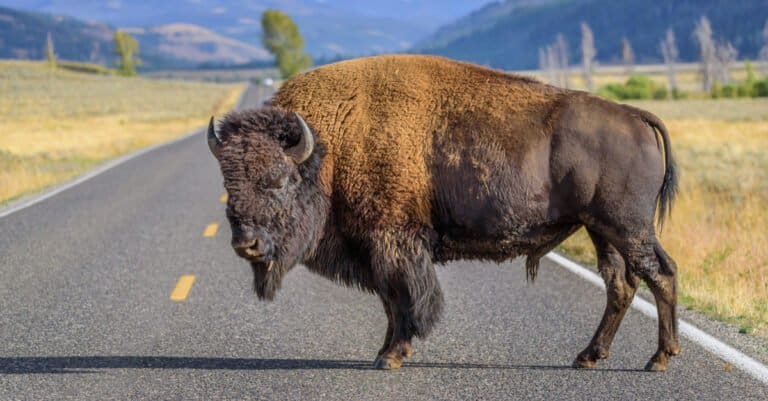
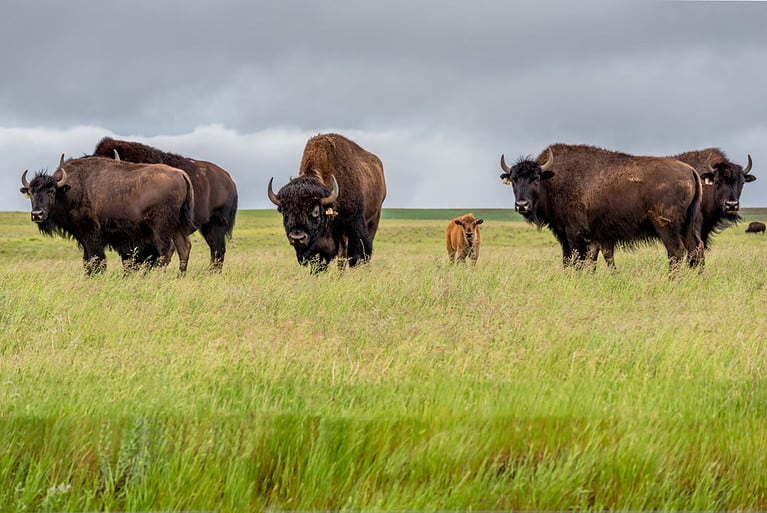
Having almost been wiped out altogether, there are now around 30,000 – 40,000 American bison in conservation herds. A further 400,00-500,000 or so are managed commercially as livestock. Most bison are dark brown, but on rare occasions, a white one is born. While many sources state that white bison occur at a rate of 1 in 10 million, not everyone agrees. The National Bison Association (NBA) questioned reports of one such calf being born in 2023. In this article from June 2023, they said, “The truth is we simply don’t know the occurrence of a white bison because, to my knowledge, no one has ever kept track.” The National Park Service cites the occurrence of such calves as 1 in 1 million births or less.
The NBA also notes that reports of white bison have increased, often for tourism purposes. They point out that some white bison are the result of crossbreeding bison with white Charolais cattle. These calves are not the same as true white bison, which are born due to a genetic mutation.
White Bison in Yellowstone National Park
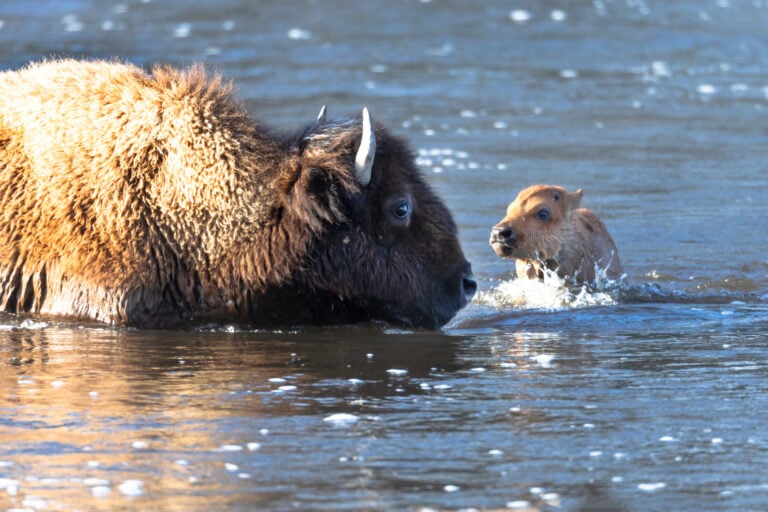
A genuine white bison calf was born in Yellowstone National Park on June 4th, 2024. Reports indicated that the calf was leucistic rather than albino, meaning it has a partial loss of pigmentation instead of a total loss. This rare event is seen as a sign of the ecocultural recovery of bison in the United States. This is considered a spiritually significant event by Native American religions, who often visit white bison calves for prayers and other rituals.