
Quick Take
- Scientists recorded more than 1,700 beluga whale vocalizations and found that “combined calls” are most commonly used when calves are present. See the study findings →
- Commercial shipping noise can mask important beluga calls, potentially interfering with mother-calf communication. See the endangered calls →
- Beluga whale vocalizations are at least partially drowned out when ships are within 10 miles of them. Explore how whales adapt →
- Scientists believe reducing underwater noise near critical habitat could help belugas communicate more effectively. Explore the Puget Sound solution →
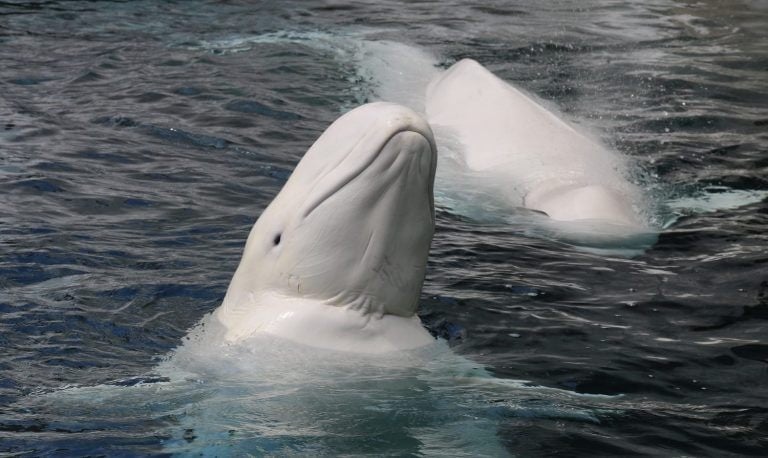
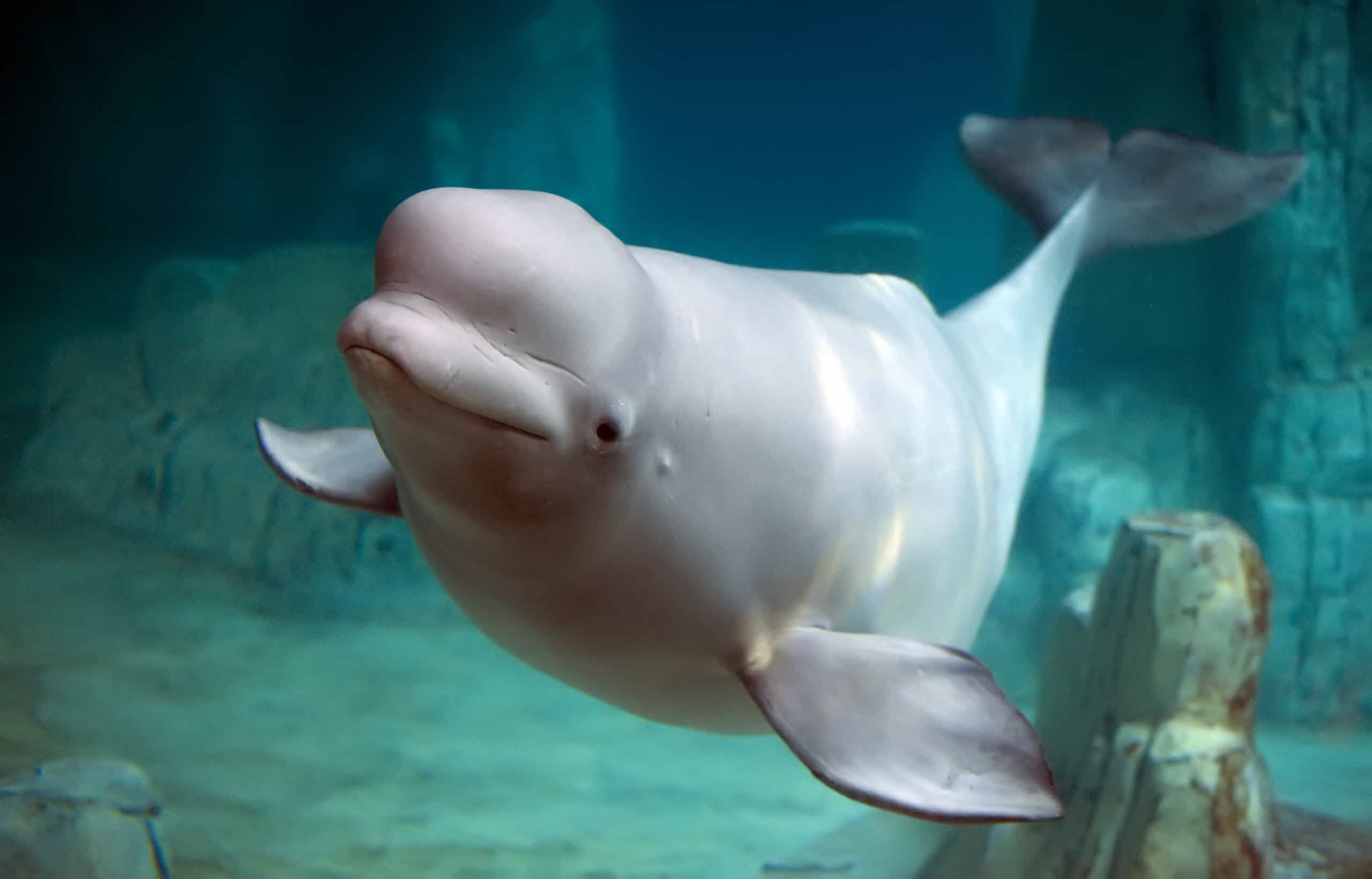
Beluga whales are some of the most distinctive marine mammals, with their white bodies and rounded foreheads. They are also well-known for their vocalizations, which have led to them being called the “canary of the sea”. However, in Cook Inlet, their sounds are being overpowered by the noise from the busy shipping corridor. Scientists are now trying to decode the beluga’s calls to determine what they are communicating. Keep reading to learn more!
Why Vocalization Is Important
Beluga whales inhabit the Arctic and sub-Arctic waters, with many migrating seasonally. However, there is a population of belugas that inhabits Cook Inlet all year round. Cook Inlet spans 180 miles between the Gulf of Alaska and Anchorage and is one of the main access points to the port of Anchorage. The water in Cook Inlet is particularly silty due to glacial sediment. This sediment combined with strong tides makes the water quite murky. Therefore, the beluga whales living there rely heavily on sound rather than eyesight. They use echolocation to navigate while also communicating through whistles and other vocalizations.
Beluga whales are highly social and stick close together in tight-knit groups. Vocalizations are important as they help them socialize and avoid danger. Some of the most useful situations for vocalizations are communications between mothers and calves. This is because calves can quickly wander away from their mother and become lost in the murky water. Therefore, keeping up the vocal communication means that mothers can keep their calves close by their side.
Scientists from the University of Washington conducted a study to track the beluga vocalizations and work out what they mean. Approximately 1,700 different vocalization calls were recorded, and they represented 21 different situations. Beluga whales use three main types of vocalizations – pulses, whistles, and combined calls. The study found that “combined calls” were most commonly used when calves were present. It also found that the whales increased their vocalizations just before a change in behavior, such as going from general socializing to actively travelling. Interestingly, it also found that belugas vocalize less when they are in a larger group. It’s speculated that it is so that the calls don’t overlap with each other.
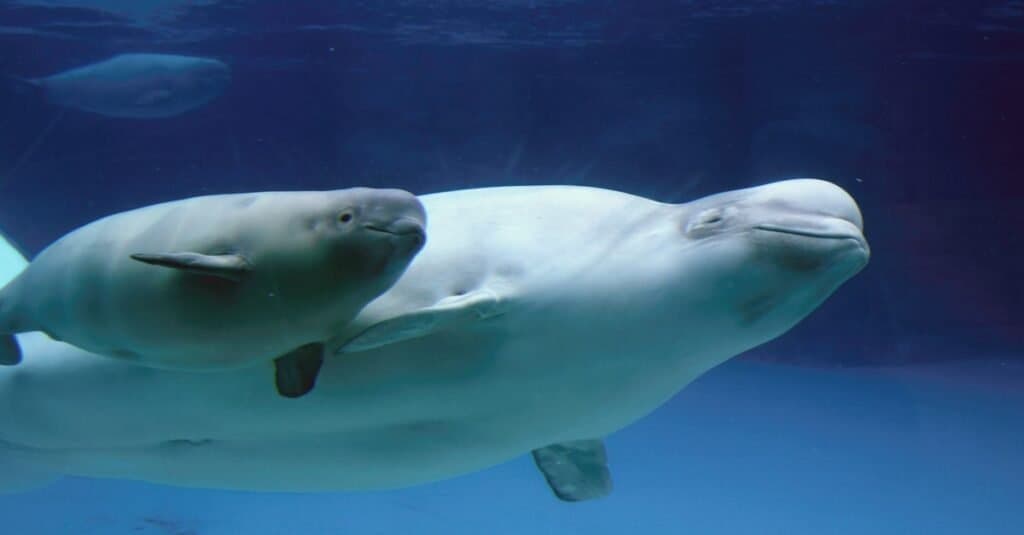
Beluga whales use “combined calls” to communicate with calves.
©CampCrazy Photography/Shutterstock.com
How Is Human Noise Affecting Beluga Whales?
There are around 300 beluga whales in Cook Inlet, which is down from 1,300 in the 1970s. Unlike other belugas, the Cook Inlet population is isolated and genetically distinct from other populations. The population is critically endangered and isn’t recovering as it is threatened from things such as pollution and a lack of available prey. However, another threat actually comes from noise from human activities.
A 2023 study found that noise from commercial shipping masks many of the vocalization calls that the beluga whales make. In particular, it found that combined calls – those that are made when calves are present – were one of the call types that was drowned out by shipping noise. This puts calves at greater risk because if they can’t hear their mothers calling them then they are more likely to become separated. This also means that the calves are at risk of swimming into shipping lanes and being struck by boats. As well as risking the calf, any loss is a concern for the future of the Cook Inlet population as a whole.
The noise in the inlet is also affecting how the belugas feed. One of their main feeding grounds is close to Anchorage airport and the Port of Alaska. The close proximity to such noisy areas can affect the belugas’ ability to detect their prey as well as cover calls as the whales are feeding. Additionally, the study found that beluga whales in other noisy areas, such as the St. Lawrence Estuary, have begun making their vocalizations louder so that they are heard over the industrial noise. They also make their vocalizations at higher frequencies than they traditionally do, which scientists think could be an attempt to adapt to the noisy place where they live.
Will Quieter Waters Help Them?
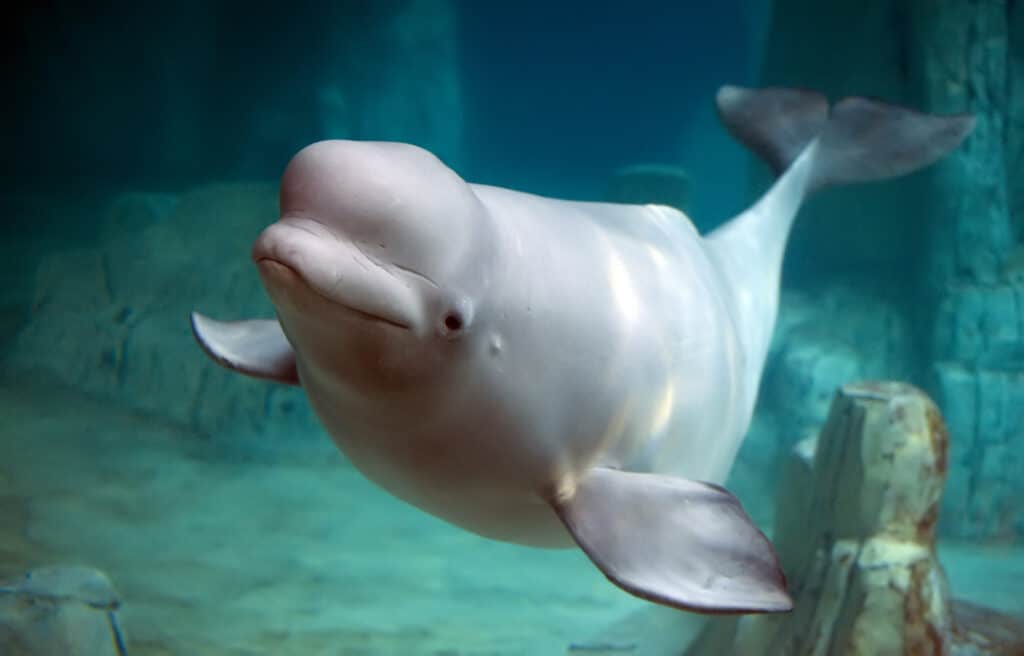
Beluga vocalizations are drowned out when ships are within 10 miles of them.
©Luna Vandoorne/Shutterstock.com
Around 500 ships use the Port of Alaska each year. The 2023 study found that vocalizations were partially drowned out when ships were within 10 miles of the whales. They became fully masked when the ships came closer. This indicates a significant portion of the whales’ calls are at least partially masked every year.
A 2021 study found that shipping noise was impacting the hunting efficiency of Southern Resident orcas in Puget Sound. Measures were then implemented to encourage ships to slow down when they are in the vicinity of the whales. Scientists therefore suggest that similar rules should be put in place in Cook Inlet to protect its beluga whales.
Completely stopping the noise in Cook Inlet isn’t likely, as the area is frequently traveled by commercial vessels. However, by slowing the ships, the volume and intensity of the engine noise could be reduced. This could mean that the beluga vocalizations are no longer entirely drowned out, improving the whales’ ability to communicate with each other.