Quick Take
- Cats might appear aloof, but studies show that they develop attachments to humans.
- Domestic cats often look to their owners for security, which can help build secure attachments.
- As a cat owner, you can help your cat feel more secure and safe in your home.
Cats often get a bad rep. Many people label felines as grumpy, aloof, and detached. When it comes to bonding with humans, cats rarely get the credit that dogs do. However, research shows that cats actually do securely attach to humans. The dynamic might just appear differently than with other pets.
Looking to learn more about cat-human bonds? Keep reading to discover how cats attach to humans, and how you can help your furry friend feel more secure in your home.
Cats Do Develop Attachments to Humans
A 2019 Oregon State University study published in the journal Current Biology explored human-cat bonds. In doing so, they found that felines do, in fact, develop attachments to their caregivers.
“Our study indicates that when cats live in a state of dependency with a human, that attachment behavior is flexible and the majority of cats use humans as a source of comfort,” Kristyn Vitale, researcher in the Human-Animal Interaction Lab in OSU’s College of Agricultural Sciences and lead study author, stated in an OSU news article on the study.
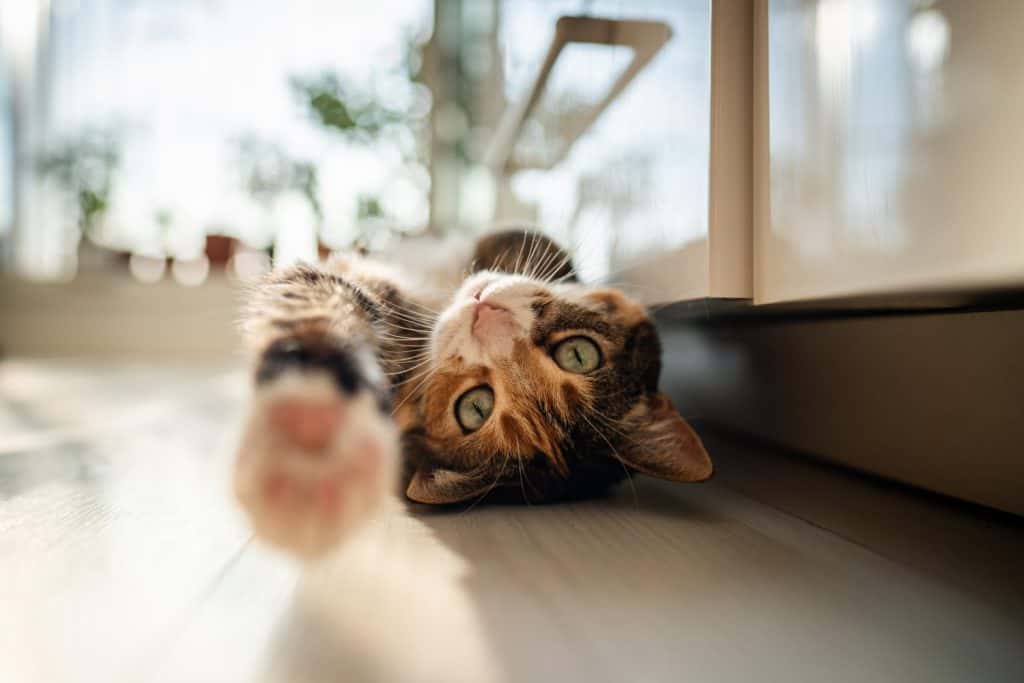
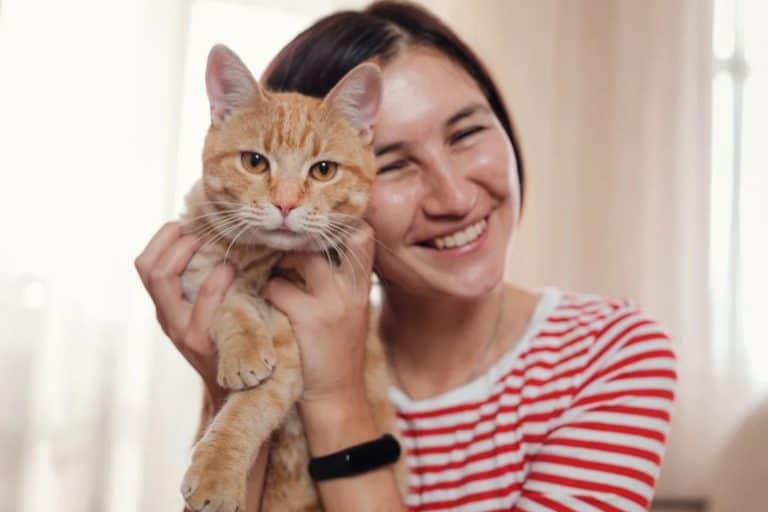
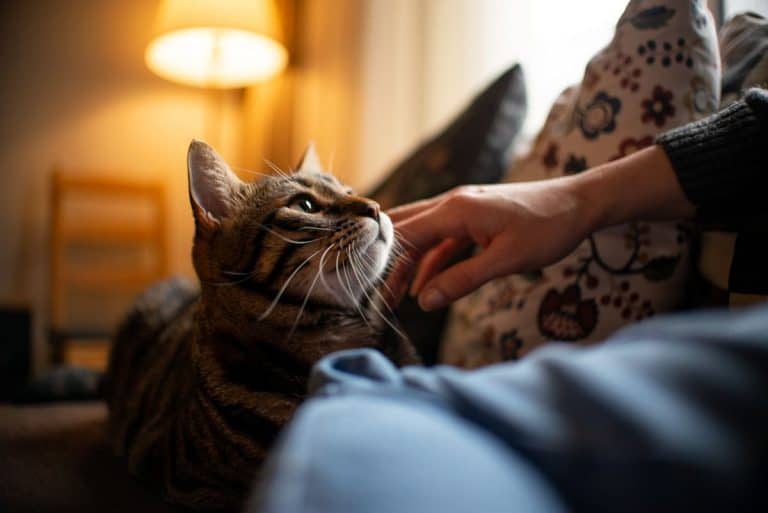
Cats can form beautiful bonds with their owners.
©DimaBerlin/Shutterstock.com
Vitale noted that, while most cats had a secure attachment to their owners, insecure cats appeared aloof. In other words, the majority of cats look to their owners for security. This was especially true when the cats were experiencing stress. When felines don’t receive security, however, they tend to display stereotypical behaviors. Think: hiding, shying away from close contact, appearing distant.
The Psychology of Cat-Human Bonds
Julia Specht, cat behavior consultant and founder of Park Slope Paws in Brooklyn, also shares her perspective on cat-human bonds. First, she points out the difference between humans and cats in terms of attachment.
“Humans are a socially obligate species, which means that we have evolved to form social bonds in any and every way that we can,” Specht explains. “Our social connections to each other are how we survive—we literally cannot live without each other.”
Domestic cats might rely on humans for survival, but cats are naturally more independent and self-sufficient than humans.
“Cats, on the other hand, are flexibly social, meaning that while they are capable of forming strong bonds and do live in groups, they hunt independently and don’t require a colony to survive,” she continues. “While humans are hypersocial (we’re out here bonding with everything that moves because that’s how our brains work), cats bond with us because they want to.”
The 2019 study showed that cats do seek security from their caregivers in domestic settings. However, according to Specht, they don’t necessarily need to bond with us. If they’re choosing to bond with you, that’s a major green flag.
While humans are hypersocial (we’re out here bonding with everything that moves because that’s how our brains work), cats bond with us because they want to.
Kristyn Vitale, researcher in the Human-Animal Interaction Lab in OSU’s College of Agricultural Sciences
How Cats Express Love and Affection
Cats have a unique way of showing their love. While dogs might be more physical, many cats are far less “in-your-face” about it. (Though plenty of cuddly cats exist!)
“Cats show love and affection in a lot of ways that go beyond physical contact,” says Specht. “As humans, we’re inclined to prioritize touch and petting, because that’s how we think about love. But because of their size, cats evolved as prey to many larger animals, and inherently have a lot of prey instincts.”
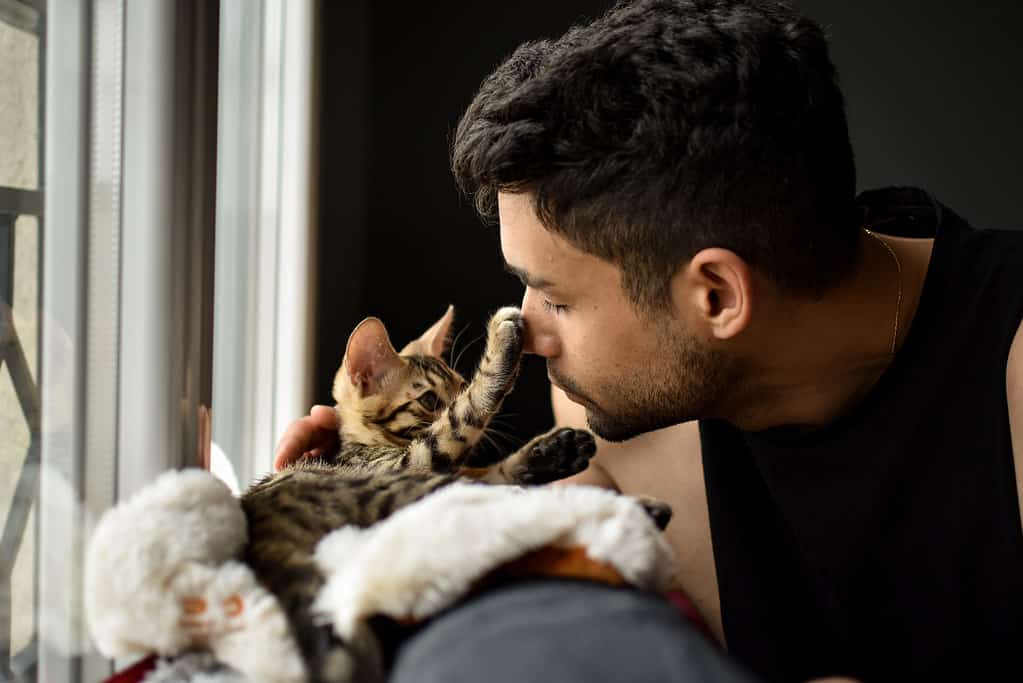
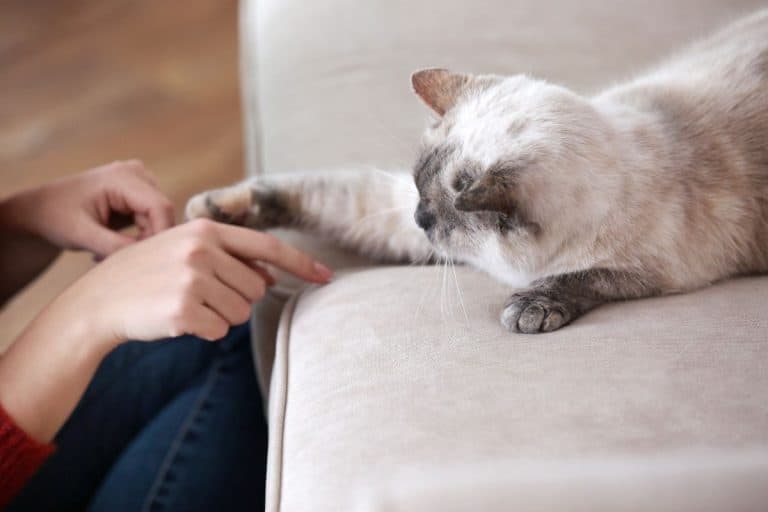
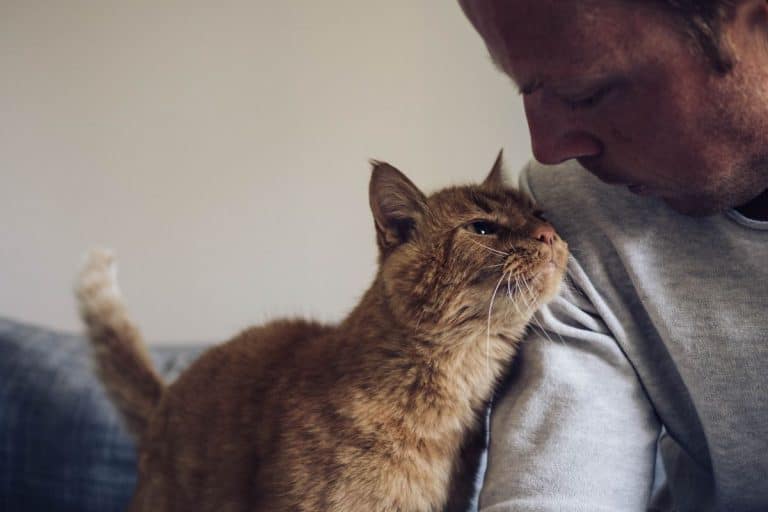
Cats might appear less affectionate than dogs, but they experience love and attachment with their humans, too.
©Raphael Angeli/iStock via Getty Images
This also might be why less secure cats appear more aloof and distant.
“Humans are big animals, and to a cat, we can seem very predatory!” Specht adds. “Due to all sorts of factors like personality and previous experience (or lack thereof) with humans, different cats have different boundaries around physical touch.”
How to Help Your Cat Feel More Secure
As a cat owner, you want to make your feline friend as comfortable and secure as possible. Thankfully, there are many ways to achieve this.
First and foremost, understand and respect your cat’s personal needs and preferences. For example, don’t force your cat into physical touch if they aren’t craving it.
“A wonderful act of love is to pay attention to your cat’s own comfort level with touch, and meet them where they are,” says Specht. “Noticing and respecting their boundaries, and celebrating the moments of connection you have throughout the day that might not be physical, are beautiful ways of deepening your relationship with your cat.”
Additionally, routine is a great way to build a stronger bond with your cat.
“The best way to help your cat feel secure is to notice and savor the little routines you’ve built together throughout your day!” Specht says. “Cats are routine-oriented creatures, and they thrive with predictability.”
For example, my cat and I get up at the same time each morning. As soon as my feet hit the floor, he’s up and greeting me with his adorable morning meows. He then follows me into the kitchen, where I brew my coffee and give him his breakfast. This sweet routine likely gives him a sense of safety and predictability.
“My guess is, if you think through the way your day looks, you’ll be able to identify little moments where you and your cat connect,” Specht says. “Noticing and prioritizing those moments, even when you’re busy or would like to be doing something else, is a real act of love for your cat. Your home is their whole world, and making it a place where they can know what’s coming next is a wonderful thing to do.”