
Quick Take
- Domestic pigs escaped Fukushima farms after the 2011 disaster and hybridized with wild boars, creating a thriving population in the exclusion zone.
- Mitochondrial DNA analysis has revealed that domestic maternal lineages persist, suggesting that domestic sows have significantly contributed to long-term population growth.
- Hybridization illustrates how human-altered landscapes can drive rapid evolutionary changes, complicating rewilding and wildlife management efforts.
When a nuclear disaster empties a landscape of people, nature doesn’t politely wait for instructions. It moves in. After the 2011 meltdown at the Fukushima Daiichi nuclear power plant in Japan, entire towns were abandoned. Crops withered in fields. Tractors were left to rust. Barn doors were left ajar. Inside those barns were thousands of domestic pigs. Some died, and some were culled. Some escaped.
Thus began one of the most fascinating natural experiments in modern wildlife biology. Domestic pigs bred with wild boars. Their offspring spread through the evacuated zone. And now, more than a decade later, scientists are discovering that these hybrid animals aren’t just surviving, they’re thriving. A recent genetic study highlighted by Eurasia Review reveals that the secret to their success lies in maternal lineage, and it may change how we think about rewilding in human-altered landscapes.
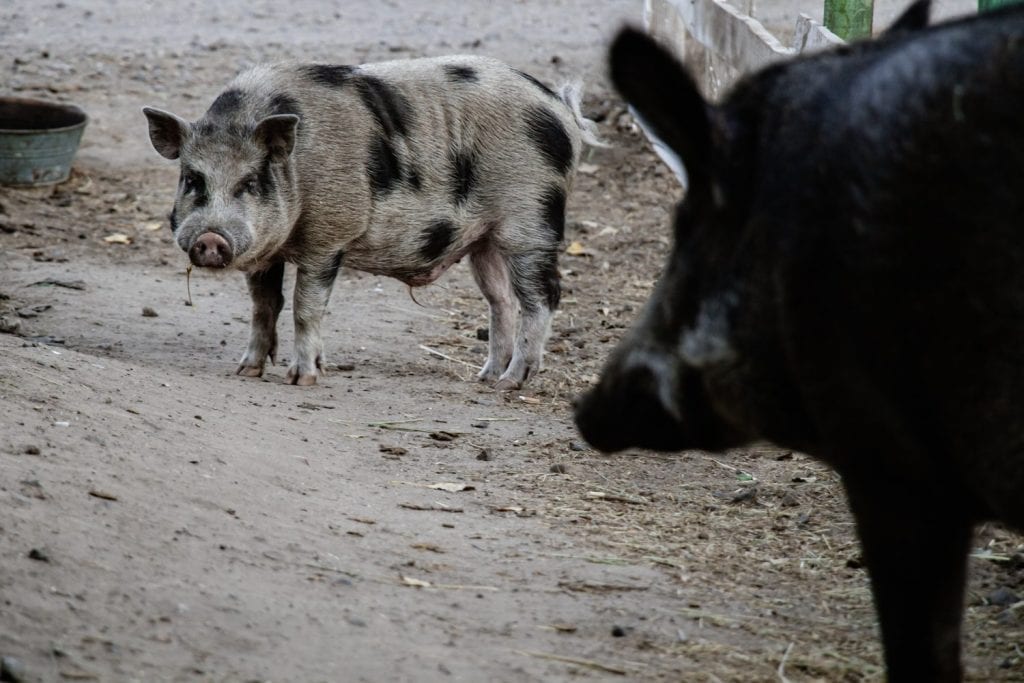
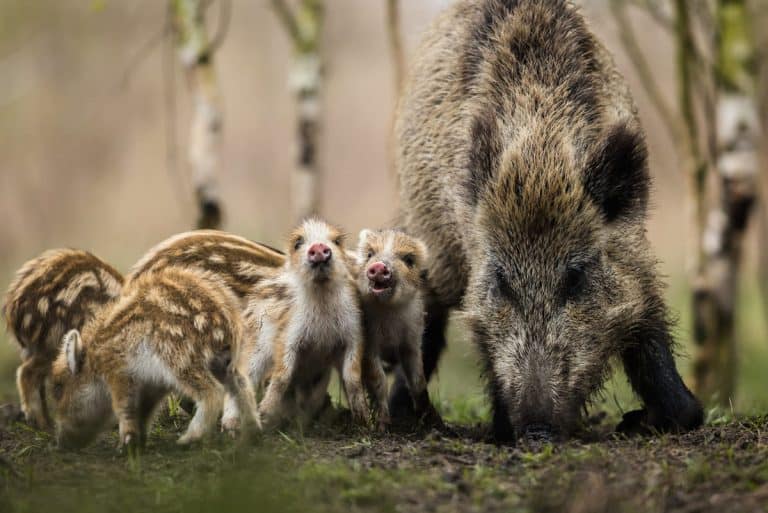
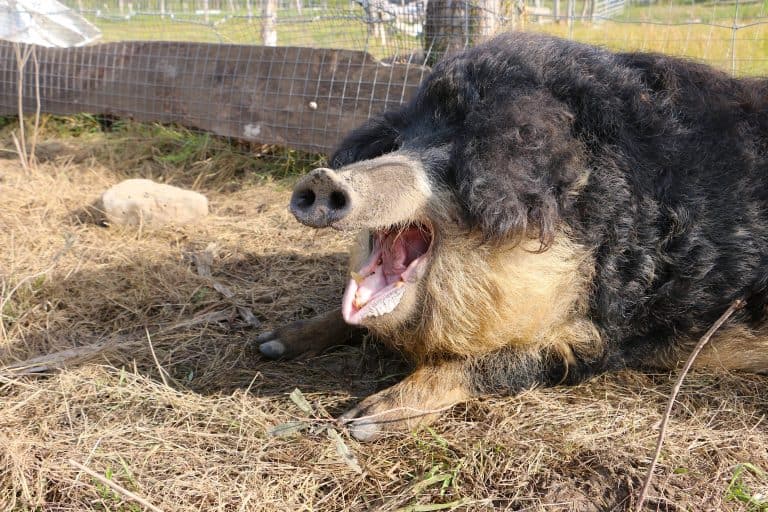
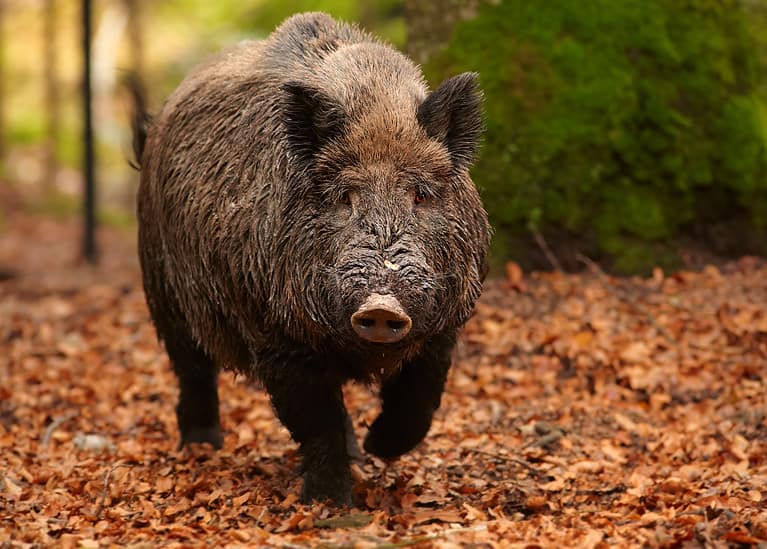
Domestic pigs escaped abandoned farms in Fukushima, meeting wild boars and creating hybrid offspring.
©Dmytry Ganzheev/Shutterstock.com

Farm Animals Gone Feral
Domestic pigs and wild boars are not separate species. Both belong to Sus scrofa. The wild boar is the ancestral form. Domestic pigs are simply the result of thousands of years of selective breeding by humans. This means they can interbreed easily and produce fertile offspring.
After Fukushima’s evacuation order created a roughly 12-mile restricted zone around the plant, human activity plummeted. Farms were abandoned. Livestock either died, were euthanized, or escaped into the surrounding forests and fields. With no farmers to manage them, domestic pigs suddenly found themselves in an environment that had reverted to wilderness almost overnight.
Concurrently, wild boar populations were expanding. In Japan, wild boars had already been increasing in number due to declining rural populations and reduced hunting pressure. Once humans left Fukushima’s evacuation zone, boars moved into empty towns, rooting through gardens and roaming quiet streets. Inevitably, escaped domestic pigs and wild boars encountered each other, and because they’re the same species, they started breeding.
The Maternal Lineage Discovery
Because of radiation and other public health concerns, researchers were studying wild boars in Fukushima, and they began noticing something unusual. Genetic samples showed that some animals carried mitochondrial DNA from domestic pigs.
Mitochondrial DNA is inherited exclusively from the mother. That means if a wild-looking boar carries domestic pig mitochondrial DNA, its maternal ancestor was a domestic sow.
The study reported in early 2026 found that a measurable percentage of wild boars in and around the Fukushima exclusion zone carry domestic maternal lineages, which indicates that domestic female pigs successfully bred with male wild boars after escaping captivity.
You may be saying to yourself, Yes, but we already knew that was possible. So what? The fact that domestic pigs and wild boars can interbreed isn’t the interesting part. What’s significant is that domestic female lineages didn’t disappear. They persisted and became part of the long-term wild population.
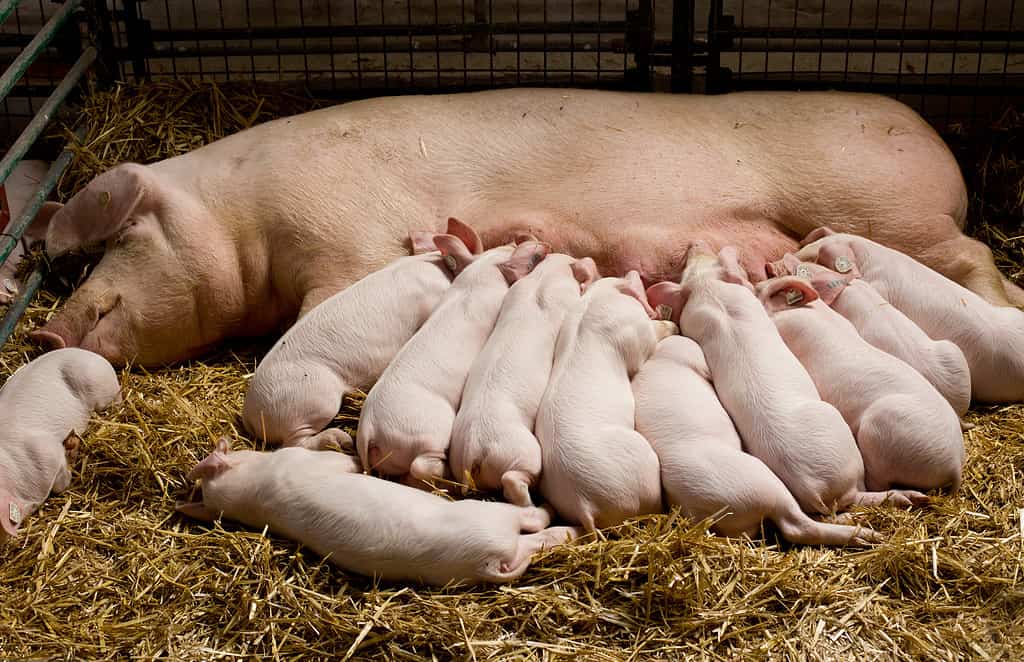
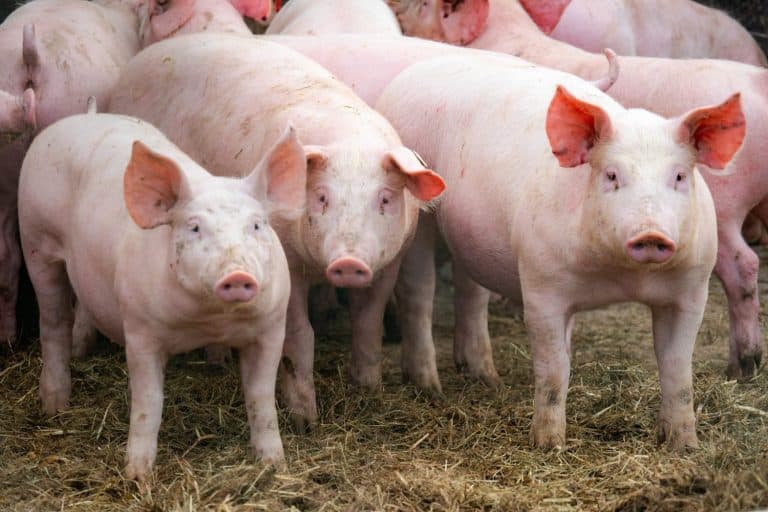
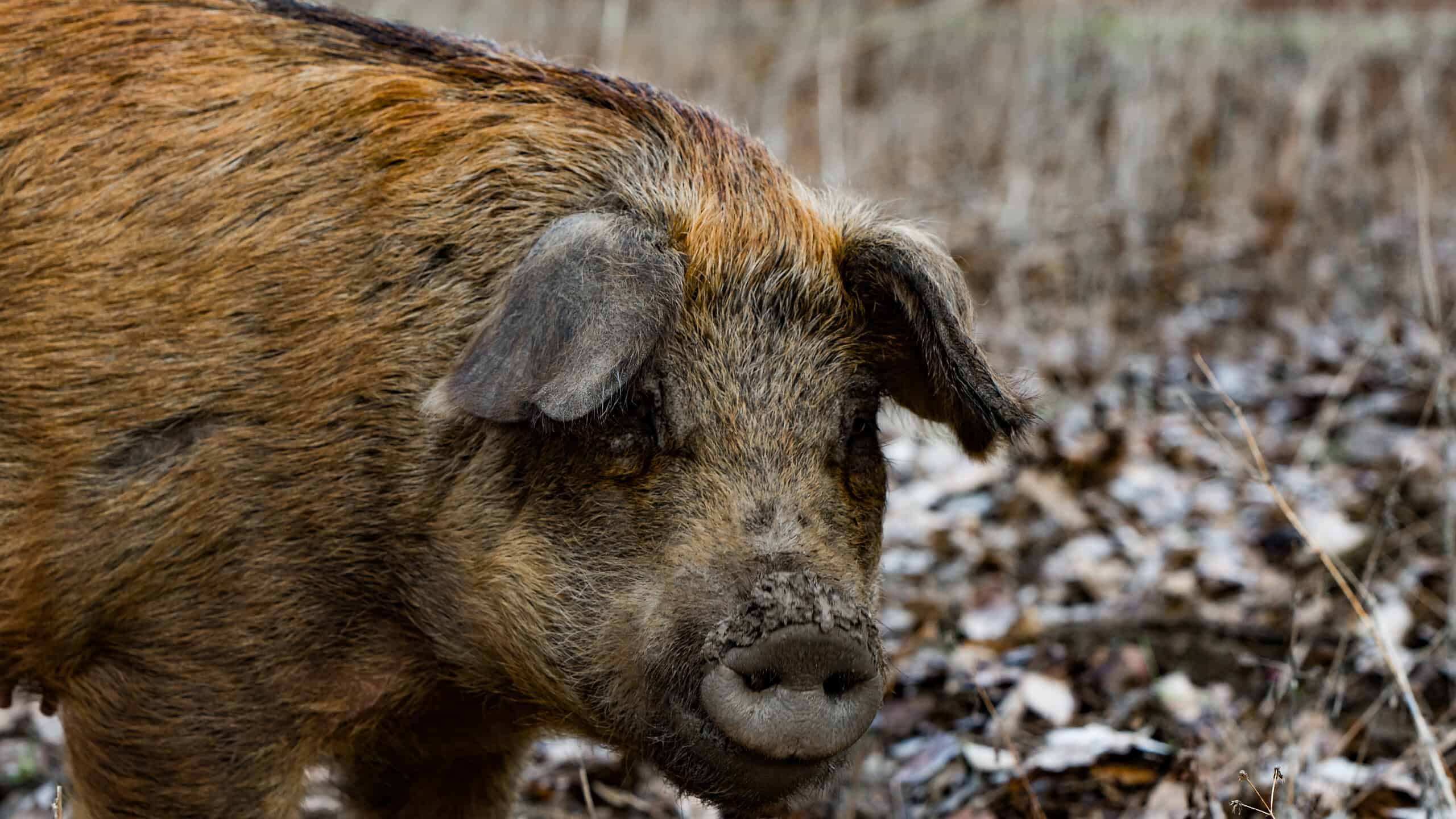
Domestic sows have been selectively bred for high fertility, with multiple litters per year and large numbers of piglets.
©Budimir Jevtic/Shutterstock.com
Female biology plays an outsized role in population growth because the number of breeding females ultimately determines how fast a population can expand. Domestic pigs have been selectively bred for high fertility for thousands of years. A typical sow can produce two litters per year, often with 8 to 12 piglets per litter. Wild boars also reproduce efficiently compared to many large mammals, but agricultural breeding has pushed domestic pigs toward even greater reproductive output and, in some cases, earlier maturity.
The mitochondrial DNA evidence shows that escaped domestic sows successfully reproduced in the wild, which was to be expected, but their daughters and granddaughters continued to do so as well. In other words, domestic pigs didn’t just mix briefly into the wild population and then vanish genetically over time; they started family lines that are still reproducing in the wild today.
However, that doesn’t automatically prove that hybrid boars are reproducing at dramatically higher rates. But it does show that human-selected reproductive traits entered the wild gene pool and stuck around. In a landscape suddenly freed from human pressure, that genetic contribution could help explain why the population rebounded so quickly.
Radiation and Resilience
One obvious question is whether radiation affected these animals. The Fukushima Daiichi disaster released radioactive isotopes, including cesium-137, into the surrounding environment. Studies conducted by Japanese researchers found elevated levels of radioactive cesium in wild boar meat within the evacuation zone, sometimes exceeding Japan’s food safety limits.
However, unsafe for human consumption doesn’t necessarily translate to unsafe for wildlife. Despite chronic exposure in contaminated areas, wild boar populations have continued to expand, which strongly suggests that radiation hasn’t caused widespread reproductive failure or population collapse in these animals.
That doesn’t mean radiation has no biological impact. Long-term ecological studies are ongoing. However, in terms of sheer population growth, hybrid boars appear robust for all intents and purposes. It’s likely that the removal of humans had a far greater impact than the presence of radiation. With no farming, no traffic, and reduced hunting pressure, the landscape effectively became a wildlife refuge.
Hybrid Vigor
When two genetically distinct populations interbreed, the result can sometimes be hybrid vigor—also known as heterosis. Heterosis is defined as the tendency of a crossbred individual to show qualities superior to those of both parents. This phenomenon can manifest as offspring that grow faster, reproduce more successfully, or survive better than either parent population under certain conditions.
Domestic pigs bring genes shaped by artificial selection. Wild boars bring genes shaped by natural selection. In Fukushima, those genetic toolkits merged. Some researchers believe this hybridization may have produced animals that combine the survival instincts of wild boars with the reproductive capacity of domestic pigs. While more research is needed to pinpoint specific traits, the maternal lineage findings certainly suggest that domestic genetics are persisting in the population.

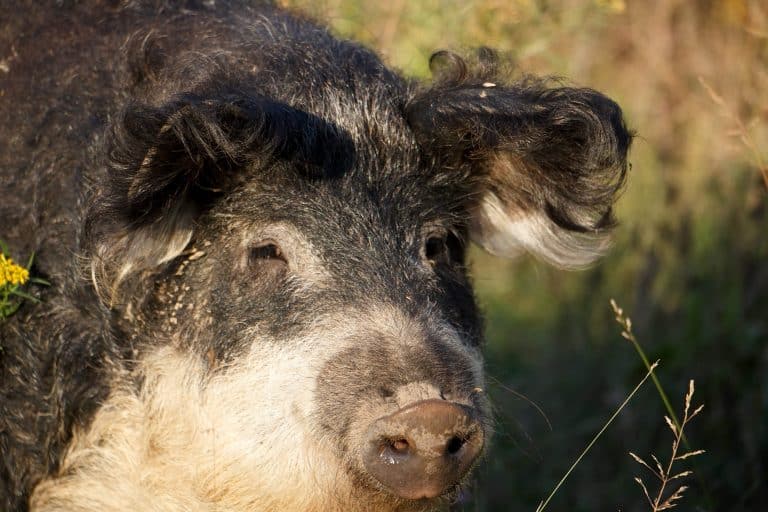
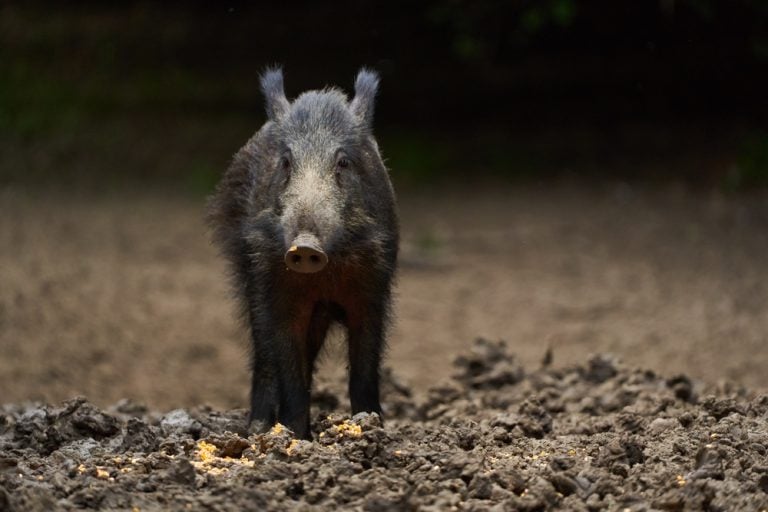
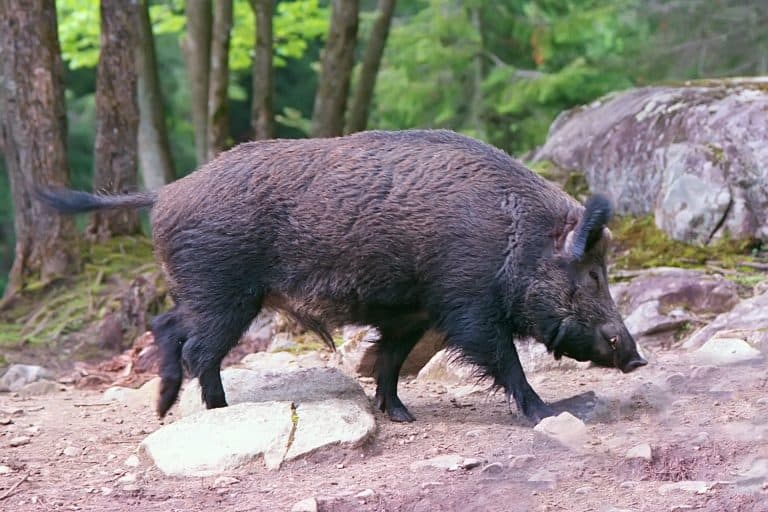
With humans gone, wild boars have moved into abandoned towns and farmland, showing how quickly wildlife can reclaim human-altered landscapes.
©WildMedia/Shutterstock.com
Rewilding by Accident
Rewilding is often discussed as a conservation strategy. The idea is to restore ecosystems by reintroducing species or reducing human interference. In Europe and parts of the United States, rewilding projects have brought back wolves, bison, and other keystone species.
But Fukushima represents accidental rewilding. No one planned for domestic pigs to become feral and hybridize with wild boars, nor did anyone design a management strategy for a nuclear evacuation zone. Yet, the outcome resembles a large-scale ecological experiment—entirely by chance.
The maternal lineage discovery highlights a key lesson. When domestic animals enter wild systems, they don’t simply vanish or revert neatly to their ancestral form; they contribute genes that can alter population dynamics for generations.
In human-altered landscapes, especially those abruptly abandoned, hybridization can accelerate change in unpredictable ways.
What It Means for the Future
So what does this mean going forward? First, it underscores how quickly nature can respond to human withdrawal. Within just a few years, Fukushima’s evacuated towns became home to thriving wildlife. Hybrid boars now roam streets once filled with cars.
Second, it shows that domestic animals are not evolutionarily neutral. Centuries of selective breeding leave genetic fingerprints that don’t disappear overnight. When those genes enter wild populations, they can shift reproduction rates, behavior, and ecological impact.
Third, it complicates the idea of “restoring” ecosystems to some previous state. If domestic genes are now embedded in Fukushima’s wild boar population, returning the area to a purely pre-disaster ecological baseline may be impossible.
There’s also a management challenge: As evacuation orders lift in parts of Fukushima and residents return, they’re encountering large, sometimes aggressive boar. Hybrid animals that reproduce faster will likely make wildlife control more difficult. Japan has already struggled with wild boar overpopulation in rural regions. Hybridization may add another layer to that issue.
A Glimpse of Evolution in Real Time
One of the most fascinating aspects of the Fukushima boar is that we get to see evolution unfold over a short time scale. Typically, evolutionary changes are discussed over centuries or millennia. Here, in just over a decade, genetic signatures from domestic pigs have spread through a wild population.
The maternal lineage evidence provides a clear marker of how that happened: Domestic sows escaped, bred, and their daughters and granddaughters carried those genes forward. Now, those genes are part of the local gene pool.
Evolution doesn’t always require dramatic mutations; sometimes it’s simply the reshuffling of existing genetic decks under new environmental pressures.

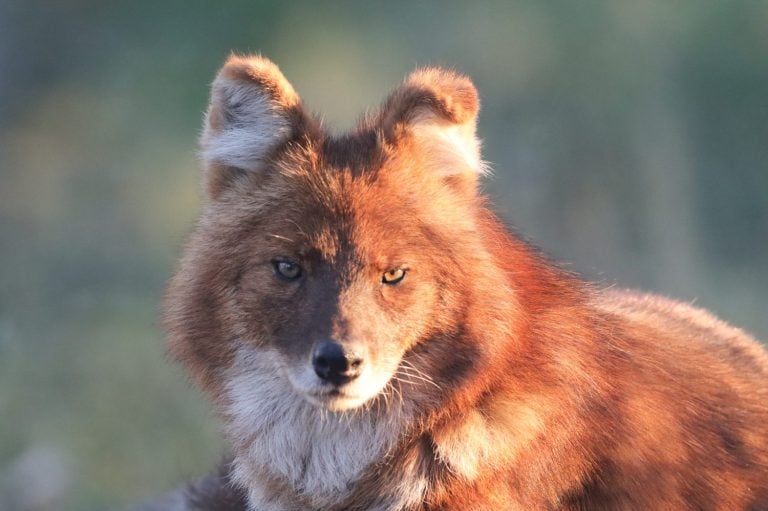
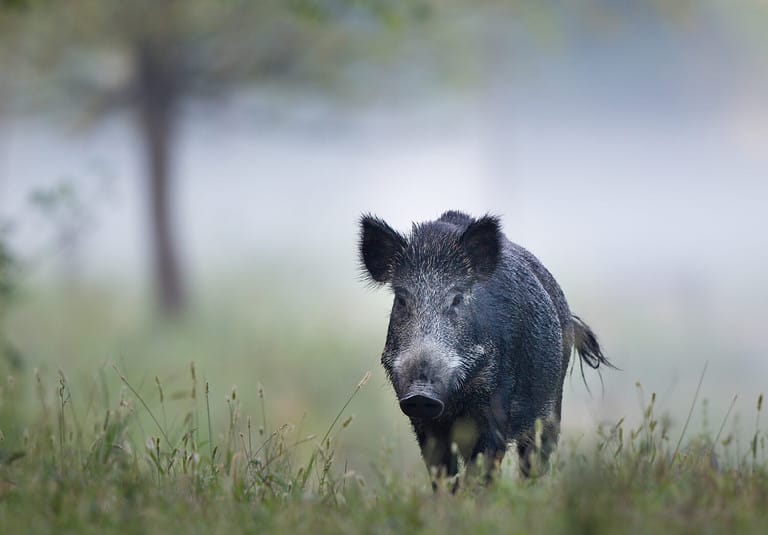
Escaped domestic pigs leave genetic footprints that can persist in wild populations for years, providing a rare look at evolution unfolding over a decade.
©aBSicht/Shutterstock.com
Beyond Fukushima
Fukushima isn’t the only place where livestock have gone feral. Hurricanes, economic collapse, and war have all led to abandoned farms in different parts of the world. Climate change may increase such disruptions in the future.
Understanding how domestic animals integrate into wild ecosystems is becoming increasingly important. Hybridization can threaten native species in some cases. In others, it can create highly adaptable populations that thrive in disturbed habitats.
The Fukushima hybrid boar illustrates both the resilience of life and the unintended consequences of human actions. We built farms, bred pigs for productivity, and created a nuclear power plant. When disaster struck, these factors combined in unexpected ways, shaping the landscape for generations.