
Quick Take
- Roads are generally blamed for habitat fragmentation.
- A new study conducted in the Ocala National Forest in Florida has examined whether unpaved forest roads with few vehicles are actually helping lizards get around.
- The study found that Florida scrub lizards were found in greater numbers along unpaved roads than deeper in the forest.
- The sunny patches and small vegetation probably helped with temperature regulation.
- The roads replaced the areas of the forest regrowth cycle that would naturally serve this purpose for the lizards.
Roads are generally blamed for habitat fragmentation and are seen as a dangerous barrier for wildlife, including reptiles. However, a new study of lizard habitats in Florida has revealed that they may provide an ecological corridor for some species in some circumstances! This is what the study found.
Studying Scrub Lizards in Florida
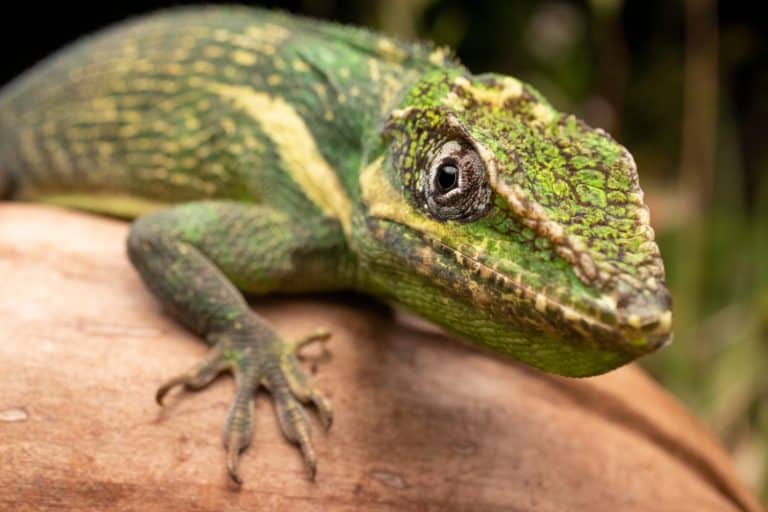
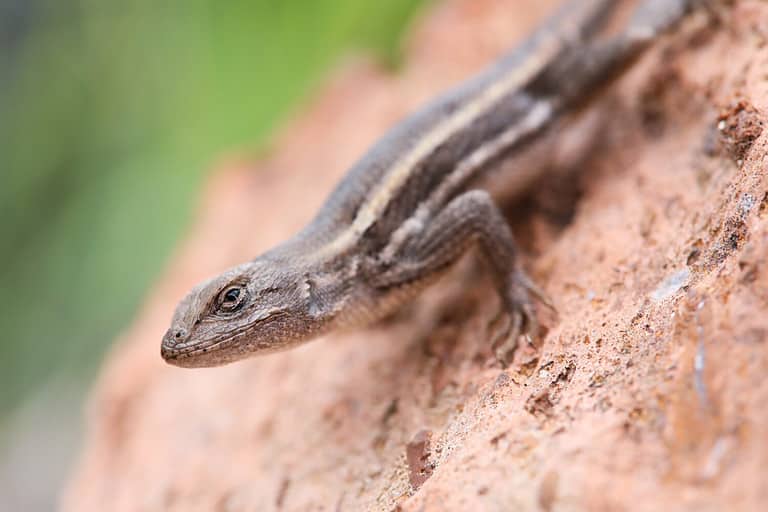
Scrub lizards such as Florida scrub lizards (Sceloporus woodi), six-lined racerunners (Aspidoscelis sexlineatus), and green anoles (Anolis carolinensis) are small ectotherms. This means that they rely on the environment to regulate their body temperature. Gaps created in their natural environments by unpaved roads may provide a suitable location for them to warm up or cool off. Normally, forest fires would create a forest regrowth cycle and areas of less dense tree growth, where the lizards could do this. However, in areas used for timber harvesting, this does not happen.
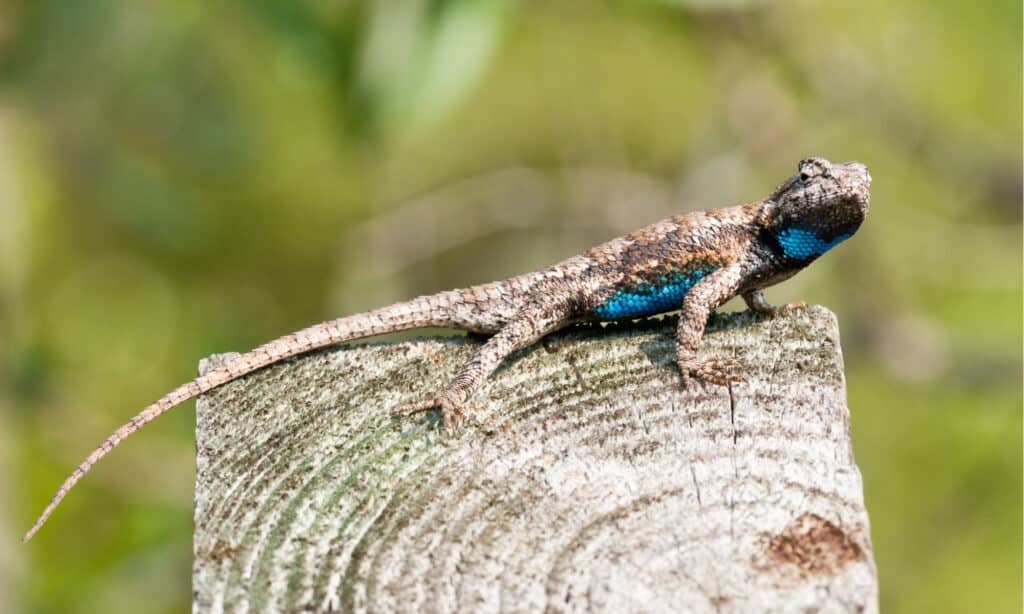
Florida scrub lizards use sandy forest roads for temperature regulation.
©Phillip W. Kirkland/Shutterstock.com
Scientists conducted a study in the Ocala National Forest in Florida. They looked at sand pine scrub and longleaf pine sandhill habitats. The study compared how many lizards were found on the roads compared to the stand interiors (deeper in the forest).
How Are Unpaved Roads Helping Scrub Lizards?
The study showed that Florida scrub lizards were found in greater numbers along unpaved roads than deeper in the forest, while other lizard species did not show this pattern. In fact, the roads appeared to serve as important corridors that allowed these animals to move around. Importantly, vehicles are rarely present on these roads, but there are sunny patches and low vegetation, both of which could help the lizards regulate their temperature. The sandy soil also provides a place for them to hide from predators.
However, speaking to The Wildlife Society in this article, David Tevs, a PhD student at the University of Montana who was involved in the research, warned that the road could also have a negative effect on other ecology in the area. For example, they may help the spread of non-native grasses and brown anoles (Anolis sagrei). On the plus side, other species such as gopher frogs (Lithobates capito) may also use these roads to move around, although direct evidence for this is limited.