
Quick Take
- Cuban knight anoles, large green lizards from Cuba, are spreading through Florida’s towns and suburbs.
- Urban environments with trees, insects, and warm temperatures help the species survive and expand northward.
- The lizards eat insects, snails, and small animals, which may threaten vulnerable native species.
- Scientists track their spread using sightings and models to understand potential ecological impacts.
Bright green lizards cling to tree trunks in neighborhoods across South Florida. These reptiles are Cuban knight anoles, large arboreal lizards originally from Cuba. Decades ago, they appeared mainly in a few South Florida yards. Today, researchers and residents report them across a wider stretch of the state. Urban development appears to help this spread. Streets, gardens, and landscaped yards provide trees, prey, and warmth. These conditions allow the lizards to thrive in areas shaped by human activity. Scientists studying the species warn that this quiet expansion could affect native wildlife.
Large predators entering new habitats can change how smaller animals behave and survive. In Florida, knight anoles may influence insects and other small creatures living in trees. Researchers are now examining how towns and suburbs help the lizards move across the region.
Cuban Knight Anole Overview
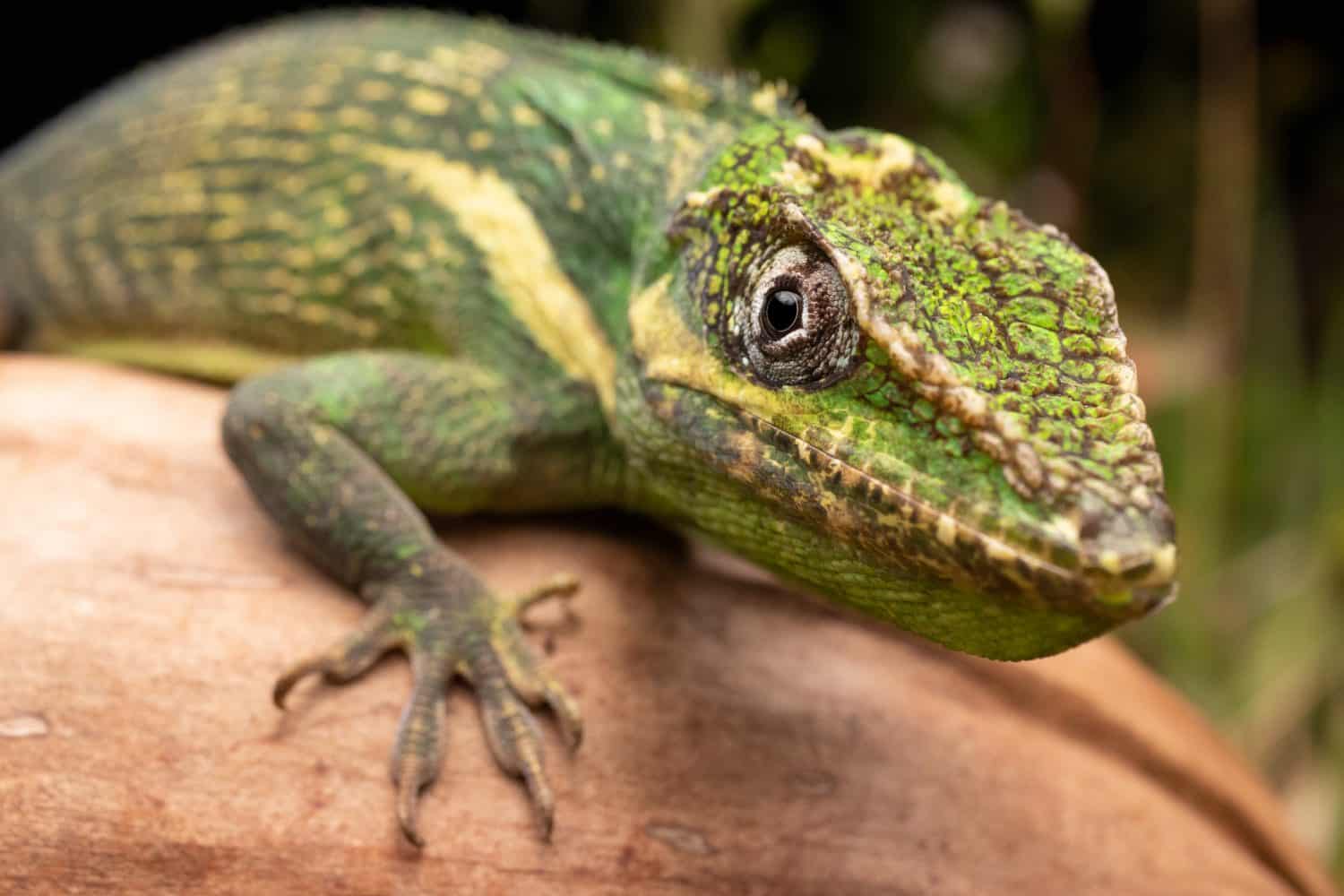
Large body size sets the Cuban knight anole apart from many other anoles in Florida. Adults commonly reach 13 to 18 inches from nose to tail. Their bright green color helps them blend among leaves and branches. A pale stripe often runs along the face and shoulder. The stripe and angular head shape inspired the name “knight.” These lizards spend most of their time on tree trunks and branches where they watch for prey.
Full-grown, Cuban knight anoles reach about 18 inches long.
©Fine Art Photos/Shutterstock.com
In their native range across Cuba and nearby islands, the species occupies forests, farms, and residential gardens. Their diet includes insects, snails, fruit, flowers, and small vertebrates. Flexible feeding habits allow them to adjust to new environments. The species likely entered Florida through the reptile trade during the twentieth century. Some animals escaped captivity or were intentionally released into yards.
Arrival of Knight Anoles in Florida
Historical reports document the earliest Florida populations during the 1950s. At that time, exotic reptiles were often imported as pets. Some owners released animals outdoors when they grew too large or difficult to manage. South Florida’s warm climate resembles parts of Cuba, a similarity which allowed early populations to survive and reproduce. Over time the lizards spread across nearby neighborhoods and parks.
Sightings gradually increased across Miami-Dade and Broward counties. Later reports confirmed populations in the Florida Keys and along the Gulf Coast. Observers have also documented the species in Central Florida and along the Space Coast. Data collected by biologists, museums, and citizen scientists helped map this expansion. Photographs posted online also provide useful records of where the lizards appear.
Urban Landscapes Create Suitable Habitat
Cities and suburbs differ greatly from wild habitats. Yet for the Cuban knight anole these places provide useful resources. Landscaped neighborhoods contain tall trees, fences, and utility poles that mimic natural perches. Garden plants attract insects at night under porch lights and streetlights. This steady supply of prey helps support urban populations of the lizard. Yards and parks also offer warm surfaces where reptiles can bask.
Research comparing Cuban and Florida populations revealed an interesting pattern. In Cuba the species distribution relates strongly to climate and vegetation. In Florida the strongest predictor of presence is human development. This result suggests towns create favorable environments. Disturbed habitats may contain fewer predators and abundant prey.
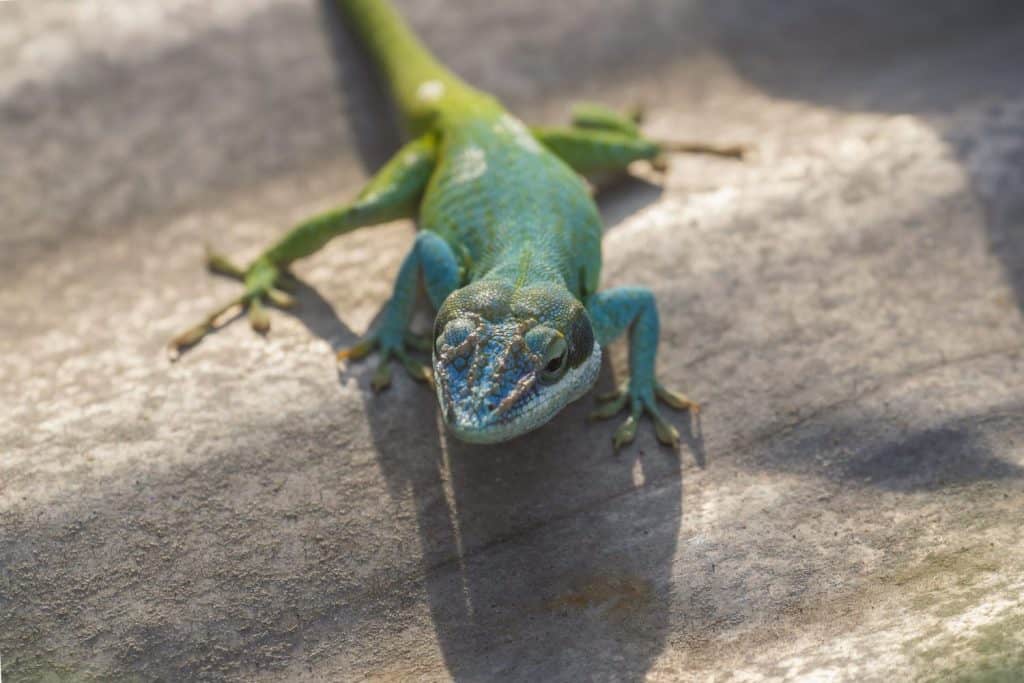
These lizards thrive in areas of human development.
©Wirestock Creators/Shutterstock.com
Heat Islands Increase Survival
Urban areas often stay warmer than nearby countryside. Concrete, asphalt, and buildings absorb heat during the day. At night these surfaces release stored warmth. The result is known as the urban heat island effect. Slightly warmer temperatures extend activity time for many reptiles. Warmer nights also help tropical species tolerate cooler seasons.
For knight anoles these conditions can improve survival in northern parts of Florida. Models examining environmental factors show that warm coastal cities provide suitable thermal conditions. Researchers studying Miami-Dade habitats noticed that open urban sites allow higher body temperatures. Lizards in these areas may grow faster and remain active longer than individuals in cooler forests.
Life High Above Florida Streets
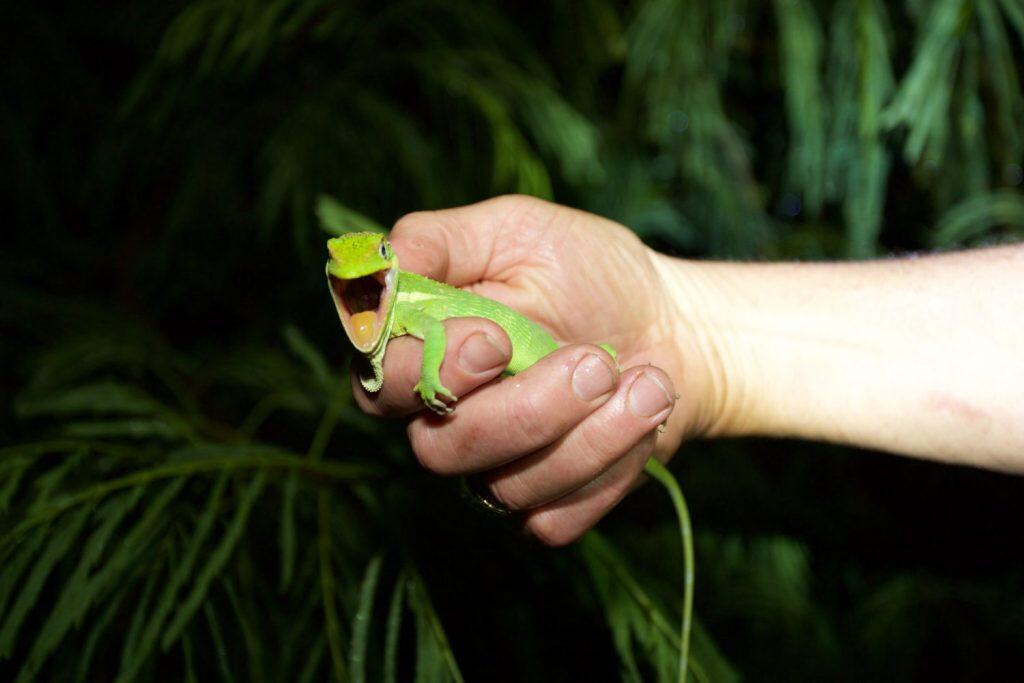
Most Cuban knight anoles remain hidden from casual observers. They spend much of the day clinging to tree trunks or branches several feet above ground. From these vantage points, they watch for prey moving nearby. When threatened, the lizards may gape their mouths or display a pink throat fan. These signals warn rivals or predators. Many individuals also remain motionless to avoid detection.
Several lizards may occupy the same cluster of trees. Fences, power lines, and hedges allow them to travel between perches. These pathways help them navigate suburban landscapes. Their preference for vertical surfaces makes neighborhoods suitable habitats. Buildings and tall plants offer the structure they require.
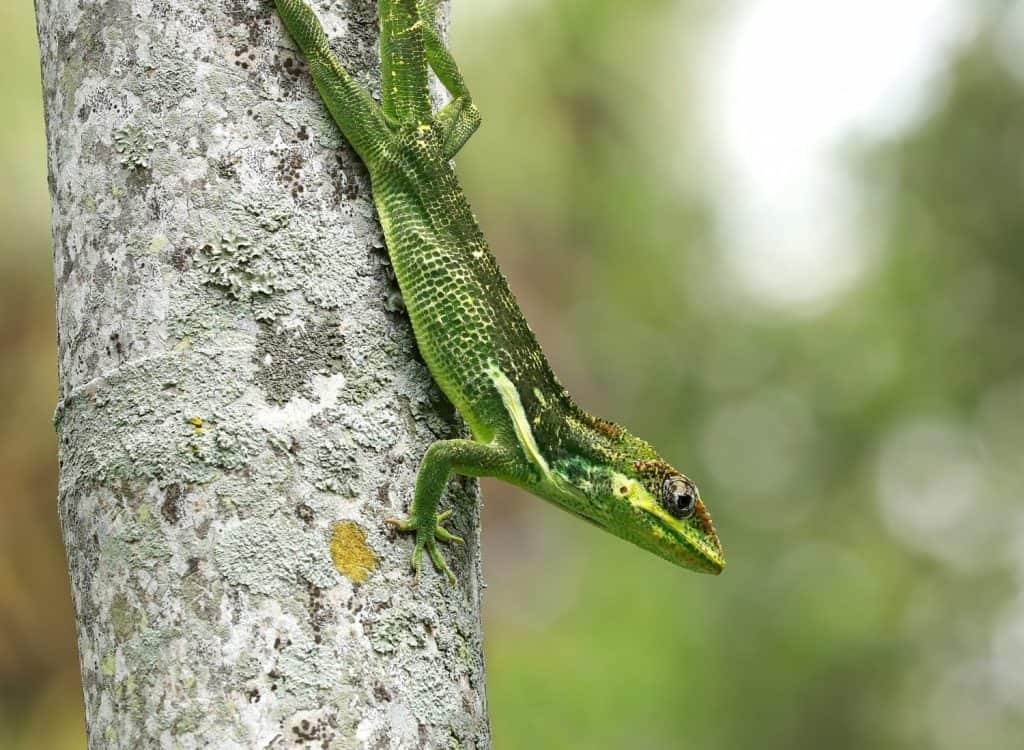
Cuban knight anoles are excellent climbers.
©Jillian Cain Photography/Shutterstock.com
Diet and Feeding Behavior
Cuban knight anoles eat a wide range of foods. Insects form the largest part of their diet. Beetles, moths, and roaches are common prey items. They also consume snails, small reptiles, and other invertebrates. Some individuals feed on fruit, nectar, and flowers found in ornamental gardens. This varied diet allows them to exploit many food sources.
Researchers have observed knight anoles eating invasive Cuban tree frogs in Florida. While this may reduce one invasive species, the lizards can also capture native animals. Because they hunt in trees, their feeding behavior overlaps with many arboreal insects and snails. This overlap raises concerns for species already facing habitat loss.
Potential Effects on Native Species
Scientists continue to study how knight anoles affect native wildlife. Large tree-dwelling predators can influence the abundance of smaller animals. Some native invertebrates occupy the same habitats used by these lizards.
The Florida tree snail, a protected species, lives in coastal hardwood trees where knight anoles forage. Caterpillars of the Schaus’ swallowtail butterfly develop on plants in similar environments. The Florida tiger beetle also occupies limited coastal habitats. Models show that suitable areas for these species overlap with predicted anole habitat. Additional predation pressure could increase challenges for these already vulnerable animals. Researchers emphasize that long-term monitoring will clarify the extent of these effects.
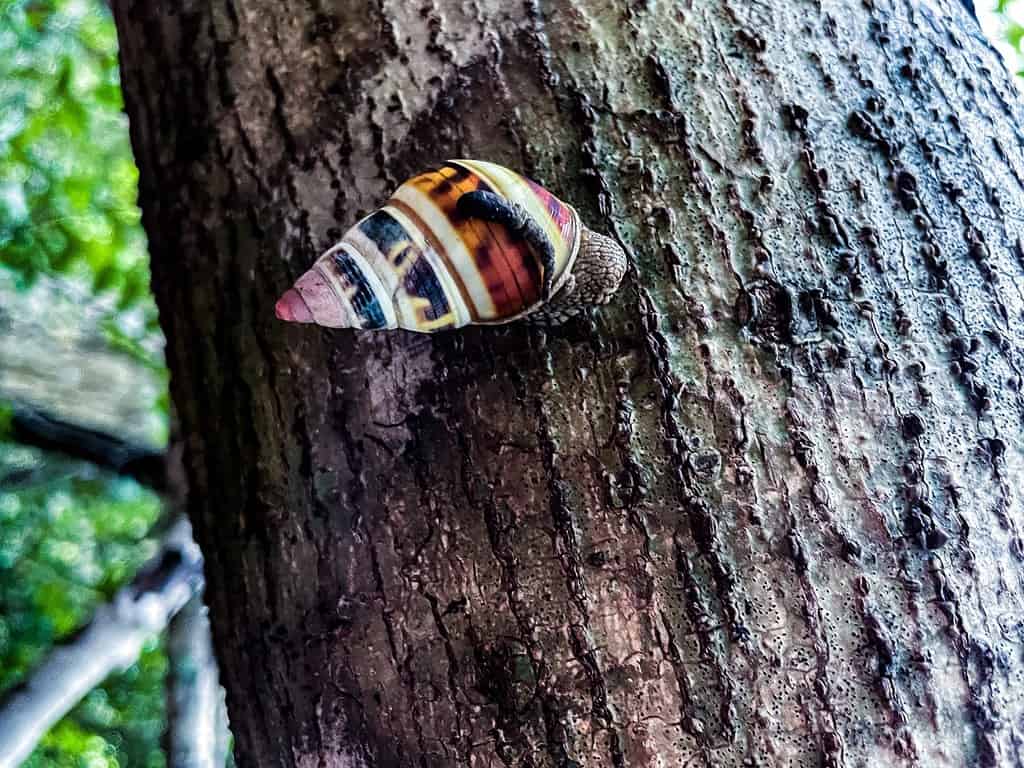
The Florida tree snail is a protected species in the state.
©jaimie tuchman/Shutterstock.com
Urban Areas as Invasion Pathways
Biologists often observe invasive species thriving in cities. Transportation networks allow animals and plants to arrive from other regions. Once established, developed landscapes may help them spread. Roads, canals, and power lines create corridors linking neighborhoods. These pathways allow animals to move between habitats. Urban plantings provide food and shelter along the route.
Florida contains many non-native reptiles that thrive in suburban environments. Knight anoles are just one introduced species supported by city life. Understanding these patterns helps scientists predict where new invasions may occur.
What Is Florida Doing About It?
Because the Cuban knight anole already occupies large areas of South Florida, removing all individuals is unrealistic. Researchers instead focus on tracking where the species appears and studying its ecological effects. Citizen science programs play an important role in this effort. Residents who photograph unusual reptiles help provide valuable records that scientists use to map the lizard’s distribution.
Florida wildlife agencies also encourage the public to report sightings of invasive species through monitoring programs. These reports help researchers identify where the lizards are spreading and where they might move next. Scientists then use these observations to refine models that predict how urban development and climate conditions influence the species’ expansion.
Education and prevention are also key parts of the state’s approach. Wildlife officials urge responsible pet ownership and remind residents that releasing non-native animals into the wild is illegal. Habitat conservation is another strategy. Protecting intact natural ecosystems may help native wildlife withstand additional pressure from introduced predators like the Cuban knight anole.
Future Concerns for Florida Ecosystems
Urban growth along Florida’s coasts continues each year. Expanding neighborhoods may provide new habitat for Cuban knight anoles. Warmer winter temperatures could also help populations move north. Scientists will continue studying how these lizards interact with native species. Understanding diet, behavior, and habitat preferences remains essential for predicting future impacts.
Early detection of range expansion allows wildlife managers to respond before problems grow larger. Careful monitoring will reveal whether the species becomes a greater ecological concern. Awareness among residents also matters, as observing wildlife in local neighborhoods can provide early clues about environmental change.